Introduction
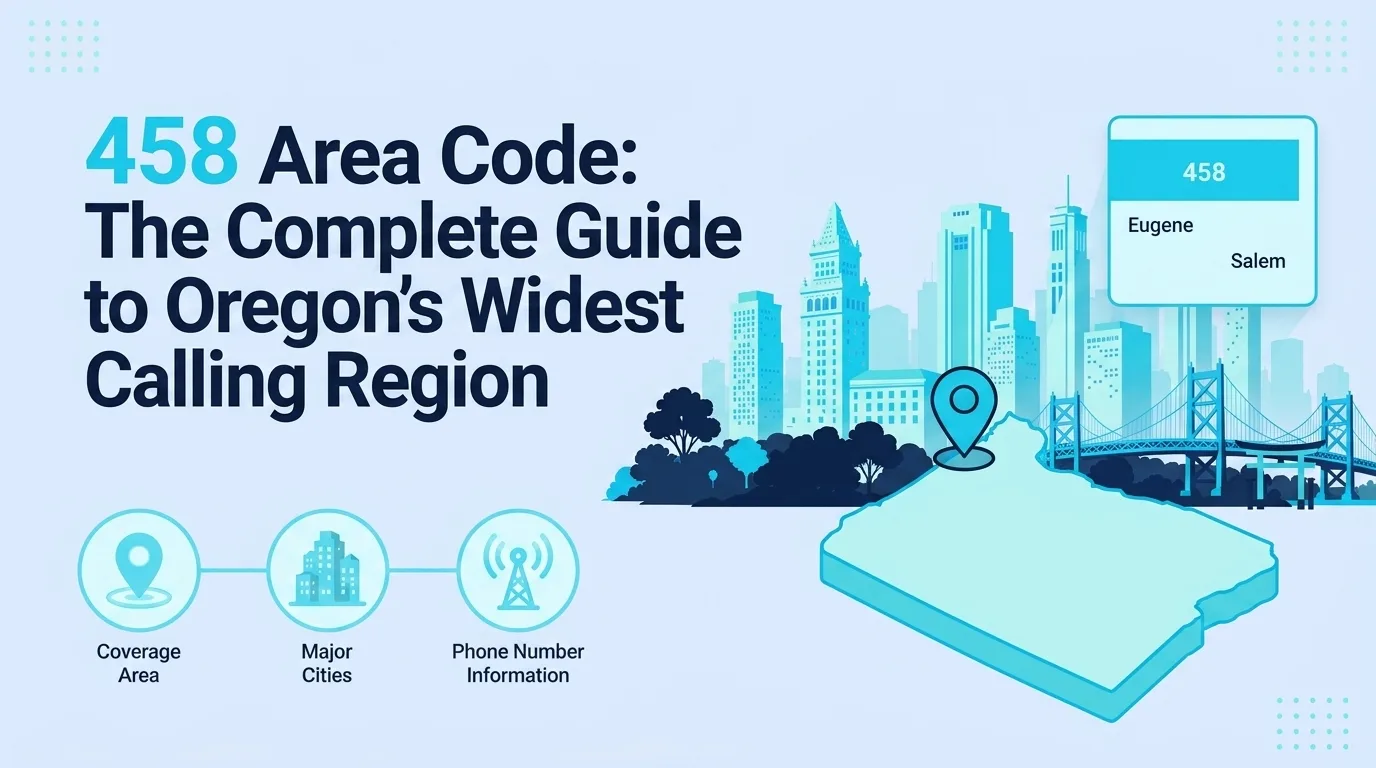
The 458 area code covers most of Oregon outside the Portland metro, and this guide breaks down exactly what that means for anyone calling, texting, or running a business across the region. This topic matters because 458 stretches across such a wide and varied part of the state that a few surprising quirks trip up even longtime residents. You will learn which cities and counties share this code, why cell phones forced Oregon to add it in 2010, and one detail about time zones that most guides never mention. Stick with this guide and you will understand Oregon's numbering system better than almost anyone who lives there.
Key Takeaways:
- The 458 area code overlays the same 26 counties as area code 541 across most of Oregon.
- Oregon added 458 in 2010 because rising cell phone use exhausted the numbers left in 541.
- Part of the 458 region actually runs on Mountain Time, not Pacific Time like the rest of the state.
- A 458 number tells you almost nothing about which Oregon city or town someone actually lives in.
Eugene to the Idaho Border: What the 458 Area Code Actually Covers
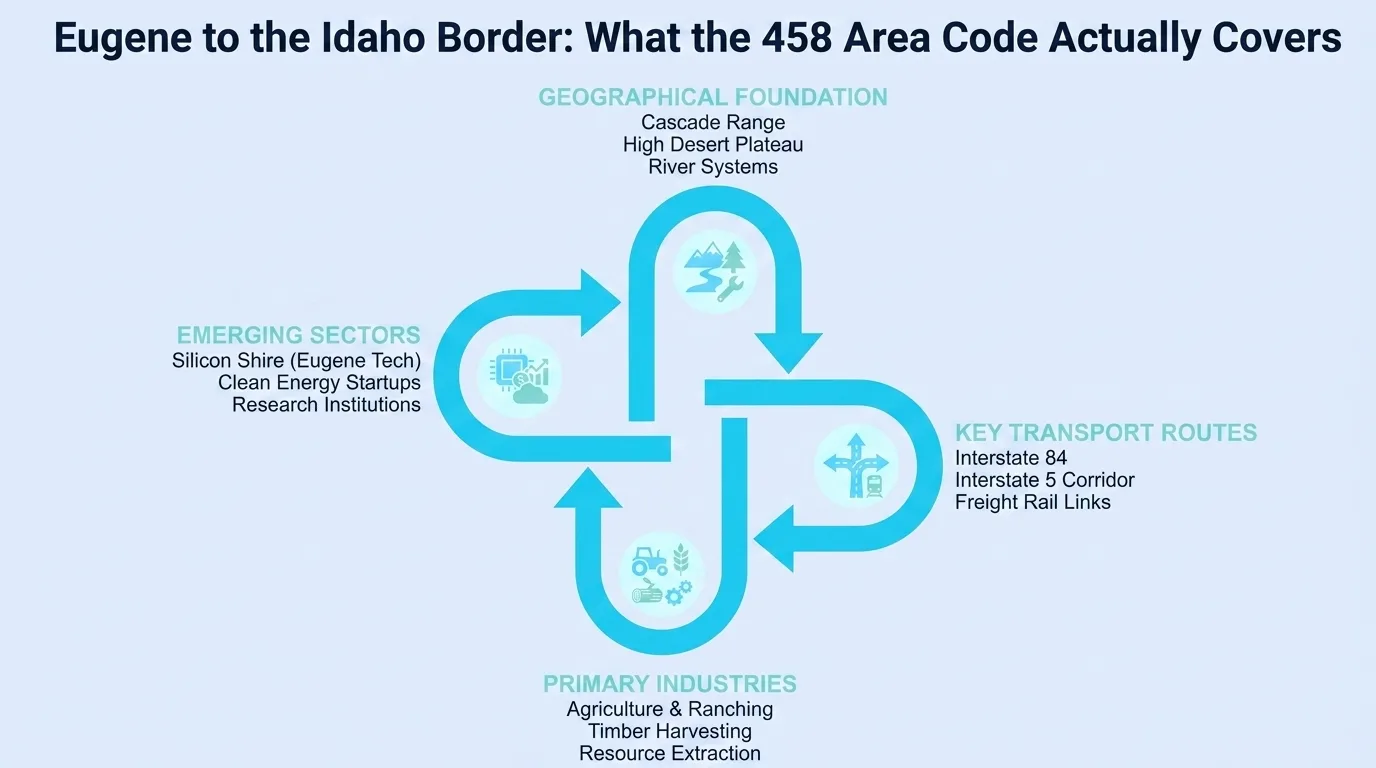
Area code 458 shares its entire footprint with area code 541, covering 26 counties across most of Oregon outside the Portland and Salem metro area. Eugene is the largest city in the region, followed by Bend and Medford, with the coverage stretching from the Pacific coast all the way to the Idaho border. That huge span means a single area code links cities with completely different climates, industries, and time zones.
- Eugene, home to the University of Oregon and the region's largest population center
- Bend, a fast-growing hub in central Oregon known for outdoor recreation
- Medford and Ashland, anchoring southern Oregon near the California border
- Corvallis and Albany, key commercial centers in the mid-Willamette Valley
- Klamath Falls, Pendleton, and Burns, spread across the state's eastern half
A Coastal-to-Desert Coverage Area
Area code 458 Oregon also reaches the entire coast south of Lincoln County, along with high desert towns like Lakeview and Burns. Few area codes in the country connect coastline, farmland, and desert the way this one does.
Why Cell Phones Forced Oregon to Add a Second Area Code in 2010
Area code 541 was created on November 5, 1995, when it split away from the original statewide 503 code that once covered all of Oregon. For over a decade, 541 handled every new phone line across this huge region without any changes. That changed as cell phones and pagers spread quickly through Eugene, Corvallis, and Medford, using up available number combinations far faster than regulators expected.
By 2007, officials realized 541 was running out of central office codes, and a full split would have forced thousands of people to change numbers they had used for years. Oregon activated 458 as an overlay on February 10, 2010, letting existing 541 customers keep their numbers while every new line received a 458 area code instead.
Why Does One Corner of the 458 Area Code Run on Mountain Time?
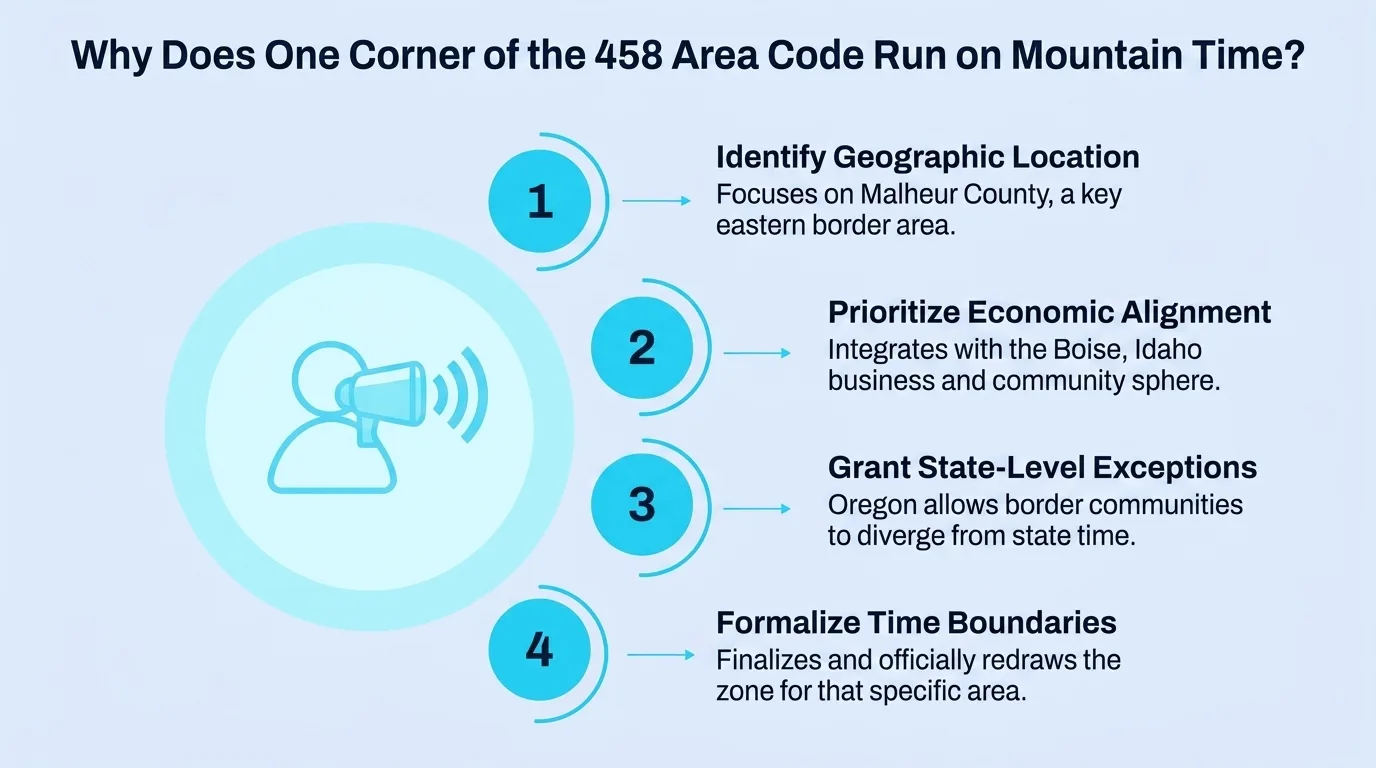
Most of Oregon runs on Pacific Time, but communities near the Idaho border, close to Ontario and parts of Malheur County, commonly keep Mountain Time in daily practice because their local economy ties closely to Idaho. That means two callers sharing the same 458 area code could be an hour apart on the clock, even though neither one has left the state. Businesses scheduling calls across this region need to double check which side of that line a customer falls on.
- Area code 458 observes Pacific Time across most of its footprint.
- Communities near the Idaho border commonly operate on Mountain Time in practice.
- Meeting times and appointment windows can shift by an hour within the same area code.
- This quirk rarely appears on typical area code reference pages.
458 or 541? What Actually Decides Which Number You Get
Both area codes cover the exact same 26 counties, so location never determines which one a customer receives. The real difference comes down to timing, since new lines started receiving 458 numbers only after February 2010.
- 541: Assigned to phone lines active before the overlay began in 2010.
- 458: Assigned to phone lines activated on or after February 2010.
- Both codes require the full ten digits for every local call.
- Neither code reveals which Oregon city or coastal town a caller lives in.
Businesses that opened after 2010 are far more likely to carry a 458 area code than an older 541 number, simply because of when they signed up for service. Anyone comparing this pattern against nearby Oregon area codes will notice the same overlay logic repeats across other fast-growing states too.
That 458 Caller Might Not Be Who They Claim — Here's How to Check
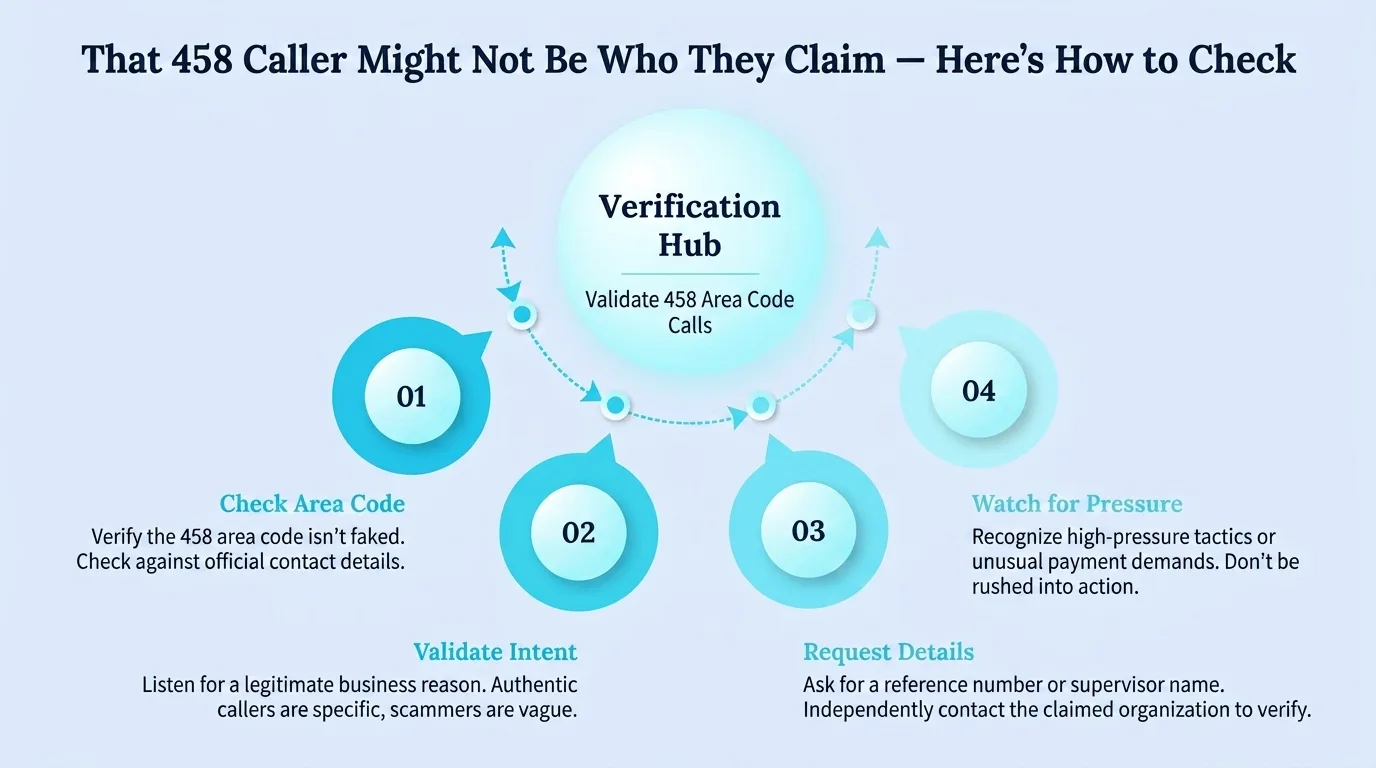
Scammers spoof 458 numbers for the same reason they spoof any local code: a familiar-looking number makes people more likely to answer without thinking twice. If a caller claiming to represent a utility company or government office pressures you for immediate payment through gift cards or wire transfers, treat that as a serious warning sign. Legitimate organizations across Oregon do not demand instant, untraceable payment over the phone.
Steps To Confirm A Legitimate 458 Caller
- Search the full ten-digit number online before returning the call.
- Contact the organization directly through its official website or listed number.
- Never share financial or personal details with an unexpected caller.
- Read up on stopping spam calls before they cost your business a real customer.
Dialing Slip-Ups That Still Confuse Longtime Oregon Callers
Plenty of residents who grew up with a single area code across the state still slip into outdated seven-digit dialing habits. These small mistakes cause real friction, from failed calls to missed appointments.
Dropping the area code entirely remains the most common error among people who lived in the region before the 2010 overlay began. Some callers also assume a business still uses its original 541 number, when many companies switched to 458 lines as they expanded. Saved contacts without the full ten-digit format often fail to autodial correctly on newer phones. According to FCC guidelines, skipping the area code in any overlay region will always produce a failed call rather than a warning to try again.
Why a Local 458 Number Still Wins Trust in Bend, Medford, and Eugene
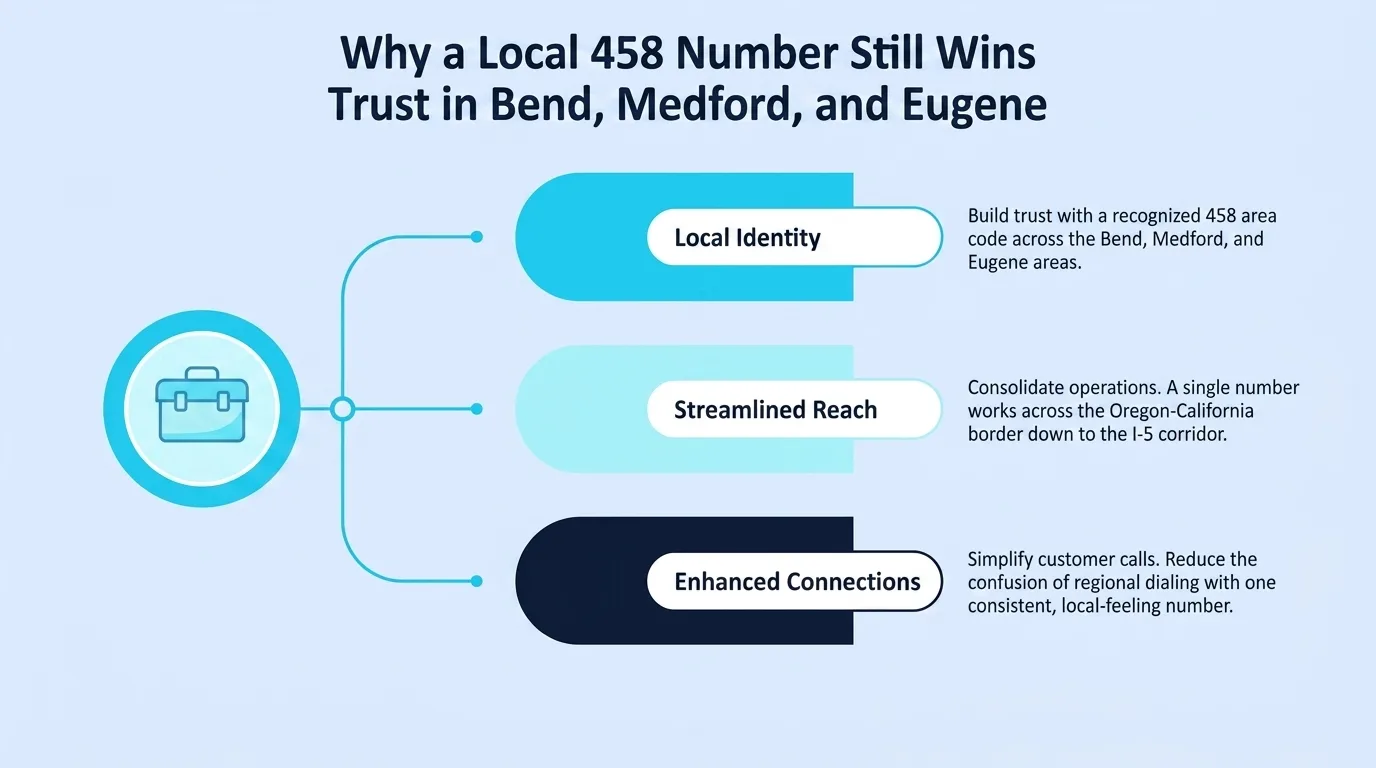
A local 458 area code tells an Oregon customer that a business understands their specific community, not just the state in general. That signal matters most in a region this spread out, where a company in Bend and one in Medford serve very different customers despite sharing a code. Businesses that back that local number with organized call handling keep the trust they earn on the first ring.
- Local numbers get answered more often than unfamiliar toll-free lines.
- Smart call routing connects customers to the right person without delay.
- Missed-call follow-up recovers leads that a busy front desk might miss.
- Consistent local presence helps repeat customers recognize a business fast.
Rozper helps growing Oregon businesses manage exactly this kind of call flow, so a local area code 458 presence turns into booked appointments instead of missed opportunities. Teams using Rozper can route incoming calls, track follow-ups automatically, and keep every customer conversation organized no matter how wide the footprint gets. That kind of dependable call handling is what actually earns the trust a 458 number promises across such a wide part of Oregon.
Conclusion
The 458 area code has shared its footprint with 541 across most of Oregon since 2010, covering everything from the coast to the Idaho border in a single overlay. Ten-digit dialing, the surprising Mountain Time pocket near Ontario, and the simple timing difference between 541 and 458 all matter for anyone living or doing business across this region. Understanding how the overlay works helps residents avoid dialing errors and helps businesses set realistic expectations about what a local number really signals. The 458 area code is more than a dialing prefix; it is a reminder that Oregon's geography rarely fits into one tidy assumption.
Businesses spread across this much territory need more than a working phone line to keep customers close. Rozper gives growing teams the call routing and follow-up tools to turn a local 458 presence into consistent, organized conversations no matter how far apart your customers live. As Eugene, Bend, and the rest of the region keep growing, the businesses that manage every call well are the ones people remember and call back.
FAQs
What state is the 458 area code in?
The 458 area code is located entirely within Oregon, covering most of the state outside the Portland metro. It shares its territory with area code 541.
Where exactly does area code 458 cover?
It covers 26 counties across Oregon, including Eugene, Bend, Medford, and the entire southern coast. This makes it one of the largest area code footprints in the country.
When was the 458 area code created?
It launched on February 10, 2010, as an overlay on top of the existing 541 code. The underlying 541 code dates back to a 1995 split from statewide 503.
How do I dial a 458 number correctly?
You must dial all ten digits, including the area code, for every local call. Seven-digit dialing has not worked in this region since the overlay began.
Is it safe to answer calls from a 458 number?
Not always, since scammers frequently spoof local numbers to appear trustworthy. Confirm any unusual request before sharing personal or financial information.
What time zone does the 458 area code use?
Most of the region runs on Pacific Time, but communities near the Idaho border commonly follow Mountain Time in practice. Always confirm the time zone before scheduling an important call.
Does getting a 458 number cost anything extra?
Standard phone service already includes whichever area code your line is assigned. Businesses comparing providers should focus on their phone plans rather than assume 458 numbers cost more.
Can a local area code 458 Oregon number really help my business build trust?
Yes, Oregon customers tend to answer local numbers far more often than unfamiliar toll-free ones. Pairing that local presence with organized call routing helps businesses turn more answered calls into loyal customers.