Introduction
Few prefixes carry as much regional weight as the 512 area code. It has been tied to the Texas capital since the first phone numbering plans went live. That history still shapes how Austin-area customers decide whether to trust a new call. This guide covers where the code reaches. It shows the decades of splits behind it. It also shows how to get a 512 number for your own team.
What Is the 512 Area Code?
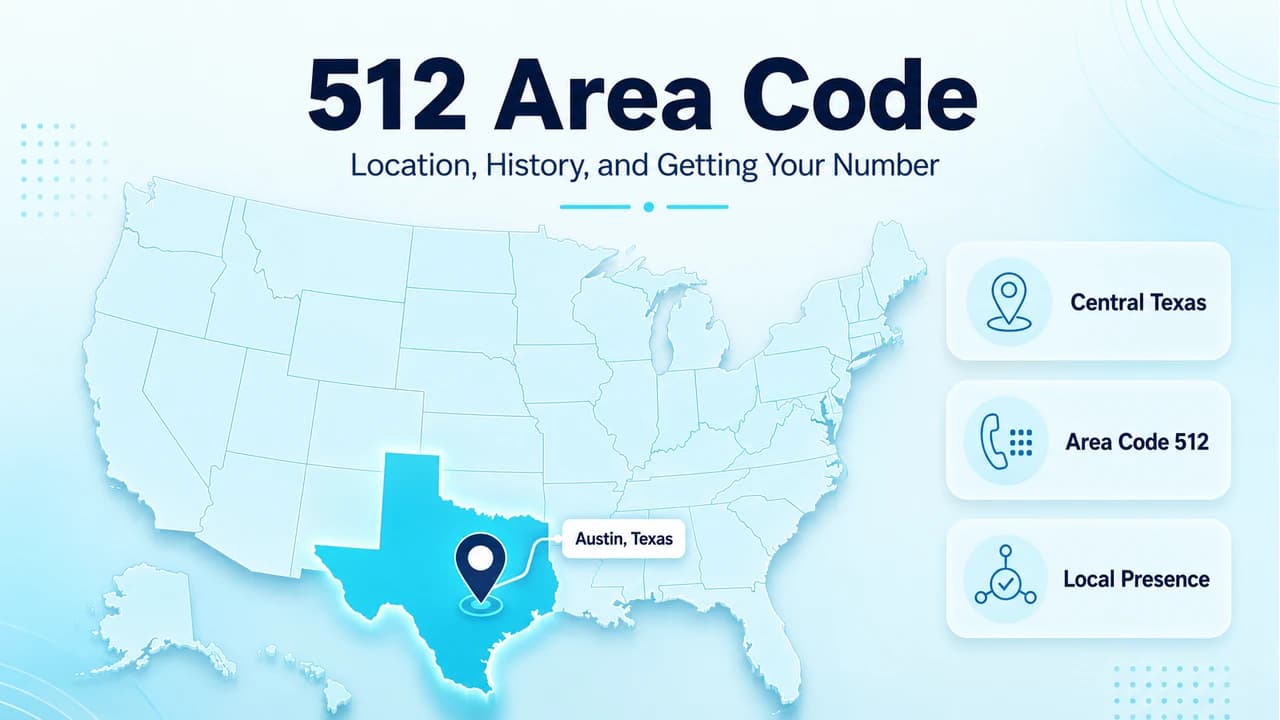
The 512 area code was set up in October 1947. It was one of the first area codes made under the North American Numbering Plan. At the time, it covered a huge stretch of south Texas. That range ran from the Gulf Coast down to the Mexican border.
Quick Facts:
| Detail | Info |
|---|---|
| Area Code | 512 area code |
| Overlay Code | 737 (added 2013) |
| Region | Austin and Central Texas |
| Time Zone | Central Time (CT) — UTC−6/UTC−5 |
| Dialing | 10-digit mandatory |
| Established | October 1947 |
| Regulatory Body | NANPA (North American Numbering Plan Administrator) |
That footprint shrank twice as demand grew. This differs from smaller, single-city codes. The 210 area code in nearby San Antonio is one example. It split away from this same area back in 1992.
Where the 512 Area Code Covers
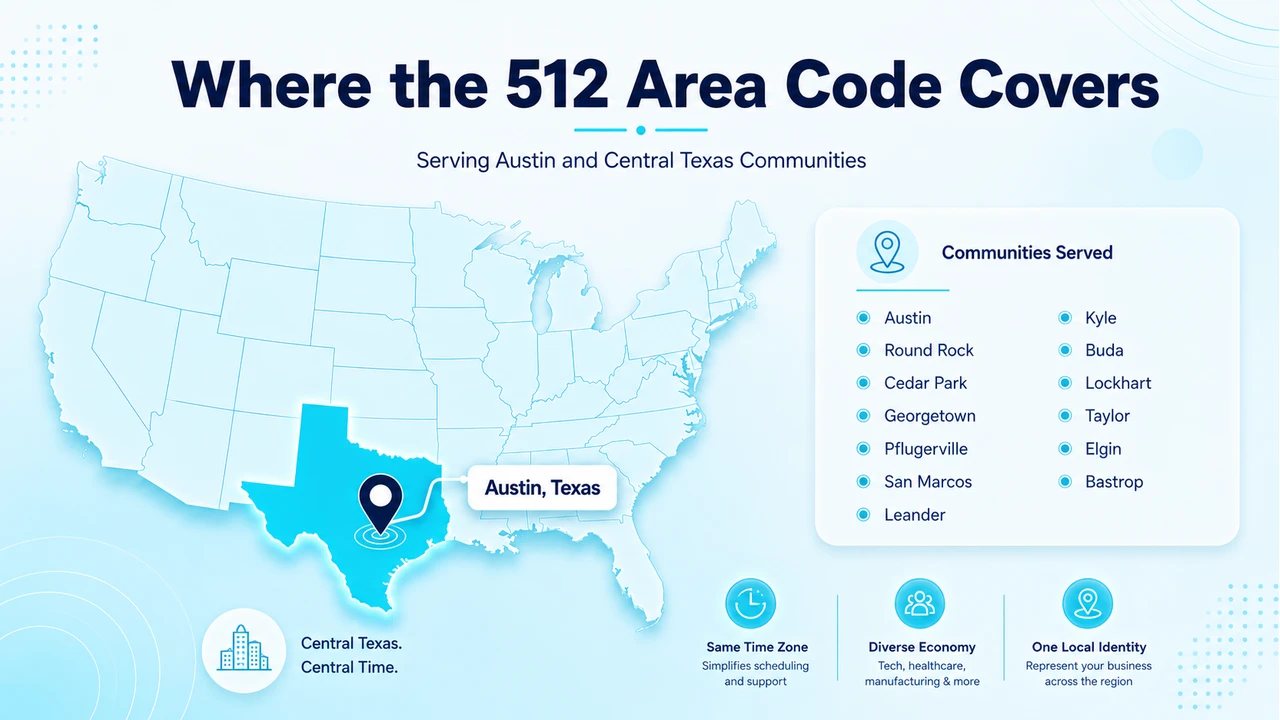
This area sits entirely within Central Texas. It is anchored by Austin and its fast-growing suburbs. It is one of the busiest prefixes in the state. That reflects the region's population boom over the past two decades. Cities and towns served include Austin, Round Rock, Cedar Park, Georgetown, Pflugerville, San Marcos, Leander, Kyle, Buda, Lockhart, Taylor, Elgin, and Bastrop.
All of these towns sit in the Central Time Zone. That keeps scheduling, live-answer support, and outbound calls simple. This holds true no matter where the rest of your team sits. Austin's tech and university scene anchors the metro core. Suburbs like Round Rock and Cedar Park bring their own factory and health care jobs. Smaller towns such as Bastrop and Lockhart add a more rural, small-town feel. A single 512 number can fairly represent a business serving any part of that range.
The History Behind Area Code 512
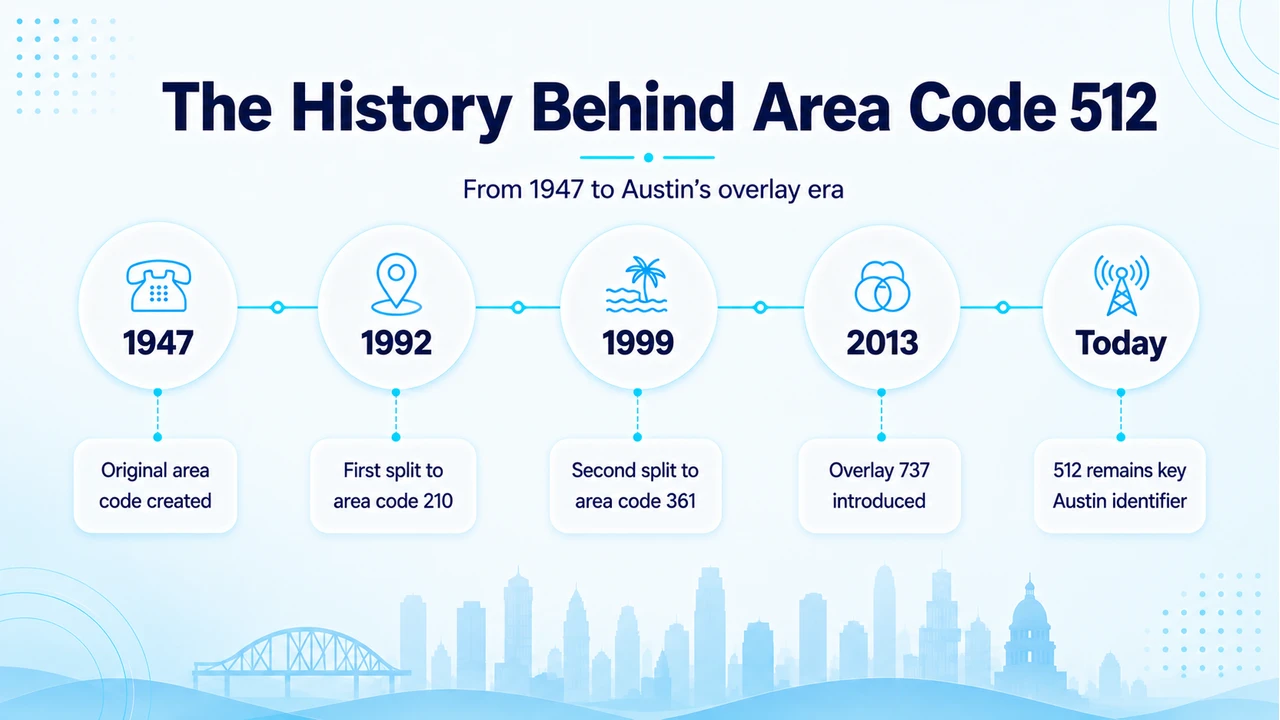
This code dates back to October 1947. It was one of the first area codes made when the North American Numbering Plan first launched. At the time it covered a huge stretch of south Texas. That included San Antonio, Corpus Christi, and the Rio Grande Valley.
That footprint shrank twice as demand grew. In 1992, San Antonio and the Rio Grande Valley split off into area code 210. Then in 1999, the coastal area around Corpus Christi split off again into 361. That left this code focused on Austin and the nearby hill country. By 2013, growth had caught up once more. Regulators added 737 on top of the same area as an overlay. They did this instead of splitting the region a third time. Every existing 512 number kept working unchanged. Ten-digit dialing became a must as a result. Two Austin firms a few blocks apart might now use different three-digit codes. Yet both still dial each other the same way.
512 Area Code Time Zone
Austin and the rest of the 512 area sit in the Central Time Zone. The region runs on CST (UTC−6) from early November through mid-March. It runs on CDT (UTC−5) the rest of the year. Much of the tech and university work in Austin follows CT hours. Because of this, teams calling from the East Coast should plan outreach before 5 PM ET. That gives them the best shot at reaching Austin offices before the day ends. West Coast callers have an easier window. CT sits only two hours ahead of PT.
Is a 512 Area Code Call a Scam?
Because area code 512 is so well known locally, scammers spoof it a lot. Reported scams include fake Social Security threats and bogus "you bought an iPhone" alerts. Others fake calls from the Texas Comptroller or the City of Austin. They ask for payment through gift cards or wire transfers. The FTC's National Do Not Call Registry FAQ explains how real firms should handle outbound calls. This makes it easier to spot the fake ones.
None of this makes the 512 area code itself unsafe. It just means a call demanding quick payment deserves a second look. Hang up. Look up the group on your own. Call back using a number you find yourself, not one the caller gives you. Firms running a real 512 line should use a STIR/SHAKEN-compliant VoIP provider. This way, recipients see a verified caller ID instead of a flagged number.
Why a 512 Area Code Number Boosts Business Credibility
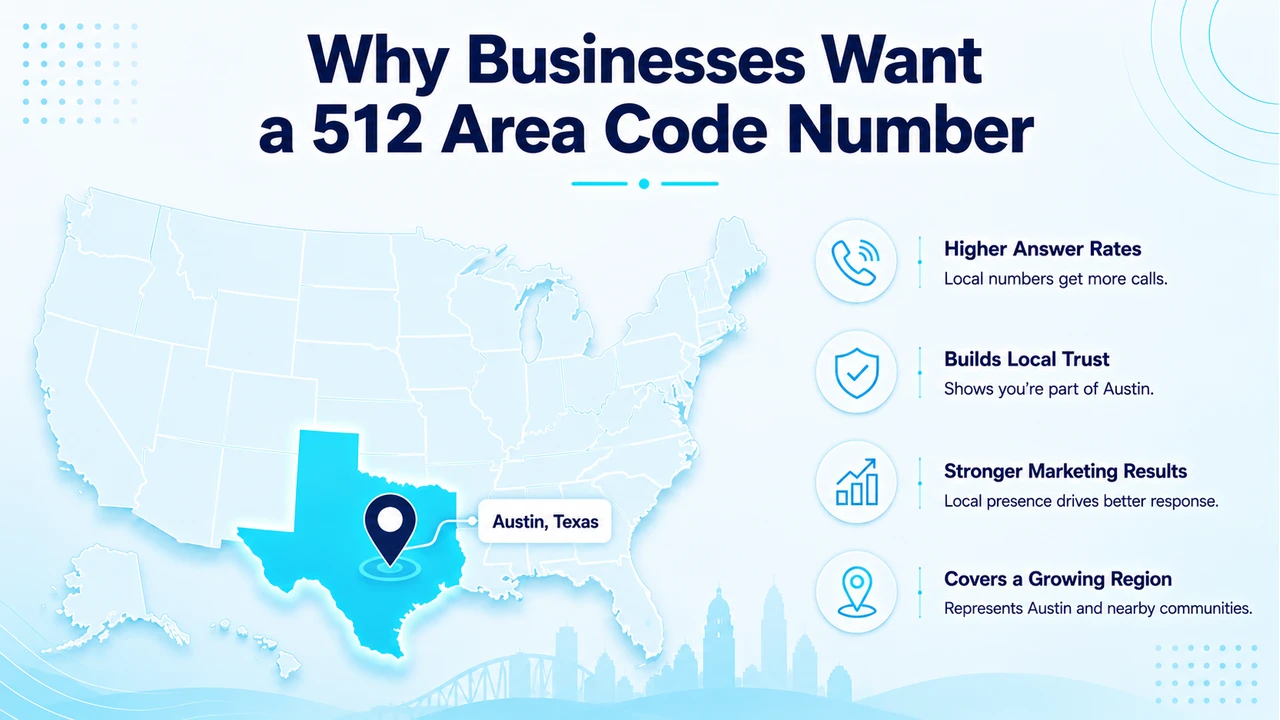
A 512 area code number shows that your business gets the Austin market. That holds true even if your team works from somewhere else. Local numbers earn stronger answer rates than unfamiliar toll-free digits. People are simply more willing to pick up a call that looks like it comes from their own city.
That trust carries into marketing too. Tech startups, health care practices, and service firms across the metro often list a local number on ads and search listings. It lifts response rates compared to an out-of-market prefix. Firms growing into other Texas markets often use this same local-first move. The 214 area code in Dallas is a common next step. The trust effect is not unique to Austin.
How to Get a 512 Area Code Number for Business
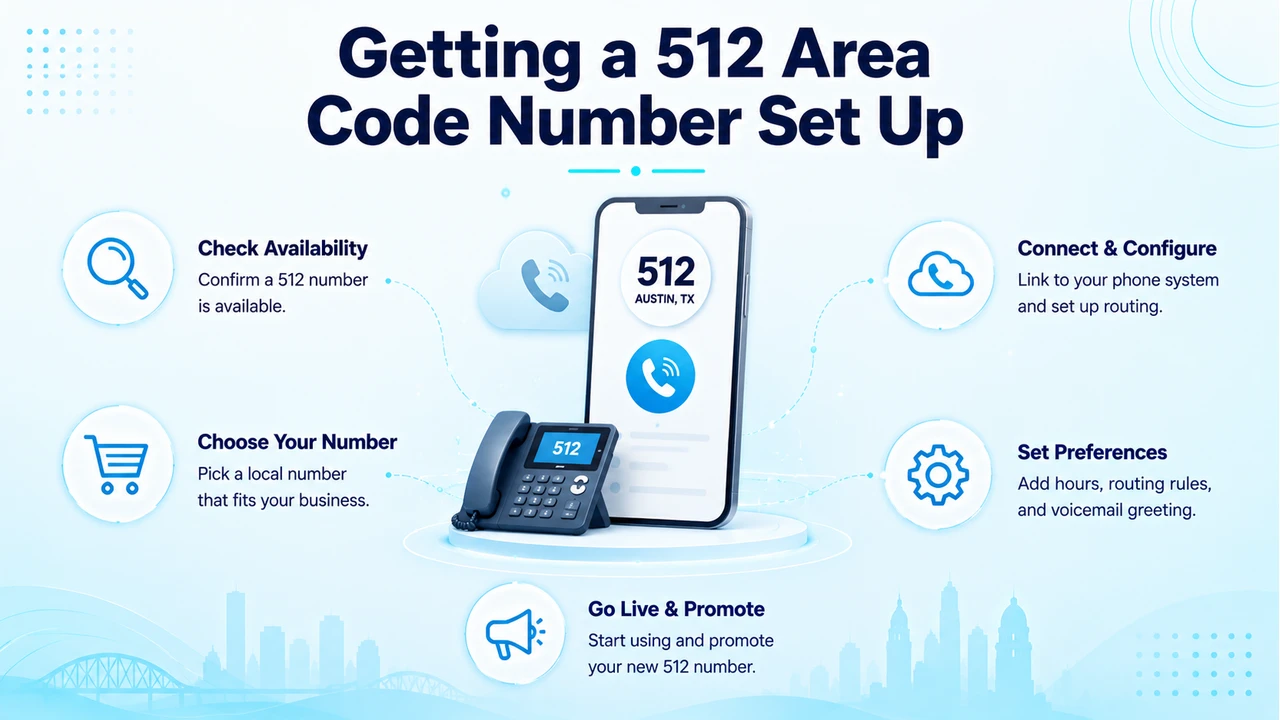
1. Confirm live availability with your provider. Check that it truly stocks Austin numbers. It should not just route calls through a shared toll-free line. 2. Reserve a number, or accept a suggested one. Simple digits are easier for callers to recall in a busy market. 3. Connect it to your phone system, VoIP app, or CRM. 4. Set business hours, routing rules, and a voicemail greeting. Send calls to phones, a softphone app, or a shared call queue based on team size. 5. Update your site, listings, and ads with the new number. 6. Port an old number if you need to. Local Number Portability rules let you move a line to a new provider without any loss of service.
Look for providers with 99.999% uptime, clear pricing, and reach across 150+ countries. Most providers finish setup the same day. Porting an old line adds just a few extra days.
Common 512 Business Number Challenges and Solutions
| Challenge | Solution |
|---|---|
| Legacy systems still dial 7 digits locally | Update stored numbers and dial-out rules to 10-digit format |
| High spoofing risk on a recognizable prefix | Use a STIR/SHAKEN-compliant provider for verified caller ID |
| Remote staff need a unified Austin line | Call forwarding routes any device while callers still see 512 |
| Confusing area code 512 vs. 737 for branding | Both cover identical territory — 512 carries stronger legacy recognition |
| Coordinating calls across CT and other zones | Use auto-attendant with after-hours voicemail-to-email |
Conclusion
Adding a 512 area code number is a small, low-risk move. It has a big effect on how Austin-area customers see your business. It will not fix a weak product or slow service. But it removes one of the easiest reasons a call goes unanswered. You may be opening a satellite office. You may be backing remote hires near the capital. You may just want your support line to sound local. Either way, this prefix carries nearly eight decades of trust to build on. Set it up with clear ownership and the right routing. It will keep quietly paying off.
FAQs
What cities does the 512 area code cover today?
It covers Austin and the surrounding Central Texas suburbs, including Round Rock, Cedar Park, Georgetown, San Marcos, and Kyle, after two geographic splits reduced its original 1947 footprint.
When was area code 512 created?
It was one of the original area codes assigned in October 1947, back when it covered most of south-central Texas, including San Antonio and Corpus Christi.
Is 737 the same as area code 512?
No. Area code 737 is an overlay added in 2013 that shares the same Austin-area territory rather than replacing it. Existing 512 numbers kept working, but the overlay made ten-digit dialing mandatory.
Can a business outside Texas get a 512 area code number?
Yes. Virtual number providers can issue one to any business and forward calls to whatever phone or system the team already uses, without requiring a physical office in Austin.
Are all calls from this prefix legitimate?
Not automatically. Scammers spoof local numbers, including this one, to appear trustworthy. Verify unexpected calls about payments, benefits, or legal threats independently before responding.
How long does it take to activate a 512 number?
Most VoIP providers turn on a new 512 number within minutes of purchase. Porting an old number from another carrier can take a few business days instead.