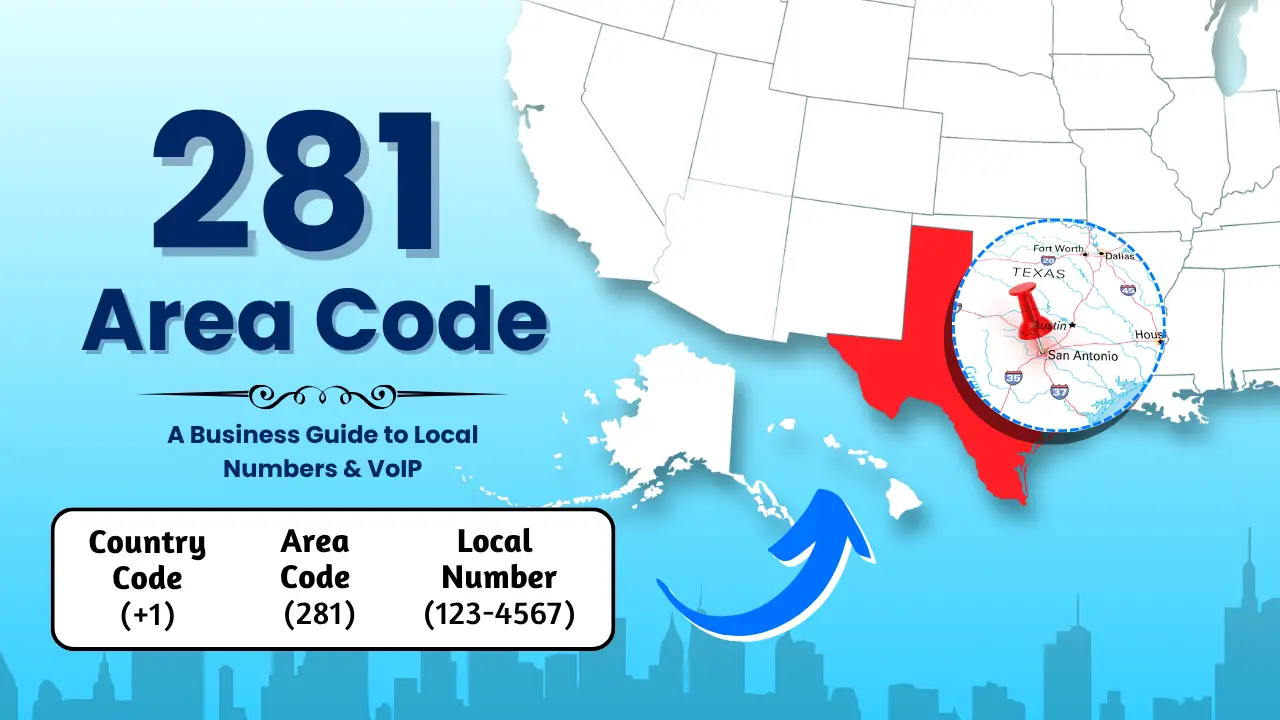
Houston's economy rewards firms that show up local. A 281 area code number is one of the simplest ways to do it.
Introduction
The 281 area code is more than a dialing prefix. For any firm working in Houston, it is a business asset. It was carved out of the old 713 code as the city grew.
This guide covers where 281 reaches, how it came about, and what it does for you through modern VoIP.
What is Area Code 281?
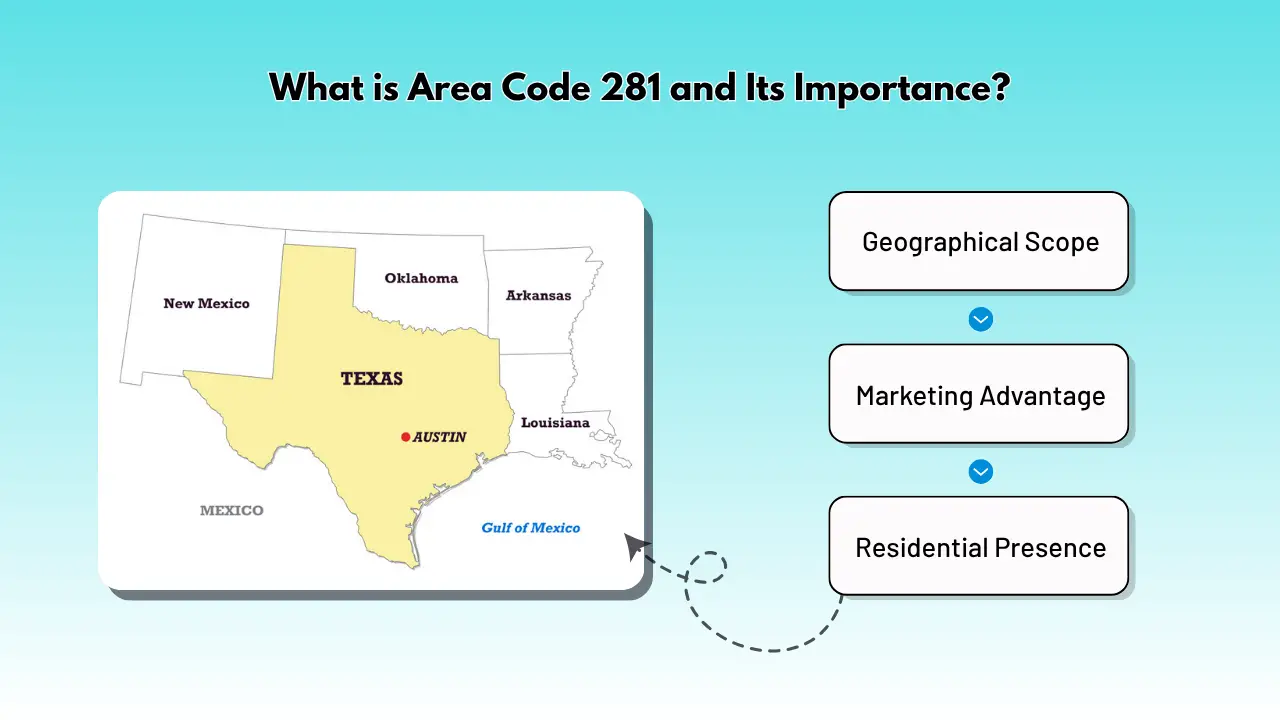
Area code 281 covers Houston and its suburbs across Harris, Fort Bend, and nearby counties. It split from 713 in 1996 to meet demand. Today it shares an overlay with 713, 832, and 346. Every local call needs all ten digits.
Key facts:
- Where it reaches: Houston plus suburbs in Harris, Fort Bend, and nearby counties
- How it started: split from 713 in 1996 as the region grew
- Overlay: shares its ground with 713, 832, and 346
- Dialing: ten digits for every local call
Why It Matters for Business
- Local trust: a 281 number reads as local, so more people pick up
- Market reach: it supports regional ads and local SEO through steady NAP data
- Modern operations: VoIP frees the number from any one address
- Professional image: calls carry your brand, not a personal mobile
History, Coverage, and Reach
How It Evolved
The 713 area code once served all of Houston. Growth forced three changes:
- November 1996: 281 arrives, covering Houston's suburbs
- January 1999: 832 arrives as an overlay on the same ground
- July 2014: 346 is added as growth continues
Where It Reaches
The 281 code covers a large slice of Southeast Texas.
Counties: Harris, Fort Bend, Montgomery, Brazoria, Galveston, Chambers, Liberty, and Waller.
Cities: Houston, Sugar Land, Katy, Pearland, League City, Pasadena, The Woodlands, Spring, Cypress, and Kingwood.
That is one of the busiest economies in the country. A 281 number reads as local to all of it.
Why Firms Choose 281
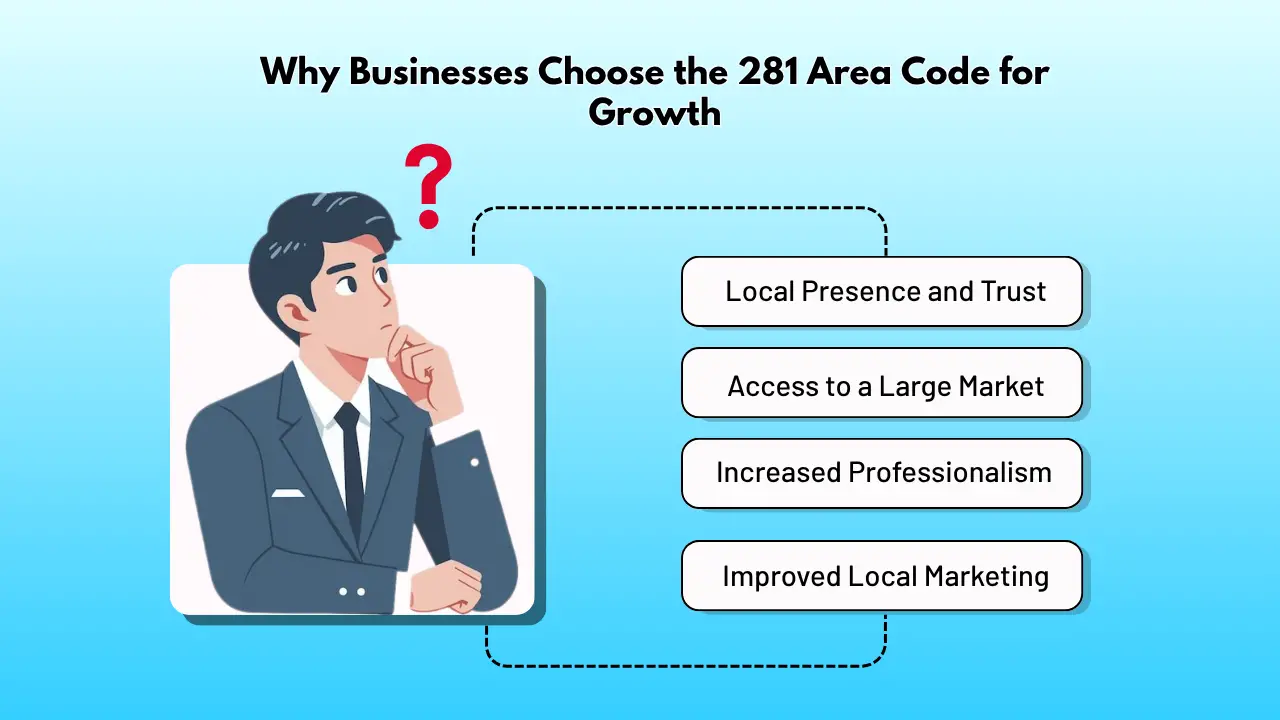
Local Trust
People answer numbers they recognize. Researchers call it the local halo effect: a familiar prefix shrinks the distance between you and the person you dialed. A 281 number lifts pickup rates against out-of-state or toll-free numbers. On a big outbound team, that gap compounds fast.
Better Marketing
- Stronger campaigns: local numbers beat non-local ones in regional ads
- Higher conversion: A/B tests often favor local over toll-free
- Local SEO: the same number across your site, directories, and Google Business Profile keeps NAP data clean
Day-to-Day Gains
- Work anywhere: answer 281 calls on any device with a connection
- Real features: auto-attendant, IVR, call queues, recording, and voicemail-to-email come standard
- One identity: every call ties back to the business
- Cheap growth: add lines without hardware or a technician visit
What the Overlay Means
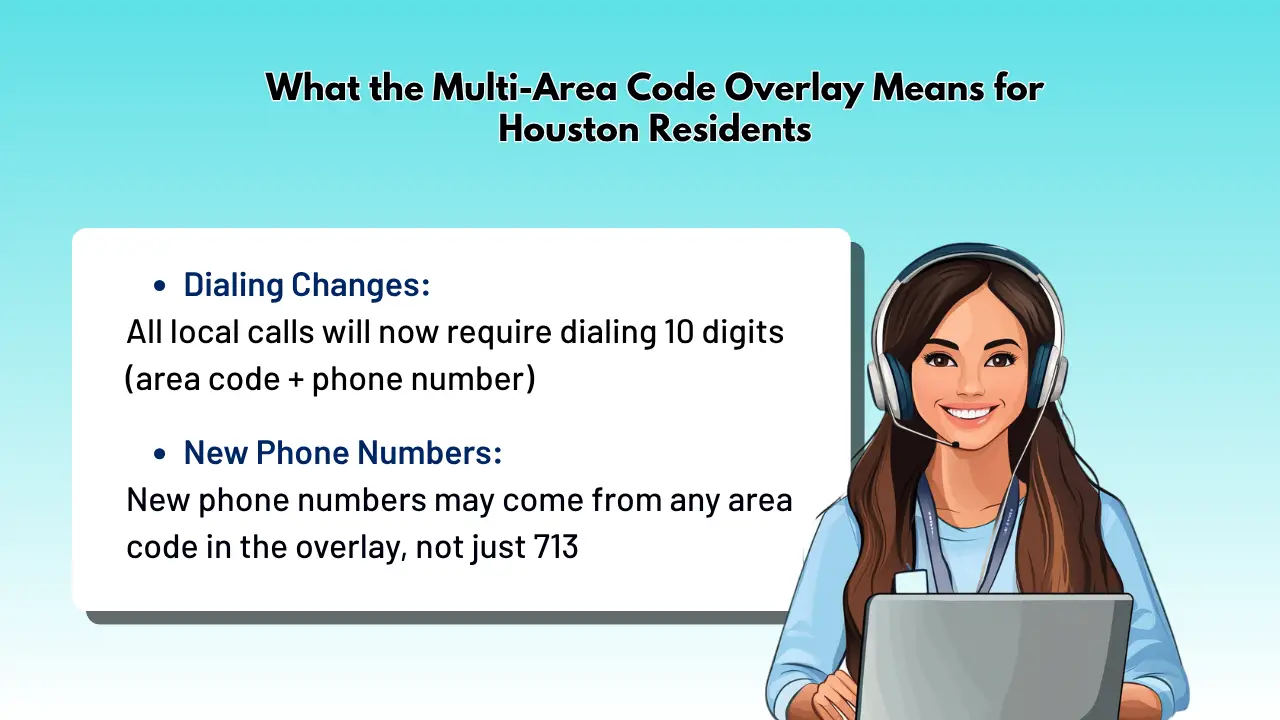
Houston runs four codes over one map: 281, 713, 832, and 346. That means:
- They cover the same ground. They are not separate zones.
- Every local call takes ten digits, whichever code you hold.
- A new number may come from any of the four.
The numbering administration framework coordinates how codes are split, overlaid, and handed out.
For your business, all four read as equally local. So:
- Print the full ten-digit number on everything
- Tell staff that local calls need ten digits
- Expect customers to treat any of the four as local
Getting a 281 Number
Two routes exist, and they run on different clocks.
A new number is the fast path. You pick a 281 number from available stock, set your routing, and take calls the same day. Nothing physical ships, and no technician visits.
Porting an existing number takes longer. You keep the number customers already know, but the losing carrier has to release it. Plan for one to four weeks. A few things speed it up:
- Match the billing name and service address to the losing carrier's records exactly
- Settle any outstanding balance before you file
- Keep the old line active until the port completes
- Port outside your busiest season if you can
Most firms do both. They port the main line customers already dial, then add fresh 281 numbers for new teams, campaigns, or departments. Tracking numbers per campaign is easy once the routing is software.
How Virtual 281 Numbers Work
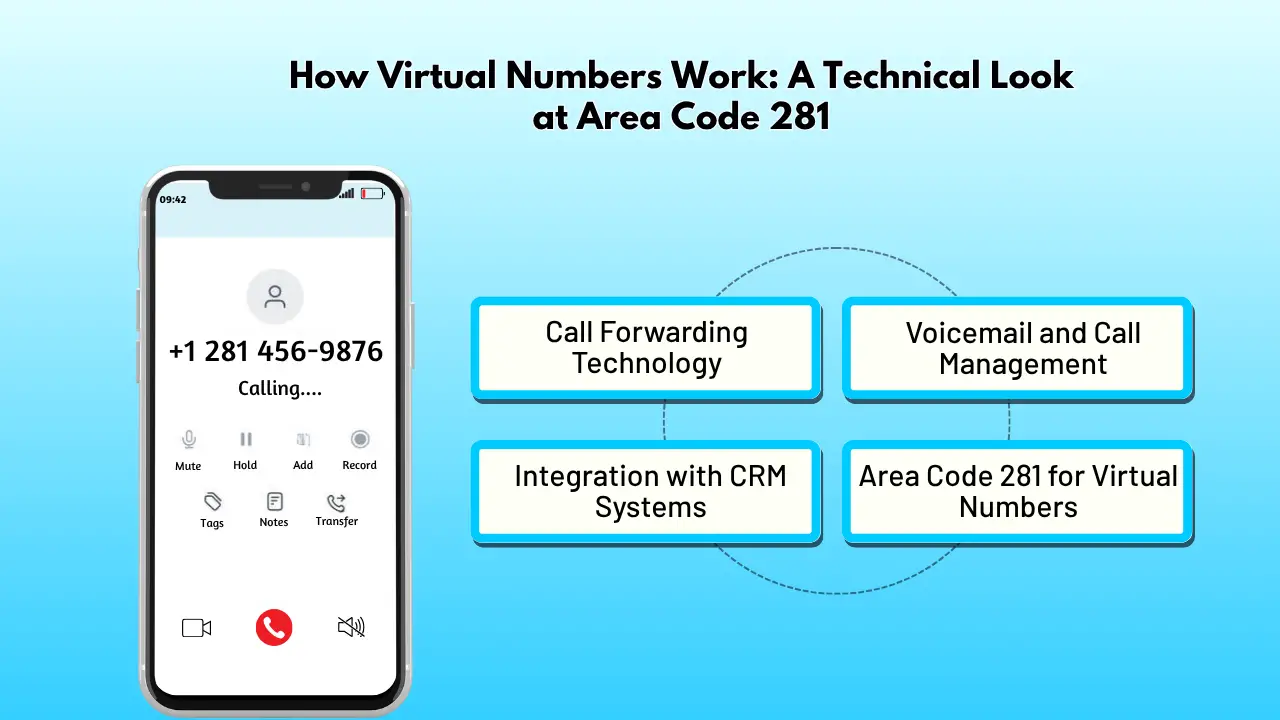
VoIP turns your voice into data and sends it over the internet. That changes three things:
- Place stops mattering. Calls route by IP, so a 281 number rings on any connected device.
- Cost drops. IP networks cost far less to run than copper lines, and there is no hardware to buy.
- Scale gets easy. Adding lines or changing routing takes minutes, not weeks.
How Rozper Delivers It
- Numbers: 281 numbers are issued inside the platform, with no wait and no technician
- Routing: set rules, business hours, and IVR menus from your online portal
- Features: voicemail-to-email, call recording, IVR, CRM sync, and AI transcription
Choosing a Provider
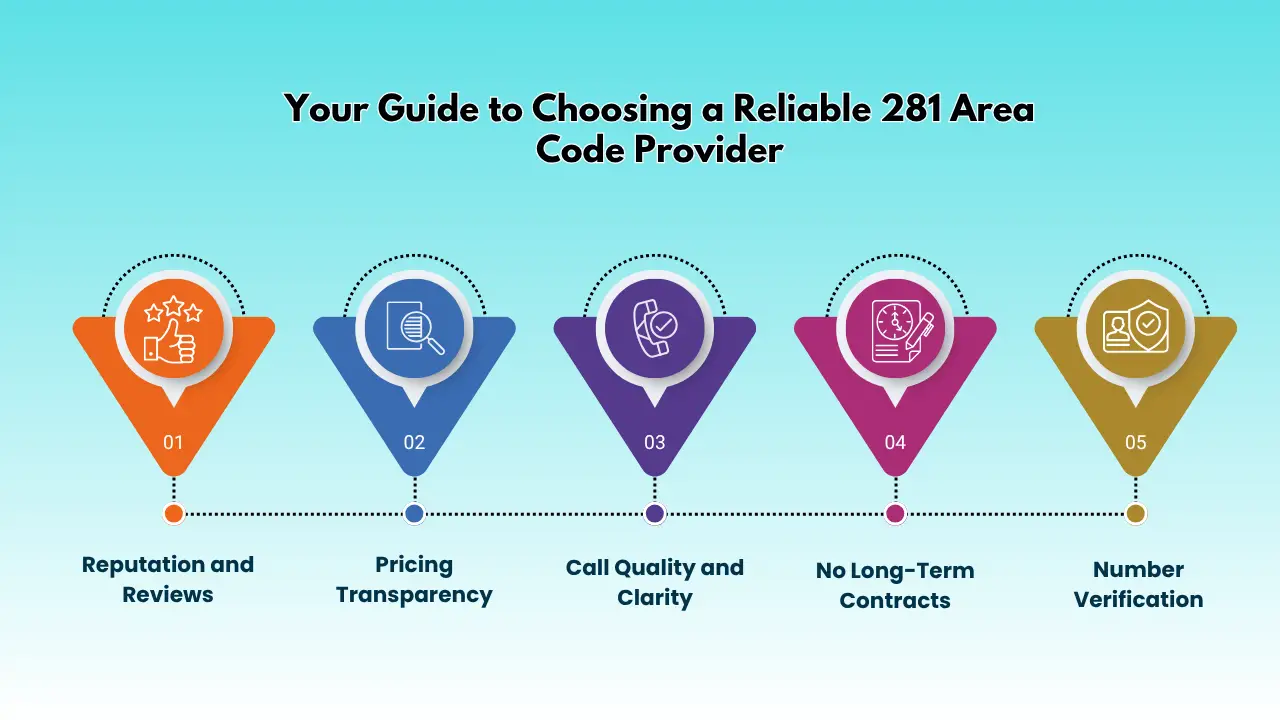
Reliability
- Uptime: look for 99.99% or better in writing. Less is a real risk for a business line.
- Voice quality: HD codecs like G.722 and Opus cut jitter and delay
- Failover: spread-out infrastructure keeps your number reachable when something breaks
Features
- Must-haves: auto-attendant, voicemail-to-email, forwarding, recording, ring groups, queues
- Nice to have: multi-level IVR, CRM links, live analytics, AI transcription, sentiment
- API access: for teams that need custom workflows
Pricing
- Ask for clear pricing: setup fees, per-minute rates, and add-ons
- Judge on value, not the lowest sticker. Reliability and support shape the real cost.
- Count the gains from CRM sync and analytics in your total
Support
A business line breaks at the worst moment. Ask how support is staffed, what the response time is by severity, and whether you get a named contact. Then ask a current customer what a real outage looked like. Sales will always say support is excellent.
Rozper for Houston Businesses
Your provider shapes how well your Houston presence works. Rozper is one option, with 99.999% uptime and 150+ countries on one platform.
Local Touches
- Custom greetings: name Houston or a specific neighborhood
- Time-based routing: send calls by Central Time business hours
- Local caller ID: outbound calls show your 281 number, not a personal one
Analytics
- Peak times: see when Houston customers call and staff for it
- Call length: learn which call types take longest
- Caller location: see where in the metro your callers sit
- Missed calls: track them and fix the routing behind them
Integrations
- CRM sync: Salesforce, HubSpot, and Zoho log every call to the right contact
- Daily tools: connect the phone system to what your team already uses
- Zapier and webhooks: 300+ more integrations for custom workflows
Conclusion
The 281 area code is a direct line into the Houston market. Paired with a solid VoIP provider, a 281 number stops being a string of digits and starts shaping how customers see you.
Whether you are new to Houston or deepening a presence you already have, the setup takes minutes and pays off from day one.
FAQs
What is area code 281, and how does it relate to 713, 832, and 346?
All four cover the same ground in metro Houston under one overlay. They are not separate regions. Houston customers read any of the four as local.
Which parts of Houston does a 281 number cover?
Southeast Texas: Harris, Fort Bend, Montgomery, Brazoria, Galveston, Chambers, Liberty, and Waller counties. Major cities include Houston, Sugar Land, Katy, Pearland, The Woodlands, League City, and Pasadena.
Do I need an office in Houston to use a 281 number?
No. A virtual 281 number routes to your team wherever they are, on any device with a connection. You get the Houston presence without the lease.
How does a 281 number help marketing and trust?
The local halo effect. Houston prospects answer a familiar 281 number more often than an out-of-state or toll-free one. In regional ads, local numbers beat toll-free on both answer rate and conversion.
What should I look for in a 281 VoIP provider?
Uptime of 99.99% or better, HD voice, real features like IVR and CRM sync, and clear pricing. Rozper adds Houston-specific routing, local caller ID, and analytics built around the metro.
Can I keep my current Houston number?
Yes. Porting moves it to the new provider and customers notice nothing. Expect one to four weeks, and keep the old line active until it completes. Make sure the billing name and address match the old carrier's records, or the request bounces.
How fast can a new 281 number go live?
Same day. You choose a number, set routing and business hours, and start taking calls. There is no hardware to ship and no site visit, because the whole setup is software.
Can my team answer 281 calls from outside Texas?
Yes, and this is the main reason firms pick a virtual number. Calls route to any device with an internet connection, anywhere. Callers see a Houston number and reach whoever is on duty, wherever they sit.
Will a 281 number work for outbound sales?
It usually helps. Houston prospects answer a local prefix more often than an unknown one, and your team's outbound calls show the 281 number instead of a personal mobile. You can also run separate numbers per campaign and compare which one performs.
A 281 number is a two-minute decision with a long-term return.
Get your Houston number → rozper.com
Call forwarding · Voicemail-to-email · CRM sync · AI transcription · 24/7 expert support