Introduction
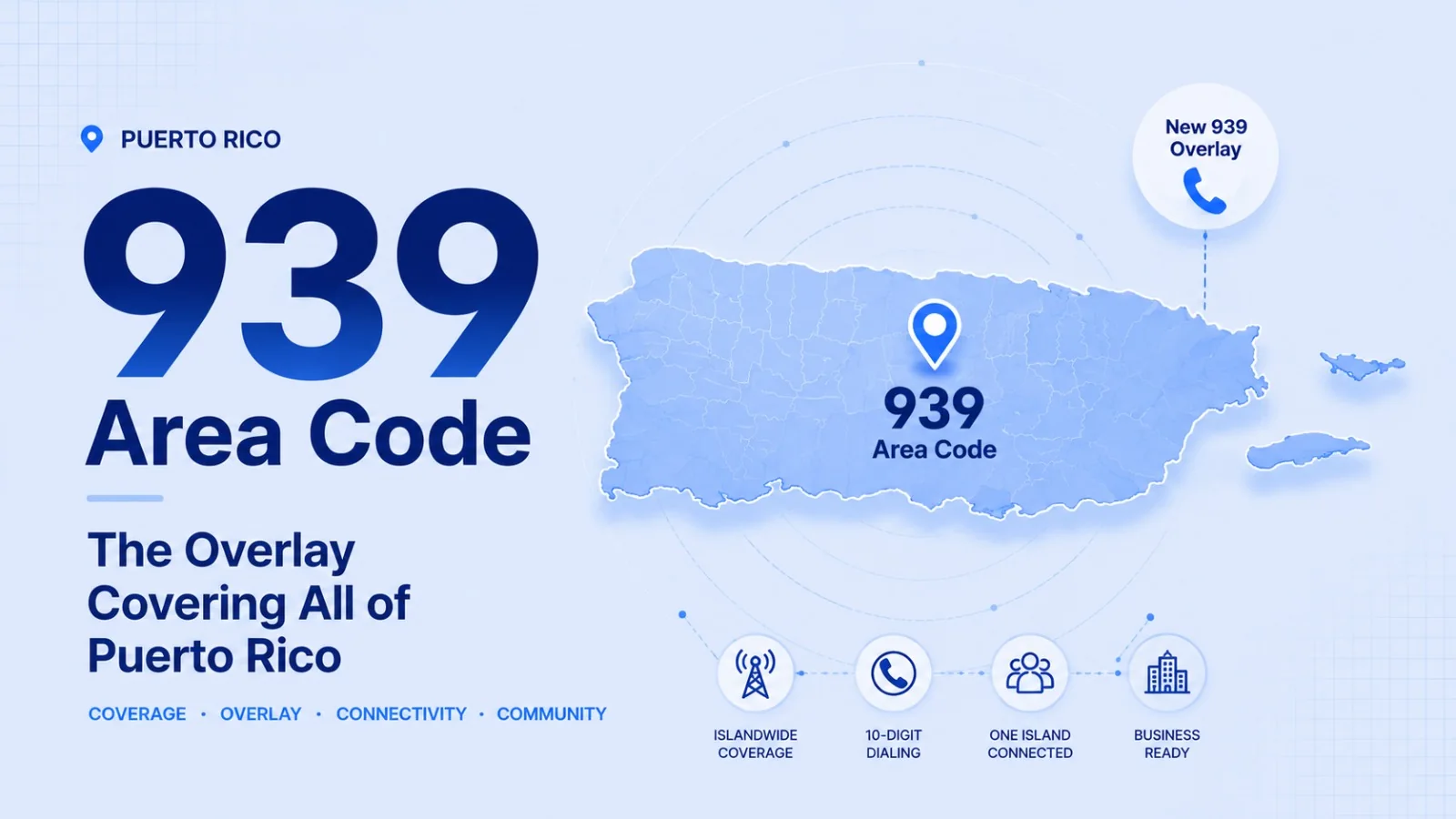
The 939 area code covers the entire island of Puerto Rico, stacked directly on top of the older 787 code rather than replacing it. That distinction trips up a lot of people, since neither prefix maps to a specific city or region the way most U.S. area codes do. This guide covers where 939 reaches, how it came to exist, the dialing rules that come with an overlay, and what a local Puerto Rico number means for a business today. Understanding the overlay setup first makes every other detail about this code much easier to follow.
Key Takeaways:
- The 939 area code overlays the entire island of Puerto Rico, covering the same territory as 787.
- It went into service on September 15, 2001, just five years after 787 was created.
- Puerto Rico runs on Atlantic Standard Time year-round, with no daylight saving time changes.
- All calls within the overlay require 10-digit dialing, even between two 939 numbers.
One Island, Every Municipality: Where 939 Reaches
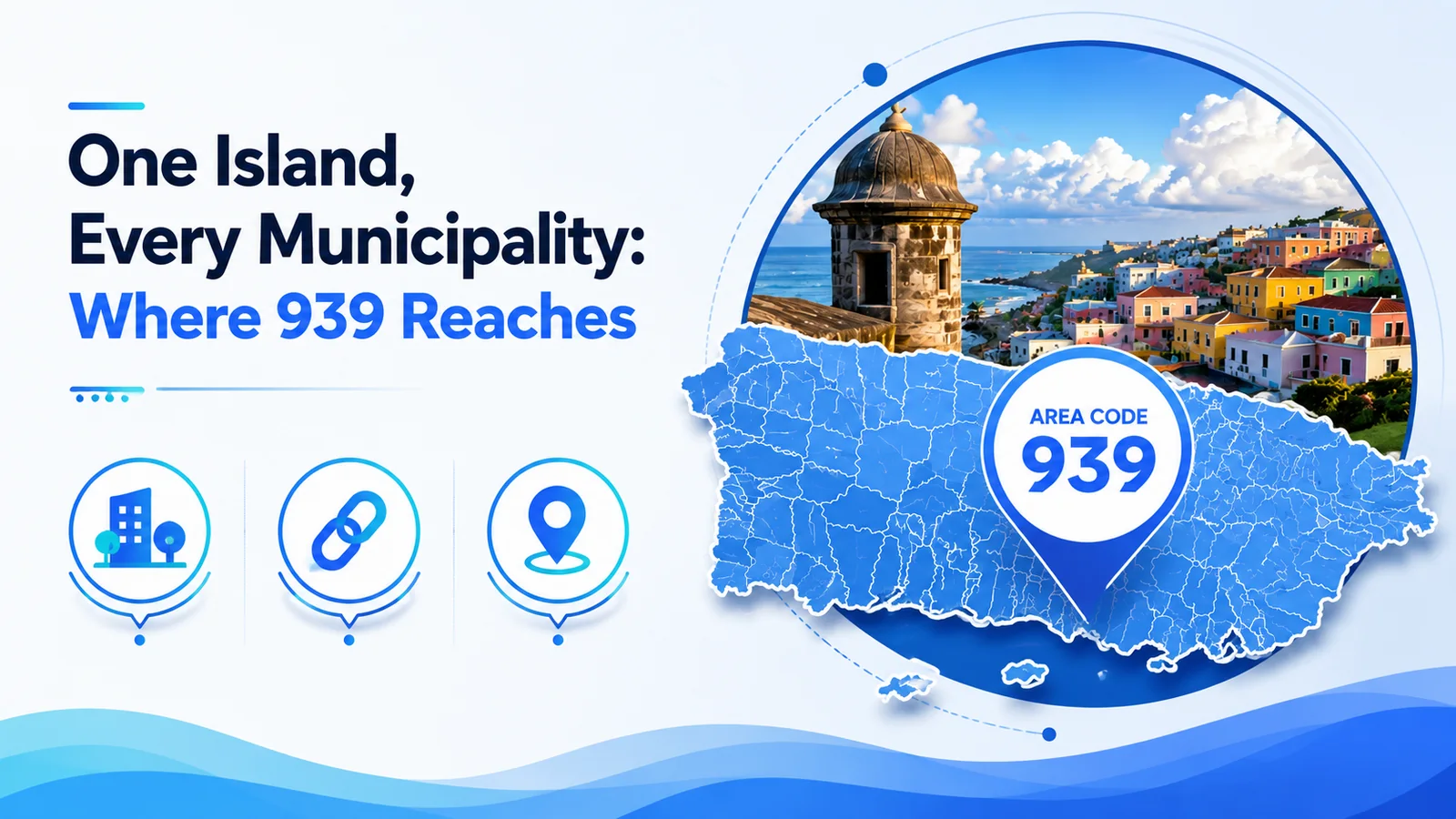
The 939 area code does not belong to any single city, suburb, or county. It covers the whole commonwealth of Puerto Rico, all 78 municipalities, the same footprint as 787. San Juan is the largest population center in that footprint, followed by Bayamón, Carolina, Ponce, Caguas, and Mayagüez, but a 939 number could belong to a business or resident anywhere on the island, from the metro area to smaller towns along the coast. Businesses researching mainland comparisons sometimes also look at the how to choose a local area code guide when deciding between an island-wide prefix and a single-city number.
- San Juan — the capital and the island's commercial and financial hub
- Bayamón and Carolina — dense San Juan metro-area municipalities
- Ponce — the largest city on the island's southern coast
- Caguas — a central Puerto Rico commercial center
- Mayagüez — the anchor city of the western coast
From 809 to 787 to 939: Puerto Rico's Two-Step Split
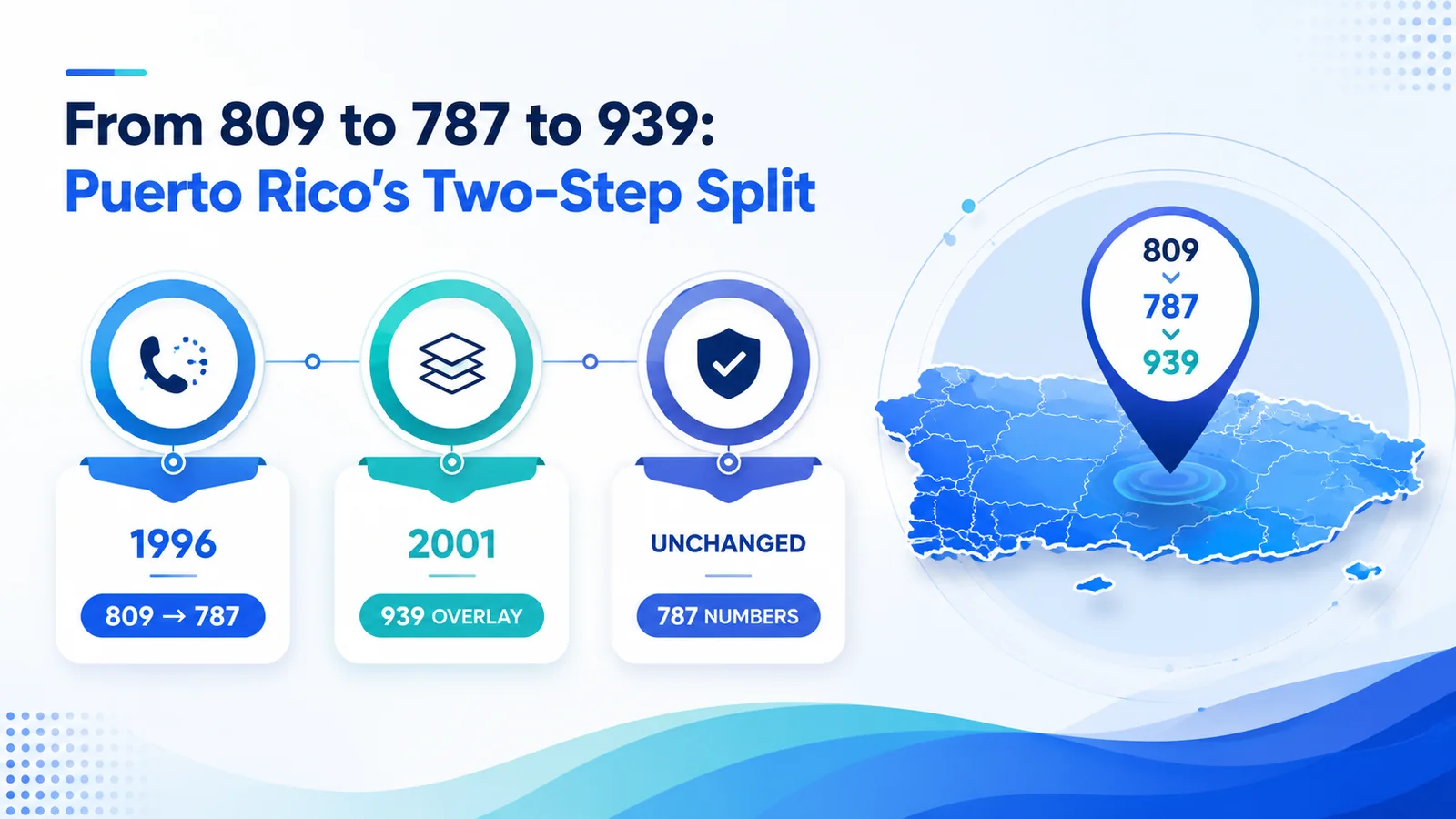
- Before 1996 — one code, 809, covered Puerto Rico along with several other Caribbean territories.
- March 1, 1996 — regulators split off the 787 area code to serve Puerto Rico on its own, separating it from the wider Caribbean numbering plan.
- September 15, 2001 — just five years later, rapid growth in cell phones and dial-up internet lines pushed 787 toward exhaustion, so regulators added 939 as an overlay rather than splitting the island again.
An overlay works differently than a split. Instead of redrawing a map and forcing some existing customers to change their number, every new phone line assigned after the overlay date could receive either 787 or 939, while existing 787 numbers kept working exactly as they always had.
Why San Juan Businesses Still Want a Local 787/939 Number
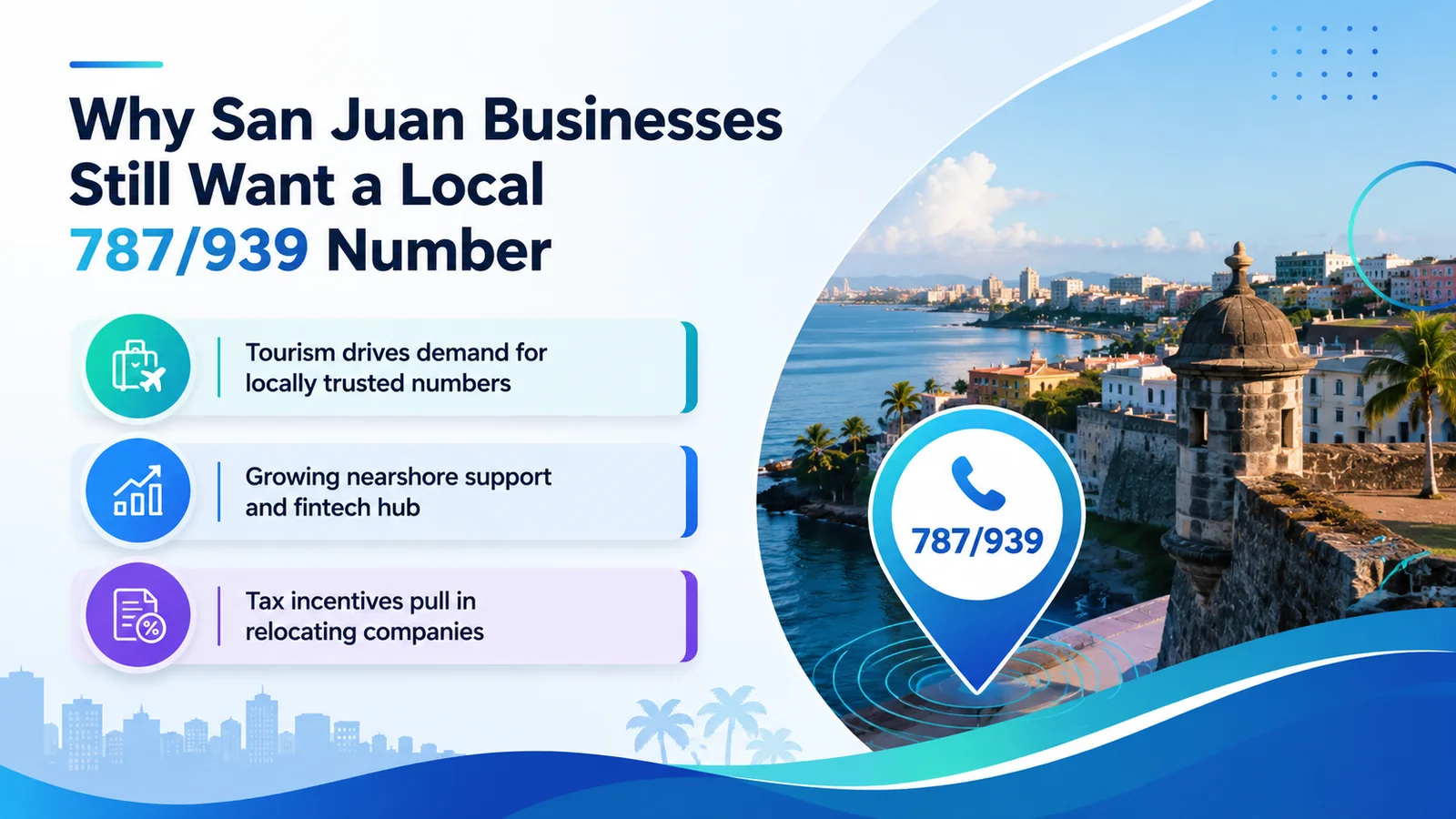
Tourism and Hospitality Demand Local Trust
Puerto Rico's tourism sector drives constant demand for phone lines that read as local, since visitors and vacation-rental guests are far more likely to answer or call back a 787 or 939 number than an unfamiliar mainland prefix.
A Growing Nearshore and Remote Services Hub
Puerto Rico has become a popular base for nearshore customer support, fintech, and remote-first companies serving both U.S. and Latin American clients. A local 939 area code number signals genuine island presence to customers on both sides of that market.
Tax Incentives Are Pulling in New Companies
Puerto Rico's business tax incentive programs have drawn a steady stream of relocating companies and entrepreneurs in recent years. Most of them need a working phone presence before they have secured permanent office space, and Rozper's virtual number setup lets a team claim a 939 number the same day it decides to expand.
Ten Digits, Always: Dialing Rules for the 939 Overlay
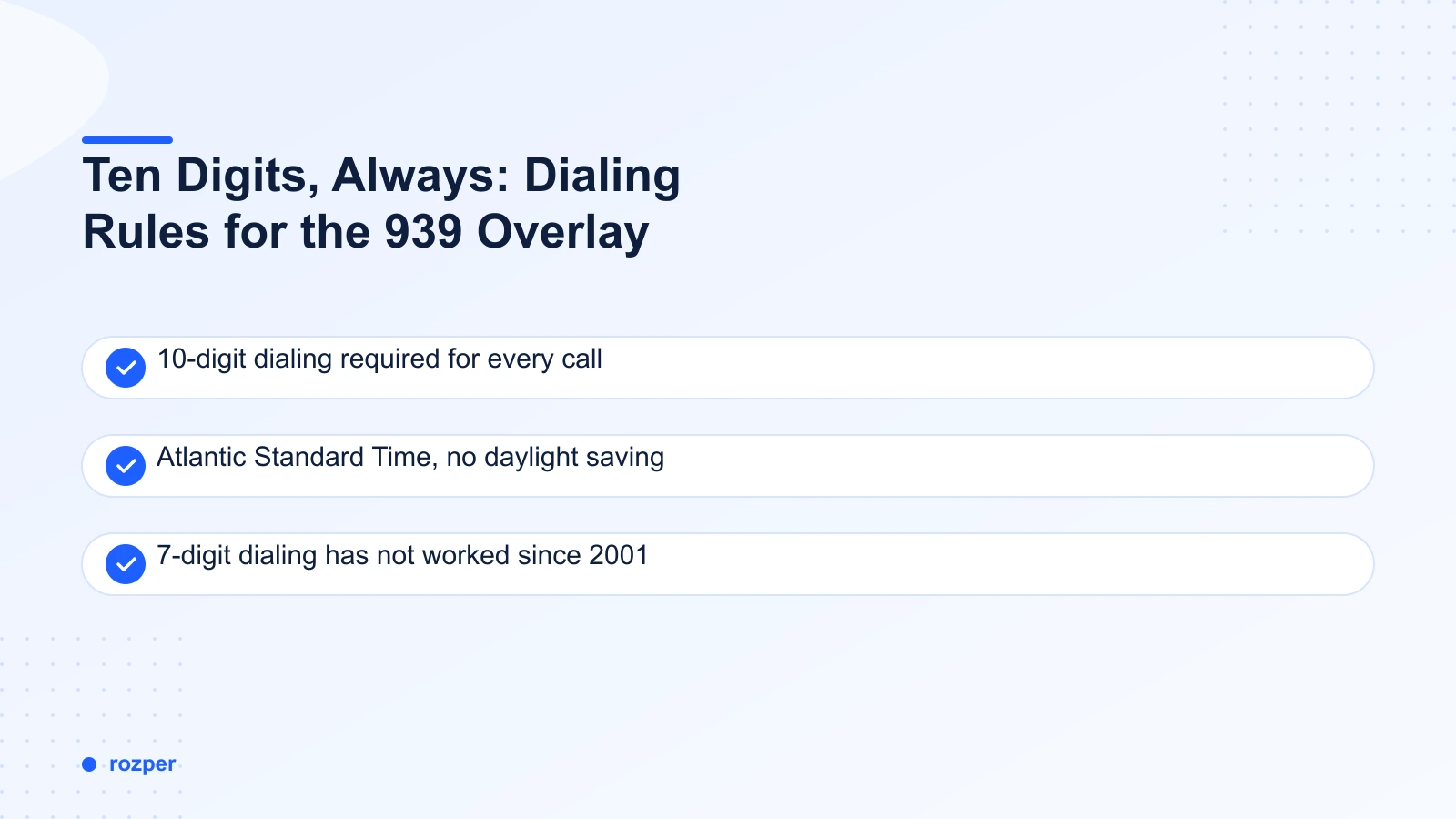
Puerto Rico runs on Atlantic Standard Time year-round and does not observe daylight saving time, which puts the island one hour ahead of U.S. Eastern Time for most of the year and level with it during Eastern Daylight Time months. Because 939 is an overlay rather than a geographic split, the island moved to mandatory 10-digit dialing back in 2001, and that rule has never changed since.
- Local calls require the full 10-digit format, even between two 787 numbers or two 939 numbers
- International callers dial +1-939-XXX-XXXX
- Seven-digit dialing has not worked on the island since the overlay went live
- Eastern Time contacts sit one hour behind Puerto Rico for most of the year
- Pacific Time contacts sit four hours behind, so late mornings work best for outreach
Anyone saving a 939 area code contact should always store the full area code, since assuming a caller is on 787 just because they are calling from Puerto Rico is no longer a safe bet.
Is That 939 Call Real? Spoofing and Scam Patterns to Know
The 939 area code is genuine and assigned to real Puerto Rico numbers, but scammers spoof it just like any other active prefix. Fraud reports tied to the island's numbers cluster around a handful of repeat patterns.
- Fake government or FEMA-relief impersonation calls following hurricane season alerts
- Bogus utility or electric-authority disconnection threats timed around bill due dates
- Robocalls pitching vacation timeshares to numbers that never inquired about one
- One-ring missed calls designed to bait an expensive international callback
Under FCC guidelines, carriers must authenticate outbound caller ID through STIR/SHAKEN, so a legitimate local number still carries real weight even as spoofing attempts continue across the Caribbean numbering plan. Providers such as Rozper apply this authentication automatically, which matters for any business calling clients who have grown wary of unfamiliar island numbers.
939 vs. 787: Same Island, Two Different Prefixes
- 787 — the original Puerto Rico code, assigned since 1996, still the more commonly recognized prefix islandwide
- 939 — the 2001 overlay, covering the identical territory and assigned to newer lines
- Neither code maps to a specific city — both can belong to a number anywhere from San Juan to Mayagüez
- A future third overlay is possible as demand grows, following the same pattern seen in dense mainland metro areas
Because 787 and 939 numbers ring identically to callers, picking between them mostly comes down to availability rather than branding, unlike a mainland choice between two genuinely different regional codes. For a business set on the island's most recognized prefix, checking the 787 area code guide first is worth the extra step before settling for whichever number a provider has open.
Claiming a 939 Number in Four Steps
- Pick a provider with live Puerto Rico inventory, since not every carrier maintains open blocks in both 787 and 939.
- Choose a number format that fits your brand, whether a standard local number or a memorable vanity option.
- Set up call routing to mobile phones, softphones, or a shared team queue so guests, clients, or support tickets never go unanswered.
- Turn on business SMS for booking confirmations, appointment reminders, and customer updates.
Most providers activate a new line in under fifteen minutes, and Rozper backs its numbers with 99.999% uptime and coverage across 150+ countries, which suits companies coordinating between island staff and mainland or Latin American teams. Locking in a 939 area code puerto rico number now means a business never has to explain a mismatched prefix to a customer who expects to hear the island in the caller ID.
Conclusion
The 939 area code is not a new region carved off the map. It is the overlay that has shared Puerto Rico's entire footprint with 787 since September 2001, five years after 787 itself split off from the old Caribbean-wide 809 code. Because it overlays rather than replaces, every call on the island now requires 10-digit dialing, and a 939 number carries exactly the same local weight as a 787 one. Understanding that history helps any business or resident treat both prefixes as equally native to Puerto Rico.
The island's tourism industry, nearshore services sector, and incentive-driven relocations keep demand for local numbers strong in both area codes. Rozper makes claiming a Puerto Rico number quick, with setup measured in minutes rather than weeks. A local line signals genuine island presence in a market where that trust is hard to fake. Get your 939 number activated now, and sound like you are already there.
FAQs
What cities does the 939 area code cover?
It covers the entire island of Puerto Rico, all 78 municipalities, including San Juan, Bayamón, Ponce, Caguas, and Mayagüez, the same footprint as the 787 area code.
Is 939 a split from 787, or something else?
It is an overlay, not a split. Introduced in 2001, 939 shares the exact same territory as 787 rather than taking over a separate region.
When was this Puerto Rico prefix created?
Regulators put the 939 area code into service on September 15, 2001, five years after 787 was created from the old 809 Caribbean code in 1996.
How do I dial a number in this overlay zone?
Every call needs the full 10-digit format, area code included, even for calls between two numbers that share the same prefix.
Is a 939 area code call safe to answer?
The prefix is legitimate, but scammers spoof it for fake government-relief, utility, and timeshare calls. Verify unexpected callers independently.
What time zone does Puerto Rico use?
It runs on Atlantic Standard Time year-round, since Puerto Rico does not observe daylight saving time.
How much does a 939 virtual number cost?
Most providers bundle a 939 number into a monthly plan rather than charging a separate number fee, with routing and SMS included.
Should I get a 787 or 939 number for my business?
Both carry equal local weight on the island, since callers cannot tell them apart by reputation. Availability with your chosen provider usually decides which one you get.