Introduction
Should a new office use a number that matches its new city? Or should it keep the number from headquarters? That question trips up more expansion plans than it should. Get it wrong, and a customer sees a strange prefix. They let the call ring out. The right local area code shapes how fast a new market starts picking up the phone.
Why This Prefix Builds Trust Before the First Hello
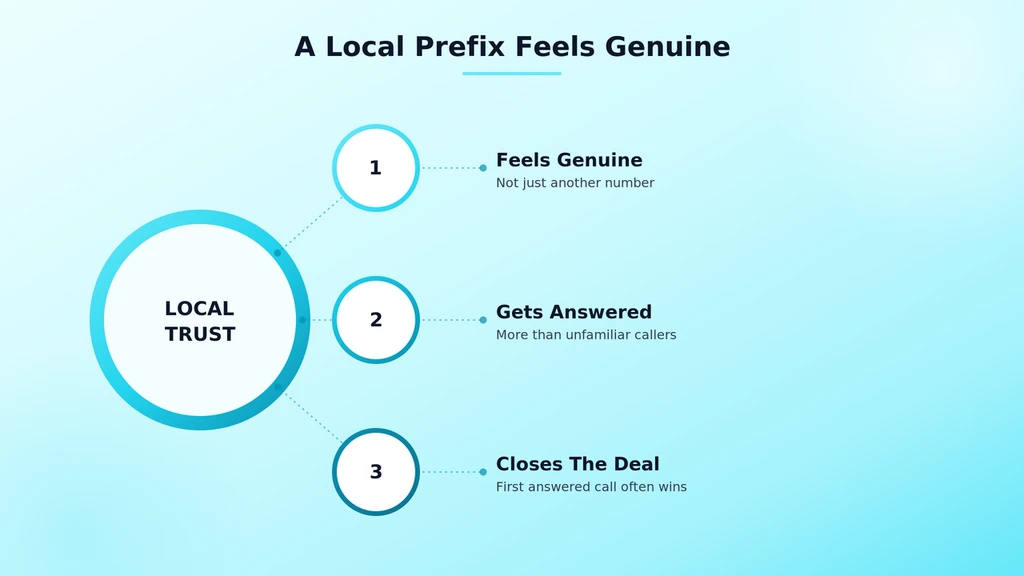
A local area code tells customers something a toll-free number never can. It shows a real, close tie to the community. Shoppers and clients in a new market answer a familiar prefix far more often. A strange one reads as coming from somewhere else. That first answered call is often the line between a closed deal and a missed one.
This effect grows for companies opening in several cities at once. Take a logistics firm launching offices in three states. It gains from using a distinct local area code in each region. One central number reads as unfamiliar in two of the three markets.
Research the Market Before Picking a Prefix
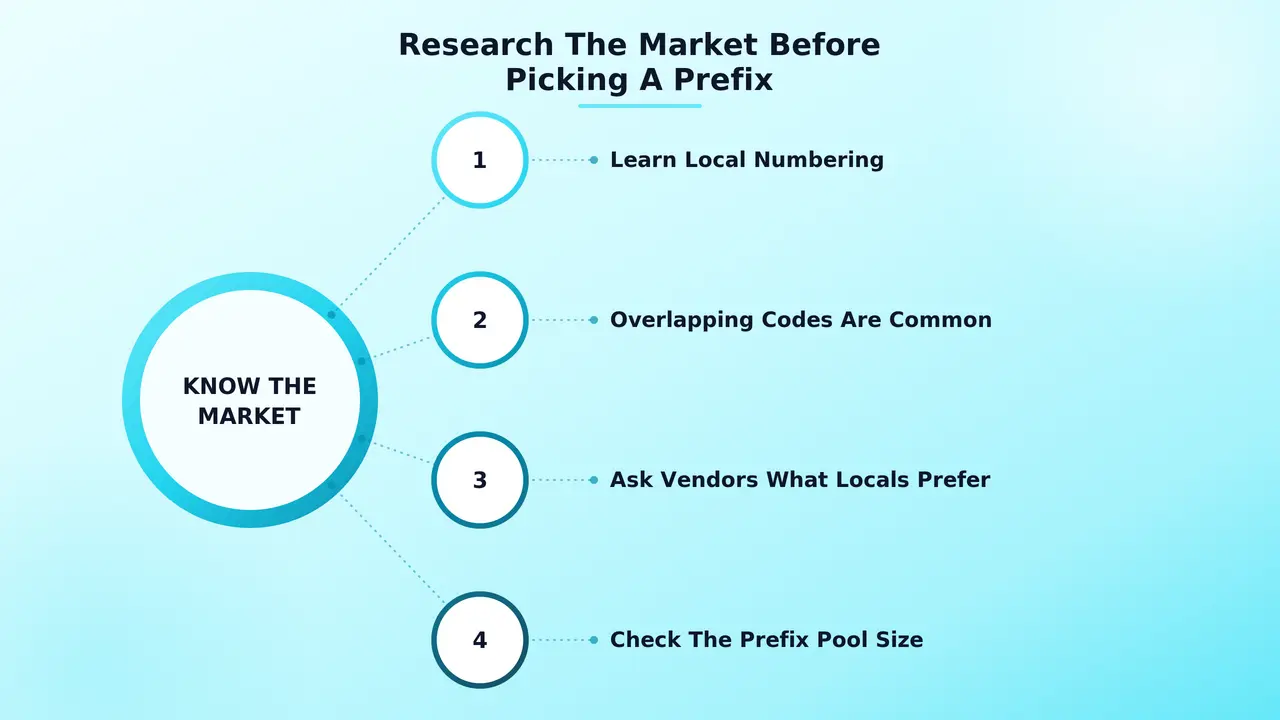
Before you commit to any number, learn how the target market's numbering works. Some cities use a single local area code with plenty of room left. Others already share an overlay between two or three codes. That changes how customers read each prefix inside the same city.
Check whether the target market has more than one code serving the same area. In those markets, customers care less which local area code a business uses. It just needs to be a recognized in-region code, not something clearly out of state.
Talk with a few vendors or partners already working in the target market. They can surface details no numbering database will show. They may know which prefix locals link to downtown versus the outer suburbs. They may know if an older code still carries a bad name from a past robocall wave.
A quick check on how many numbers a provider has left in a prefix is worth the extra time too. A pool running low can quietly shift new requests to a newer overlay code. That can happen no matter which option a business first wanted.
Matching a Prefix to What Customers Expect
Each industry has its own needs here. A neighborhood law firm or clinic gains a lot from a local area code. Clients want someone rooted in their community. A national online brand's support line matters far less. Buyers there rarely think about the number at all.
Service firms that send techs, workers, or field reps into a city should treat this as a must. Homeowners often screen odd numbers before they answer. A local prefix raises the odds that a job call gets picked up the first time.
Real estate offices feel this the most. Buyers and renters comparing agents in a new city often skip calls from numbers that don't match. They do this before they hear the pitch. Clinics moving into a new region face a similar test. Patients booking visits are far more likely to answer a number that matches their own city.
Overlay Codes and Choosing Between Multiple Prefixes

Many growing metros now run overlay setups. Two or three area codes share the exact same area instead of splitting the city into separate zones. In these markets, a business can often pick between several valid prefixes for the same city. The choice sometimes comes down to which pool simply has more numbers left.
Businesses eyeing a Southeast move, for instance, may want to see how the 470 area code covers Atlanta and its nearby counties. Knowing one market's history shows which local area code will feel familiar to locals. Not every number with the right three digits will do the job.
Piloting a New Market With a Local Number
A working local area code can go live well before a lease is signed or staff is hired on the ground. That lets a company test a city's response before it invests further. A team piloting a Gulf Coast expansion might look at how the 813 area code covers metro Tampa. Starting with one number under the right local area code turns a guess into a real trial run. It's not a permanent step taken sight unseen.
Rozper makes this kind of testing simple. A company can turn on a number, route it to an existing team, and see how the local market responds. It can do all this before committing to anything permanent on the ground.
Common Mistakes When Choosing a Business Area Code
The most common mistake is picking a business area code just because a signup form showed it first. Businesses skip checking if it fits the exact neighborhood or city customers expect. A prefix inside the right state but far from the target city misses the whole point of going local.
Another frequent slip is thinking one number will work the same in every city in a plan. A local area code in one market can look like a random long-distance number in the next. This is true in states with several separate regional codes instead of one shared code. The North American Numbering Plan entry on Wikipedia is a good place to check a prefix's real coverage before you pick a new number.
Businesses also skip checking if a chosen area code still has room left. Some old prefixes nationwide sit close to running out. New requests then shift to a newer overlay code on their own. That can catch a plan off guard if nobody checked ahead.
Finally, some plans skip a trial period. They turn on dozens of numbers across every city before even one is proven to work. Test one market first. Watch answer rates for a few weeks. Then roll the same plan out elsewhere. This tends to catch problems while they are still cheap to fix.
How Rozper Supports Multi-City Rollouts
Setting up numbers across new markets does not mean a new local carrier in every city. Rozper backs its whole platform with 99.999% uptime. It runs on a true human-first model. A growing business can turn on a local area code in each new market. It can route every line into one shared dashboard. It can add more cities without new contracts each time.
Every location's calls, texts, and voicemail stay tied to one account. This holds no matter how many numbers are active. A business growing from one city to a dozen can manage its whole footprint without switching providers. There's no need for a separate login per market. Rozper covers 150+ countries. The same setup works for a nearby state or a whole new country.
Support teams built around this human-first model can help set call rules for each market on its own. That matters for a firm opening a dozen small offices at once. It beats one large office that gets all the attention.
Conclusion
Choosing the right local area code for a new market is a small choice with a big effect. It shapes how fast customers pick up the phone. Research each market's numbering history. Match the prefix to what local customers truly expect. Confirm capacity before you commit, rather than take whatever number a provider defaults to. Get the right prefix once per market, and every future expansion becomes a repeatable template instead of a guessing game.
FAQs
Why does a local area code matter for a new office location?
It shows a real tie to the community. That raises the odds that local customers answer a strange call instead of sending it to voicemail.
Can a business use more than one local area code at once?
Yes. Many firms keep a separate prefix for each city they work in, all routed through one shared phone platform.
What is an overlay area code?
An overlay is a second or third area code that covers the same area as an existing code, instead of splitting the area in two.
How do I know if a business area code still has numbers available?
Providers can usually confirm this right away. Busy old prefixes sometimes shift new requests to a newer overlay code on their own.
Does industry affect how important a local prefix is?
Yes. Service firms, real estate, and local clinics tend to gain the most. Some national brands see less effect from prefix choice.
Can a company test a number before opening a physical office in that city?
Yes. Virtual number providers can turn on a number and route it to an existing team well before any lease or local hire is set.