Introduction
A phone number can say a lot before anyone even answers. The 877 area code tells a caller one simple thing: this call is free. That small signal builds trust fast. It also gives a business a national feel, no matter where the team sits. This guide covers what the prefix is, how a call routes, what it costs, and how to get one set up.
What the 877 Area Code Is
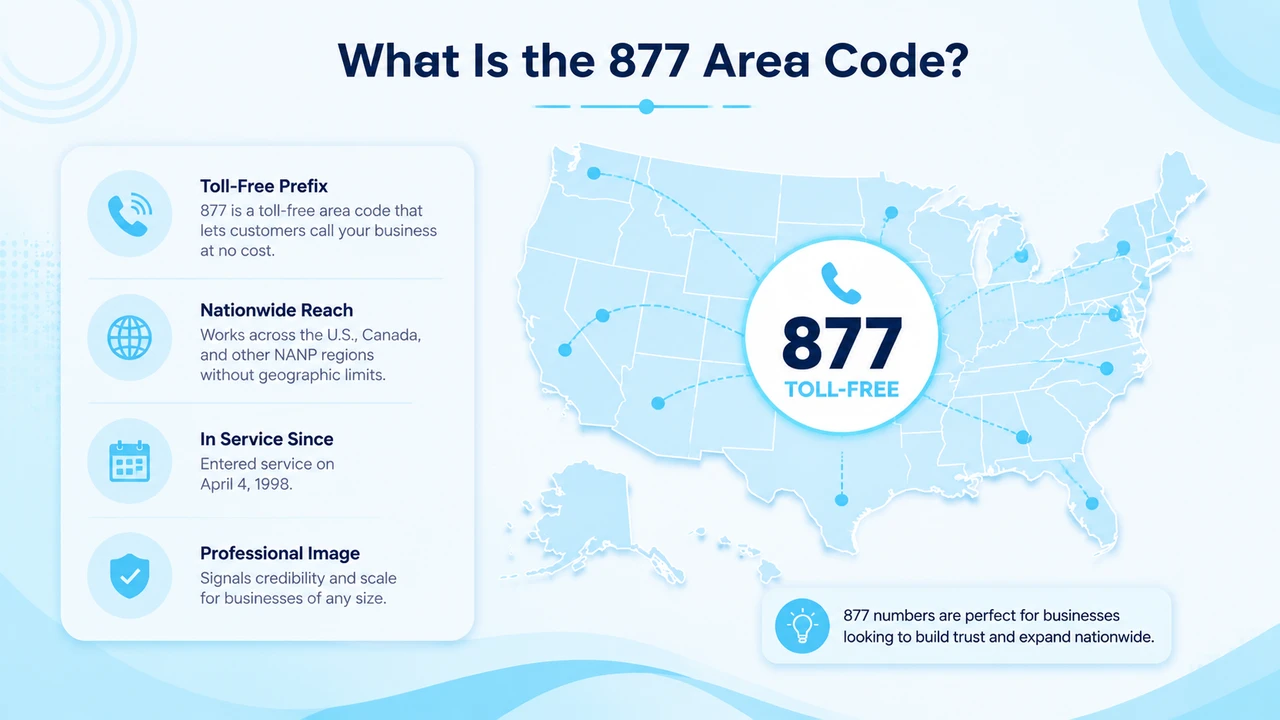
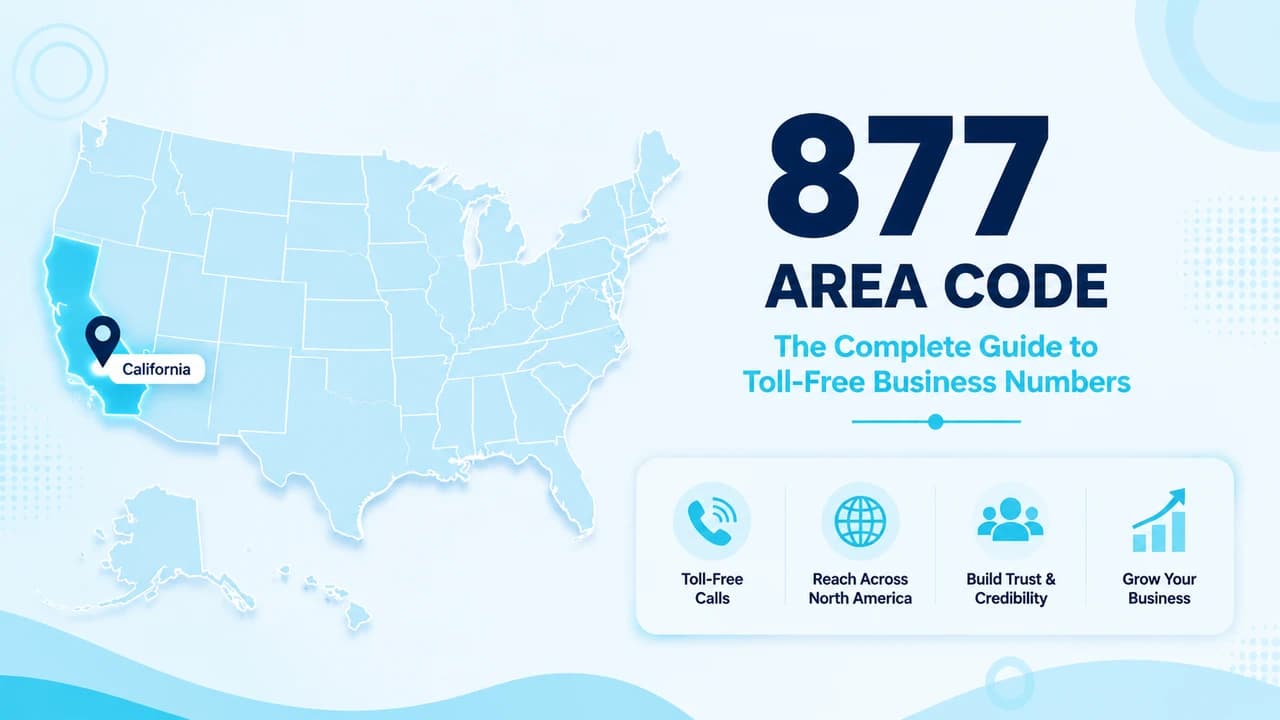
The 877 area code is a toll-free prefix. It is used across the North American Numbering Plan, which covers the United States, Canada, and nearby territories. It is not tied to any single city or state. A local prefix works that way, but a toll-free prefix does not. When a caller dials a number on this prefix, the business that owns the line pays for the call. The caller pays nothing at all. That one rule is the whole point of toll-free service. Customers can reach a company from anywhere without worrying about the cost. The business, in turn, gets a number that speaks for the whole country.
The History Behind the 877 Prefix
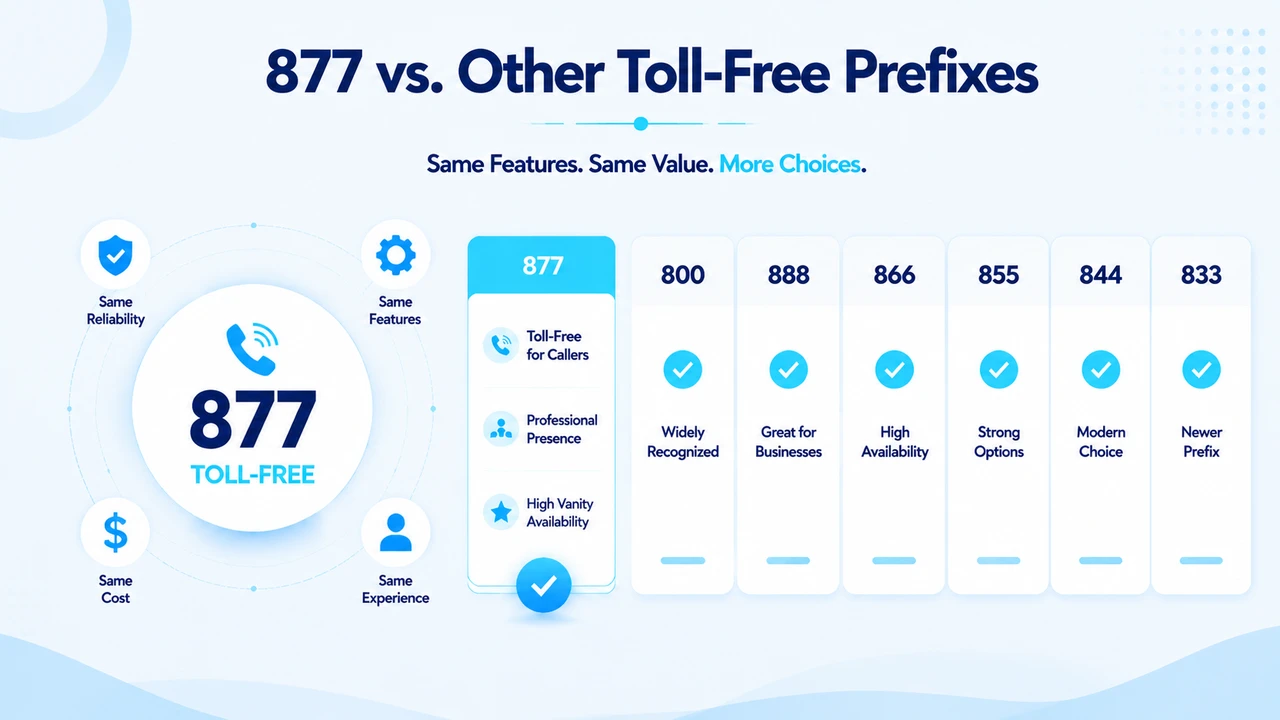
The 877 area code was introduced in 1998. It was the second toll-free prefix ever added to the North American Numbering Plan. The very first toll-free prefix was 800, launched by AT&T in 1966. As 800 numbers ran low, the industry added the 888 area code in 1996. Two years later, 877 followed to keep up with growing demand. More prefixes came after that. 866 arrived in 2000, then 855 in 2010, 844 in 2013, and 833 in 2017. Every one of these prefixes, including 877, works in exactly the same way. They exist only to open up fresh number combinations once older pools ran dry.
How an 877 Call Connects
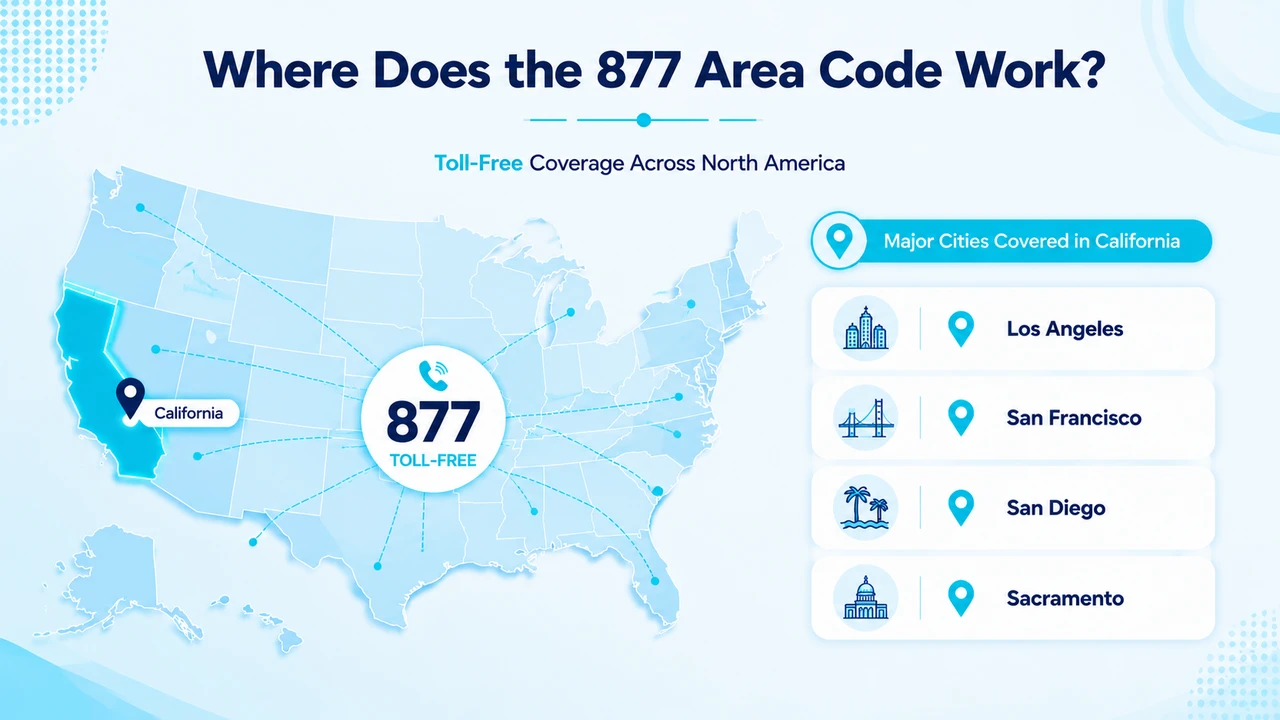
An 877 number uses the standard ten-digit format. That means the prefix plus a seven-digit line number. There are no special codes to dial. A caller just enters all ten digits from anywhere in North America. Behind the scenes, the number is managed in one place. It gets routed to whatever spot the business chooses. That could be a desk phone, a mobile device, a call center, or a cloud app. The routing can change at any time. Calls can be split by time of day or by team. Every inbound call can be logged, too. In practice, an 877 number acts less like a single phone line. It works more like a flexible front door into the business.
What an 877 Line Costs
Toll-free pricing tends to be low and easy to predict. Most providers charge a small monthly fee for the number itself. They also add a per-minute rate for inbound calls. The business pays this cost, which is why the caller pays nothing. Vanity numbers that spell a word often carry a one-time premium. Demand for those combinations runs high. Plain numeric lines cost less and work just as well for most companies. Many plans bundle in call routing, voicemail, and analytics at no extra charge. So the real cost tracks call volume more than setup. There is no equipment to buy and no technician visit needed. A brand-new business can launch a national-sounding phone line in a single afternoon.
Getting and Porting an 877 Number
Setting up an 877 area code line is quicker than most owners expect. You search a provider's open inventory. You pick a standard or vanity combination. Then you point it at the phones or apps your team already uses. No hardware install is needed. If a business already owns a toll-free number, it can usually be ported to a new provider without losing it. You supply account details and authorization, and the switch often happens with little or no downtime. For a look at a sibling prefix, our breakdown of the 844 area code covers much of the same ground from another angle.
Format and Features of 877 Numbers
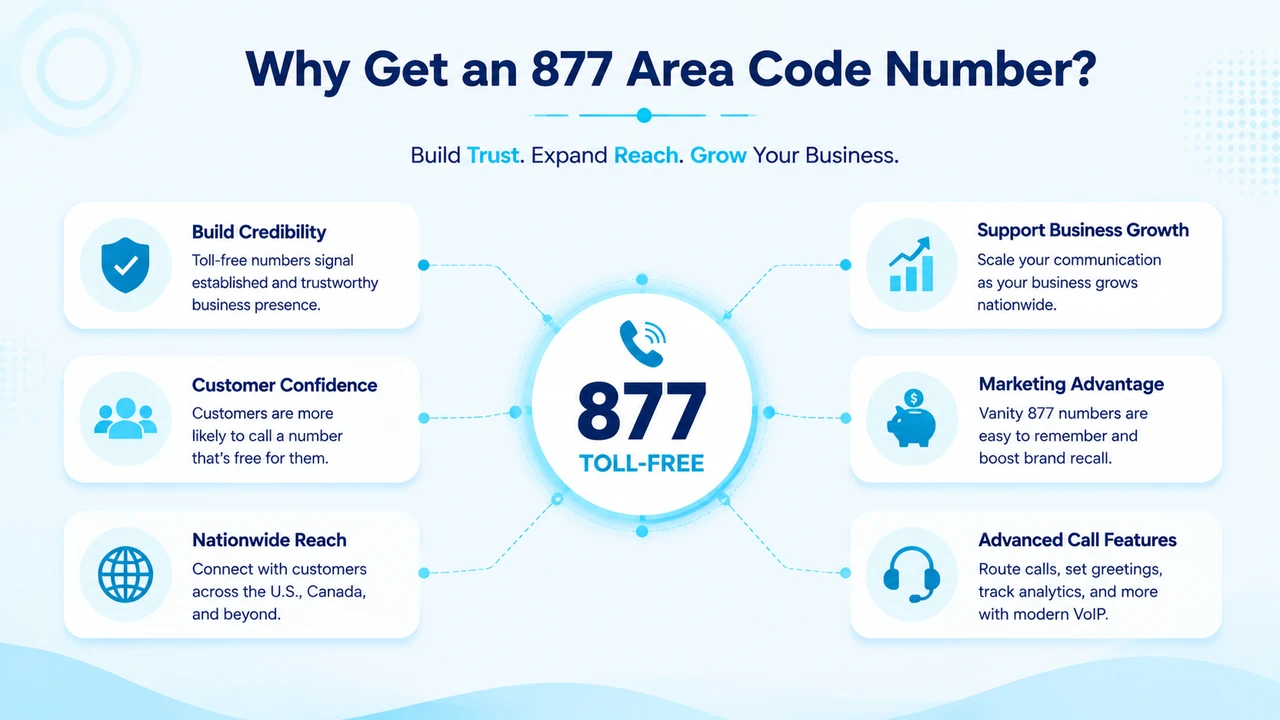
Every 877 number follows the same ten-digit shape as any other toll-free line. There is nothing unusual about the format itself. What sets a good 877 number apart is how it gets used. Providers often layer on features such as call forwarding, voicemail-to-email, and simple call menus. Some plans add call recording and live analytics as well. These extras let a small team sound like a large, organized company. The U.S. Federal Communications Commission explains how toll-free billing and routing work in its official toll-free guide. It is a useful read before choosing a plan.
Turning 877 Into a Marketing Asset
A toll-free number also works as a measuring tool. Attach call tracking to an 877 line, and a business can see exactly which campaigns make the phone ring. Budget then shifts toward what actually works. This is where a provider like Rozper fits in. With 99.999% uptime and coverage across more than 150 countries, it can set up an 877 number that routes anywhere. Calls, texts, and analytics all live in one dashboard, so a growing team never has to juggle separate tools.
Why an 877 Area Code Builds Customer Trust
First impressions move fast over the phone. An 877 area code signals that a company is established and serves customers well beyond one city. It also shows the business is willing to pay for the conversation itself. That small signal can turn a hesitant prospect into a paying customer. The same number can follow a business through every office move, rebrand, or expansion. Customers never lose track of how to reach it, no matter how the company grows.
Is an 877 Number Right for Your Business?
Not every company needs a toll-free line, but a few signs point to a clear yes. If a business sells across state lines, a local number can quietly suggest it only serves one area. An 877 number says the opposite. If the company runs paid ads, the tracking data tied to the prefix shows which channels deserve more budget. And if growth is on the horizon, a number that scales from one line to many spares a business from rebuilding its setup later. Service firms, online stores, clinics, and support teams tend to gain the most from a line like this.
A solo operator can use the number to sound like a larger, more established team from day one. A growing company can route calls to different departments without ever changing the number customers already know. Even a business that mostly sells online can benefit, since a working phone line still reassures shoppers who want a real person to answer questions before they buy. The common thread across all these cases is simple. When a call costs nothing, more people are willing to make it.
Conclusion
The 877 area code may be the second toll-free prefix ever created, but it works just as well as any other in the family. It removes the cost barrier for customers, gives a brand a national feel, and hands over data that can guide real decisions. Whether a business is claiming its first toll-free line or porting one it has used for years, the prefix rewards companies that treat the phone as a real channel. If you're ready to set one up with dependable routing and real support behind it, see how Rozper handles toll-free numbers at rozper.com.
FAQs
Is the 877 area code free to call?
Yes. Calls to an 877 area code number are free for the person dialing. That holds true from anywhere in the United States, Canada, and other North American Numbering Plan regions. The business that owns the line covers the full cost of the call.
Where is the 877 area code located?
Nowhere in particular. Area code 877 is a toll-free prefix, not a place marker. A number using it can be answered in any state or province. A shop in Ohio and a firm in Toronto could both run an 877 line from the same dashboard.
When was the 877 area code introduced?
The 877 area code launched in 1998. It was the second toll-free prefix added after the original 800 pool ran low, following 888, which arrived in 1996.
How is an 877 number different from an 800 number?
There is no real difference in how they work. Both are toll-free and free to the caller. Only the digits differ. When the 800 pool filled up, prefixes like 888 and 877 were added to expand supply, and each one carries the same benefits as a classic 800 line.
Can I port my existing toll-free number to a new provider?
Usually, yes. Most providers let you move a current toll-free number, including one on the 877 area code, to a new platform. You supply authorization and account details, and the transfer often finishes with no downtime.