Introduction
Imagine dialing the same three digits whether you're calling a shop in Honolulu, a hotel on Maui, or a farm on the Big Island. That's daily life under the 808 area code, the single prefix that has covered the entire state of Hawaii since area codes first reached the islands. No other state runs on just one code the way Hawaii does, and that quirk shapes how local businesses build trust with customers across every island chain. This guide walks through what the 808 area code actually covers, how it has stayed a single code while mainland states keep splitting theirs, and what a business gains from holding one. It also looks at how a proper VoIP platform turns a Hawaii number into something far more useful than a simple dial tone.
A Prefix for an Entire State
Area code 808 went into service in 1957, back when Hawaii was still a U.S. territory, and it has never needed a split or an overlay since. Mainland metros like Atlanta or Los Angeles have added four or five extra codes as their populations grew, but Hawaii's smaller, geographically contained population has kept demand for new numbers manageable. That history means a single 808 area code number can represent a business anywhere in the state, from downtown Honolulu to a small town on Kauai, without ever needing a second prefix. Business owners searching area code 808 online are often surprised to learn just how rare a single-code state has become, since almost every other state population Hawaii's size has already split or overlaid its numbering plan at least once. Hawaii sits in the Hawaii-Aleutian Time Zone and does not observe Daylight Saving Time, so the offset from the mainland shifts twice a year even though the local clock never moves.
Islands and Cities Covered by the 808 Area Code
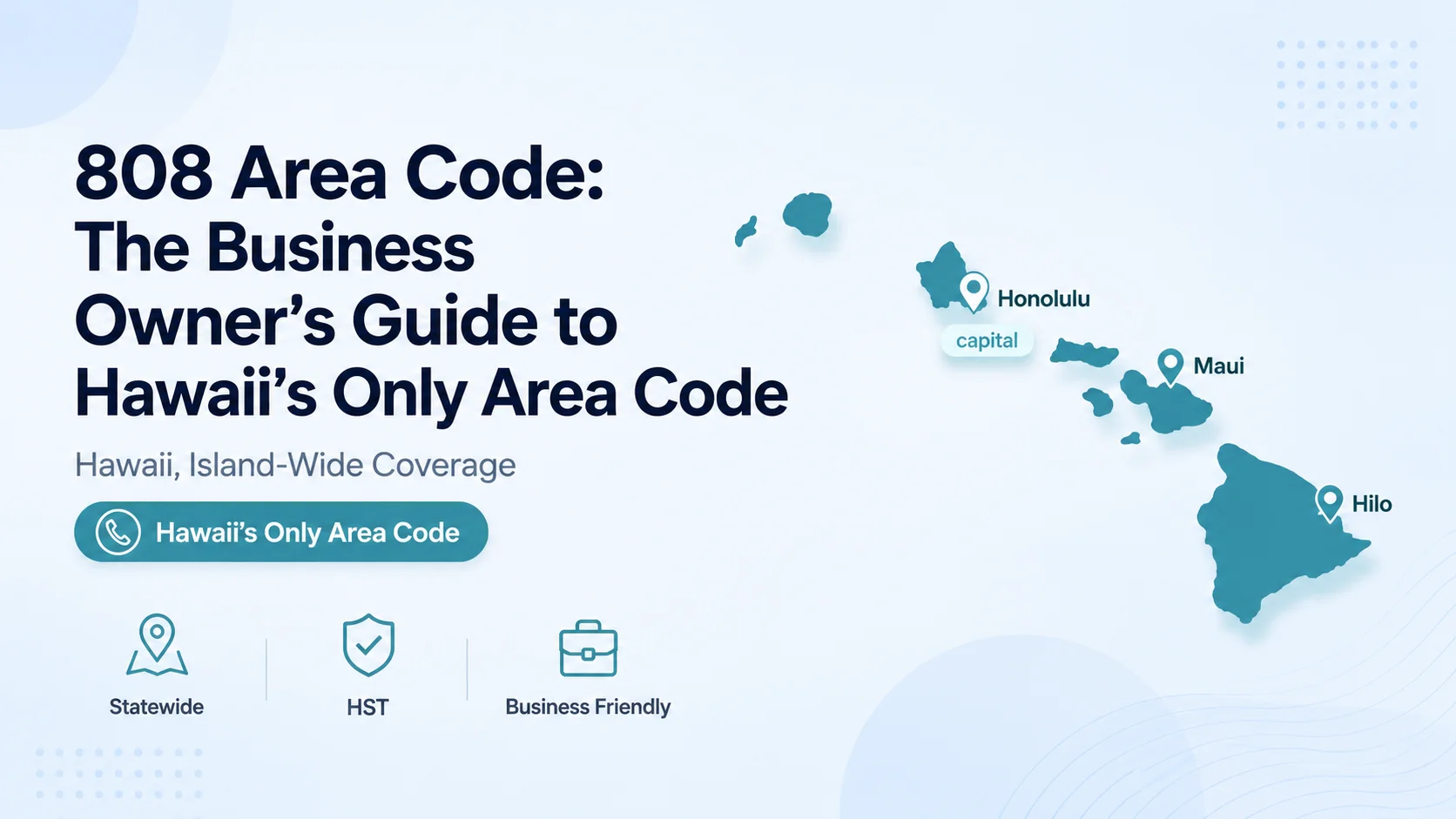
Because Hawaii never split its numbering plan, every inhabited island shares the same 808 prefix.
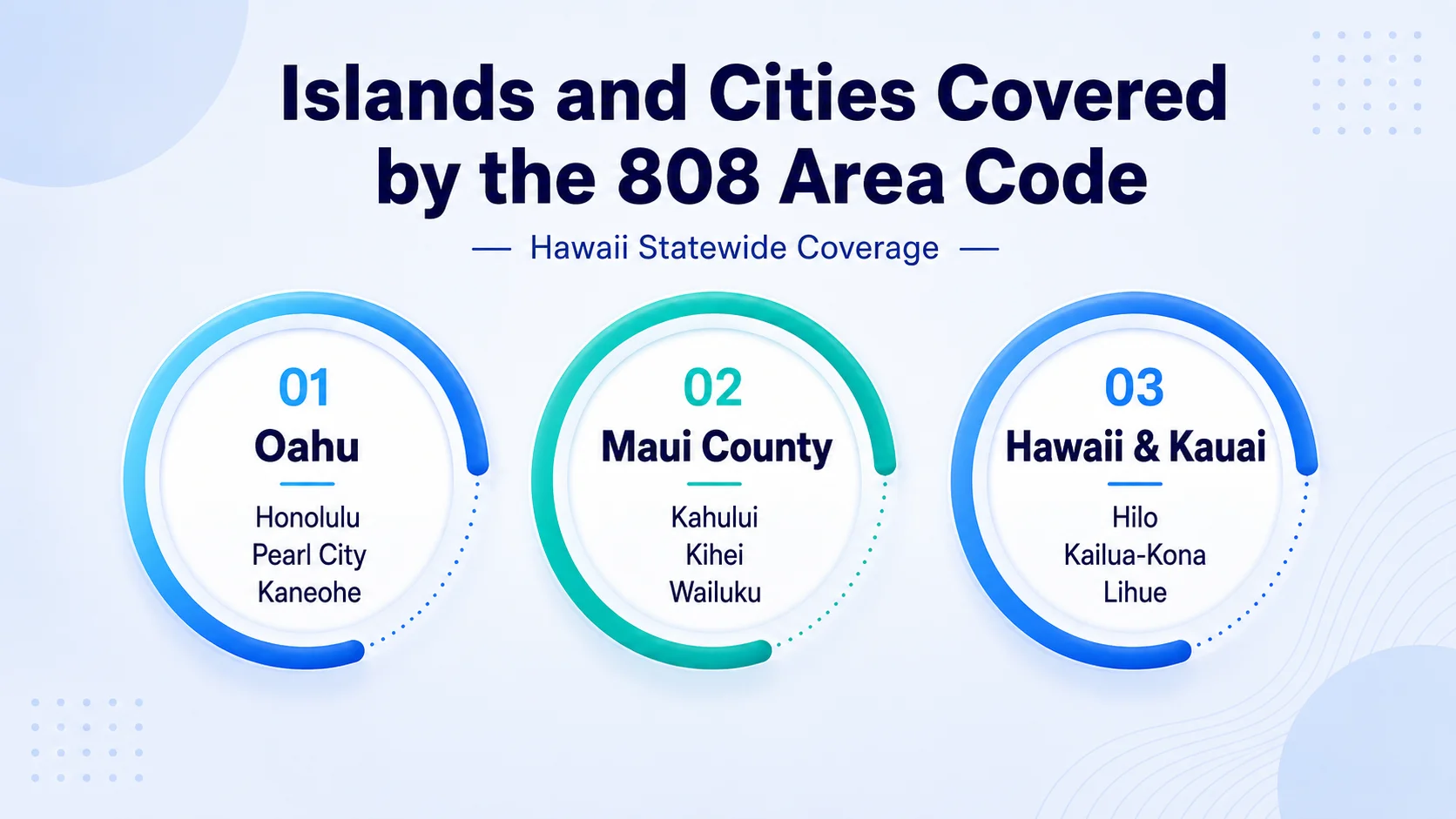
Honolulu, Hilo, Kailua-Kona, Kahului, Lihue, Kaneohe, Wailuku, and Kihei all dial out under area code 808, along with dozens of smaller towns spread across Oahu, Maui, the Big Island, Kauai, Molokai, and Lanai. For a mainland business trying to reach island-based customers, or a Hawaii company managing locations on several islands, that single prefix is a real convenience — one number format works everywhere in the state, with no need to track which code applies to which town. Compare that to a mainland retailer managing five or six regional codes across different offices, and the simplicity of a single statewide prefix starts to look like a genuine operational advantage rather than just a quirk of geography.
What Holding a 808 Number Does for Local Trust
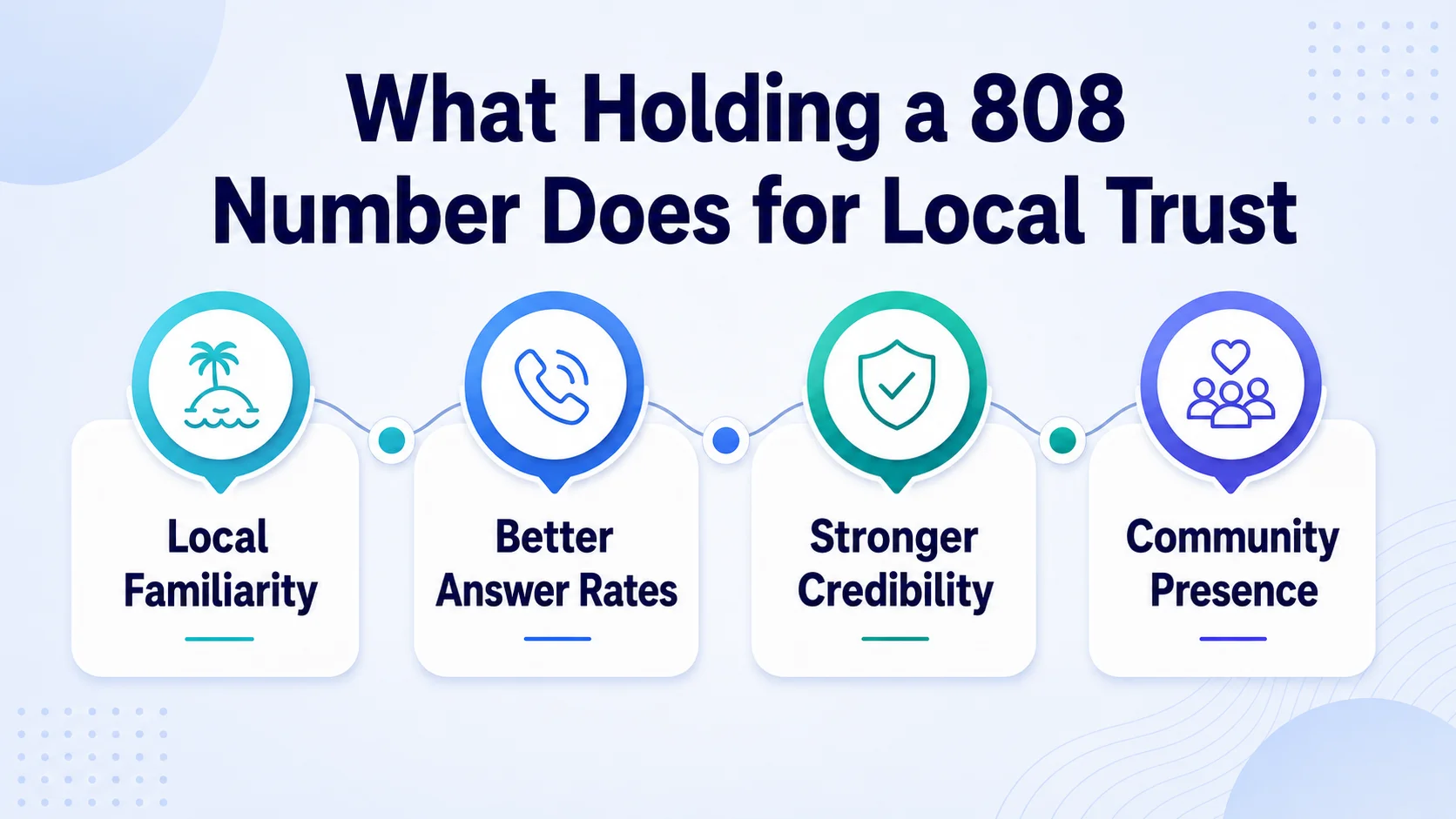
Hawaii's economy runs heavily on tourism, hospitality, and small local business, and island customers tend to notice quickly when a caller ID doesn't look local. A business calling from an 808 number reads as part of the community rather than an outside vendor cold-calling from the mainland. That distinction matters even more here than in many mainland markets, since island communities are tight-knit and word of mouth travels fast between islands. For a look at how a similar local-trust dynamic plays out in a major West Coast tech hub, our 669 area code guide covers the same pattern for Silicon Valley. Whether you're booking tour reservations, running a property management company, or handling customer support for an island retailer, a familiar prefix on the screen often decides whether the call gets answered at all.
VoIP Features That Make an 808 Number More Useful
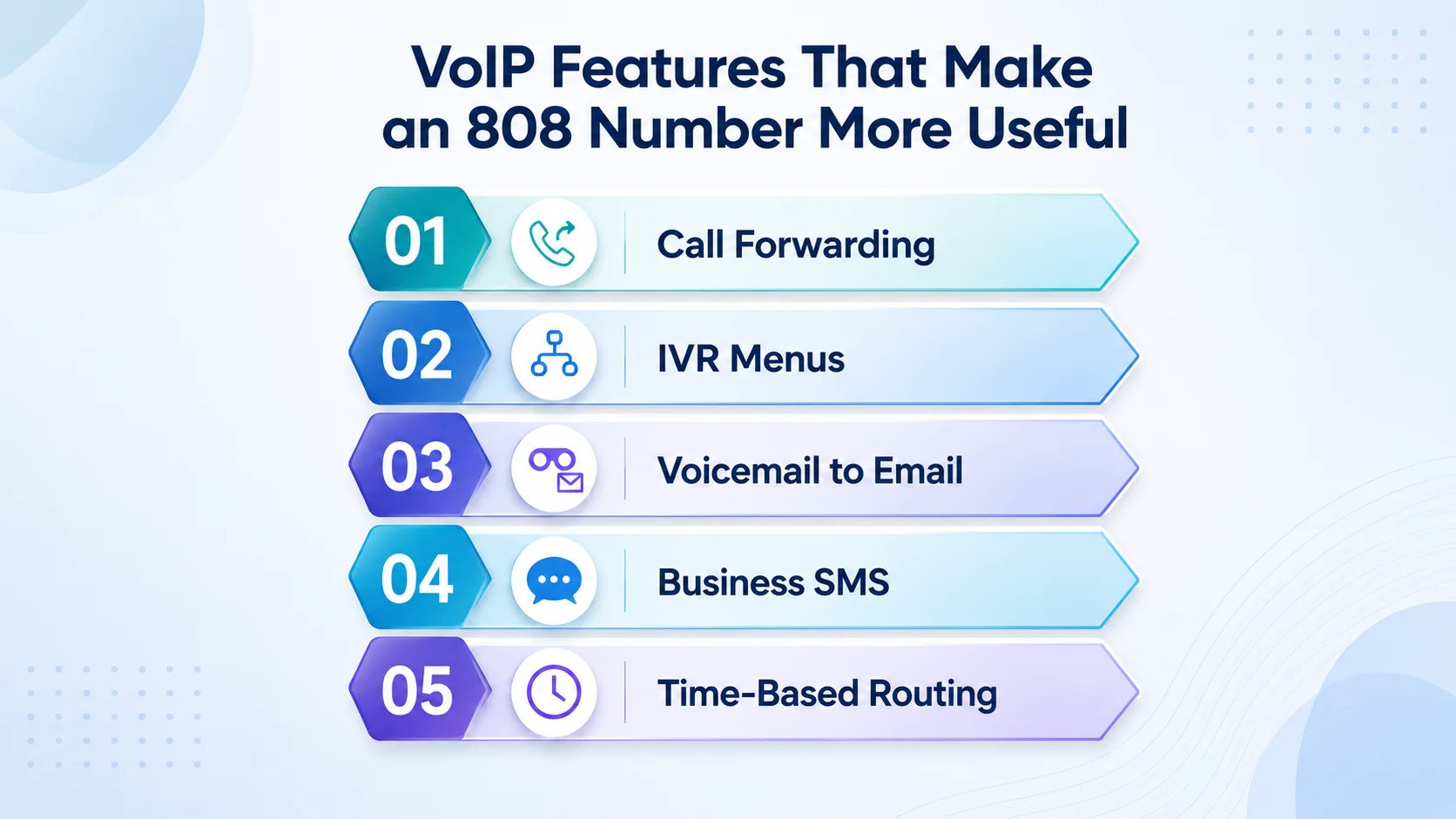
Owning the number is only step one — the platform behind it is what actually does the work. Smart call routing can send calls to the right department or the right island office automatically, which matters when a business runs locations on more than one island. CRM integration logs every 808 call against the correct customer record, keeping booking and service histories accurate without manual data entry. Hawaii is a two-party consent state, so any VoIP platform handling call recording needs to prompt for consent before recording starts, not after. Add voicemail transcription, live call analytics, and business SMS, and a single 808 area code line becomes a complete communication hub instead of a landline that only rings during business hours. That matters even more on the islands, where staff often split time between a front desk, a job site, and a home office, and a call to the 808 area code number still needs to land in the right place every time. Rozper delivers all of this with 99.999% uptime and support across 150+ countries, so an island business — or a mainland company serving island customers — stays reachable no matter where the team actually sits.
Picking the Right VoIP Plan for a Hawaii Business
A single-location bed-and-breakfast on Kauai has very different needs than a multi-island property management firm. Entry-level plans typically include one 808 area code number, voicemail-to-text, and mobile and desktop apps, which covers most solo operators and small storefronts. Mid-tier plans add multi-user lines, IVR menus, call recording with consent prompts, and CRM sync for busier hospitality and retail operations. If your business is also expanding onto the mainland, our 415 area code guide covers the same setup process for a San Francisco-based presence. Enterprise plans go further, adding custom SLAs, API access, and unified reporting across every 808 area code line a company runs, whether that's three storefronts or thirty, and whether those locations sit on one island or all six.
Getting the Most Out of Your 808 Number
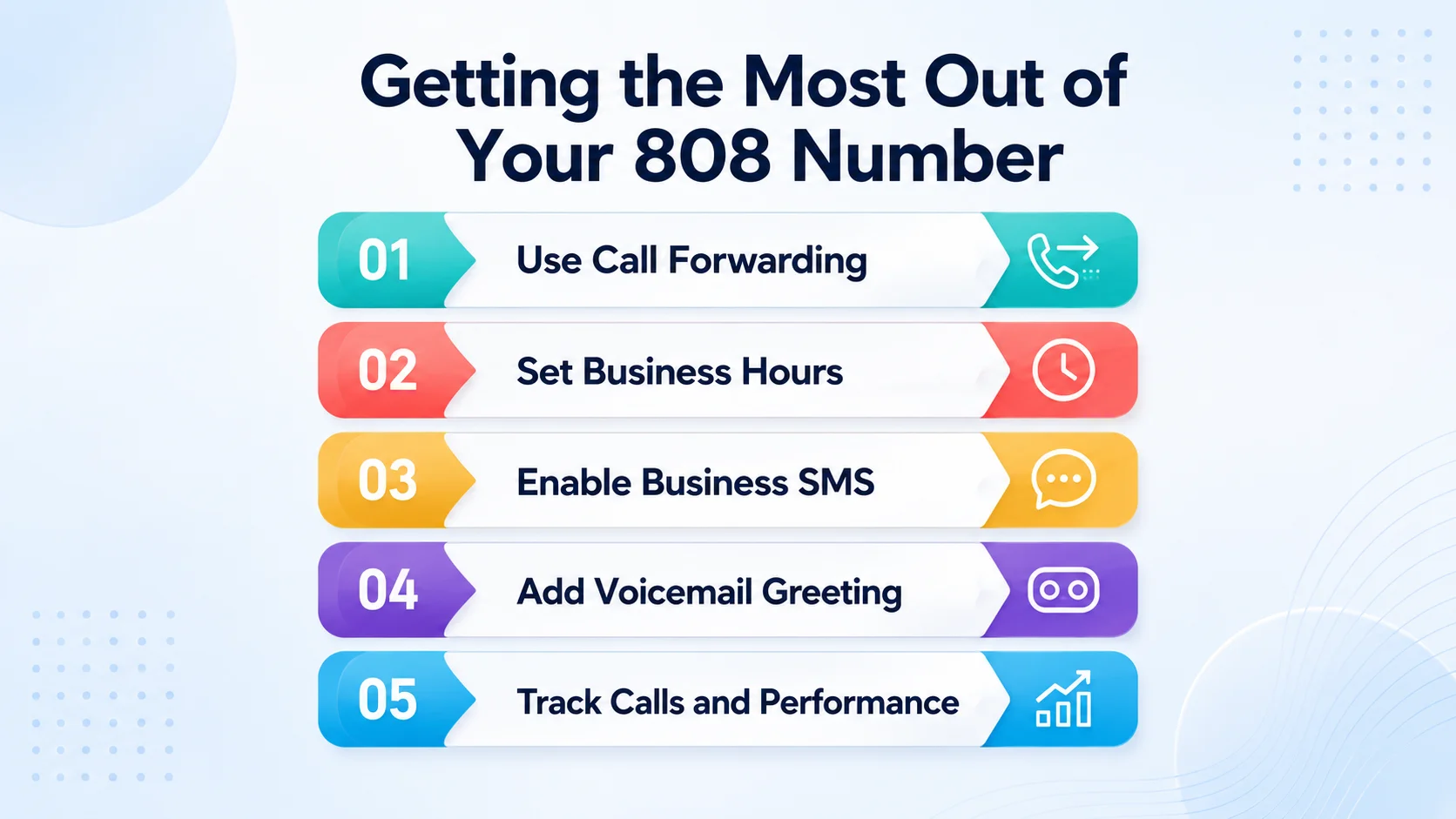
A number only pays off once it's built into the way the business actually operates day to day, not just left listed on a business card and forgotten.
List It Consistently Across Every Channel
Put your 808 area code number on your website, Google Business Profile, and every island-specific directory in the same format every time. Inconsistent listings quietly hurt local search visibility, even on an island where the customer base is smaller and more concentrated.
Understand Hawaii's Consent Rules Before Recording Calls
Hawaii requires both parties to consent before a call can be recorded. Make sure your VoIP platform's recording feature includes an automatic disclosure, and confirm your team knows the rule applies to every call, not just ones flagged as sensitive. The federal framework behind numbering and dialing rules nationwide, including Hawaii's, is outlined in the FCC's guidance on ten-digit dialing.
Connect Every Call to Your Booking or CRM System
Route your 808 line straight into your reservation system or CRM from day one. That keeps guest and customer histories accurate as call volume grows across busy tourist seasons.
Conclusion
Hawaii's decision to keep a single statewide prefix makes the 808 area code unlike almost any other code in the country, and that simplicity is exactly what makes it valuable for local businesses. One number works the same way whether a customer is on Oahu or the Big Island, and that consistency builds trust in a market where community ties run deep. Anyone comparing options after searching area code 808 will find the choice is simple: there's only ever been the one code, and it isn't going away. Add a modern VoIP platform behind the number, and an 808 area code line stops being just a way to answer the phone — it becomes a real operational tool with routing, recording, and analytics built in.
FAQs
Which islands does the 808 area code cover?
All of them. Oahu, Maui, the Big Island, Kauai, Molokai, and Lanai all share the same statewide prefix, so there's no separate code to track by island.
Why has Hawaii never added a second area code?
Hawaii's population is smaller and more contained than most mainland states, so the original number supply from 1957 has lasted without needing a split or an overlay.
Do Hawaii calls require ten-digit dialing?
Yes. Like the rest of the country, calls within the 808 area code require all ten digits, even between two numbers that share the same prefix.
Can a mainland business get a Hawaii number without an island office?
Yes. A VoIP provider can issue an 808 number to any business regardless of location, with calls routed to any device or team member worldwide.
Does Hawaii require consent before a business call can be recorded?
Yes. Hawaii is a two-party consent state, meaning both sides of the call must agree to being recorded before recording starts.