Introduction
An unfamiliar call lights up your screen with an 833 area code. Your first instinct is to wonder where it came from. The honest answer is nowhere in particular. This is not a normal prefix tied to a city or region. It is toll-free. It could belong to a bank, a retailer, a doctor's office, or a help desk anywhere in North America. This guide explains what the prefix is, how it works, and how a business can put one to use.
What Is the 833 Area Code?
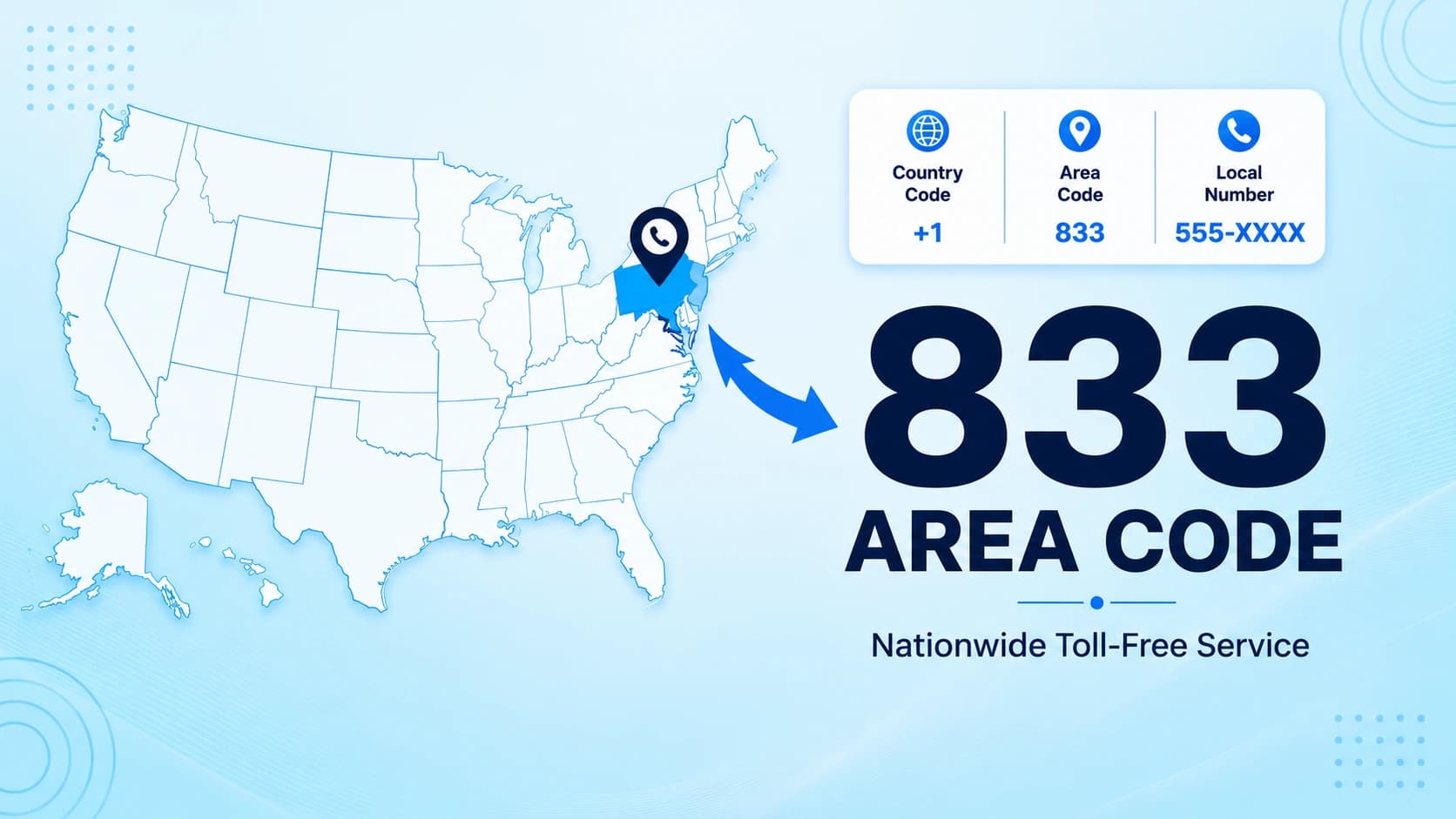
The 833 area code is a toll-free prefix. It sits inside the North American Numbering Plan. That system governs phone numbers across the United States, Canada, and much of the Caribbean. It is not a geographic code. A call carrying it is not coming from any specific state or city. It belongs to the same family as 800, 888, 877, 866, 855, and 844. These are the recognizable strings that let people reach a company at no cost.
The 833 area code is not tied to any town, time zone, or local exchange. A startup in Texas and a hospital network in Ontario could both hold numbers in the area code 833 range. A caller would have no way to tell their locations apart. That portability is the whole point. The number follows the organization, not a building.
How 833 Toll-Free Numbers Work
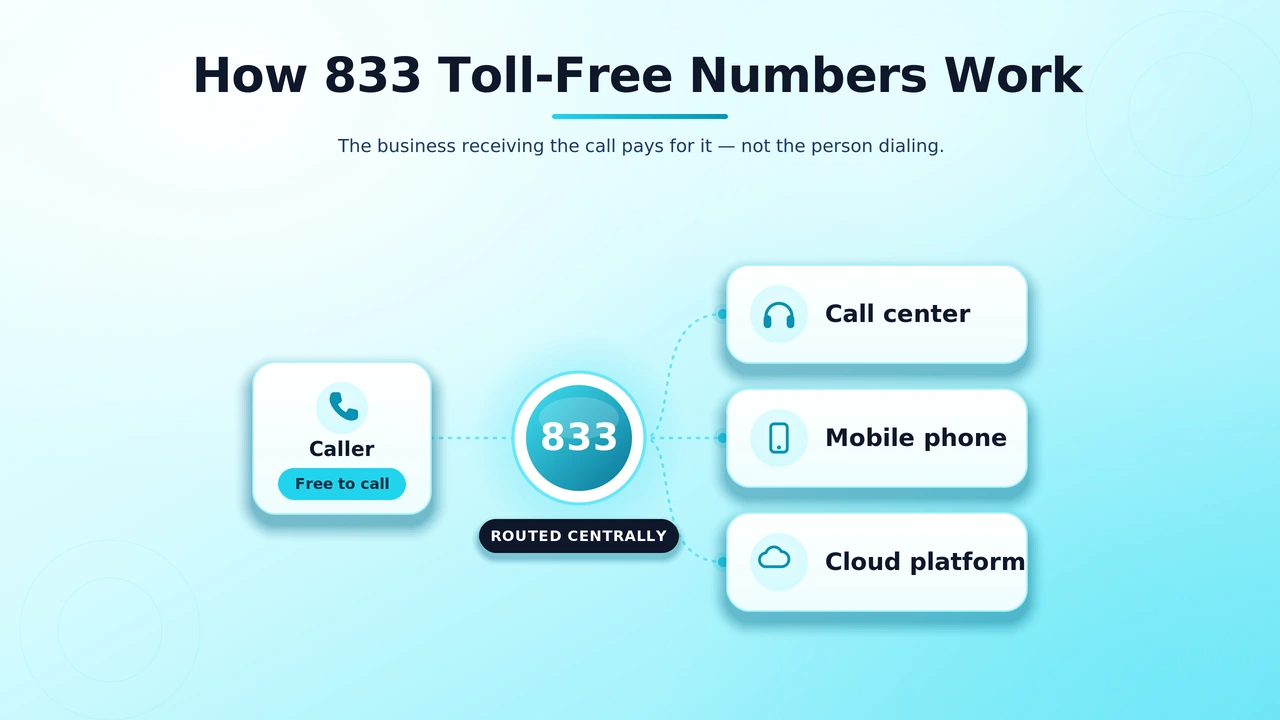
The defining feature of every toll-free line is simple. The business pays for the call, not the person dialing. Every call to an 833 area code number is free for the caller. That is why customers reach for these numbers when they want support.
Toll-free numbers are managed centrally. They route to whatever destination the owner picks, whether a call center, a mobile phone, or a cloud platform. The owner can change that routing at any time. Calls can go to different teams by hour or region. Every inbound call gets tracked. In practice, an 833 number works just like an old 800 number. It just carries a newer prefix.
When the 833 Area Code Launched
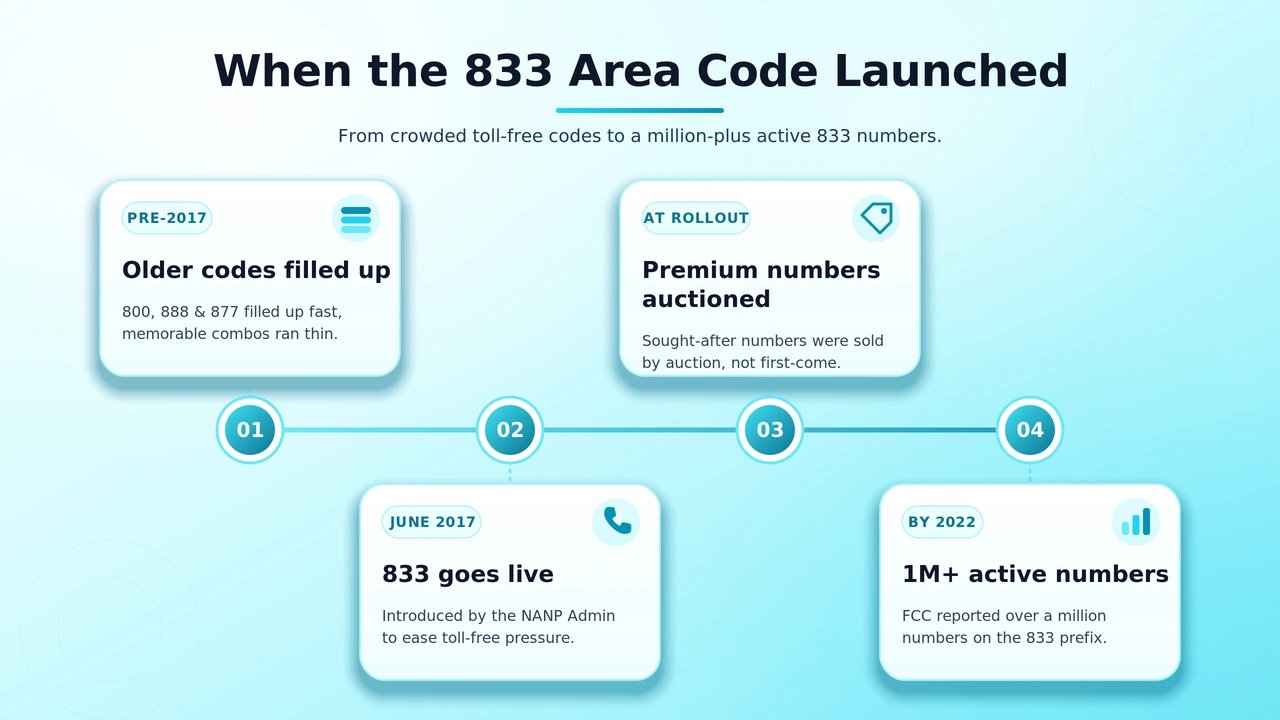
The 833 area code became operational in June 2017. The North American Numbering Plan Administrator introduced it to relieve pressure on older toll-free codes. By that point, 800, 888, and 877 had been used heavily for years. The supply of memorable combinations was running thin. Demand for the new prefix grew fast. By 2022, the Federal Communications Commission reported more than a million active numbers using it.
The rollout stood out for another reason. Regulators did not hand out the best combinations first-come, first-served. Instead, they auctioned certain premium numbers. A clean, easy toll-free line has real commercial value. If you want a deeper history, the 800 area code tells the original story that paved the way.
833 vs Other Toll-Free Prefixes
There is no functional difference between 833 and its siblings. A customer calling 833 pays nothing, just as they would calling 888 or 866. The only real difference is availability. Newer prefixes have more open combinations. That makes it easier to land a clean vanity number. Comparing options like the 888 area code against the area code 833 family usually comes down to which one still has the digits you want.
Callers rarely judge a business by which toll-free prefix it uses. What matters is that the number is free to dial and easy to recall. For an authoritative primer on how the whole toll-free system is structured, the overview of toll-free telephone numbers is a useful reference.
Are 833 Numbers Safe to Answer?
Toll-free does not automatically mean trustworthy. The 833 area code is cheap and easy to get. Scammers sometimes register numbers in the area code 833 range to look legitimate. The prefix itself is neutral. Real banks and retailers use it, but so do occasional bad actors running robocalls.
Treat any unexpected call the way you would treat an unknown local number. Legitimate organizations leave a clear voicemail and identify themselves. They never pressure you to share passwords or payment details on the spot. If a caller claims to be your bank, hang up. Dial the official number printed on your card instead.
Why Businesses Choose an 833 Number
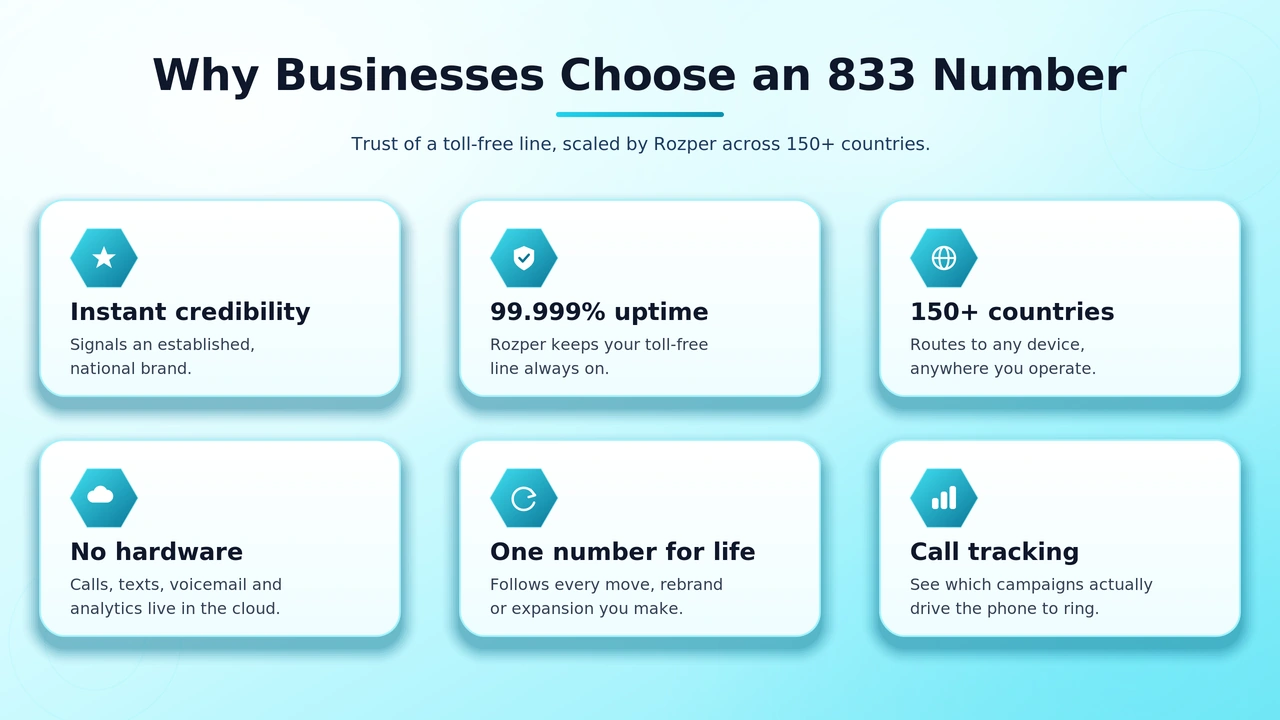
A toll-free line still carries weight with customers. An 833 area code number signals that a company is established and national in scope. It shows the company is willing to absorb the cost of a call. For small and growing businesses, that can be the difference between a prospect who calls and one who scrolls past.
This is where a provider like Rozper fits in. Rozper offers 99.999% uptime and coverage across more than 150 countries. It can set up an 833 line that routes to any device, anywhere, with no hardware to install. Calls, texts, voicemail, and analytics all live in the cloud. A lean team can sound like a large enterprise while keeping every interaction organized in one place.
A toll-free line also gives a company real flexibility. The same number can follow a business through every move, rebrand, or expansion. Customers never lose the thread when an office relocates or a team goes remote. Marketing teams can attach call tracking to measure which campaigns drive the phone to ring. That turns a support line into a source of insight. For companies that sell across state or national lines, that mix of permanence and data is hard to match with an ordinary local number.
How to Get an 833 Area Code Number
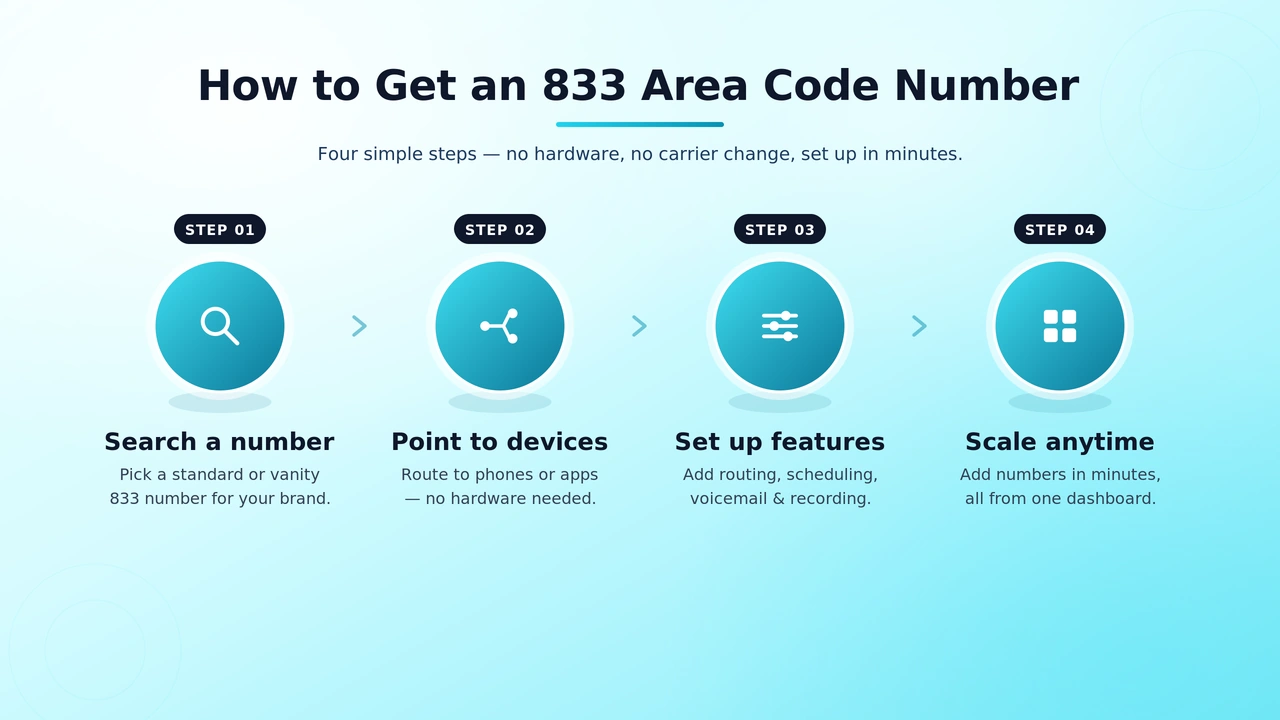
Getting an 833 area code number is simpler than most owners expect. You search available numbers. You pick a standard or vanity combination that fits your brand. Then you point the line at whatever phones or apps your team already uses. There is no physical equipment and no long install window. You do not need to change carriers for the rest of your service.
Rozper's support team helps you reserve an area code 833 line and set up call routing. You can add features such as business-hour scheduling, voicemail-to-email, and call recording. Everything runs from a single dashboard. You can add a second number for a new campaign in minutes, and scale the setup up or down as your needs change.
Conclusion
The 833 prefix is not a place on the map. It is a promise that the call costs the dialer nothing. It was born in 2017 to keep pace with demand. It works just like the toll-free numbers before it, with more room for memorable combinations. Treat unexpected calls with the same caution you give any unknown number. Then the prefix becomes what it was designed to be: a simple, trusted, nationwide way for customers to reach you.
FAQs
Is the 833 prefix a real, official number?
Yes. It is a legitimate toll-free prefix administered within the North American Numbering Plan. It has been active since 2017. It carries the same status as 800 or 888. Over a million businesses and organizations already use it across the United States and Canada.
Where is an 833 call coming from?
Nowhere specific. Toll-free prefixes are not tied to a city, state, or time zone. The digits reveal nothing about the caller's location. The number could route to a call center in one country and an owner based in another.
Does it cost money to call an 833 number?
No. Calls are free for the person dialing from anywhere inside the North American Numbering Plan region. The business that owns the number pays the charges. That is the whole purpose of a toll-free line.
Can a small business get one?
Absolutely. Toll-free numbers are available to organizations of any size through a provider. You can reserve a standard or vanity combination and route it to existing devices. You can be taking calls the same day without buying new equipment.
Why do some 833 calls feel like spam?
The prefix is cheap and easy to obtain. Because of that, a minority of callers misuse it for robocalls. The prefix itself is neutral, so judge each call on its behavior. Real organizations identify themselves and never demand sensitive details under pressure.
Can I keep my 833 number if I switch providers?
Yes. Toll-free numbers are portable. You can move yours between providers without losing it. The number is tied to your business rather than a single carrier. You stay reachable even if you change services, upgrade your plan, or consolidate several lines into one platform.