Introduction
Some numbers earn a reputation. The 800 area code is one of them. It was the very first toll-free prefix ever made. It changed how customers reach a business by phone. Decades later, it is still the most well-known toll-free code in North America. This guide covers what the prefix is. It covers how a call routes, what it costs, and how to get one today.
What the 800 Area Code Is
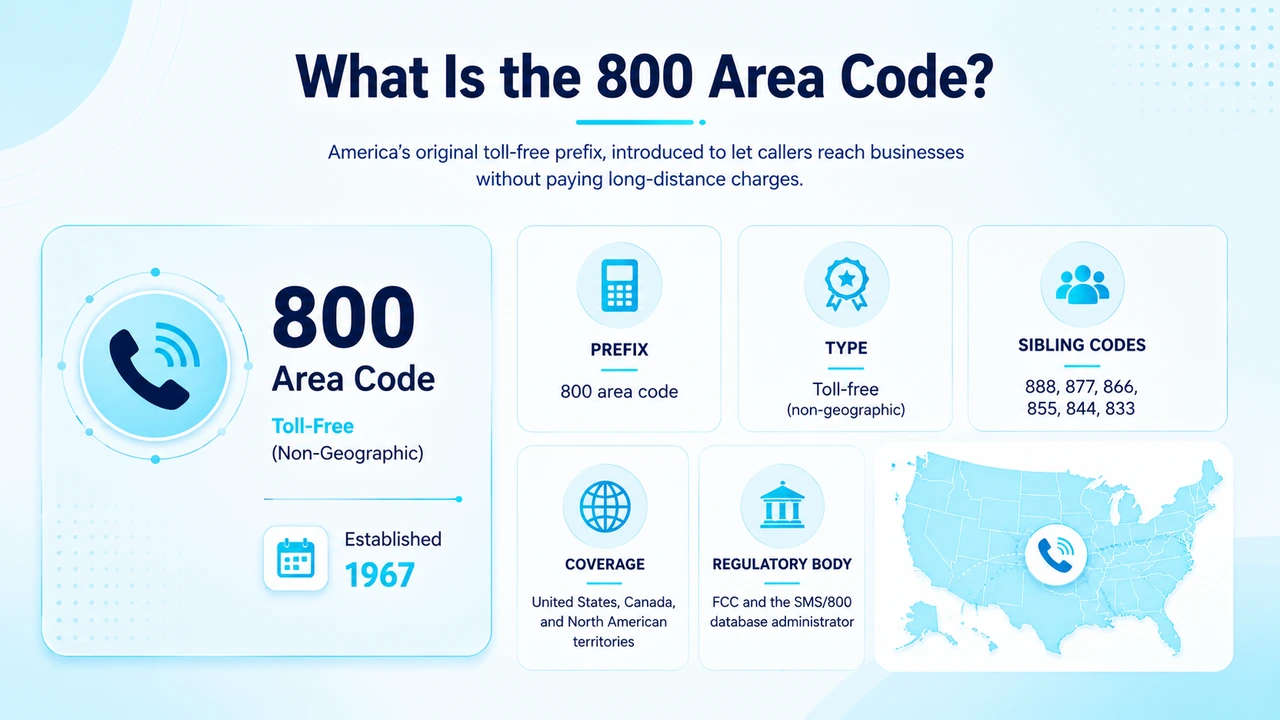
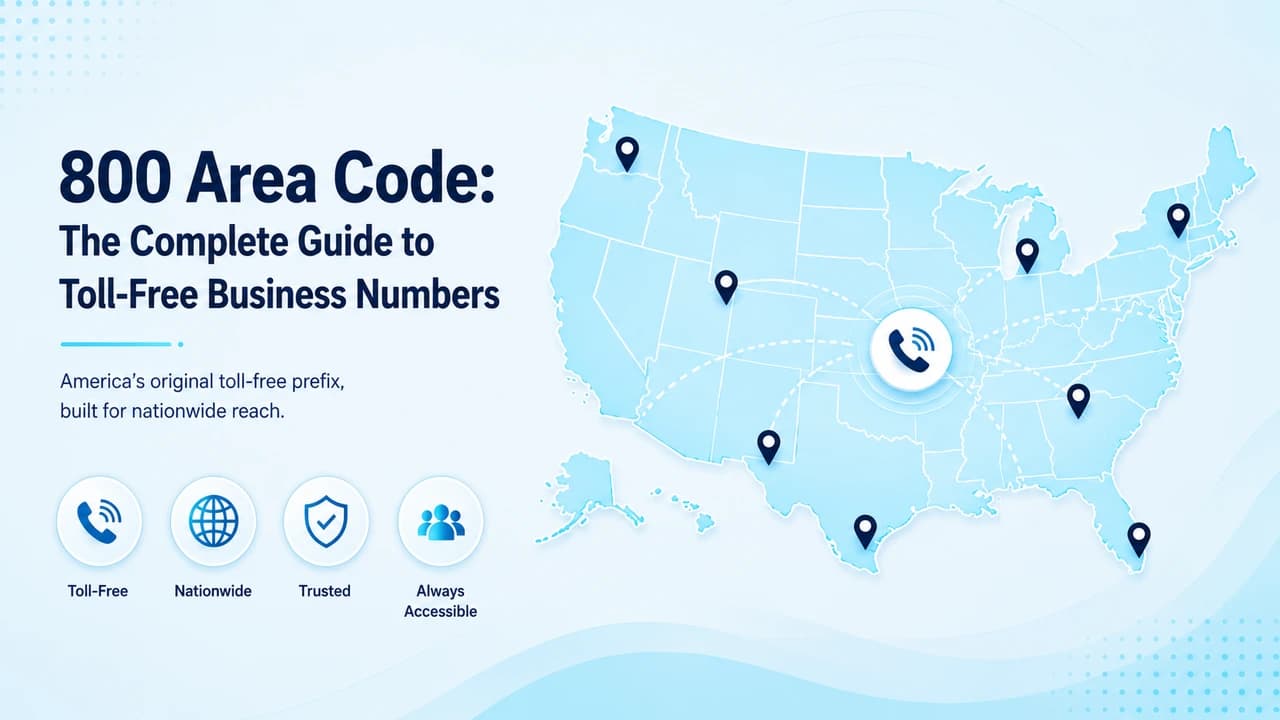
The 800 area code is a toll-free prefix. It is used across the North American Numbering Plan. That plan covers the United States, Canada, and nearby territories. It is not tied to any city or state. A local prefix works that way, but this one does not. It is a service code instead. When someone dials a number on this prefix, the business that owns the line pays for the call. The caller pays nothing at all. That one rule makes toll-free service so useful. A customer in any state can call a company for free. The business gets a number that speaks for the whole country, not just one town.
The Origin of the 800 Area Code
AT&T introduced the 800 area code in 1966. It was the first toll-free code that ever existed. Before that, businesses had no easy way to offer free calls to customers. The 800 prefix filled that gap fast. It quickly became the standard way to sound national. As call centers grew, demand for 800 numbers climbed fast too. Soon the open combinations ran thin. New toll-free prefixes had to be made to keep up with demand. The 888 area code arrived in 1996. Then came 877 in 1998, 866 in 2000, 855 in 2010, 844 in 2013, and 833 in 2017. Every newer prefix works just like the original. They exist to open fresh number combinations once older pools filled up.
How an 800 Number Works
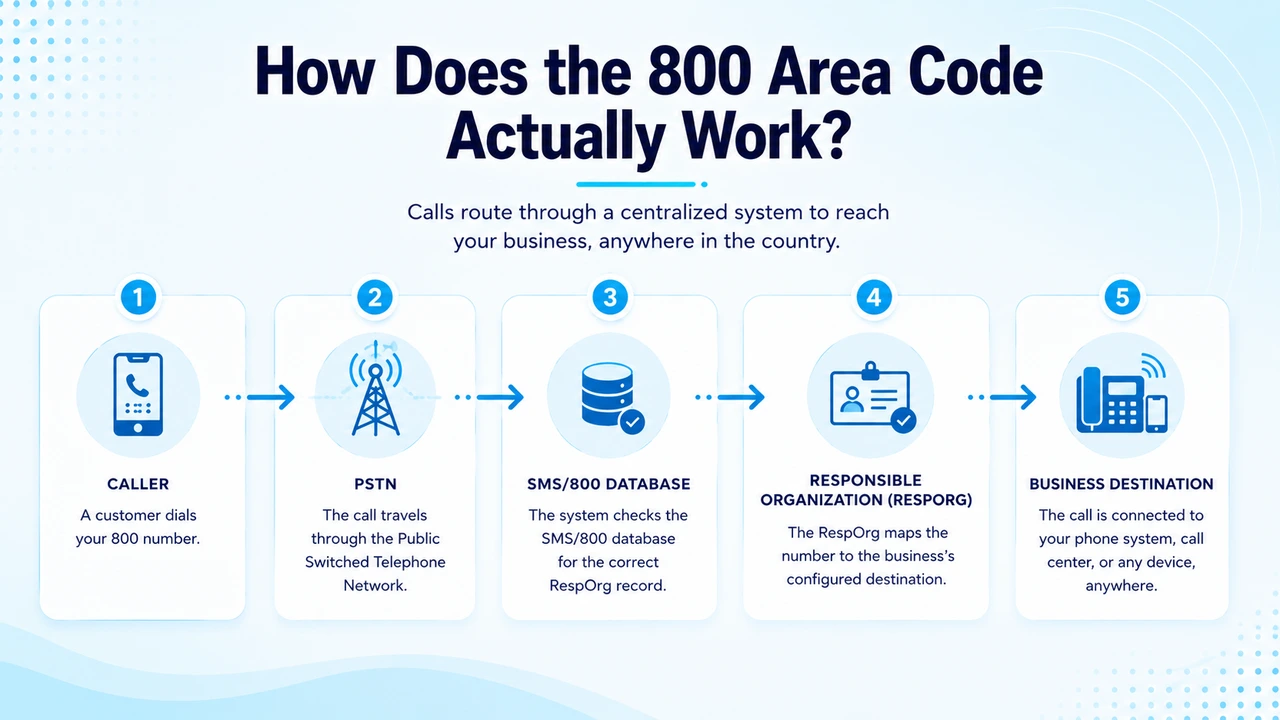
An 800 number uses the standard ten-digit format. That means the prefix plus a seven-digit line number. There are no special codes to dial. There is nothing extra for the caller to remember. The person just dials all ten digits from anywhere in North America. Behind the scenes, the number sits in one place. It gets routed to wherever the business wants it to go. That could be a desk phone, a mobile device, a call center, or a cloud app. The routing can change at any time. Calls can be split by time of day or by team. Every inbound call can be logged, too. In practice, an 800 number acts less like a single phone line. It works more like an adjustable front door to the business.
What It Costs to Run an 800 Number
Pricing for a toll-free line is usually low and easy to predict. Most providers charge a small monthly fee for the number. They also add a per-minute rate for inbound calls. The business pays this cost. That is exactly why the caller pays nothing. Vanity numbers that spell a word often cost more. Demand for them runs high. Plain numeric lines cost less and still work just as well. Many plans bundle in call routing, voicemail, and analytics at no extra charge. So the real cost tracks call volume, not setup. There is no equipment to buy. There is no technician visit needed. Even a brand-new company can launch a national phone presence in a single afternoon.
Getting and Porting an 800 Number
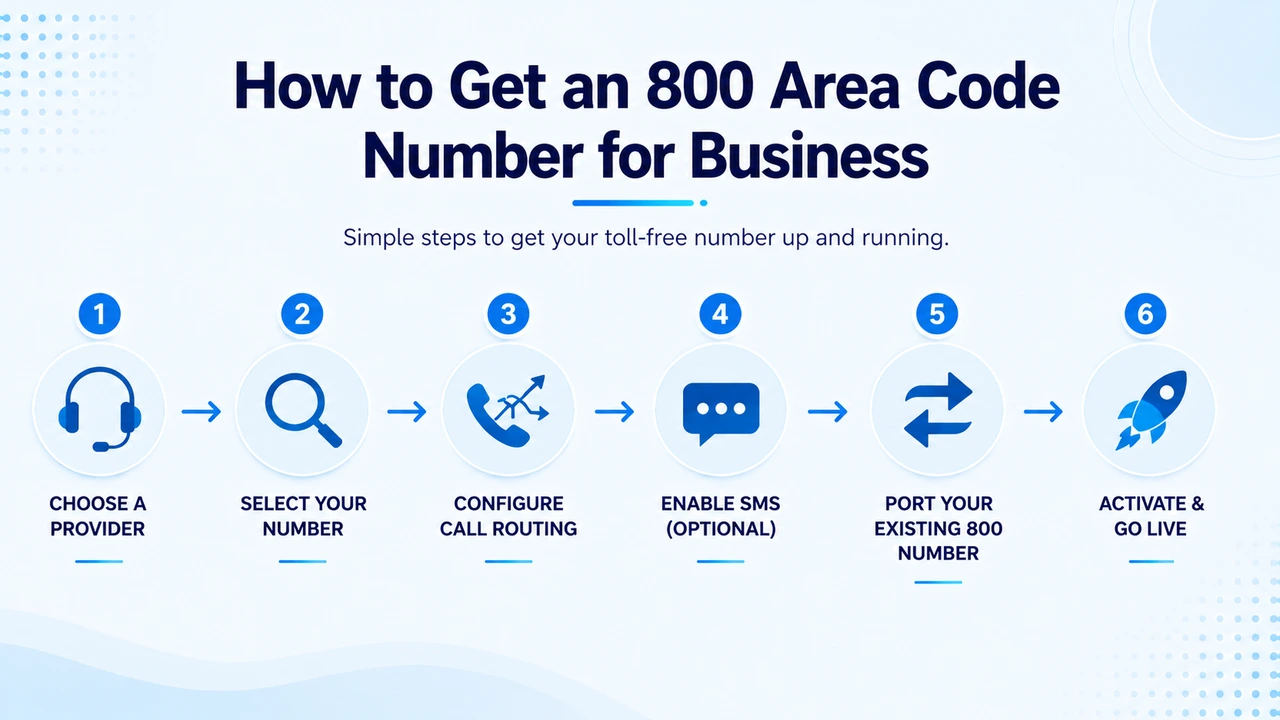
Setting up an 800 area code line is faster than most owners expect. You search a provider's open inventory. You pick a standard or vanity combination. Then you point it at the phones or apps your team already uses. No hardware install is needed. If a business already owns an 800 number, it can usually be ported to a new provider. It will not lose the number in the process. You supply account details and authorization. The transfer often finishes with little or no downtime. Since 800 is the oldest prefix, good combinations are harder to find than on newer prefixes like the 844 area code. It pays to search early and act fast once a good match appears.
800 vs Other Toll-Free Prefixes
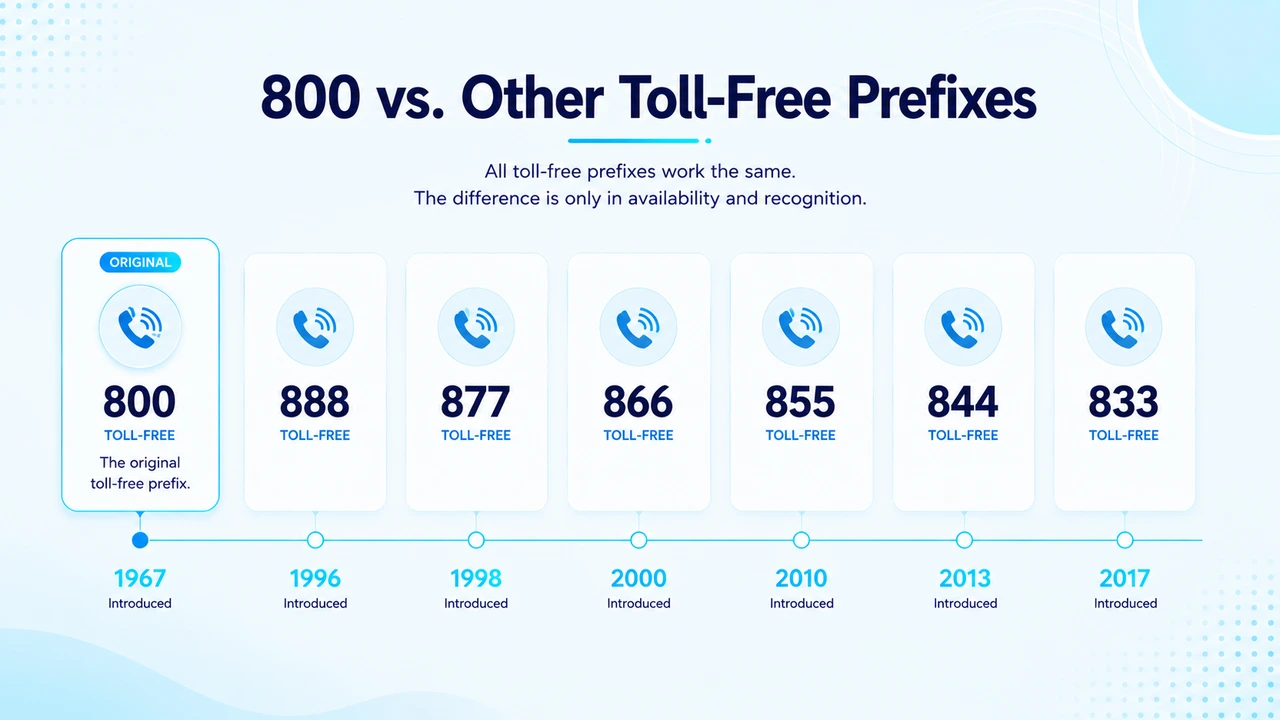
Every toll-free prefix works the same way once a call connects. The caller pays nothing. The business that owns the number covers the cost of the call. That is true whether the number starts with 800, 888, 877, 866, 855, 844, or 833. The real difference between them is age and how many numbers are still open. Because 800 came first, it carries the strongest brand recognition. Many view it as the most premium toll-free prefix a company can hold. Newer prefixes such as the 888 area code exist simply because the 800 pool ran low. They do not work any differently. For more on how toll-free service compares to local numbers, see our toll-free vs. local numbers guide.
Turning an 800 Line Into a Marketing Asset
A toll-free number is also a measurement tool. Attach call tracking to an 800 line. A business can then see which campaigns make the phone ring. Budget can shift toward what actually works. The U.S. Federal Communications Commission explains how toll-free billing and routing work in its official toll-free guide. It is a useful read before choosing a plan. Providers often add features such as business-hour scheduling and voicemail-to-email. Auto-attendants and call recording are common too. These let a small team sound like a much larger operation. This is where a provider like Rozper fits in. With 99.999% uptime and coverage across more than 150 countries, it can set up an 800 number that routes anywhere. Calls, texts, and analytics all sit in one dashboard.
Why the 800 Area Code Still Earns Trust
First impressions travel fast over the phone. An 800 area code signals that a company is established and national in scope. It also shows the business is willing to cover the cost of the call. Because it is the oldest toll-free prefix, many callers link it with older, larger, and more trusted brands. That holds true even when the business behind it is brand new. That one perception can tip a hesitant prospect into a paying customer. The same number can follow a business through every office move or rebrand. Customers never lose track of how to reach it.
Is an 800 Number Right for Your Business?
Not every company needs a toll-free line. But a few signs point to a clear yes. If a business sells across state lines, a local number can quietly hint that it serves one region only. An 800 number says the opposite. If the company runs paid ads, the tracking data tied to the prefix shows which channels earn more budget. If growth is coming, a number that scales from one line to many saves a rebuild later. Service businesses, online stores, clinics, and support teams tend to gain the most. Each one lives or dies on how easily a real person can be reached.
Conclusion
The 800 area code started the toll-free era. It still carries the most weight of any prefix in the family. It lowers the barrier for customers to call. It gives a brand a national feel. It hands over data that can guide real decisions. Whether a business chases one of the last open 800 combinations or picks a newer sibling prefix, the value stays the same. A free call is an easier call to make. If you're ready to set one up with dependable routing and real support behind it, see how Rozper handles toll-free numbers at rozper.com.
FAQs
Is the 800 area code free to call?
Yes. Calls to an 800 area code number are free for the person dialing. That holds true from anywhere in the United States, Canada, and other North American Numbering Plan regions. The business that owns the line covers the full cost of the call.
Where is the 800 area code located?
Nowhere in particular. Area code 800 is a toll-free prefix, not a place marker. A number using it can be answered in any state or province. A shop in Ohio and a firm in Vancouver could both run an 800 line from the same dashboard.
Why was the 800 area code created?
AT&T introduced the 800 area code in 1966. It was the first toll-free code in the North American Numbering Plan. It let customers call a business without paying long-distance fees. The business covered the cost instead.
Is an 800 number better than newer toll-free prefixes like 888 or 877?
Not in how it works. Every toll-free prefix routes calls the same way. None of them cost the caller anything. The 800 prefix simply carries more history and name recognition since it came first. That is why some businesses view it as more premium.
Can I port my existing 800 number to a new provider?
Usually, yes. Most providers let you move a current toll-free number to a new platform. That includes one on the 800 area code. You supply authorization and account details. The transfer often finishes with no downtime.