Introduction
Three eights at the start of a phone number tend to catch the eye. That is no accident. The 888 area code is one of the most recognizable toll-free prefixes in North America. Businesses use it so callers can reach them without paying a cent. This guide covers what the prefix is, how it routes a call, what it costs, and how any company can put one to work. We keep the language plain and simple.
What the 888 Prefix Really Means
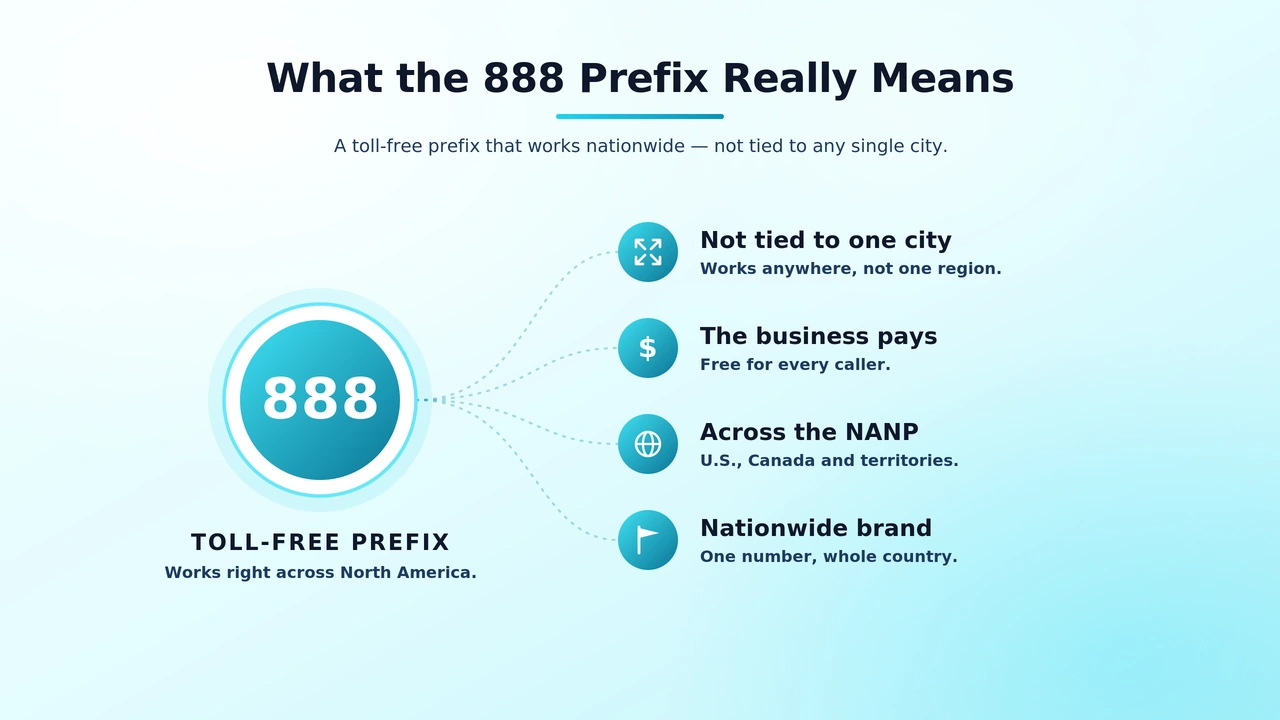
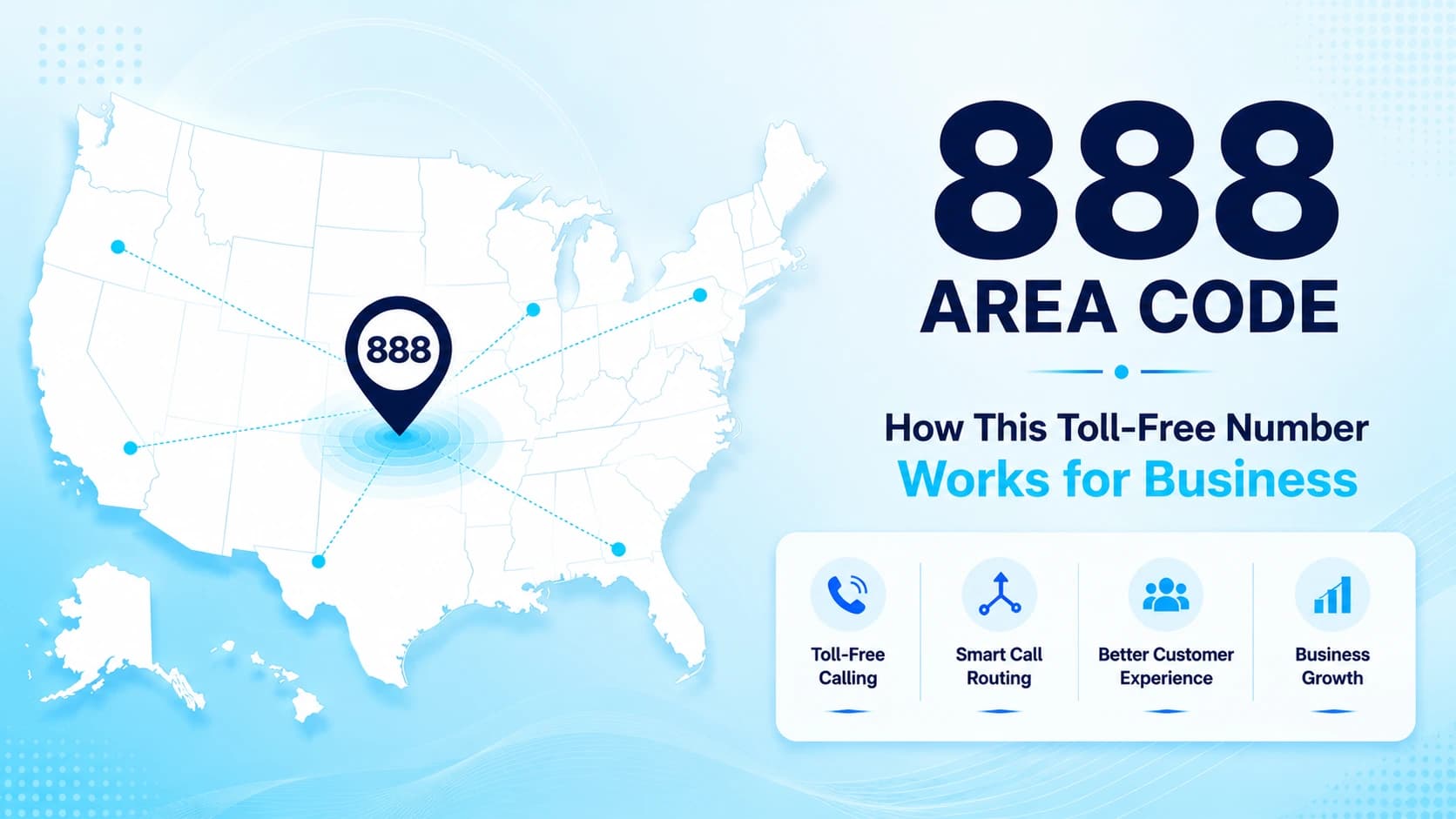
The 888 area code is a toll-free prefix. It works across the North American Numbering Plan, which covers the United States, Canada, and several nearby territories. It is not tied to a city the way a local prefix is. When someone dials a line on this prefix, the business that owns the number pays for the call. The caller pays nothing. That one rule is the heart of toll-free service. People reach you at no charge on their end. In turn, you gain a number that speaks for your brand across the whole country, not just one neighborhood.
Where 888 Sits Among Toll-Free Codes
Toll-free dialing began with the original 800 line. It grew as the best combinations ran short. If you want the full backstory, our toll-free vs. local numbers guide explains how the first toll-free numbers changed customer service. The 888 prefix arrived as the first expansion of that pool. Then came 877, 866, 855, 844, and 833. Every one of these works the same way. Each exists only to open up fresh number combinations. Here is the practical lesson: an 888 area code behaves just like a classic 800 line. So your real choice comes down to which numbers are still open and how easy they are to remember.
How an 888 Call Connects
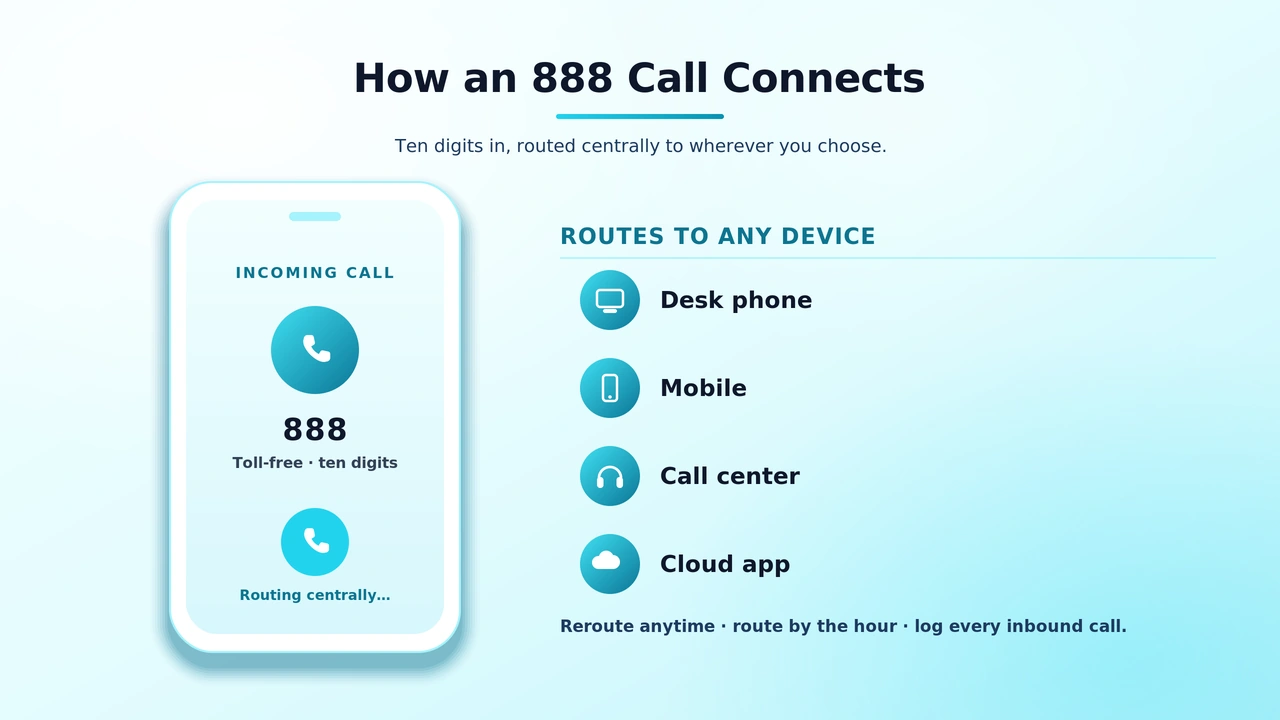
An 888 number uses the standard ten-digit format: the prefix, then a seven-digit line number. There are no special codes to dial. A caller just enters all ten digits from anywhere in North America. Behind the scenes, the number is managed in one place and routed to whatever spot you choose — a desk phone, a mobile, a call center, or a cloud app. You can reroute it whenever you like. You can send calls to different teams by time of day. You can log every inbound call, too. Seen this way, the 888 area code is less like a single phone line and more like an adjustable front door to your business.
What an 888 Line Costs
Toll-free pricing is usually low and easy to predict. Most providers charge a small monthly fee for the number, plus a per-minute rate for inbound calls. The business pays this charge so the caller pays nothing. Vanity numbers that spell a word can carry a one-time premium, since demand for them runs high. Plain numeric lines cost less and work just as well. Many plans bundle in routing, voicemail, and analytics at no extra charge. So your real cost tracks call volume more than setup. For most small teams, that monthly cost is far lower than the value of just one new customer the line brings in. There is no equipment to buy and no install visit to book. That means an 888 area code line is within reach for a brand-new business on day one.
Claiming or Porting an 888 Number
Getting started is quicker than most owners think. You browse a provider's list of open numbers, pick a standard or vanity combination, and point it at the phones or apps your team already uses. No hardware is needed. If you already hold a toll-free number, you can usually port it to a new provider without losing it. You supply account details and sign off, and the move happens with little or no downtime. For a closer look at a sibling prefix, our breakdown of the 844 area code covers the same ground from another angle. Picking a vanity number that spells your brand can make the line easier to remember and lift response on your ads.
Turning 888 Into a Marketing Asset
A toll-free number is also a measuring tool. Attach call tracking to your line, and you can see which campaigns actually make the phone ring. Then you shift spend toward what works. The U.S. Federal Communications Commission explains how toll-free billing and routing work in its official toll-free guide. It is a useful read before you commit. Providers add features such as business-hour scheduling, voicemail-to-email, auto-attendants, and call recording. This lets a small team sound like a national operation. This is where a provider like Rozper fits in. With 99.999% uptime and coverage across more than 150 countries, it can set up an 888 number that routes anywhere, with calls, texts, and analytics in one dashboard.
The Credibility an 888 Number Brings
First impressions move fast over the phone. An 888 area code signals that a company is established, has a national reach, and is willing to cover the cost of a conversation. That feeling can nudge a hesitant prospect into becoming a customer. The same number can follow your business through every move, rebrand, or growth spurt. So customers never lose touch when an office moves or a team shifts to remote work. That mix of staying power, reach, and clear data is hard to match with an ordinary local line. This is why many growing companies treat the 888 area code as core infrastructure, not just a nice extra. It is a quiet edge that costs little to claim and pays off on the very first call.
Staying Safe From 888 Scams
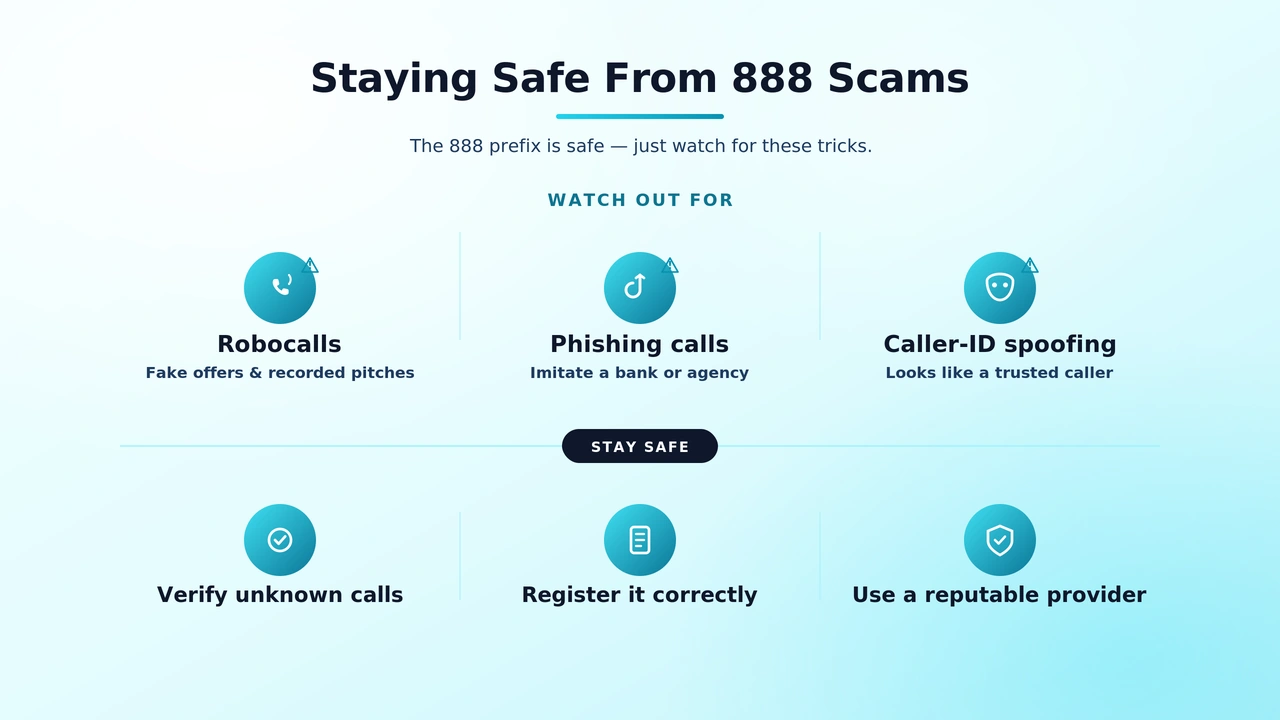
Toll-free prefixes are simple to get, so the occasional scammer hides behind one. Tricks linked to the 888 area code include robocalls that push fake offers, phishing calls that copy a bank or agency, and caller-ID spoofing that dresses up a fake call as a trusted one. The prefix itself is not a red flag. Countless honest brands rely on it. Still, treat any unwanted call that asks for personal details with care. For your own line, registering it the right way and working with a trusted provider lowers the odds of it being spoofed or flagged.
Is an 888 Number Right for You?
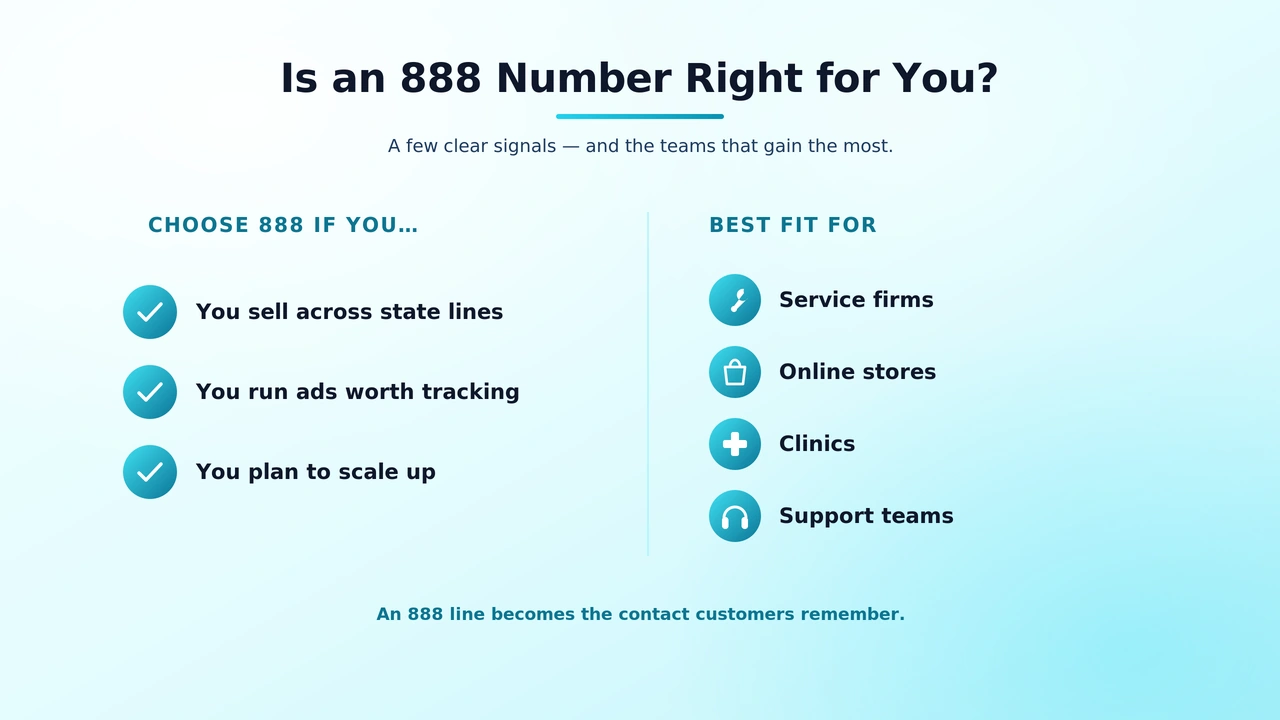
Not every company needs a toll-free line, but a few signs point to a clear yes. If you sell across state or national borders, a local number quietly hints that you only serve one area. A toll-free line says the opposite. If you run ads, the tracking data tied to the prefix shows which channels deserve more budget. And if you plan to grow, a number that scales from one line to many, with no new hardware, saves you from rebuilding your phone setup at every stage. Service firms, online stores, clinics, and support teams tend to gain the most. Each one depends on how easily customers can reach a real person. For many of them, an 888 area code becomes the steady point of contact that customers remember.
Conclusion
In the end, the 888 area code is a small choice with a big payoff. It removes the cost barrier for customers, gives your brand a national feel, and hands you data you can act on. Whether you are setting up your first toll-free line or moving one you have used for years, the prefix rewards businesses that treat the phone as a real channel, not an afterthought. If you want to launch one with steady routing and real support behind it, see how Rozper handles toll-free numbers at rozper.com.
FAQs
Is the 888 area code free to call?
Yes. Calls to an 888 area code number are free for the person dialing, from anywhere in the United States, Canada, and other North American Numbering Plan regions. The business that owns the line covers the cost. That is exactly why customers feel at ease picking up the phone and reaching out.
Where is the 888 area code located?
Nowhere specific. Area code 888 is a toll-free prefix, not a geographic marker. A number using it can be answered in any state or province. A shop in Texas and a firm in Toronto could both run an area code 888 line from the very same dashboard.
Can I move my current toll-free number to a new provider?
Usually, yes. Most providers let you port a toll-free line, including one on the 888 area code, to a new platform. You supply authorization and account details. The transfer usually finishes with no downtime, so customers never notice a gap.
How is an 888 number different from an 800 number?
In practice, there is no difference. Both are toll-free and free to the caller. Only the digits change. When the first pool filled up, prefixes like 888 were added to expand supply. So an area code 888 number carries the same benefits as a classic 800 line.
Does an 888 number help with marketing?
Yes. Beyond free calls, an area code 888 line supports call tracking and analytics. These reveal which ads, pages, or campaigns drive real phone calls. This turns a basic support line into a real source of customer insight.