Introduction
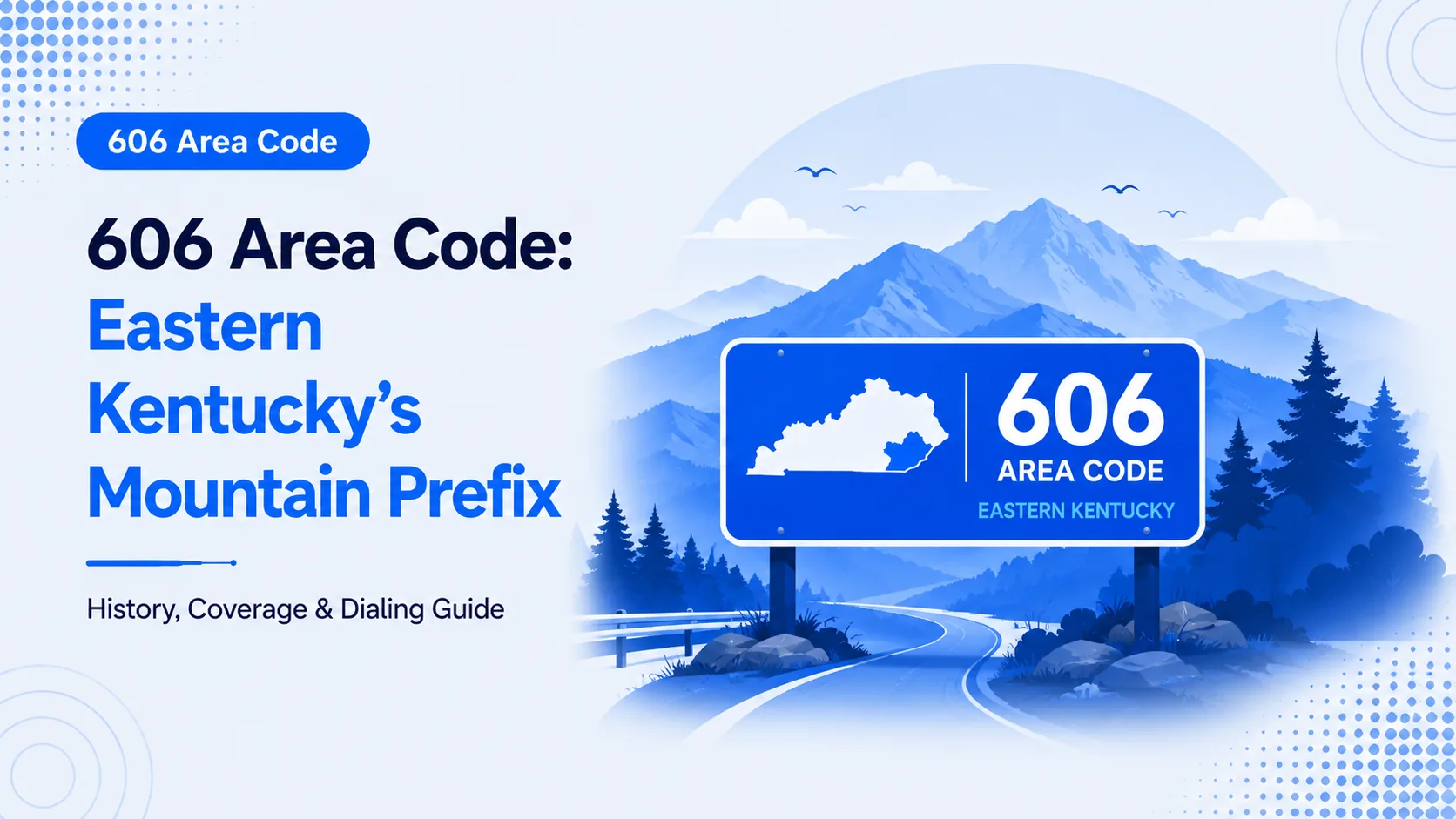
Eastern Kentucky has used the 606 area code since the 1950s. It covers the Appalachian mountains, a region that works a little differently than the rest of the state. Maybe a call from this prefix just landed on your phone. Maybe you run a business and want a local number in Ashland or Pikeville. Either way, this guide explains what the code covers and where it came from. You'll learn its geography, its history, the mountain cities it reaches, and the dialing rules that set it apart.
Key Takeaways:
- The 606 area code covers the Appalachian mountains at Kentucky's eastern edge.
- It split from the statewide 502 code in 1954 and gave up Lexington to area code 859 in 1999.
- It has no overlay, so 7-digit local dialing still works between neighbors.
- Ashland, Pikeville, and Somerset anchor a rugged, mostly rural coal and mountain region.
Where Is the 606 Area Code Located?
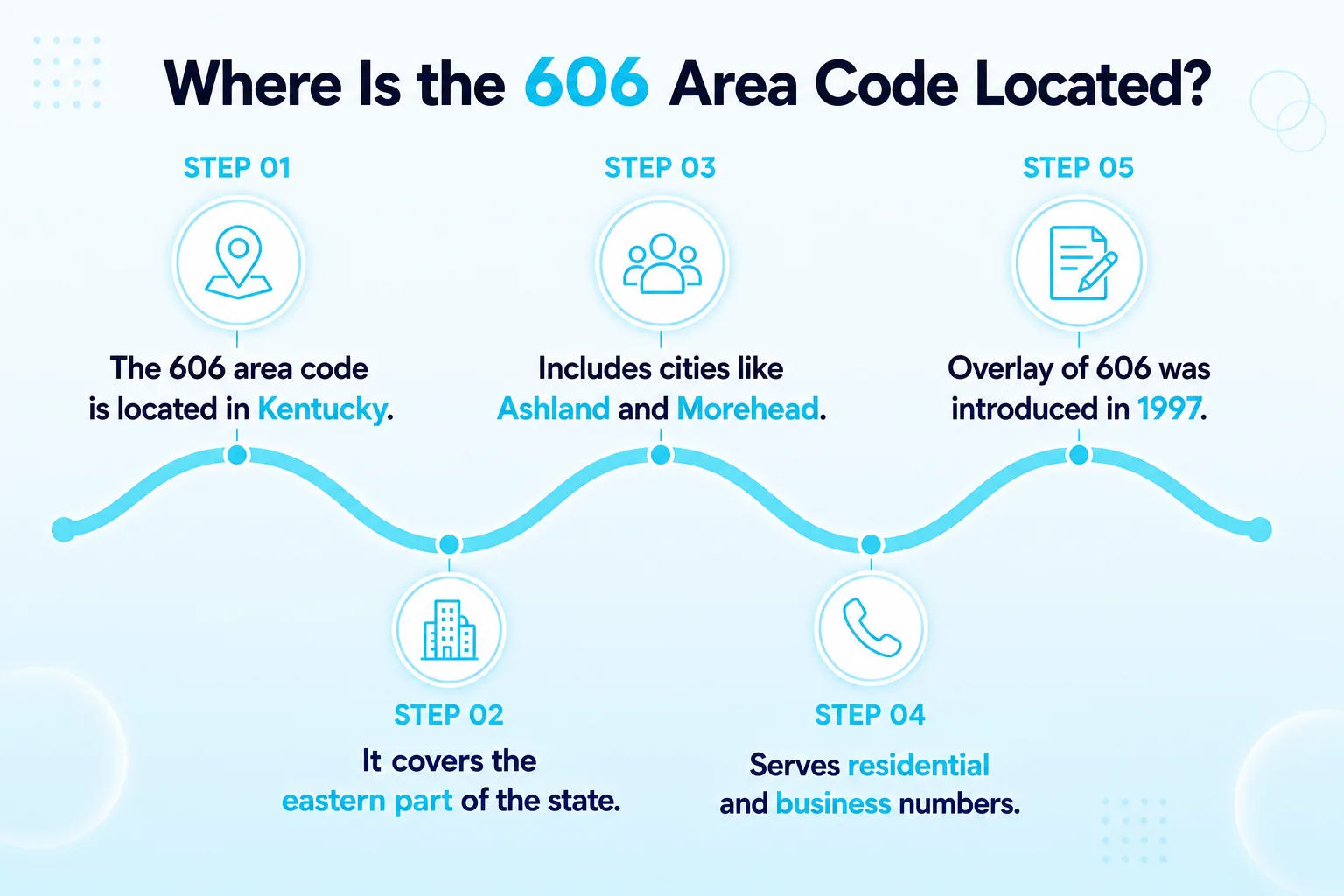
This area code covers the eastern edge of the state, deep in the Appalachian mountains. It was once far larger. Today it wraps around the mountain counties that border West Virginia and Virginia, plus a stretch of coal country and river towns. The terrain is rugged and rural, with no single big metro at its center. Instead, a chain of small cities and county seats anchor the region. It sits apart from the flatter, faster-growing parts of the state to the west. The 606 area code is the prefix most tied to Appalachia and mountain life.
History and Origin of the 606 Area Code
The 606 area code is one of the older codes in the country. It went into service in 1954, split off from the original 502 that once covered the whole state. At first it took in the entire eastern half of the state, reaching as far west as Lexington and the northern suburbs near Cincinnati. That was a huge territory for one code. As the region grew, it had to shrink. In 1999, regulators carved out area code 859 for Lexington and the central Bluegrass. That left 606 with the mountains alone, and its boundaries have held steady ever since.
Area Code 606 Compared to Nearby Kentucky Codes
The state runs on several area codes, and the 606 area code sits at the far eastern end of the map. To the west, area code 859 covers Lexington and the Bluegrass, the region 606 gave up in 1999. Further west, 502 covers Louisville and 270 covers the western third of the state. What sets 606 apart is time and terrain. It runs on Eastern Time, while the western codes run on Central. You can see that western contrast in our guide to the 270 area code.
- 606 covers the Appalachian mountains at the state's eastern edge.
- It observes Eastern Time, unlike the Central-Time western codes.
- It has no overlay, so it stays a single standalone code.
- It borders West Virginia and Virginia, not the Midwest.
Cities and Communities Served by the 606 Area Code
This area code reaches a wide mix of mountain communities. It has no single metro hub. Ashland anchors the northern end along the Ohio River, near the West Virginia line. Pikeville sits deep in the coalfields to the southeast as a regional medical and education center. Somerset and London hold down the southern end near Lake Cumberland and the interstate.
Between them spread smaller county seats like Hazard, Morehead, Corbin, and Middlesboro, each with its own downtown and history. Towns like Paintsville, Prestonsburg, and Harlan carry the region's deep coal-mining and bluegrass-music roots. Choosing which of these markets to target is its own decision, and our area code guide helps weigh the options.
Time Zone and Dialing Rules for the 606 Area Code
Every community in this area code runs on Eastern Time. That puts it an hour ahead of the western part of the state, which sits on Central Time. The dialing rules are where 606 really stands out. Because it has no overlay, seven-digit local calls still connect between neighbors. That puts it in a small group of fewer than 75 area codes that still work the old way. Many people dial all 10 digits out of habit, and that works fine too. The Wikipedia entry on area code 606 lays out the full split history.
Why 7-digit dialing survives here
No second code was ever layered on top of 606. Without an overlay, seven digits are still enough to identify a local number, so the shorter dialing pattern never went away.
What that means for you
If you live in the mountains, a quick local call needs only seven digits. If you set up a business line, saving contacts in full 10-digit form keeps them working anywhere you travel.
Why Businesses Choose a 606 Area Code Number
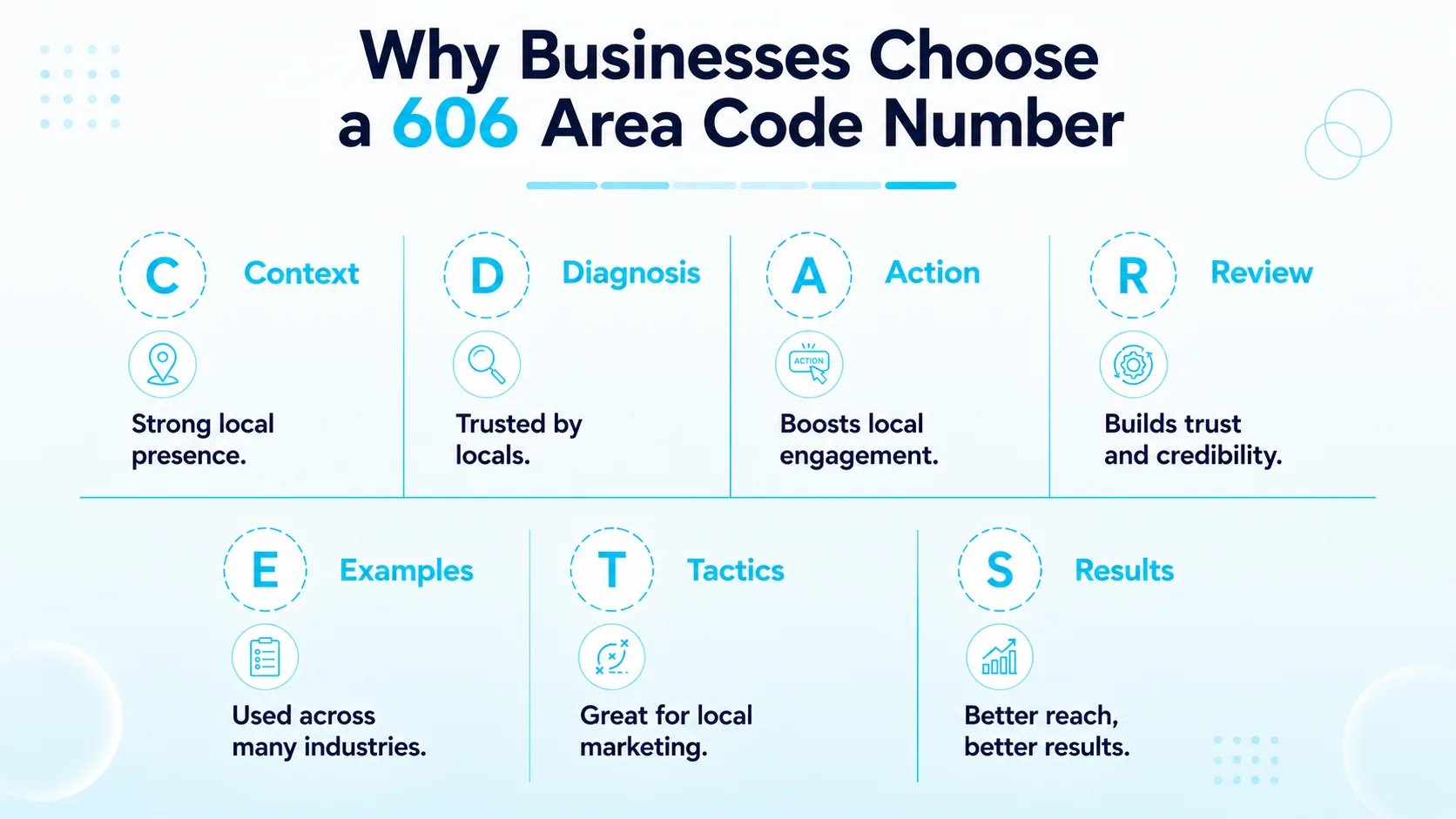
A local number in this area code sends a clear signal. It tells customers a business has real roots in the mountains, not a call center three states away. That matters in a region built on tight-knit towns where people know their neighbors. Local trust still drives referrals here. Businesses expanding into Ashland, Pikeville, or Somerset often pick up a matching number so their caller ID fits right in.
This is where a cloud phone provider like Rozper fits in. A business doesn't need a physical office in the region. Rozper lets it set up a local 606 number through a VoIP platform instead. The local presence stays intact, and calls can route anywhere the team actually works. Rozper backs that setup with 99.999% uptime and coverage across 150+ countries. A company can claim a mountain number while its support or sales team works from anywhere else. It's a practical way to plant a flag without signing a lease.
How to Get a 606 Area Code Number
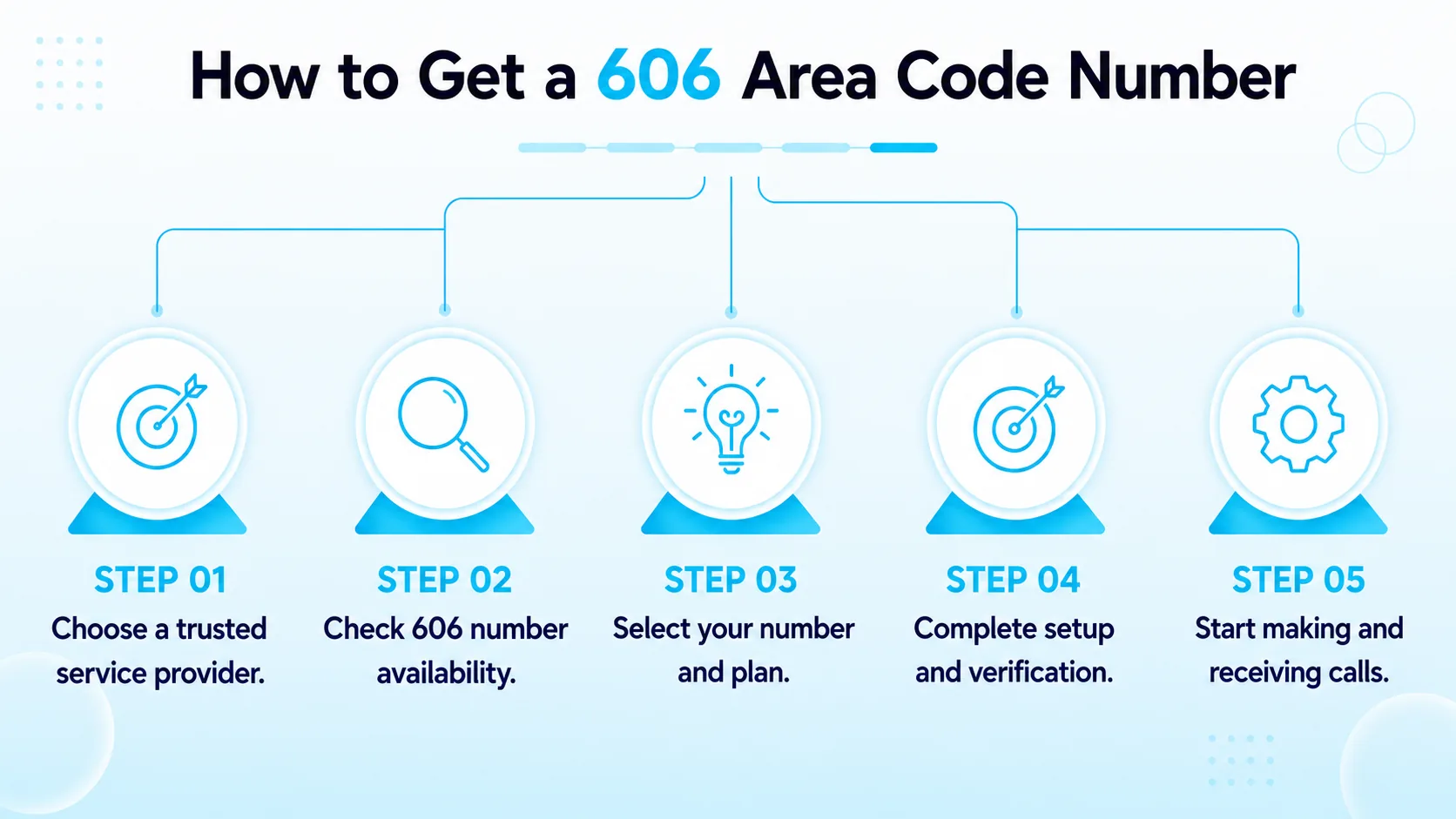
Getting a new number in this area code usually means going through a phone provider. That's different from the phone company that first assigned the block decades ago. VoIP providers can issue one in minutes. The process looks the same almost everywhere:
- Pick a cloud or VoIP provider that offers coverage in the region.
- Search available numbers in the 606 area code and choose one that fits.
- Confirm the number and point it at your existing phones or app.
- Route incoming calls to any team, wherever they actually sit.
Businesses moving a number from an old provider need one extra step. They file a standard porting request, which usually takes a few business days. It's worth confirming the old number keeps working normally during the transfer.
Conclusion
Area code 606 started in 1954 and has anchored the Appalachian mountains of eastern Kentucky ever since. It covers Ashland, Pikeville, Somerset, and dozens of small mountain towns across the region. Its Eastern Time zone and rare seven-digit dialing set it apart from the western part of the state. For residents, the 606 area code is simply the prefix tied to home and the hills around it. For businesses eyeing the mountains, it's a small but meaningful signal of local presence.
FAQs
When was area code 606 created?
It went into service in 1954, split from the original 502 code. It was one of the earliest area codes assigned anywhere in the country.
What cities does the 606 area code cover?
It covers eastern Kentucky's mountains, including Ashland, Pikeville, Somerset, Hazard, Morehead, Corbin, and Middlesboro. Many smaller county-seat towns fill in the rest of the region.
Do I need to dial 10 digits for local calls in this area code?
No. Because 606 has no overlay, seven-digit local dialing still works between neighbors. Many people dial all 10 out of habit, and that works too.
Is area code 606 the same as area code 859?
No. Area code 859 split away from 606 in 1999 to cover Lexington and the Bluegrass. Today 606 covers only the eastern mountains.
What time zone does the 606 area code use?
The entire region runs on Eastern Time. That puts it one hour ahead of the western part of the state, which sits on Central Time.
Is a call from the 606 area code safe to answer?
Yes, it's a standard code used by mountain residents and businesses alike. As with any call, stay cautious about sharing personal details with an unfamiliar number.
Can a business outside Kentucky get a 606 area code number?
Yes. VoIP providers can issue a number in this area code to any business, wherever it's based. Rozper, for example, can set one up with call routing and support for remote teams.
Why does the 606 area code still allow 7-digit dialing?
No second area code was ever overlaid on the same region, so numbers never had to expand. That keeps it among the few codes where short local dialing survives.