Introduction
Can a simple phone number change how your business connects with people? Across southern California, it can. This prefix does more than it looks like it can. It covers a huge stretch of the state. That includes the coast towns of north San Diego County. It also reaches the desert towns of the Coachella Valley. In short, it gives any business an instant local presence. And this is one of California's fastest-growing areas.
Trust matters a lot in these markets. The prefix on an outbound call is a first impression. It lands before anyone even speaks. People are far more likely to pick up a call from a number they know as local. They are less likely to answer an odd toll-free or out-of-state line. This guide covers where this prefix works. It explains what time zone it uses. It shows how the overlay system works. It also shows how any firm can get a local southern California number. This holds true no matter where the team sits. Maybe you run a hotel in Palm Springs. Maybe you run a clinic near the coast. Maybe you run a freight business in the High Desert. Either way, a known local prefix can turn a first-time caller into a repeat customer.
What Is the 442 Area Code?
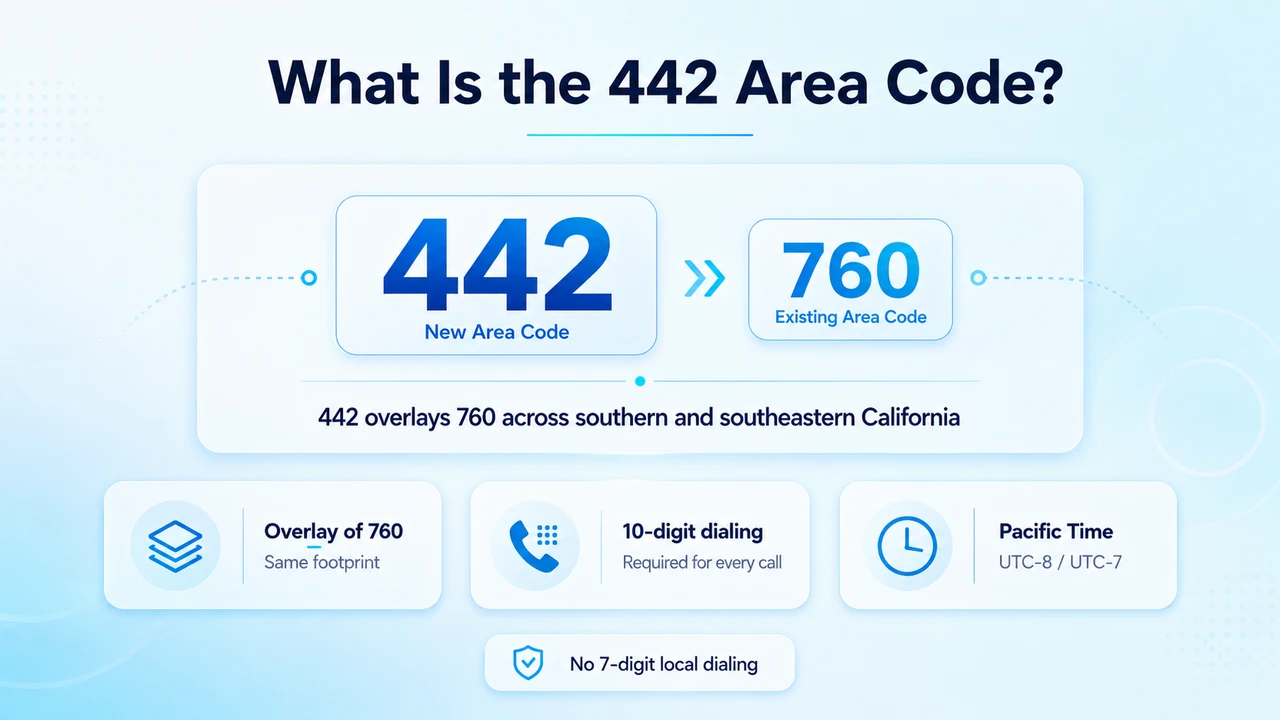
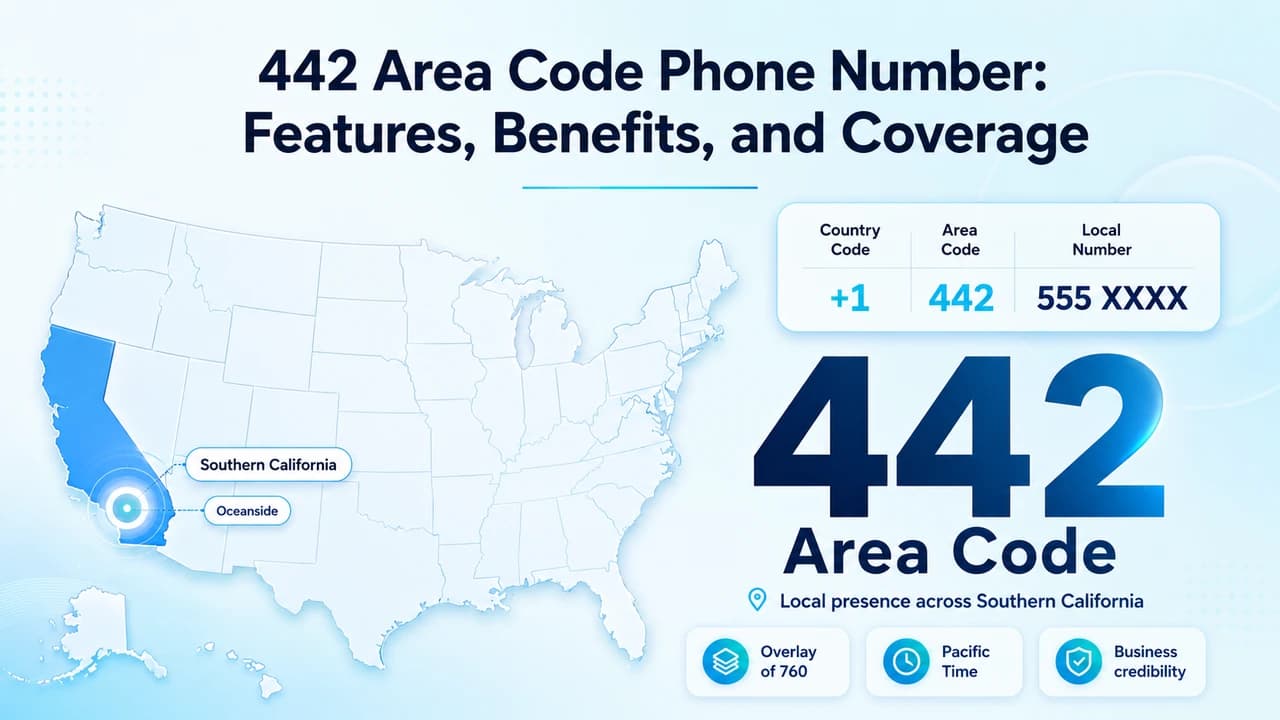
The 442 area code started in 2009. It works as an overlay on the old 760 code. That means it sits on top of the same area, not splitting it up. This overlay let old 760 users keep their old numbers. New lines got the fresh prefix as need for numbers grew.
Today, this prefix shares its whole area with 760. The two codes act as one local calling area. Together they cover a huge part of south and southeast California. Because of this overlay setup, each call in the area needs 10-digit dialing. This rule began when the overlay went live. If you dial just seven digits, the call will not go through. Locals are used to seeing both prefixes side by side in their contacts. So a 442 number feels just as local as an old 760 line.
The region runs on Pacific Time (PT). That's UTC-8 in the winter months, from early November through mid-March. It's UTC-7 in the summer months, from mid-March through early November. Firms in Central, Mountain, or Eastern time zones should plan for this gap. Keep it in mind when you reach out to folks in Oceanside, Escondido, or Palm Springs.
For businesses also targeting the greater Los Angeles market alongside southern California's inland and coastal communities, our 323 area code guide covers central and south Los Angeles in detail.
Where Does the 442 Area Code Cover?
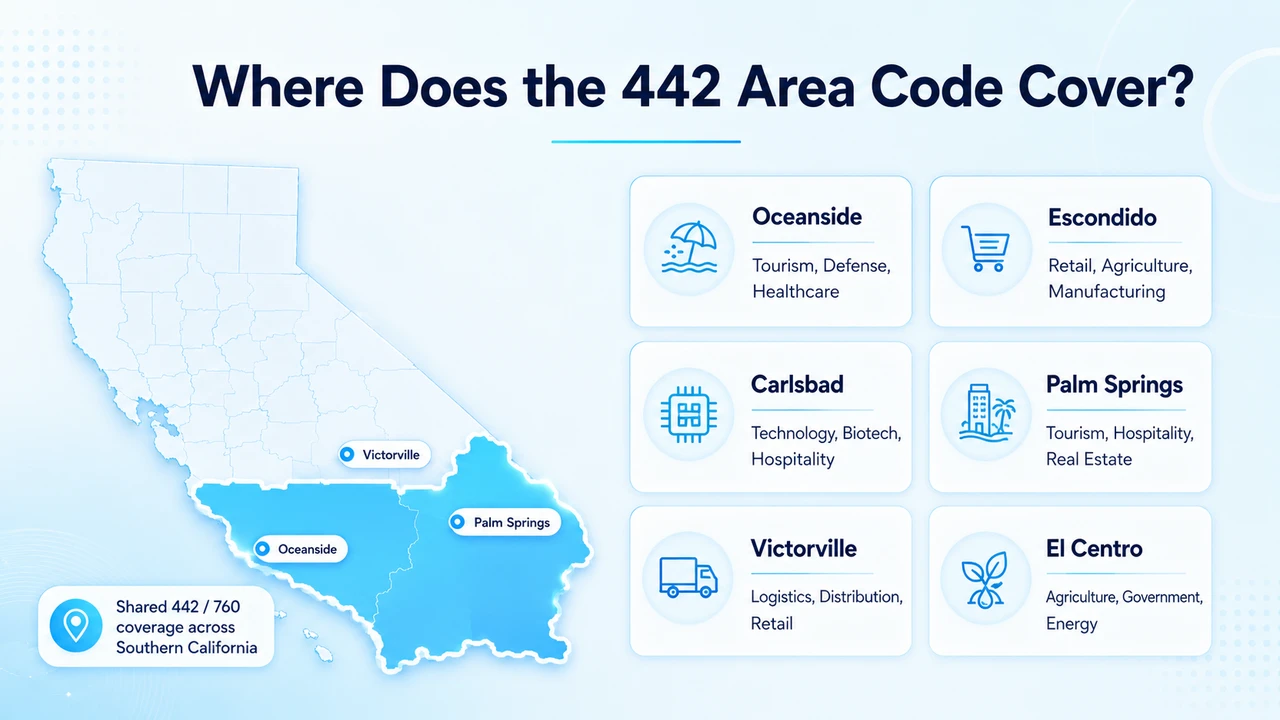
The 442 area code spans the same broad territory as 760. It reaches from the Pacific coast through the inland deserts. Here is an overview of key cities and their economic focus:
| City | Key Industry Focus |
|---|---|
| Oceanside | Tourism, Defense, Healthcare |
| Escondido | Retail, Agriculture, Manufacturing |
| Carlsbad | Technology, Biotech, Hospitality |
| Palm Springs | Tourism, Hospitality, Real Estate |
| Victorville | Logistics, Distribution, Retail |
| El Centro | Agriculture, Government, Energy |
This local prefix carries real weight across this varied region. A local number tells buyers that your firm belongs to their community. It doesn't sound like a call routed from a far-off national hub. Along the north San Diego County coast, biotech and defense drive a strong economy. There, a known prefix builds trust. Out in the Coachella Valley and High Desert, tourism, freight, and farming anchor local trade. In those spots, that same local sign backs up the community ties that shape buying choices.
For companies expanding north into California's Central Valley, our 559 area code guide covers Fresno and the surrounding agricultural heartland.
History of Area Code 442
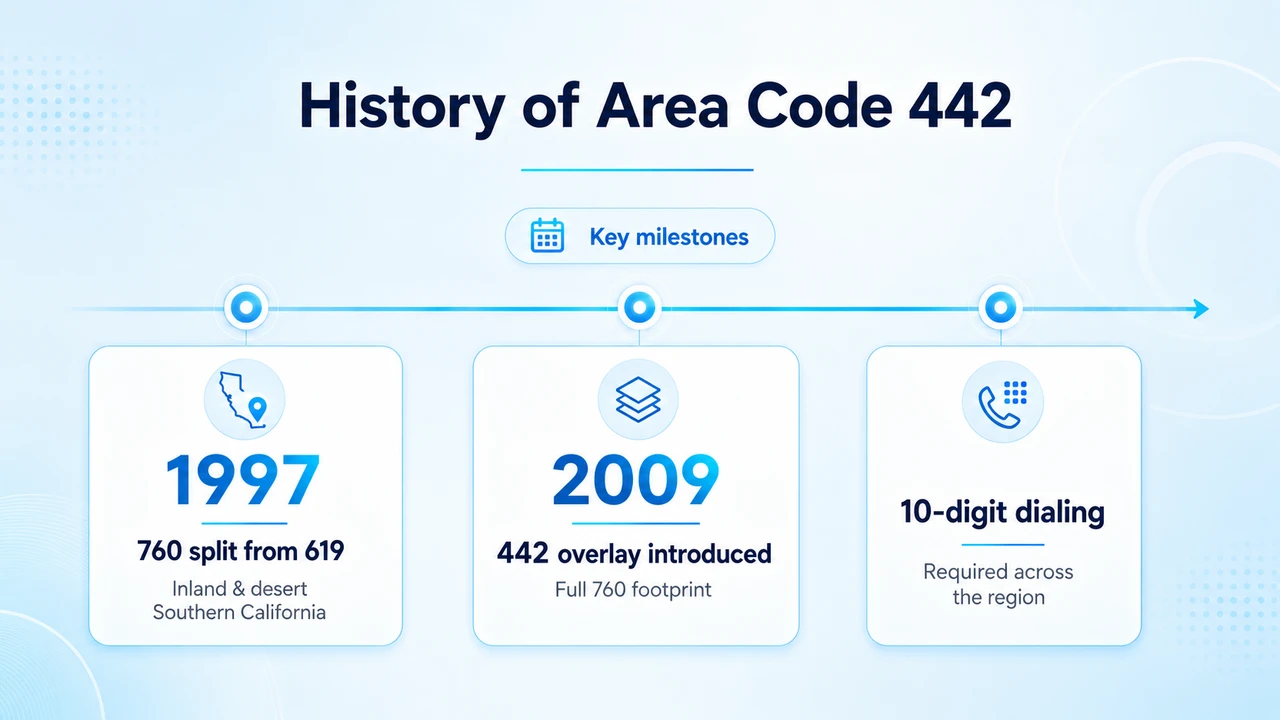
Area code 442 went live on November 21, 2009. It served as the overlay fix for the 760 region. The 760 code had itself split from the 619 area code back in 1997. That split served the inland and desert towns of south California. By the late 2000s, need for new numbers across this growing area called for more room.
Key facts that define the 442 territory:
- 1997: Area code 760 split from 619 to serve inland and desert southern California
- 2009: The 442 code introduced as an overlay covering the full 760 footprint
- Dialing: Mandatory 10-digit dialing applies to every call within the 442/760 region
When the 442 area code was first set up, planners chose the overlay plan for one main reason. They did not want to force locals and firms to change their old 760 numbers. This kept things simple. At the same time, it grew the pool of open numbers across a region that spans many counties. The FCC's consumer dialing guide lists federal rules on overlays and 10-digit dialing. It's the main source for how these rules work nationwide.
How to Get a 442 Area Code Number
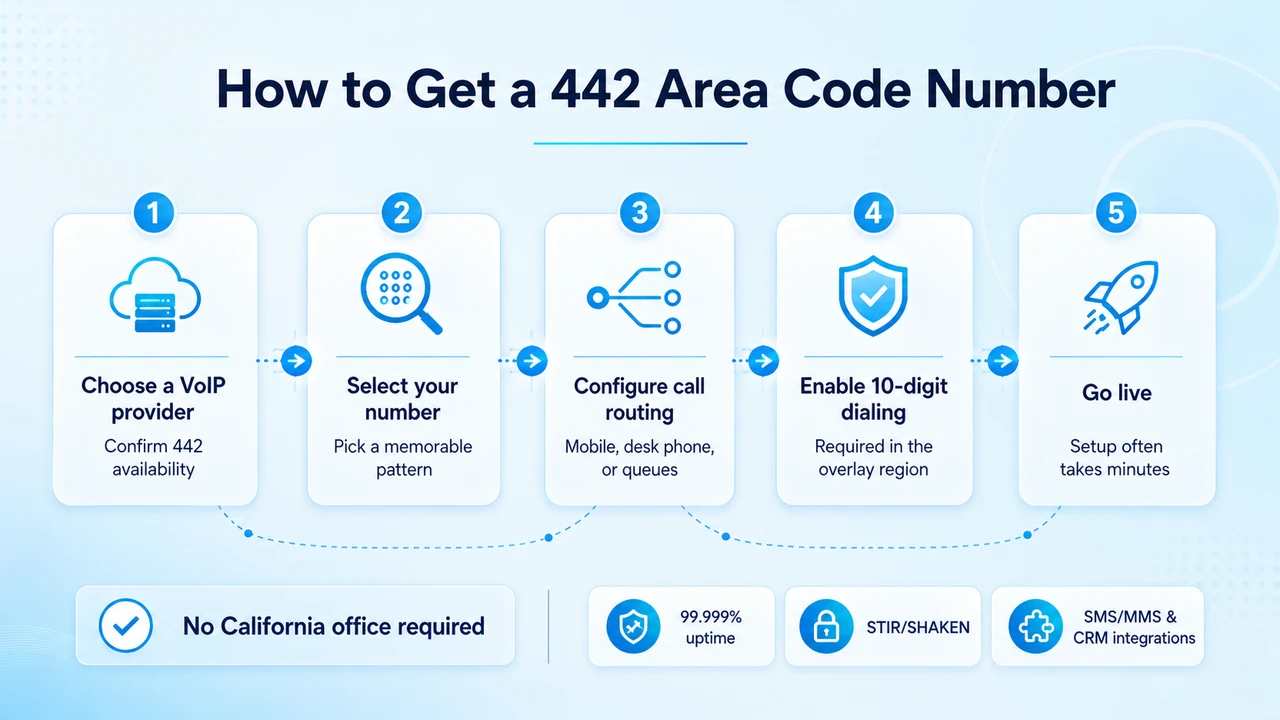
Getting a number with this prefix does not need a California office. You don't need a real address in the region either. VoIP (Voice over Internet Protocol) tech lets any firm get and run a local southern California number from anywhere in the world. Calls go to whatever gear your team uses now.
Steps to get started:
- Choose a VoIP provider with live 442 number inventory — confirm availability before committing to a plan
- Browse and select your number — search for memorable patterns or sequences that strengthen brand recall
- Configure call routing — forward calls to mobile devices, desk phones, or call queues based on your hours and team structure
- Enable 10-digit dialing across every CRM system and outbound configuration, as required in the overlay region
- Go live — most providers complete setup in minutes, with no hardware or technician visit required
What to look for in a provider:
Look for platforms with 99.999% uptime. Across southern California's tourism and freight trades, a missed call often means a lost booking or shipment. STIR/SHAKEN caller ID checks confirm your number at the carrier level. This keeps it from being flagged as spam by other networks.
Business SMS and MMS support extends your reach past voice calls. This fits the mobile-first habits of California's buyers. Links to Salesforce, HubSpot, or Zoho log every 442 call against contact records on their own. Your California customer chats stay tracked with no manual entry. Your team also gets a full view of each tie over time. Call logs and voicemail-to-email add more insight. Managers can check calls for quality and training, without sitting in on each one.
Conclusion
The 442 area code has served southern California since 2009. It extends the trusted 760 area across north San Diego County, the Coachella Valley, and the High Desert. Are you after customers in this region? Then a number with area code 442 is a smart spend on local trust. It lifts answer rates. It earns community trust before a single word gets spoken. With a modern VoIP platform, getting a southern California number takes minutes. It needs no in-state address at all.
FAQs
What cities does the 442 code serve?
The 442 area code shares its area with 760. It covers a broad part of south and southeast California. This includes Oceanside, Escondido, Carlsbad, Palm Springs, Victorville, and El Centro. The region runs from the north San Diego County coast through the Coachella Valley and the High Desert. That gives the code wide name recognition across many towns.
What is the difference between 442 and 760?
Both codes cover the exact same area as overlay partners. Both feel local to people across the region. 760 is the older code, set up in 1997. Area code 442 was added in 2009 as an overlay to meet growing need for new numbers. To callers, a 442 number feels just as local as a 760 number anywhere in the shared area.
Do I need a California address to get a 442 number?
No. VoIP providers let firms anywhere get and run a local southern California number. You don't need a real state address or office. Calls route to any device your team uses — phone, laptop, or desk phone — no matter where you sit. This makes it a good fit for remote and spread-out teams that want a real local feel.
What time zone is the 442 code in?
The 442 code follows Pacific Time (PT). That's UTC-8 in standard time and UTC-7 in daylight saving time. Firms in other time zones should plan south California outreach during Pacific work hours, roughly 8 AM to 6 PM PT. This gives you the best shot at reaching folks in Oceanside, Palm Springs, and beyond.
Is 10-digit dialing required for the 442 code?
Yes. Since 442 overlays the 760 area, each call in the region needs the full 10-digit number. Dialing just seven digits leads to a failed call. So firms should set up all phone systems, CRMs, and dial-out strings to use the full 10-digit format across the whole 442/760 area.