Introduction
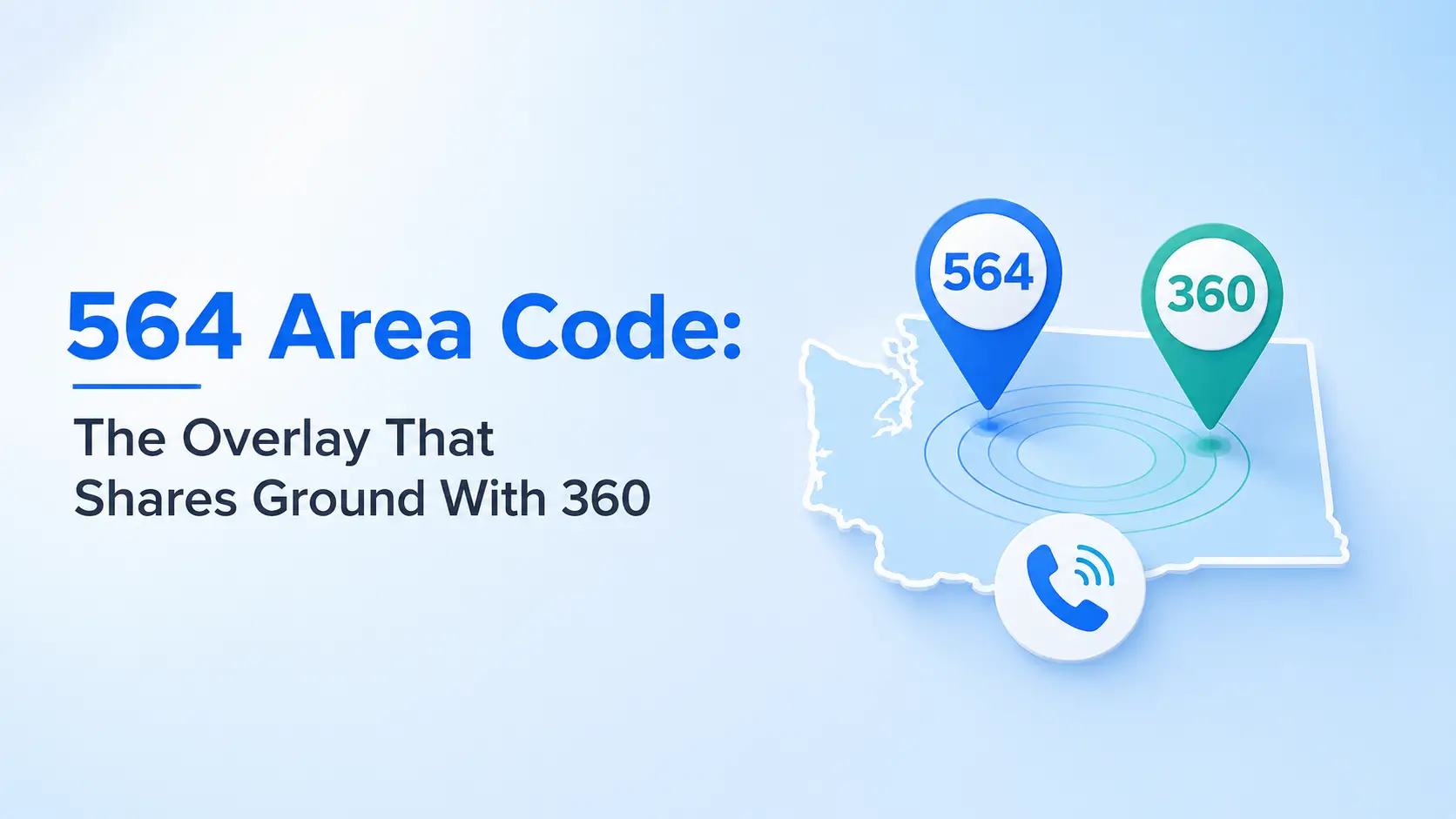
Seeing a 564 area code appear on your phone screen does not mean you're dealing with a new or unfamiliar region of Washington State. This prefix shares the exact same territory as the older 360 code, added in 2017 purely to keep up with numbering demand. In the next few minutes, you'll learn exactly why this overlay exists, which cities and towns it reaches, and how to tell a legitimate local call from one you should simply ignore. Understanding this overlay relationship changes how you read every unfamiliar call carrying these three digits.
Key Takeaways:
- The 564 area code shares identical territory with 360, covering most of Washington outside Seattle.
- It was added in 2017 as an overlay, not a new geographic split.
- Every local call in the region now requires all ten digits because of the overlay.
- Businesses can request a matching number through a cloud phone system without opening a local office.
2017: The Year a Second Code Joined 360's Territory
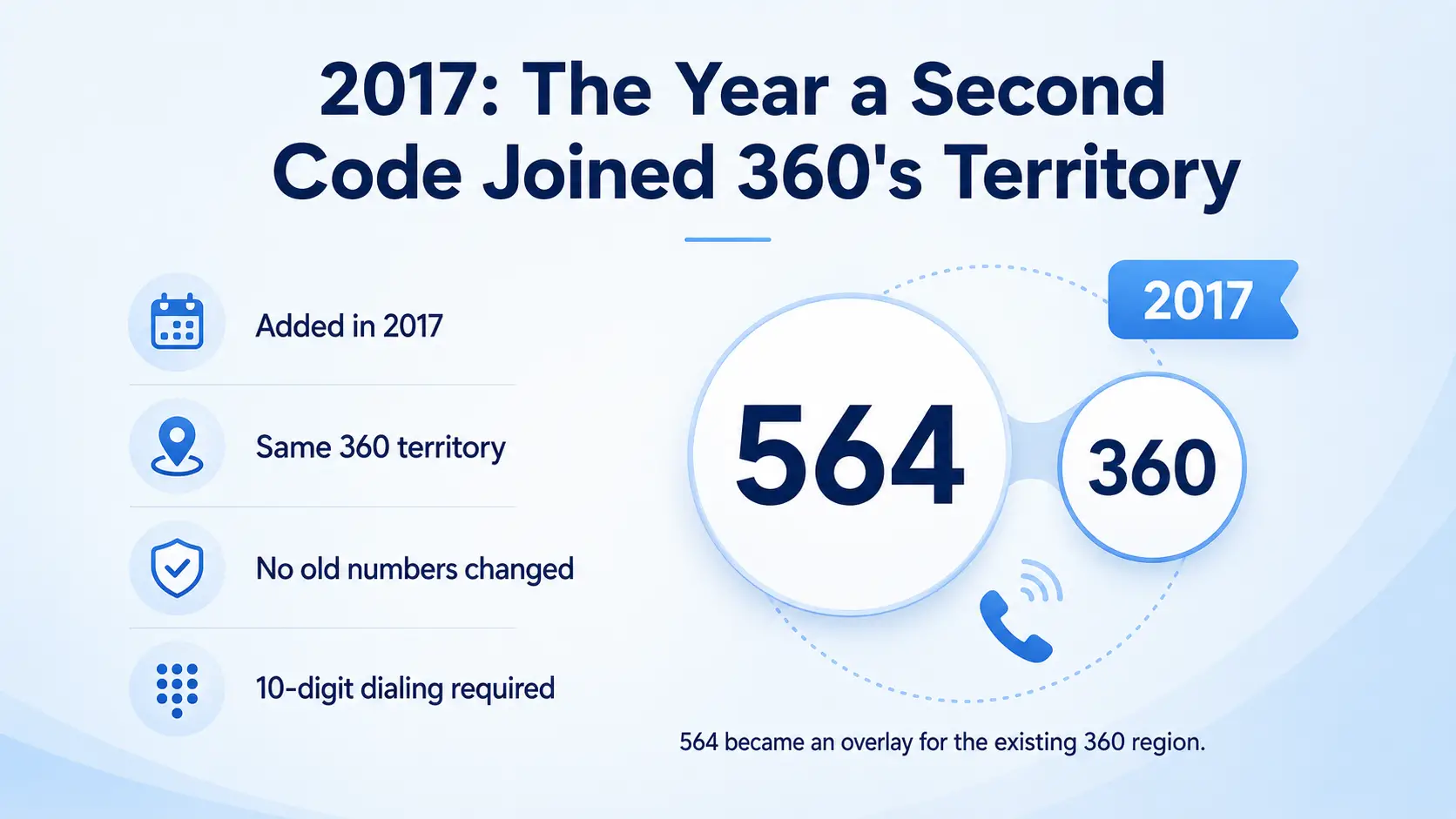
Washington regulators faced a familiar problem in the mid-2010s: the original 360 numbering pool, created back in 1995, was running low on available combinations after more than two decades of steady population and business growth. Rather than redraw the map and force existing customers to change their numbers, the state added the 564 area code as an overlay directly on top of the same ground.
- Introduced in 2017 to relieve numbering pressure across the 360 territory
- Covers the exact same cities and counties as its overlay partner
- Required no existing 360 area code numbers to change or reassign
- Forced mandatory ten-digit dialing across the entire combined region
Cell phones, fax lines, and small business expansion had eaten through the original 1995 numbering pool faster than regulators expected. Search engines and directories often list this territory as area-code-564, though most residents simply treat the digits as an extension of the same 360 identity they already knew.
Does the 564 Area Code Point to a Different Place Than 360
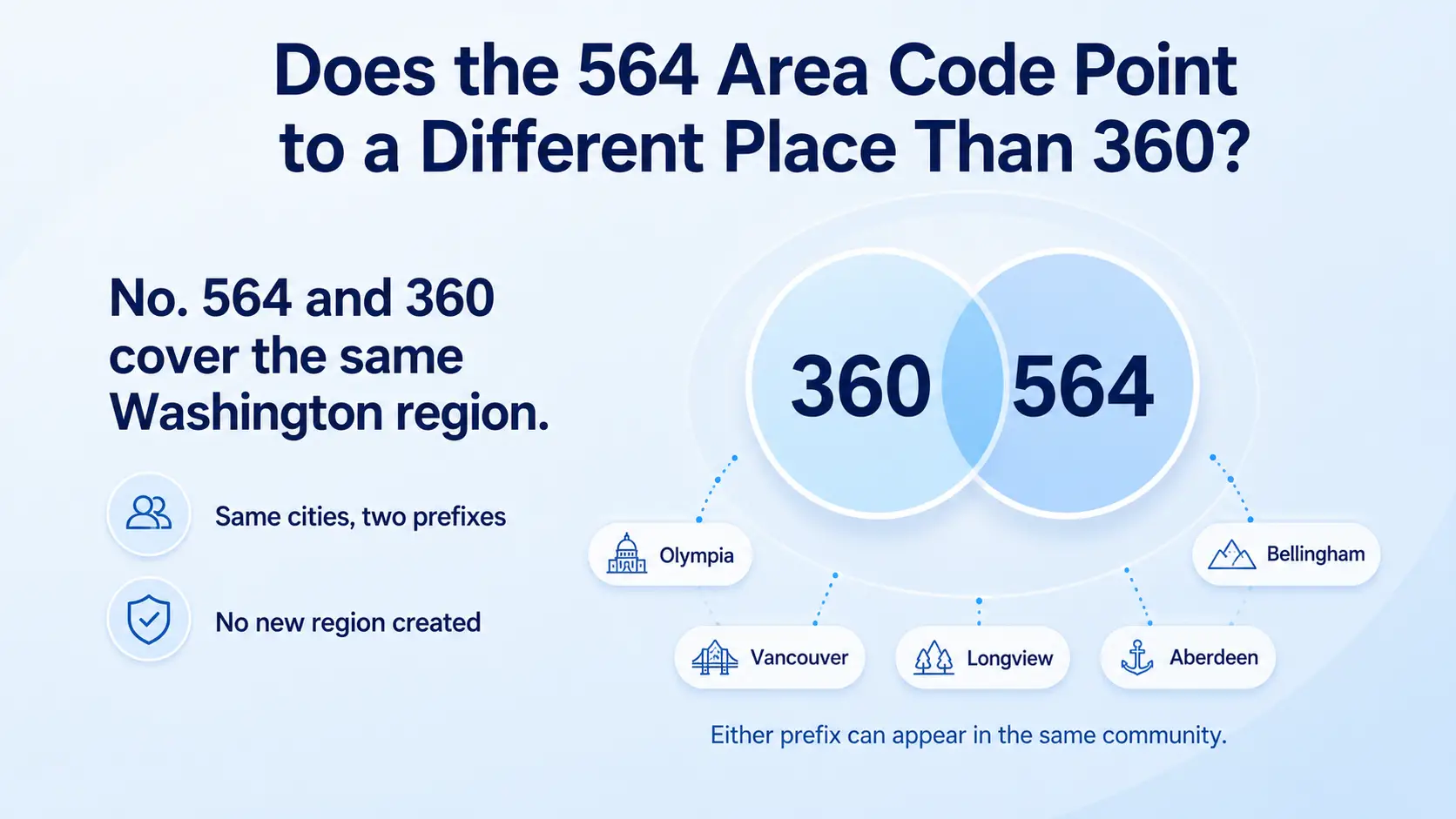
No, and this is the single biggest point of confusion for anyone unfamiliar with how overlays work. A call from Olympia, Bellingham, or Vancouver could carry either prefix depending purely on when the number was issued, not on any difference in location. A business owner who requests a 564 area code number today is simply drawing from the newer of two pools serving the identical community.
Same Cities, Two Prefixes
Olympia, Vancouver, Bellingham, Longview, and Aberdeen all sit inside both the 360 and 564 footprints, since the overlay stacks directly on the older code's territory. Port Angeles, Bremerton, and dozens of smaller towns along the coast and peninsula share this same dual coverage as well, right down to the individual street level in most cases.
No New Region Created
Regulators never expanded the geographic boundary when they added this prefix, meaning area-code-564-Washington describes exactly the same land area that 360 already covered for more than twenty years. Anyone searching for a distinct "564 region" on a map will come up empty, since no such boundary was ever drawn.
The Biggest Misunderstanding About This Overlay
Many callers assume a 564 area code number must belong to a newer or different part of the state, treating it like a fresh geographic assignment rather than a numbering pool addition. That assumption causes more confusion than it resolves, especially for anyone trying to guess a caller's exact town from the prefix alone.
- Myth: This prefix covers new towns that 360 didn't reach
- Reality: Both codes cover the identical Washington territory
- Myth: A 564 number is somehow less established than a 360 one
- Reality: Both prefixes carry equal legitimacy under the same overlay
An Aberdeen Business Owner's Two-Number Confusion
Picture a small accounting firm in Aberdeen that added a second line for its growing staff. The new number came back under area-code-564 instead of the original 360 prefix the owner had used for over a decade.
Confused customers started asking if the firm had moved or opened a second office somewhere else. Rozper customers navigating this exact overlay situation often need a quick explanation for clients, since two prefixes on the same business card can look like two separate locations if nobody clarifies the overlay upfront. A short note on the firm's website explaining that both numbers ring the same Aberdeen office cleared up the confusion within a week.
Why a Matching Prefix Still Builds Trust in an Overlay Region
Local numbers still shape whether someone picks up the phone, regardless of which of the two overlay prefixes a business happens to hold. Roughly 60% of consumers say they're more likely to trust a business that looks local, and that preference applies equally to a 564 area code number and a legacy 360 line sharing the same community.
- A 564 area code number still reads as local to Washington callers
- Rozper lets a remote team route calls under either overlay prefix
- Matching digits build quicker rapport with small-town and rural clients
- Neither overlay code outperforms the other for local credibility
- Businesses can mix both prefixes across departments without losing trust
- Customer support teams answer just as naturally under either number
Is a 564 Area Code Call Something to Verify?
Most calls carrying this prefix are exactly what they claim to be: local businesses, clinics, schools, farms, or neighbors reaching out from somewhere in the shared 360 and 564 territory. Scammers can still spoof any area code, though, so caller ID alone is never proof of legitimacy.
Federal complaint data consistently shows spoofed calls tend to borrow whatever prefix looks locally credible to the recipient, which means a 564 area code caller ID deserves a quick check rather than automatic trust. Confirming the number against a business's official website before sharing any details takes only a minute and avoids most common scams tied to caller ID spoofing. Even in an overlay region like this one, robocall volume has climbed enough that healthy skepticism serves callers well regardless of which prefix shows up.
564 vs. 360: Same Ground, Different Numbering Pool
Confusing these two prefixes is common, since they trace back to the exact same territory rather than two separate regions with their own history. Anyone comparing a 564 area code number against an older 360 listing is really just looking at two numbering pools layered on one map. The table below breaks down what actually differs between them.
| Feature | 564 Area Code | 360 Area Code |
|---|---|---|
| Territory | Identical to 360 | Original 1995 territory |
| Created | 2017 (overlay) | 1995 (split from 206) |
| Dialing | 10-digit mandatory | 10-digit mandatory |
| Legitimacy | Equal to 360 | Equal to 564 |
Requesting a 564 Number in Four Steps
Claiming a number tied to this overlay no longer requires a physical office anywhere in western Washington. A cloud-based platform like Rozper lets any business request a matching prefix in minutes, and the process for area-code-564 provisioning takes less time than filling out a standard vendor form. Teams already juggling numbers across other overlay regions often find the setup nearly identical to what they've configured before.
- Create a Rozper account and search available numbers under the 564 area code
- Choose a number tied to the specific city or region you're targeting
- Route the number to a mobile device, desktop app, or existing office phone
- Start dialing and receiving calls under a local Washington identity immediately
This approach works whether the goal is understanding the 360 area code territory this overlay shares ground with, or comparing how a similar overlay region functions on the East Coast. Rules governing how overlays like this one get approved are documented publicly through FCC guidelines, which oversee numbering policy nationwide.
Conclusion
Understanding the 564 area code turns an unfamiliar caller ID into useful context instead of a guessing game. This prefix shares identical territory with 360, added in 2017 purely as a second numbering pool rather than a new geographic assignment. Businesses and callers across western Washington benefit from knowing both codes carry equal legitimacy, since neither one signals a newer or more established presence than the other. Knowing the overlay relationship behind these three digits puts you ahead of most callers who never look past the caller ID.
Whether you're simply trying to identify a call or planning to request a matching number for your own business, the next move is straightforward from here. A cloud phone platform makes claiming area-code-564-Washington coverage possible in minutes, no matter where your team actually sits, whether that's a single founder or a growing regional sales team. Rozper keeps that setup simple, backed by real support instead of an automated queue. The next call from this prefix doesn't have to stay a mystery.
FAQs
What region does the 564 area code cover?
It covers the exact same territory as 360, including Olympia, Vancouver, Bellingham, and Aberdeen. No new cities were added when this overlay began.
Where did this prefix originally come from?
It was added in 2017 as an overlay over the existing 360 territory once that numbering pool ran low. Regulators layered it on rather than redrawing any boundaries.
Is a 564 number less established than a 360 number?
No, both prefixes carry equal legitimacy since they cover identical ground under the same overlay. Neither one indicates a newer or lower-quality business.
How can I tell if a 564 call is a scam?
Check whether the number matches a business you've actually contacted before, and never share payment details on an unsolicited call. Scammers can spoof any prefix, so caller ID alone isn't proof.
Is this prefix tied to a specific time zone?
Yes, the entire territory sits in the Pacific Time Zone alongside the rest of western Washington. A call placed at a normal hour on the East Coast may still be too early here.
What does a 564 area code number cost to set up?
Most cloud phone providers, including Rozper, offer this prefix as part of a standard monthly plan with no separate setup fee. A free trial lets you test the number first.
Do I need to dial ten digits for every local call?
Yes, since the overlay took effect, every call across the shared territory requires the full ten-digit number. This applies even between neighboring towns that once used seven-digit dialing.
Can a business outside Washington claim this prefix?
Yes, cloud-based providers let any business request and route a number tied to this territory regardless of physical location. Calls simply forward to whatever device the team already uses.