Introduction
If you've spent any time doing business south of Richmond, chances are you've already dialed the 434 area code without giving it a second thought. This prefix quietly anchors one of Virginia's most academically and economically distinct regions, stretching from the college town streets of Charlottesville down through Lynchburg and into the tobacco country near the North Carolina line. This guide breaks down exactly where this code reaches, why it was carved out on its own, why a matching local number still matters for businesses working this part of the state, and how to get one no matter where your team actually sits. By the end, you'll understand this corner of Virginia's numbering map far better than the average caller ever does.
Key Takeaways:
- The 434 area code covers Central Virginia, including Charlottesville, Lynchburg, and Danville.
- It was created in 1995 when regulators split it away from the original 804 code.
- This is a clean geographic split, not an overlay, so it's the only prefix serving the region.
- Businesses can request a matching number through a cloud phone system without opening a local office.
Origins of the 434 Area Code
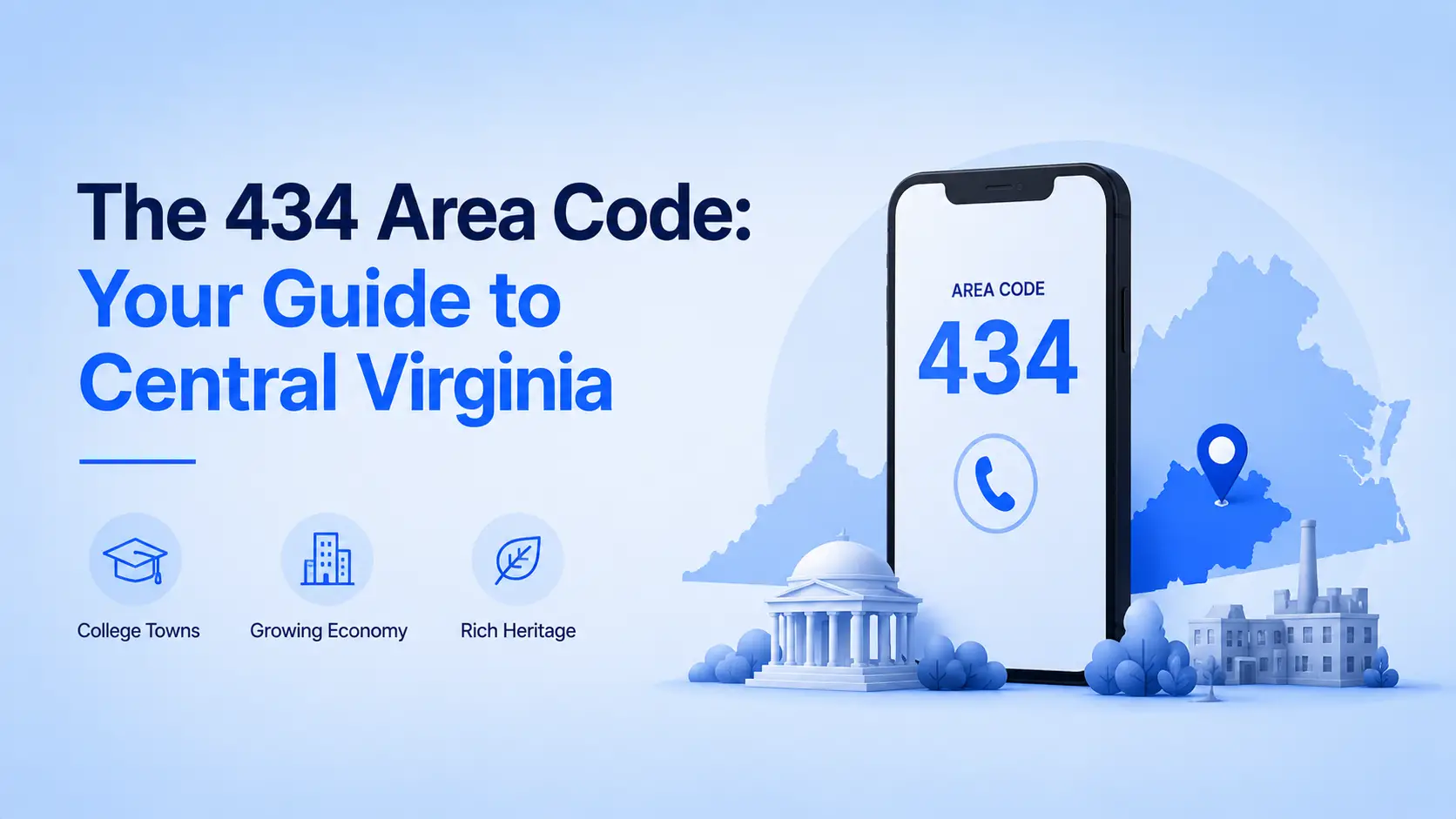
The 434 area code is a telephone area code covering Central Virginia, south and west of the Richmond metro. It was created in 1995 when regulators split it away from the original 804 code, which had grown to cover far too much of the Commonwealth — from the Richmond suburbs all the way down to the North Carolina border — to remain workable as a single numbering zone. Rather than force this entire southern stretch of the state to keep sharing a code with the capital region, the split gave Central Virginia its own dedicated prefix.
Since that 1995 split, this prefix has served the territory on its own, distinct from the codes covering greater Richmond, Hampton Roads, or Southwest Virginia. For residents and business owners across Central Virginia, this code has become as recognizable as the region's own zip codes, tied closely to the area's university towns and rural farming communities alike.
South-Central Virginia. Local by Nature.
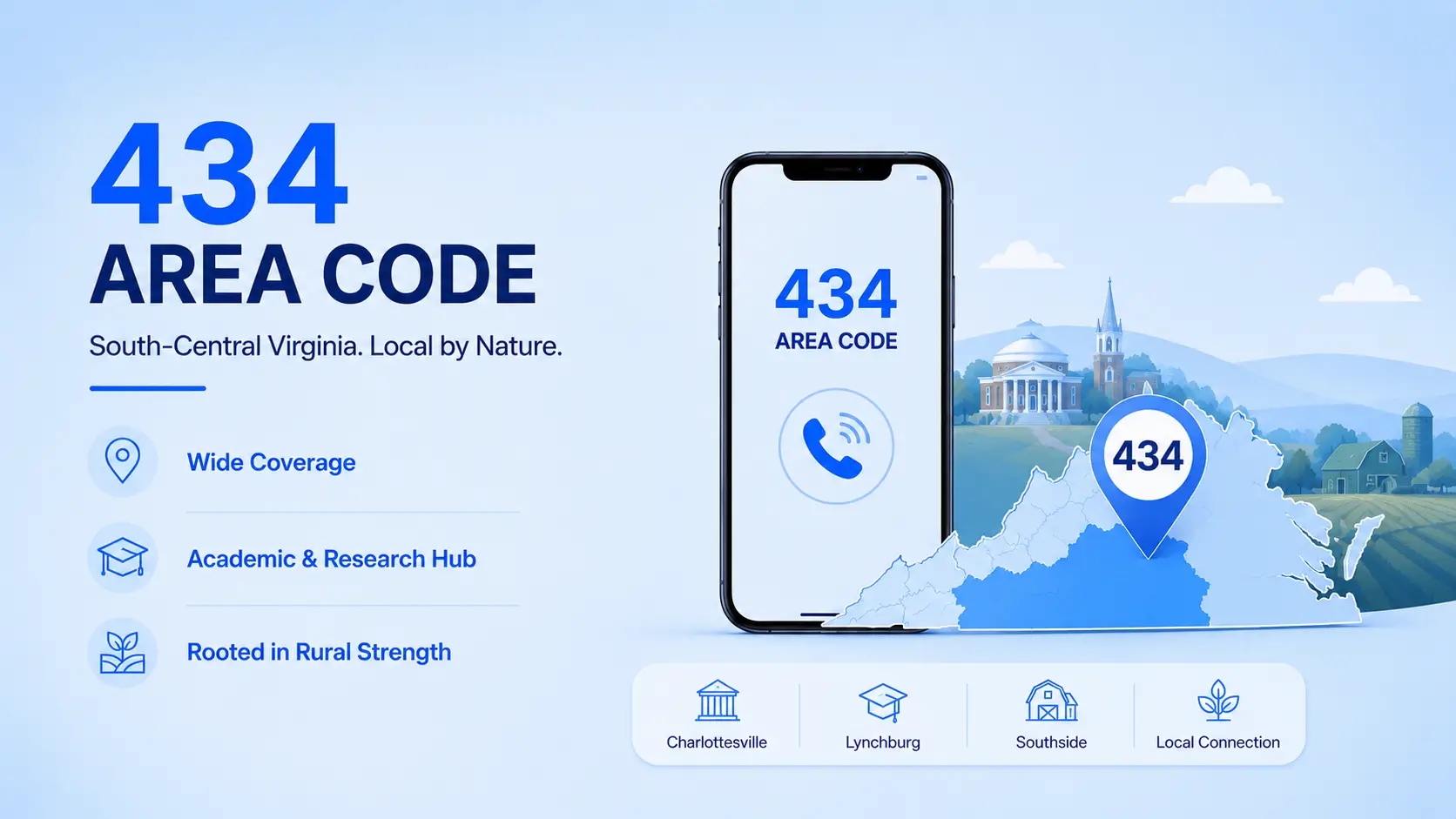
The 434 area code covers a broad stretch of south-central Virginia rather than a single metro. Cities and towns served by this prefix include Charlottesville, Lynchburg, Danville, Farmville, South Boston, South Hill, and Emporia, along with dozens of smaller communities scattered across the Piedmont and Southside regions. This territory blends college-town energy with a rural, agricultural economy that still leans heavily on tobacco, timber, and small manufacturing.
Because the region hosts major institutions like the University of Virginia in Charlottesville and Liberty University in Lynchburg, a number in this range often signals a connection to Virginia's academic and research economy as much as its farmland. For a business courting either audience — students and university staff or the agricultural communities further south — an area code 434 number reads as authentically local in a way an out-of-region prefix simply cannot.
Why the 1995 Split Happened
Understanding the 434 area code means understanding the numbering pressure Virginia faced in the early 1990s. The original 804 code had been stretched across an enormous footprint, covering Richmond, its suburbs, Central Virginia, and the Southside region all at once, and rapid growth in phone lines pushed that supply toward exhaustion faster than expected. Rather than overlay a second code onto identical territory, the North American Numbering Plan Administrator chose a geographic split, carving Central Virginia into its own zone.
That decision means this code and the 804 prefix now serve entirely separate, non-overlapping parts of the state, unlike an overlay situation where two codes share the exact same map. For businesses in Charlottesville, Lynchburg, or the Southside towns, the split actually simplified matters — everyone in the region dials under one single code rather than juggling which of two overlapping prefixes belongs to which neighbor.
Local Calls. Stronger Connections.
Local phone numbers still shape whether people decide to answer. Surveys consistently find that most consumers are more likely to pick up a call from a number sharing their own regional prefix, and roughly 60% of shoppers say they prefer working with a business that looks local. For any company selling into Charlottesville, Lynchburg, or the surrounding Southside towns, holding a 434 area code number can meaningfully improve answer and callback rates compared with an out-of-state or toll-free line.
The advantage runs both directions. Sales teams dialing prospects from a 434 area code number tend to see stronger pickup rates than teams calling from an unfamiliar prefix, since recipients are less likely to assume the call is a distant robocall. For contractors, healthcare providers, university-adjacent businesses, and farm-supply companies across the region, a matching number quietly reinforces that help is coming from someone who understands the area — whether that's a college town rhythm or a rural growing season.
Local Presence. No Office Needed.
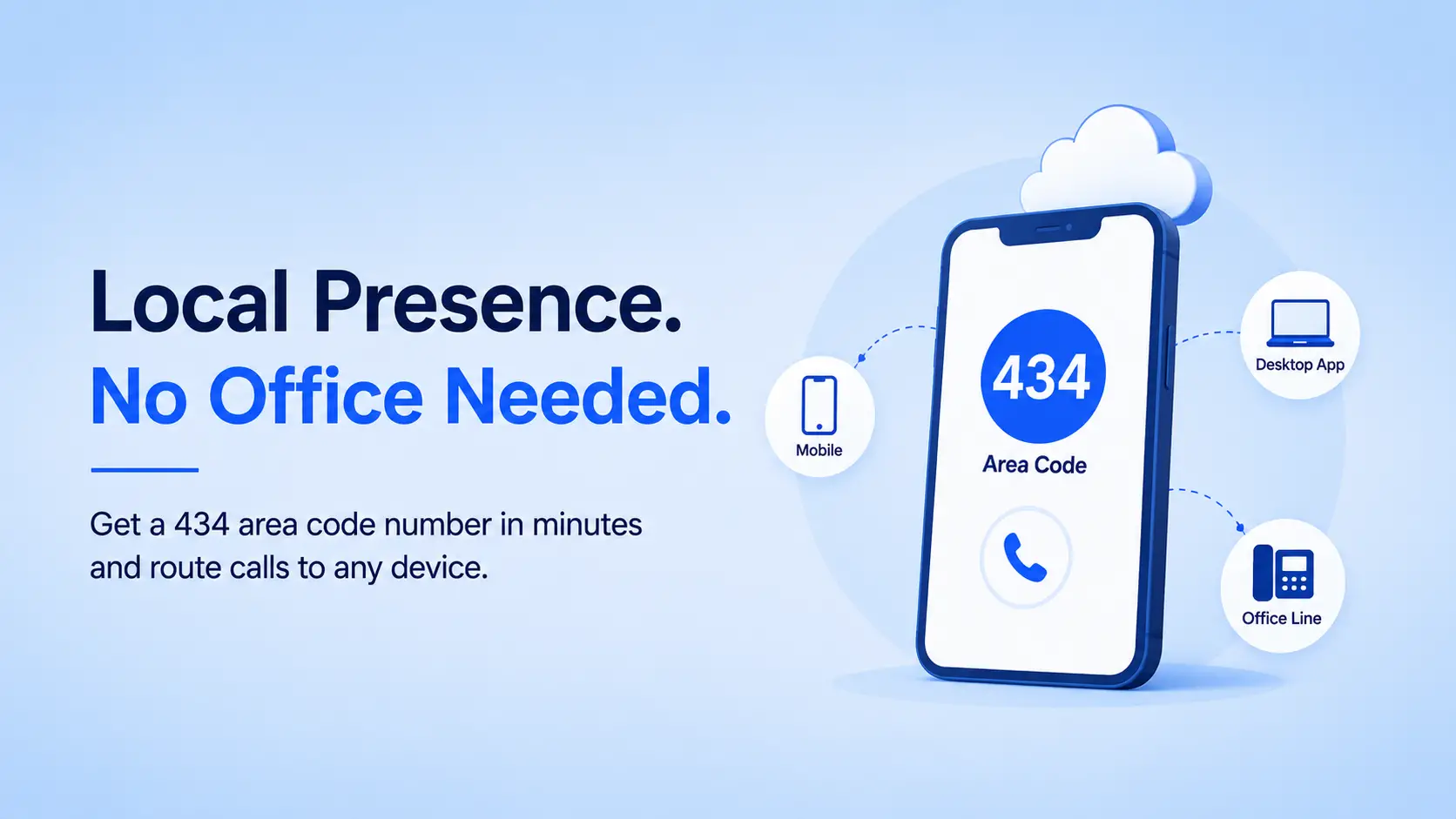
You don't need a lease in downtown Charlottesville or a storefront in Lynchburg to hold a number in this territory. Modern cloud phone systems let a business or individual request a number tied to almost any area code in the country, then route incoming calls to a mobile phone, desktop app, or existing office line. That flexibility suits companies expanding into Central Virginia without opening a physical branch, and remote teams that want one consistent local identity across every customer touchpoint.
Rozper is one option worth considering for exactly this situation. Alongside coverage across 150+ countries and a 99.999% uptime guarantee, it lets teams provision a 434 area code number in minutes and manage it beside their other business lines, with real human support behind the setup instead of an automated ticket queue. If your footprint also reaches further into the state's mountain communities, it's worth seeing how a 276 area code number compares for reaching customers in far Southwest Virginia under a separate geographic code entirely.
434 Next to Virginia's Other Codes
Virginia's numbering map includes several distinct prefixes, and this Central Virginia code stands out because it resulted from a clean geographic split rather than an overlay. That's a very different situation from metro markets where two codes stack on identical territory, forcing ten-digit dialing on every local call. Across Central Virginia, by contrast, there's only ever one code to keep track of for any given address.
If you're curious how an overlay situation compares, our guide to the 801 area code explains how Utah's capital region ended up sharing territory with a second prefix once demand outgrew the original numbering pool — a useful contrast to the clean split behind area code 434. The rules governing how U.S. area codes are assigned, split, or overlaid are documented publicly by the North American Numbering Plan Administrator, and additional detail is available through the Federal Communications Commission.
434 Area Code: Facts That Matter
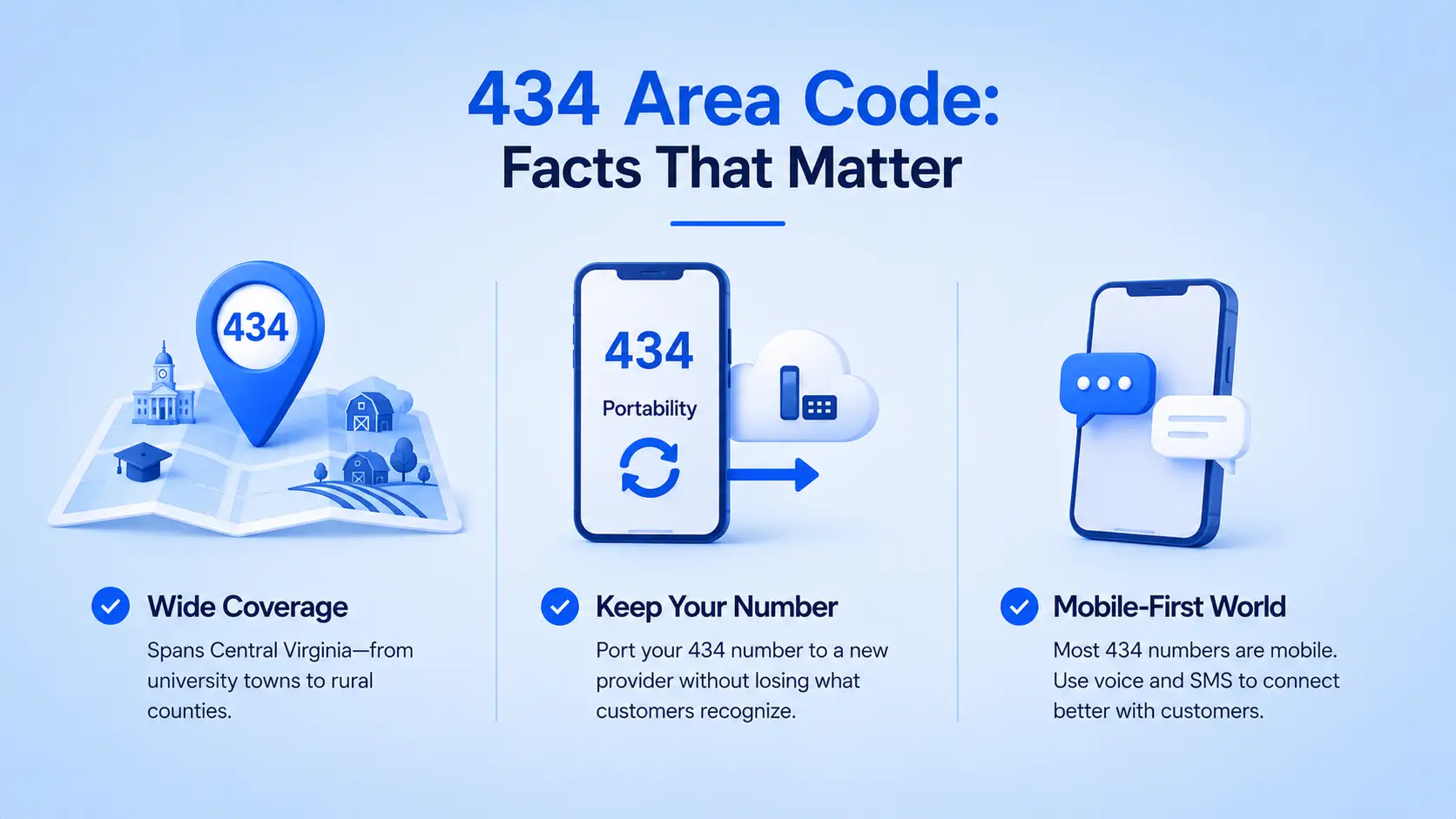
Some callers assume the 434 area code identifies a single city, when it actually spans a wide stretch of Central Virginia, from university towns to rural farming counties near the North Carolina border. Others assume the code is somehow newer or less established because it emerged from a 1995 split — in reality, that split simply reflects growing telecom demand, not a lower-quality business presence tied to the region.
Porting is another common point of confusion. Many business owners believe switching phone providers means giving up a number under area code 434 that their customers already recognize, but most modern carriers support number porting, which lets a company keep its existing digits while moving service to a new platform entirely. This matters for Central Virginia businesses that have spent years building recognition around one number and don't want a provider switch to disrupt that continuity.
It's also worth understanding how this prefix interacts with mobile versus landline use. As wireless adoption has grown, a large share of numbers under area code 434 are now tied to mobile devices rather than fixed office lines, which changes how businesses should think about texting and outreach. A number that handles both voice calls and SMS tends to outperform a voice-only line for appointment reminders and order updates, since most customers now expect to text a business the same way they'd text a friend.
Conclusion
Central Virginia's phone prefix carries more history than most callers realize — a marker of a region shaped as much by university life in Charlottesville and Lynchburg as by the farmland and small towns stretching toward the North Carolina line. Whether you're tracing an unfamiliar call or deciding whether your business should claim a matching local number, understanding the reach and origins behind the 434 area code puts you ahead of most people who never look past the first three digits. As Central Virginia keeps growing its education, agriculture, and small-business economy, expect this prefix to remain part of daily communication across the region for a long time to come.
FAQs
What cities does this area code cover?
It covers Central Virginia, including Charlottesville, Lynchburg, Danville, Farmville, and South Boston, along with many smaller Piedmont and Southside communities.
When was the 434 area code created?
It was created in 1995 when regulators split it away from the original 804 code to relieve numbering pressure across the Richmond and Central Virginia region.
Can I get a number here if I don't live in the area?
Yes, cloud phone providers let you request and route a number tied to this territory no matter where you physically live or work.
Does this region share its code with another area?
No, this code resulted from a clean geographic split, so it's the only prefix serving Central Virginia, unlike overlapping overlay codes elsewhere.
Can numbers in this prefix send text messages?
Yes, most modern numbers here support both voice and SMS, which works well for appointment reminders and customer follow-ups.