Introduction
If your phone just flashed a call from the 216 area code, you are looking at a fully legitimate Ohio number, not a fake or invented prefix. This one matters because it was one of the original area codes assigned when the entire numbering plan began. This guide breaks down exactly where the 216 area code reaches, why it eventually shrank in size, and how to tell a genuine local call from a spoofed one. Stick around, and you will know precisely what to expect the next time this prefix shows up on your screen.
Key Takeaways:
- The 216 area code is a real, NANP-compliant code assigned to Ohio in 1947, not a scam prefix.
- Area code 216 Ohio was one of the original 86 area codes created when the numbering plan launched.
- Cleveland's rapid growth later split off 440 and 330, shrinking 216 to its current footprint.
- A suspicious 216 call is far more likely to be a spoofed number than proof the area code itself is fake.
216 Has Anchored Cleveland Since the Original 1947 Rollout
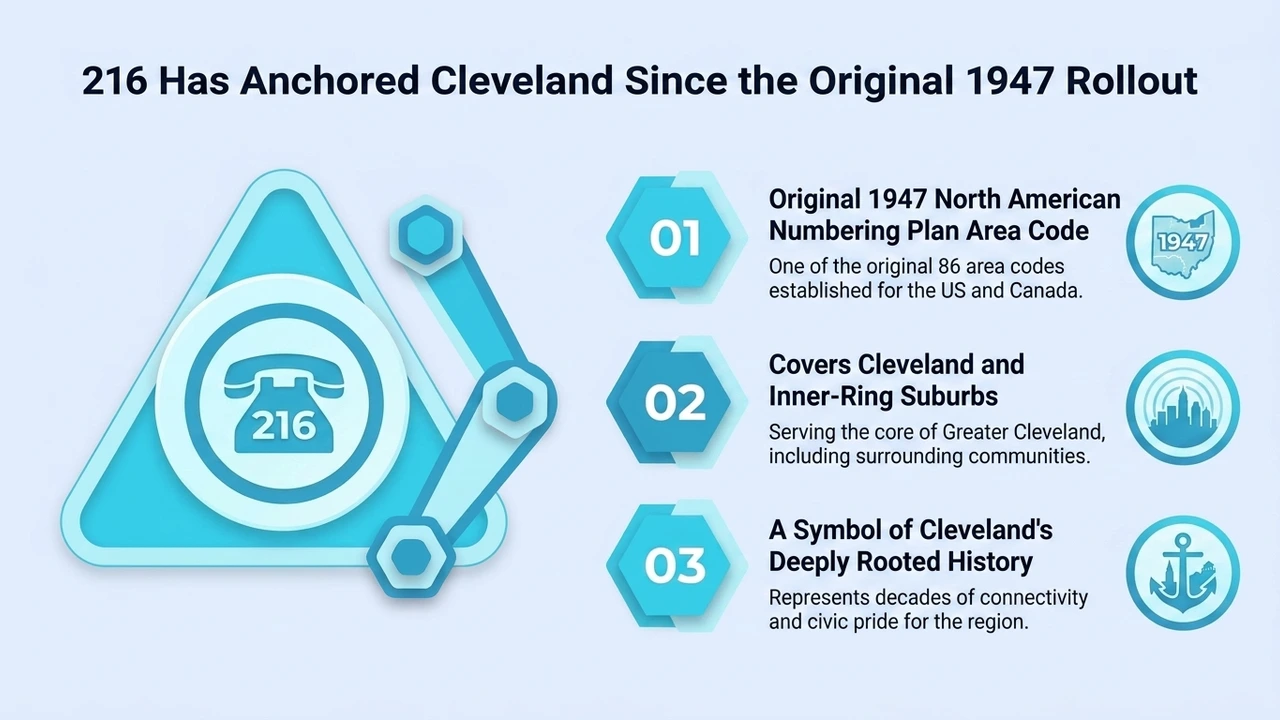
Most people assume an unfamiliar three-digit prefix is automatically suspicious, especially after years of scam-call headlines. The 216 area code breaks that assumption completely, because it was assigned through the original North American Numbering Plan rollout rather than anything invented or spoofed, and its entire history is a matter of public record anyone can verify in minutes. Few prefixes anywhere in the country carry as much documented history as this one.
- Area code 216 Ohio was one of the original 86 area codes assigned when the numbering plan launched in 1947.
- It originally covered a much larger footprint across northeastern Ohio before later splits reduced its territory.
- Every carrier database, reverse lookup tool, and public numbering record confirms the 216 area code as valid and assignable.
- New subscribers across Cleveland still receive 216 numbers today, nearly eighty years after the code was first assigned.
- The 216 area code follows every North American Numbering Plan rule that a fabricated prefix like 110 or 111 never could.
- Unlike a scam-generated sequence, this code has a documented assignment date, a public filing history, and a defined carrier region behind it.
The Format Check That Confirms 216 Is a Genuine Area Code
Every legitimate area code in the United States and Canada follows one unbending format, and the 216 area code satisfies it completely, unlike the fake prefixes that fail the same test. Knowing this one rule gives any reader a fast way to sanity-check an unfamiliar prefix before assuming the worst, no matter how old or unfamiliar the code looks at first glance.
The Digit Every Area Code Must Start With
The North American Numbering Plan requires every area code to begin with a digit from 2 through 9, and 216 meets that requirement without exception. This is the same rule that instantly disqualifies invented sequences like 110 or 112 from ever becoming real, and 216 clears it on the first digit alone.
Why This Code Never Needed an Exception
Regulators only reassign or split a code once documented exhaustion data shows the existing supply is running low, and Cleveland's growth eventually did exactly that to the original 216 territory. The 216 area code exists today because it followed that exact process from 1947 onward, unlike a fabricated prefix that never entered any real numbering system at all. Every step of that process, from the original 1947 assignment to the later splits, is documented in public regulatory filings that anyone can still look up today.
How 216 Shrank as Cleveland's Suburbs Grew
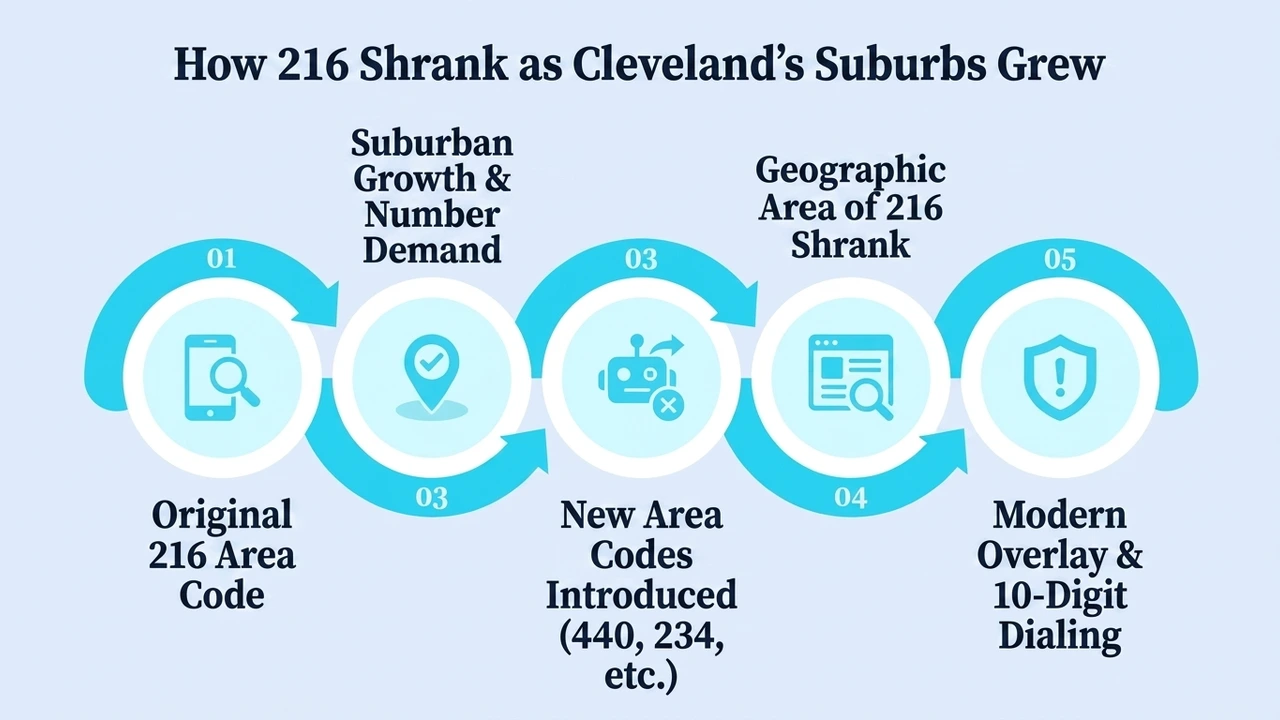
A large share of the confusion around the 216 area code comes from not knowing how much smaller its footprint is today compared to its original 1947 boundaries, since two later splits carved away most of its surrounding territory. Longtime Ohio residents sometimes forget just how much ground the original 216 area code used to cover before those changes took effect.
- Area code 216 Ohio originally covered a wide swath of northeastern Ohio, far beyond Cleveland alone.
- Population and business growth eventually pushed the original territory toward exhaustion decades later.
- Area code 330 split away in 1996 to serve Akron, Youngstown, and the surrounding region.
- Area code 440 split away the following year to serve Cleveland's outer suburbs and the Lake Erie shoreline.
- The proposal for each split went through a public comment period before final regulatory approval.
- What remains of 216 today covers only Cleveland and its immediate inner suburbs, a fraction of its original 1947 territory.
- Despite shrinking twice, the 216 area code itself was never retired or reassigned, unlike what some residents assume.
Where 216 Reaches Across Cleveland Today
Understanding the geography makes the 216 area code far less mysterious than a random unfamiliar prefix, since it now maps onto a compact urban core rather than the wide region it once served, and one most Ohio residents already picture the moment they hear it named.
Cities and Neighborhoods Covered
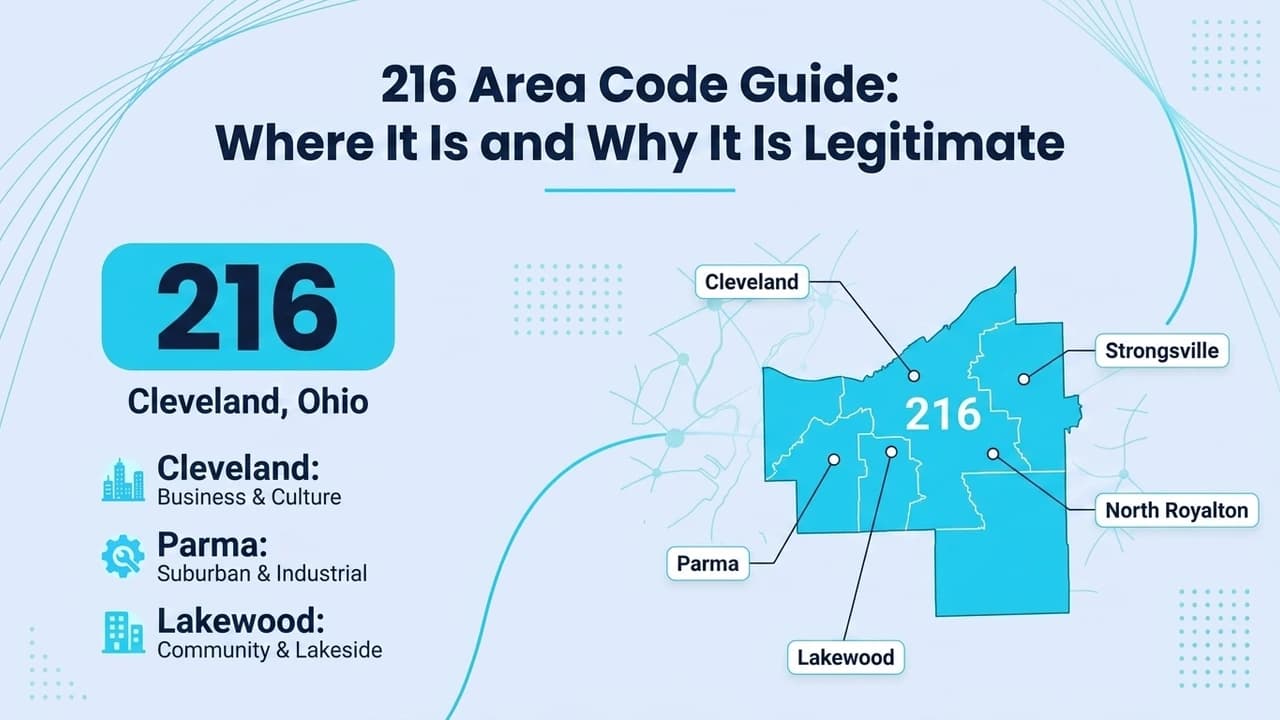
Area code 216 Ohio now serves Cleveland proper along with close-in suburbs like Lakewood, Shaker Heights, and Cleveland Heights, forming a compact urban core surrounded on nearly every side by the newer 440 and 330 territories.
Why Ten-Digit Dialing Matters Here
Because Cleveland's metro area is now split across 216, 330, and 440, every local call requires the full ten digits, including the area code, even between two neighbors on the same street. This is standard practice anywhere multiple codes share a metro area, and it is the single biggest everyday change residents noticed once the later splits took effect.
Why Original 1947 Codes Still Confuse Modern Callers
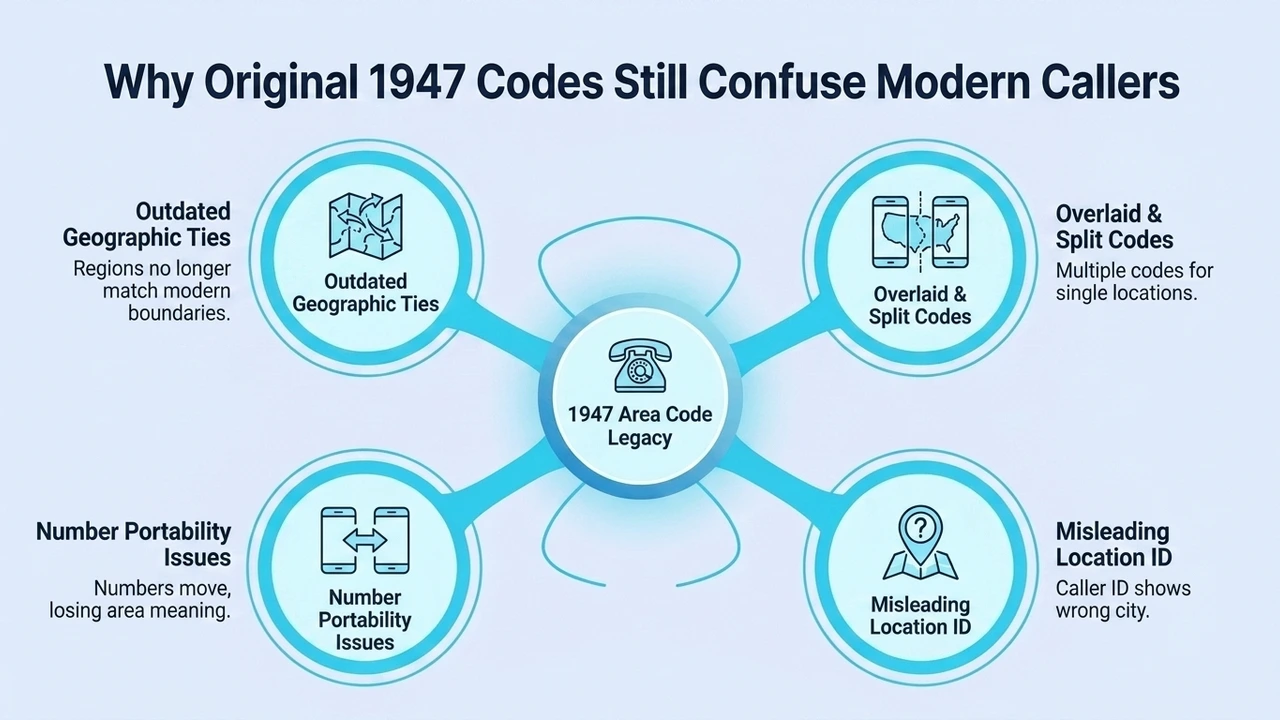
The 216 area code shares nothing with a fabricated prefix except a similar three-digit shape, and understanding why an old, established code still raises questions helps explain the confusion at its root. Even a code with eight decades of legitimate history behind it can still get mistaken for something suspicious.
- Scam call coverage in the news has trained people to distrust any prefix they do not immediately recognize.
- Long-running codes like 216 have accumulated decades of both legitimate and spoofed call history, unlike a newer prefix.
- Spoofing software can fake any prefix, including a legitimate one like 216, which muddies public perception further.
- Reverse lookup tools and carrier databases confirm legitimate codes instantly, something a fabricated prefix could never pass.
- The overlay and split history behind 216 is on public regulatory record, unlike any scam operation.
- Younger residents who grew up after the 330 and 440 splits sometimes assume 216 itself must be the newer code, when the opposite is true.
5 Checks Before You Trust an Unfamiliar 216 Call
A short verification habit beats guessing every time an unusual prefix shows up on your screen, even when the area code itself, like 216, is entirely legitimate. This question comes up often enough among residents unfamiliar with the region's numbering history that it is worth a quick, repeatable routine you can run through in under a minute.
- Confirm the full ten-digit number rather than judging legitimacy from the area code alone.
- Search the number in a trusted reverse lookup tool to see if it matches a known business or resident.
- Remember that a real area code like 216 does not guarantee every individual caller is trustworthy.
- Check whether the caller can verify their identity through a callback to a published, official number.
- Report a confirmed spoofed number through the FCC guidelines for consumer complaints.
Keeping Business Caller ID Clear When Choosing a 216 Number
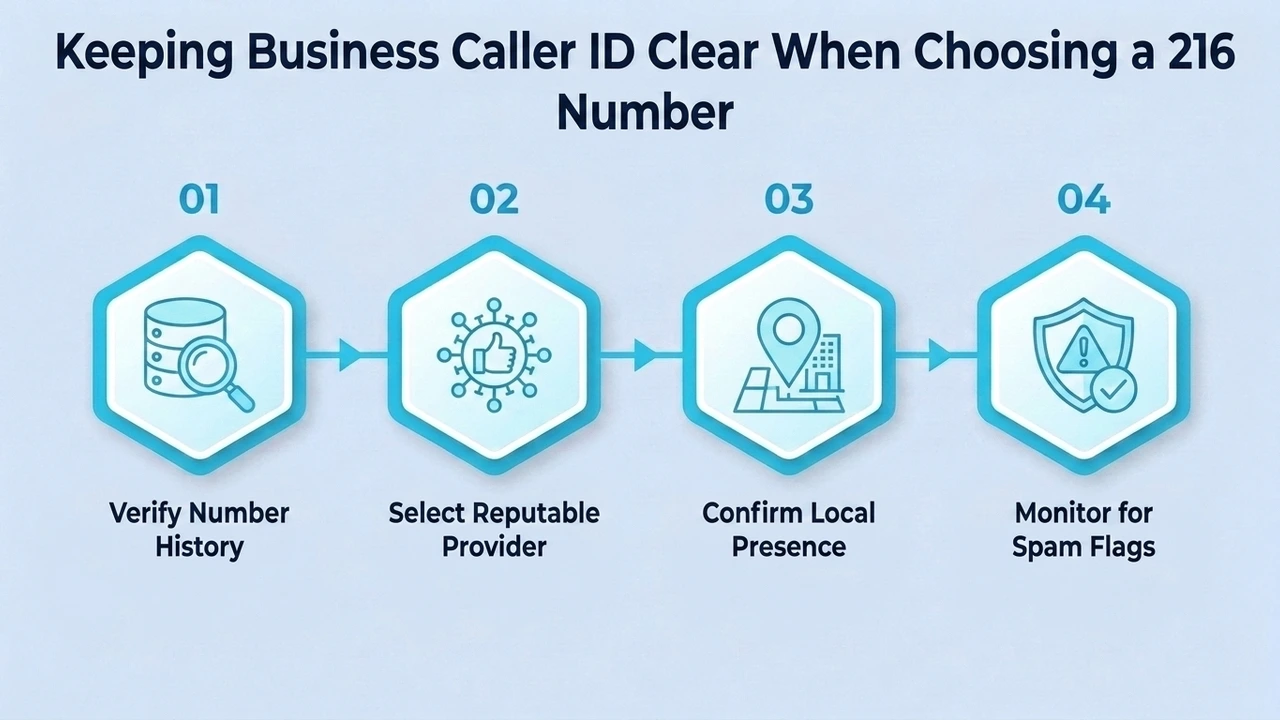
Businesses expanding into Cleveland face a real decision here, not a scam concern: choosing a recognizable local presence without confusing customers who may see 216, 330, or 440 depending on their exact location. Rozper helps growing teams navigate exactly this kind of regional numbering choice, since picking the wrong-looking prefix can still cost answered calls even when the number itself is completely legitimate, especially for a sales or support team calling out at scale.
- Provision outbound lines through a carrier that issues real, NANP-compliant numbers in the exact region you serve.
- Use STIR/SHAKEN-authenticated calling so your caller ID never gets flagged as suspicious by the receiving carrier.
- Choose local presence numbers like area code 216 Ohio so customers see a recognizable regional code every time.
- Rozper configures every business number so it always matches a real, assignable NANP region, never a stray or spoofed sequence.
Rozper customers get this regional accuracy built into their outbound calling by default, which keeps every number they dial looking as legitimate as area code 216 Ohio itself, whether the team is five people or five hundred, and no matter how many regions they operate across, from a single Cleveland office to a multi-state operation.
Conclusion
The 216 area code is exactly what a legitimate original NANP assignment looks like, anchoring Cleveland since 1947 even after later splits carved away most of its original territory. Comparing it against fabricated prefixes that fail the same first-digit rule shows exactly how much real regulatory history backs a genuine regional code. Most suspicion around 216 traces back to general scam-call fatigue rather than anything wrong with the code itself. Rozper builds that same regional clarity into every number it provisions, so your business never sends a confusing caller ID by accident, and unfamiliar prefixes like 216 stop raising questions starting today.
FAQs
Is 216 a real area code in Ohio?
Yes, area code 216 Ohio is a fully legitimate code assigned in 1947 as one of the original 86 area codes. It follows every North American Numbering Plan rule that a fabricated prefix could never meet.
Where does the 216 area code cover?
It covers Cleveland and its immediate inner suburbs, including Lakewood, Shaker Heights, and Cleveland Heights.
Why does my caller ID sometimes look suspicious even with a 216 number?
A legitimate area code does not stop spoofing software from faking a 216 number on purpose. Always verify the full ten-digit number rather than judging by the prefix alone.
Does calling a 216 number cost more than other Ohio numbers?
No, area code 216 Ohio carries standard regional rates like any other assigned code in the state. Ten-digit dialing applies to every local call across the Cleveland area.
Can businesses get a 216 number for their Cleveland presence?
Yes, carriers issuing NANP-compliant numbers can provision a 216 number for a genuine regional presence. Rozper configures business numbers to match the exact region a company serves.