Introduction
If a call comes in with three digits tied to the Rocky Mountains, it likely belongs to metro Denver. This prefix has grown with one of the fastest-growing regions in the country. It is now one of the codes Colorado firms reach for most when they want a number that feels local. Maybe you are new to the Front Range. Maybe you are opening a company there. Or maybe you are just curious about the number on your caller ID. This guide covers where the prefix reaches, how it began, and why it still matters for business today.
Where This Denver Prefix Reaches
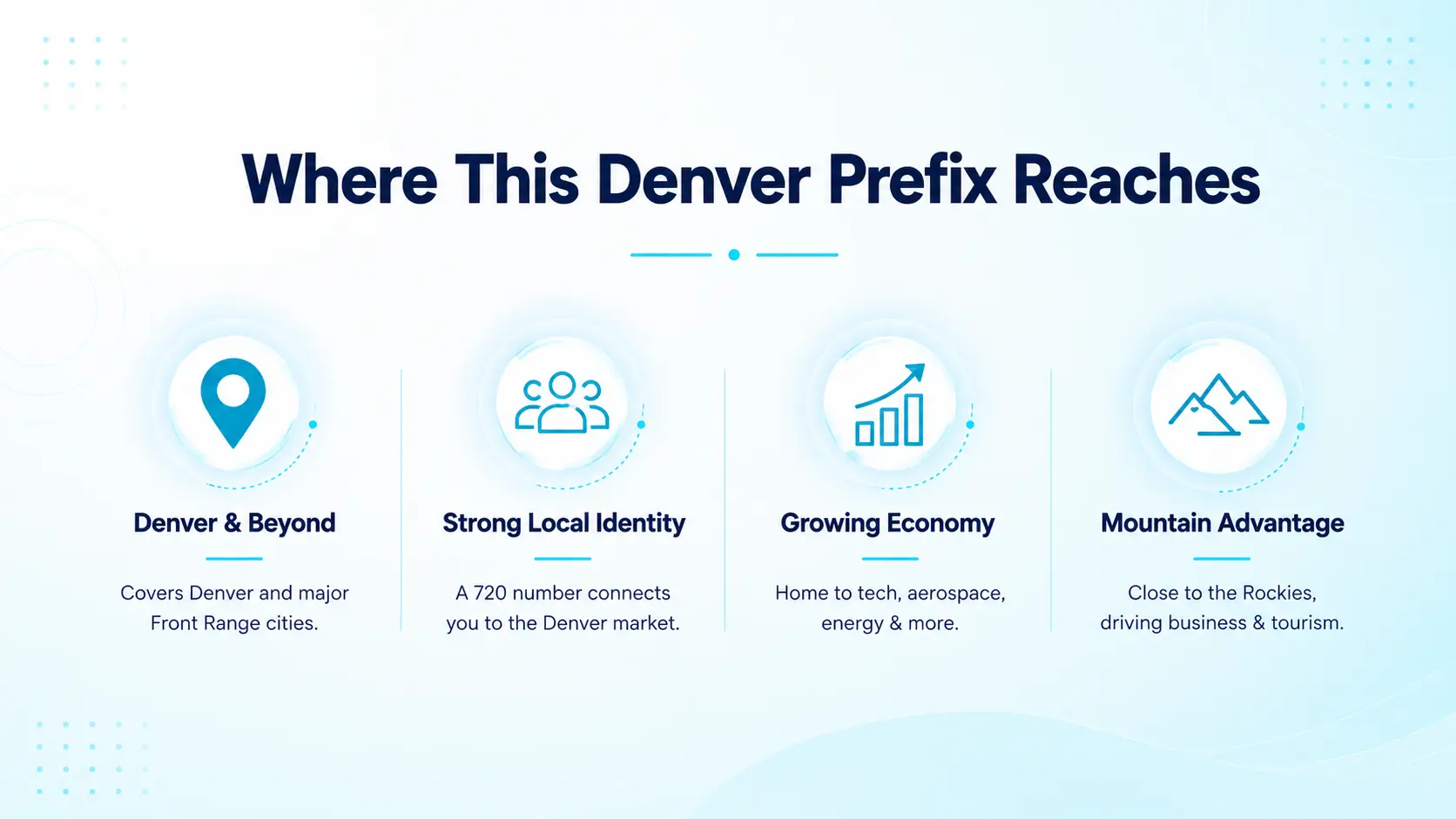
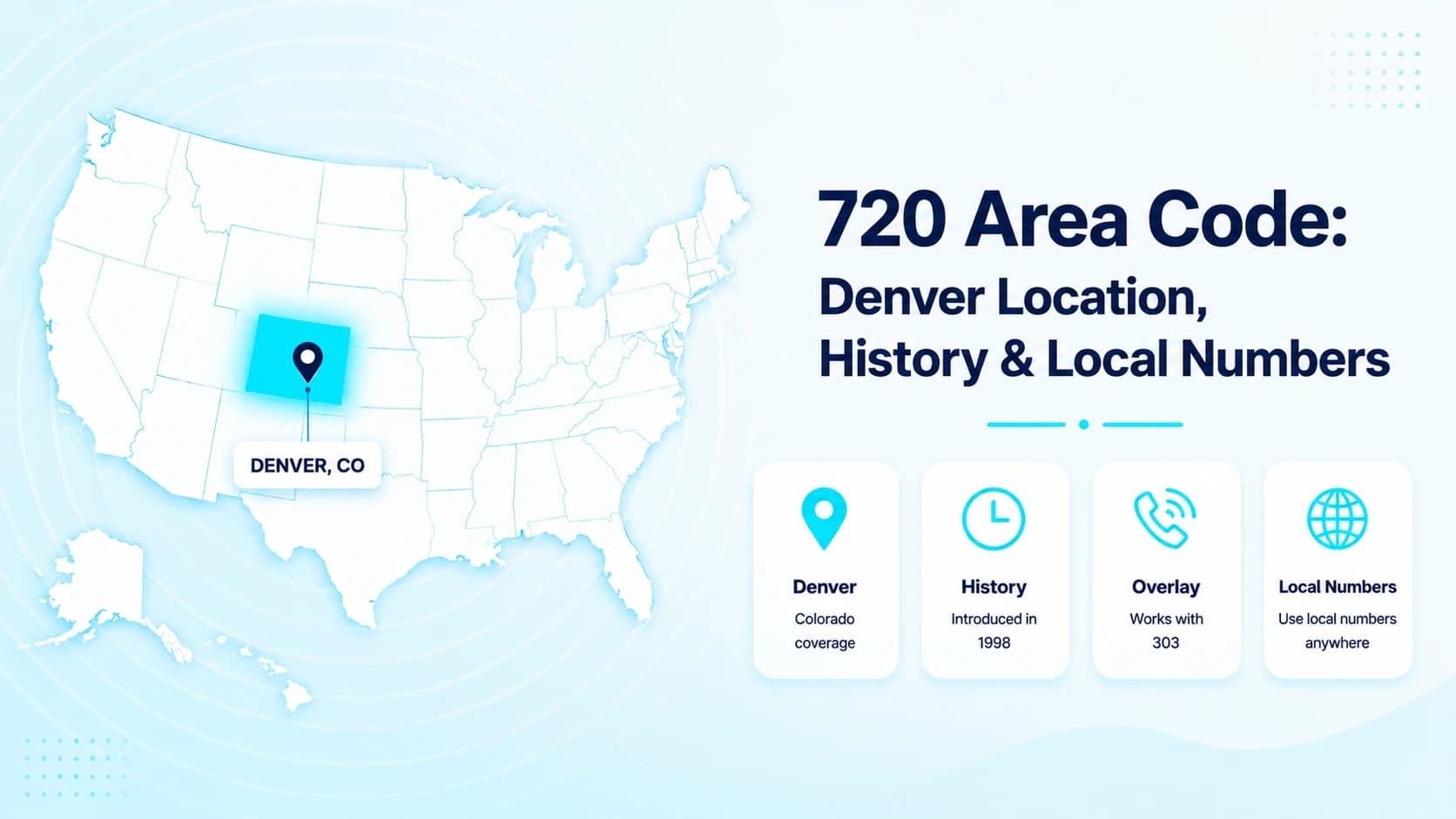
The 720 area code covers the City and County of Denver and spreads out across the busy Front Range corridor. Coverage goes well past downtown into Aurora, Boulder, Lakewood, Littleton, Englewood, Longmont, Broomfield, and Castle Rock. Together, these towns form one of the most active metro economies in the Mountain West. A number under this prefix tells callers that a business or resident can be reached through the Denver exchange, a name that carries real weight across Colorado.
Denver has grown into a major hub for jet, tech, power, and outdoor firms. It draws people and firms from all over the country. That steady flow keeps demand for local phone numbers high. New folks and new firms alike want a number that fits their new home. They don't want one that still points back to where they moved from.
The metro area sits close to the Rocky Mountains. This draws a steady stream of summer workers, tour guides, and outdoor firms. They all need a local number to work with customers all year. This adds one more layer of demand on top of the region's steady growth in full-time folks.
The Story Behind the Overlay
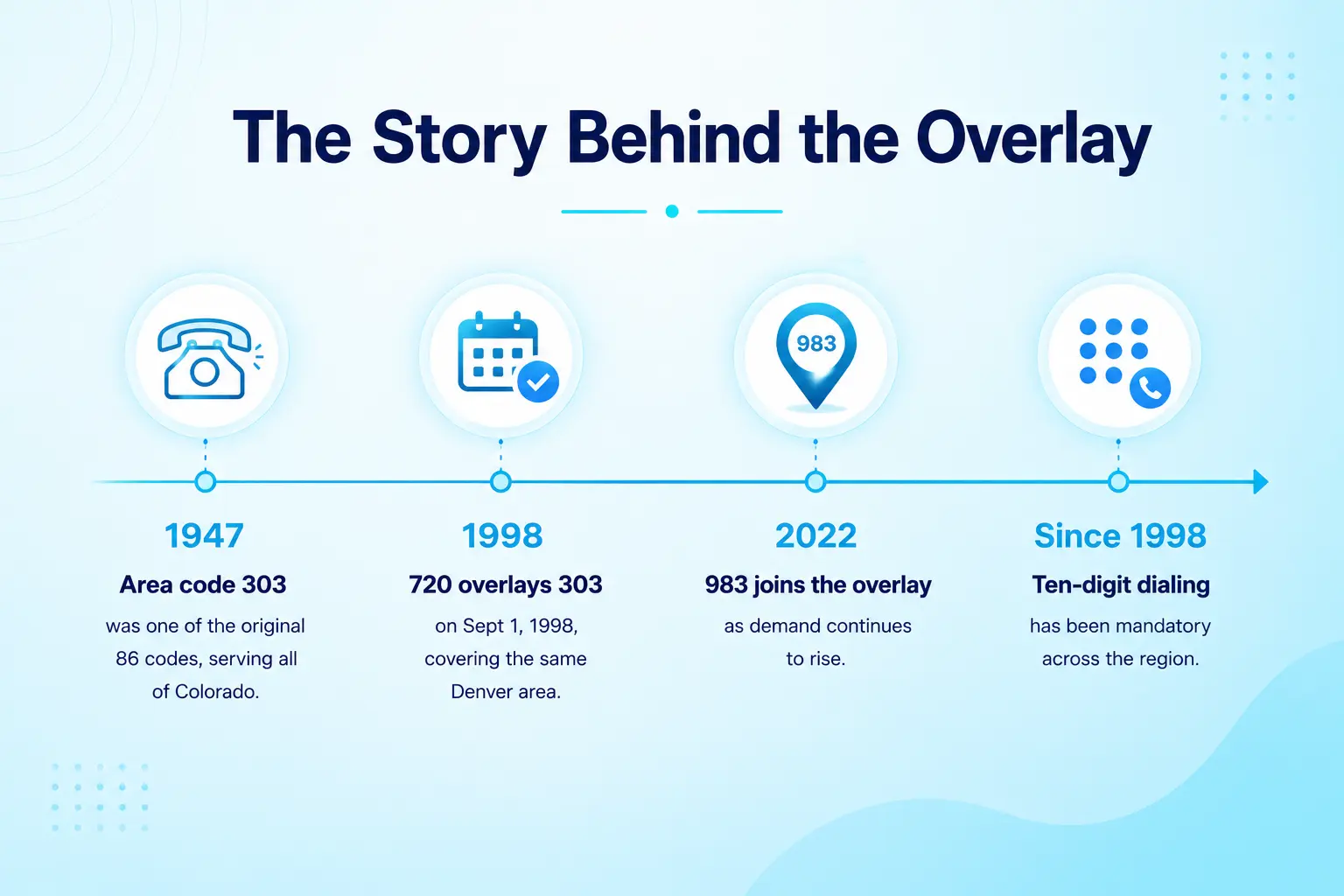
Area code 303 was one of the first 86 numbering plan areas. It was set up in October 1947. For decades, it served the whole state of Colorado on its own. Fast growth in the Denver metro sped things up. So did the rise of pagers, fax lines, and cell phones in the 1990s. Together, they used up number combos faster than planners had guessed.
Rather than split the region and force half of Denver to switch numbers, planners added area code 720 as an overlay on September 1, 1998. Both codes now serve the same ground. A third code, 983, joined the same overlay group in 2022 as demand kept climbing. Ten-digit dialing has been the rule across the region ever since the first overlay began.
Choosing an overlay over a split was a clear choice by planners. A split would have forced tens of thousands of Denver folks to reprint stuff, update ads, and tell contacts about a new number. An overlay skipped all of that hassle. It still fixed the number shortage.
Cities and Suburbs Sharing the Coverage Zone
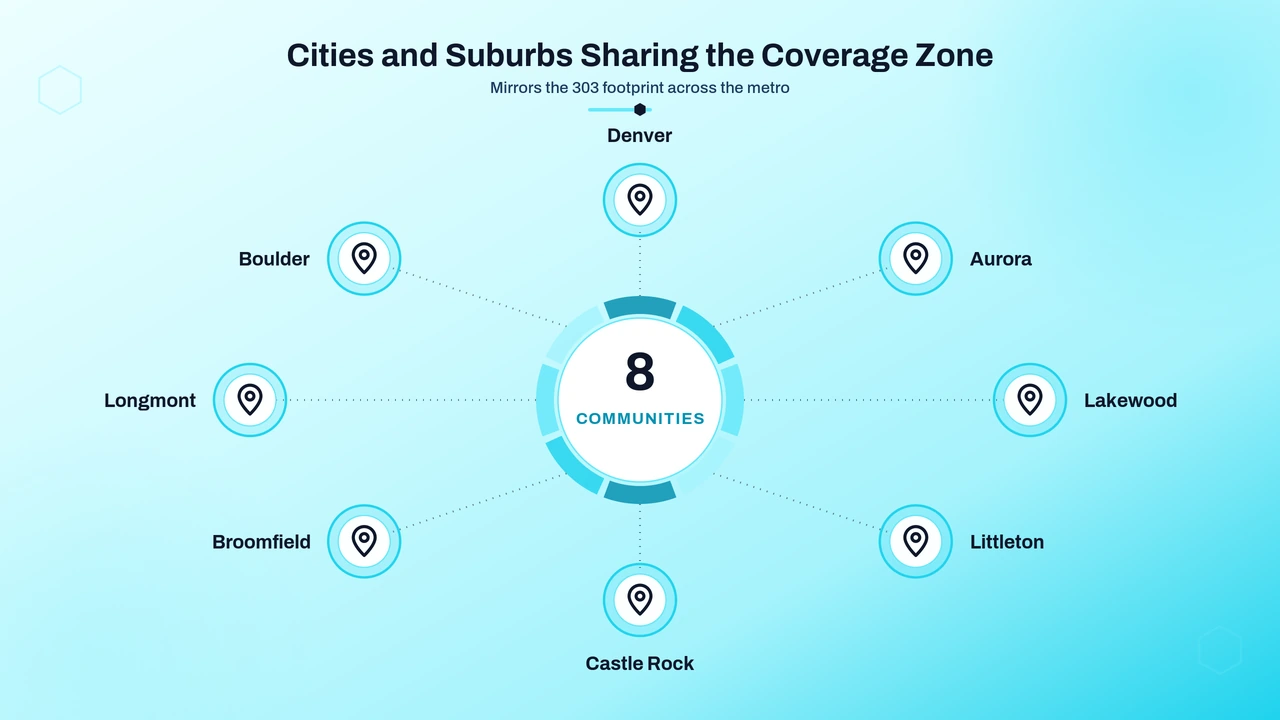
The 720 area code footprint matches 303 almost exactly. It reaches Denver's core neighborhoods along with fast-growing suburbs like Aurora, Lakewood, and Littleton. Boulder and Longmont extend the map northwest of the city, while Broomfield and Castle Rock round it out to the north and south.
This wide reach means one local number can serve a business with clients across the whole metro area. It is not tied to just one neighborhood. Suburbs like Aurora and Lakewood have taken in a large share of the region's recent growth. More calls placed under this prefix now start well outside Denver's downtown core. Firms comparing their options nearby may also want to check how the related 303 area code covers this exact same ground. Every code in the overlay now serves the same towns under the current plan.
Time Zone and the Ten-Digit Dialing Rule
Every town inside the 720 area code runs on Mountain Time. It uses Mountain Standard Time in winter and Mountain Daylight Time the rest of the year. That places Denver roughly one to two hours behind the East Coast, worth keeping in mind when you set up calls with partners across the country.
Area code 720 shares its ground with both 303 and 983. So ten-digit dialing has applied to every local call since the overlay began, even between two neighbors on the same street. For a deeper look at how Colorado's number plan grew across all three codes, the Wikipedia entry on area codes 303, 720, and 983 lays out a clear timeline of the splits and overlays. Getting used to ten-digit dialing takes a small adjustment. But it stays key for anyone routing calls into or out of the Denver region today.
Why Businesses Choose a Local Denver Number
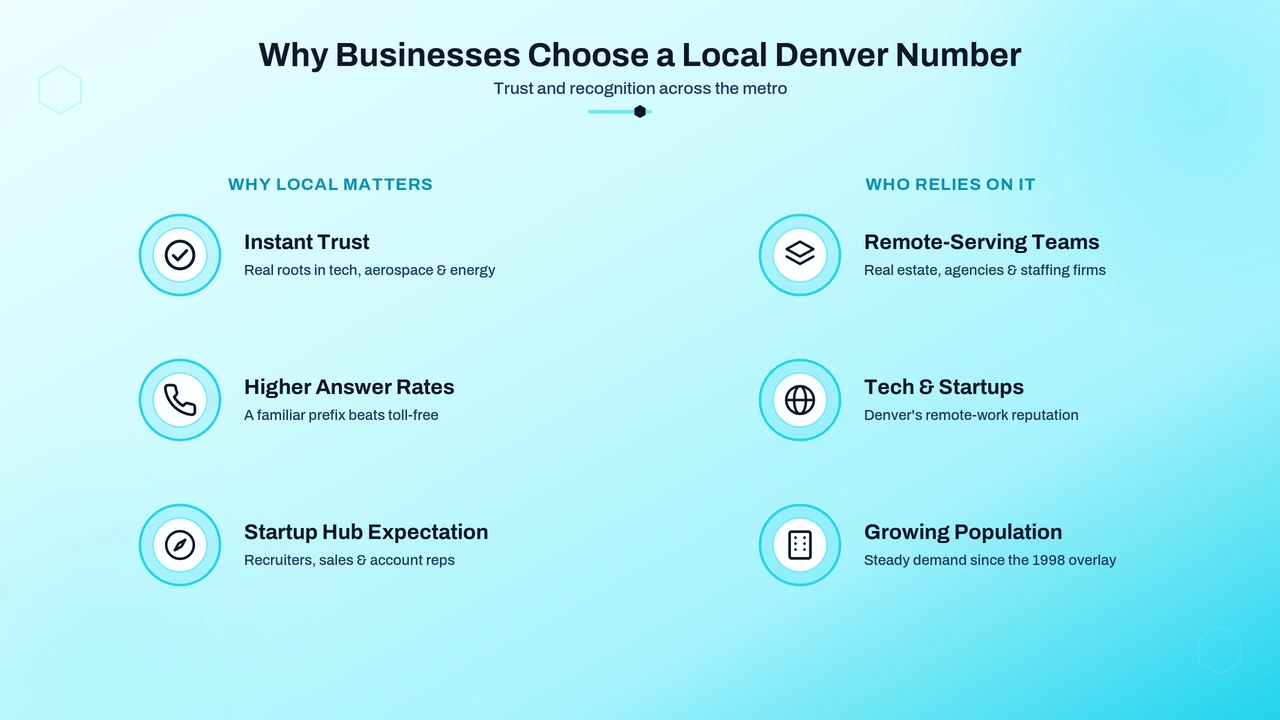
A 720 area code number tells callers right away that a business has real roots in Denver. That matters in a metro built on tech, aerospace, energy, and a growing tourism scene tied to the outdoors. Local folks tend to pick up calls from a known prefix more than an out-of-area or toll-free number. That instinct alone can shift booking rates and response times in a firm's favor.
A 720 presence also helps firms serving the Denver market without a physical office there. Real estate teams, remote agencies, shipping coordinators, and staffing firms often ask for area code 720 numbers so their outreach reads as local. This holds true even when their main office sits in another state. In a region where word of mouth and local name still drive plenty of new business, the right prefix can decide whether a call gets picked up.
Tech firms lean hard on this trust. Denver's growing name as a startup and remote-work hub means job seekers and clients often expect a local number tied to any recruiter, sales rep, or account manager they deal with.
Denver's population has climbed for more than a decade. That growth keeps adding to the base of residents and small firms who want a number that matches their neighbors' area code. Planners have built that ongoing demand into every number decision made for the region since the first 1998 overlay.
Getting a Local Number Through Rozper
Setting up a 720 area code number does not need an office in Denver. It also skips any long-term deal. Rozper issues local and virtual numbers across 150+ countries, backed by 99.999% uptime. A business can turn on this number, route it to any device, and start taking calls the same day. The platform is built as a real, human-first partner, not a self-serve app alone. Because of this, support staff can help set up call routing, voicemail, and multi-line plans for a Denver-based team.
For firms growing their reach across Colorado, a local number paired with a full phone platform keeps every call, text, and voicemail in one place. Nothing gets spread across separate devices. As a team grows from one rep to a full regional office, more lines can join the same account. There is no need to sign new deals or switch providers midway.
This flexibility helps most in Denver's busiest seasons. Tour firms and summer businesses may need several new lines in a matter of days, not weeks, unlike an old-style carrier's slow setup.
Conclusion
From its start as an overlay to the original 1947 numbering area to today's three-code, ten-digit system, the 720 area code has grown right alongside Denver itself. It reaches across the Front Range, runs on Mountain Time, and remains one of the best-known codes for tech, aerospace, and outdoor firms throughout Colorado. With growth showing few signs of slowing, area code 720 is set to stand for this corner of the Rockies for a long time to come.
FAQs
What city and region does the 720 area code serve?
It serves Denver and the surrounding Front Range metro, including Aurora, Boulder, Lakewood, Littleton, and Broomfield.
Is the 720 area code the same as 303?
No. They are separate codes overlaying the same territory since September 1998, along with a third code, 983, added in 2022.
When did the 720 area code begin?
It launched on September 1, 1998, as an overlay to the original 303 code rather than as a full geographic split.
Can a company get a 720 area code number without an office in Denver?
Yes. Virtual number providers can issue a 720 area code line that forwards to any phone or device, letting remote and out-of-state teams maintain a local Denver presence.
What time zone applies to the 720 area code?
All communities inside the 720 area code follow Mountain Time, switching between Mountain Standard Time and Mountain Daylight Time throughout the year.
Why do Denver businesses prefer this prefix?
A recognizable local number builds instant trust in a metro shaped by tech, aerospace, and tourism, often leading to higher answer rates than unfamiliar or toll-free numbers.