Introduction
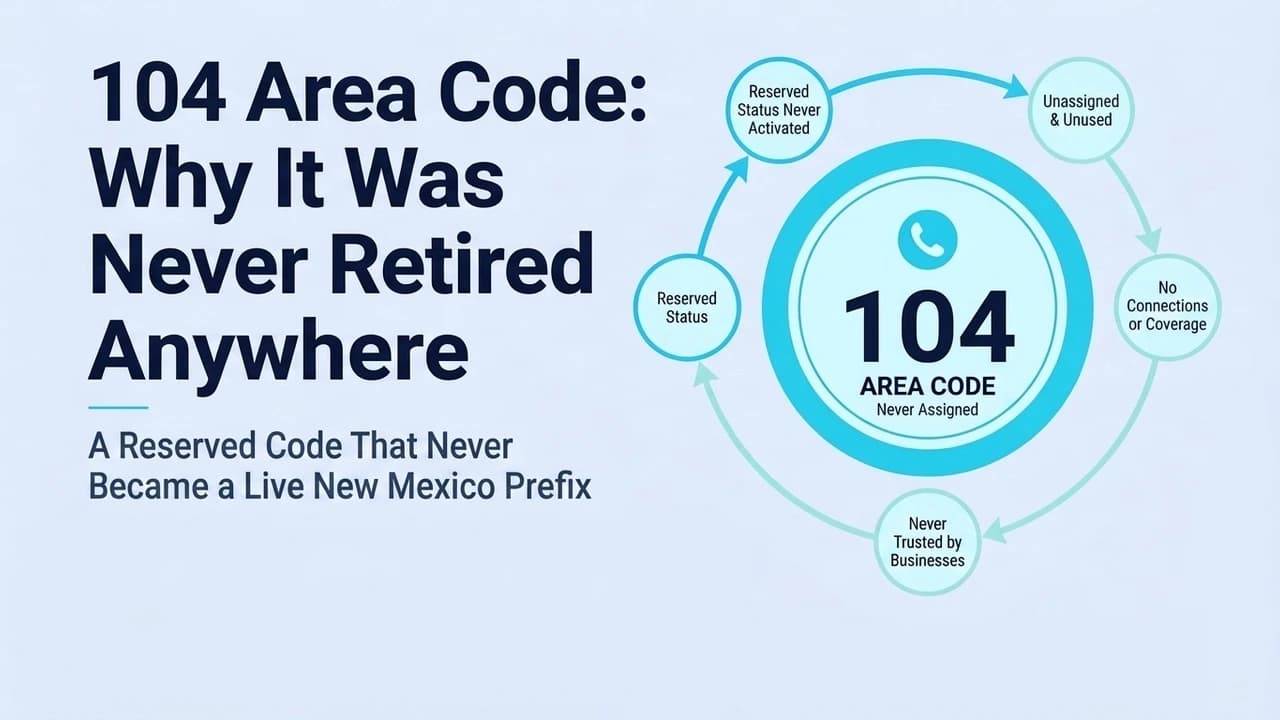
If your phone just flashed a call from the 104 area code, you might assume it is an old code that fell out of use, but that assumption is wrong, no matter which carrier or app displayed it. Area codes in the United States and Canada are never quietly retired, so a missing code almost always means it was never issued in the first place. This guide breaks down exactly why the 104 area code fails the numbering rules, how real regional codes like area code 336 North Carolina actually come into existence, and what a call displaying 104 usually means instead. Stick around, and you will never confuse a fabricated prefix with a retired one again.
Key Takeaways:
- The 104 area code has never been assigned to any city, carrier, or region, and it was never retired either.
- Real area codes are only ever created through a formal split or overlay process, never invented on the fly.
- Area code 336 North Carolina came from a real 1997 split, giving you a clear contrast against a fabricated code like 104.
- A call showing 104 almost always points to spoofing or a simple data entry error, not a hidden or discontinued line.
No, 104 Wasn't Retired — It Was Never Assigned
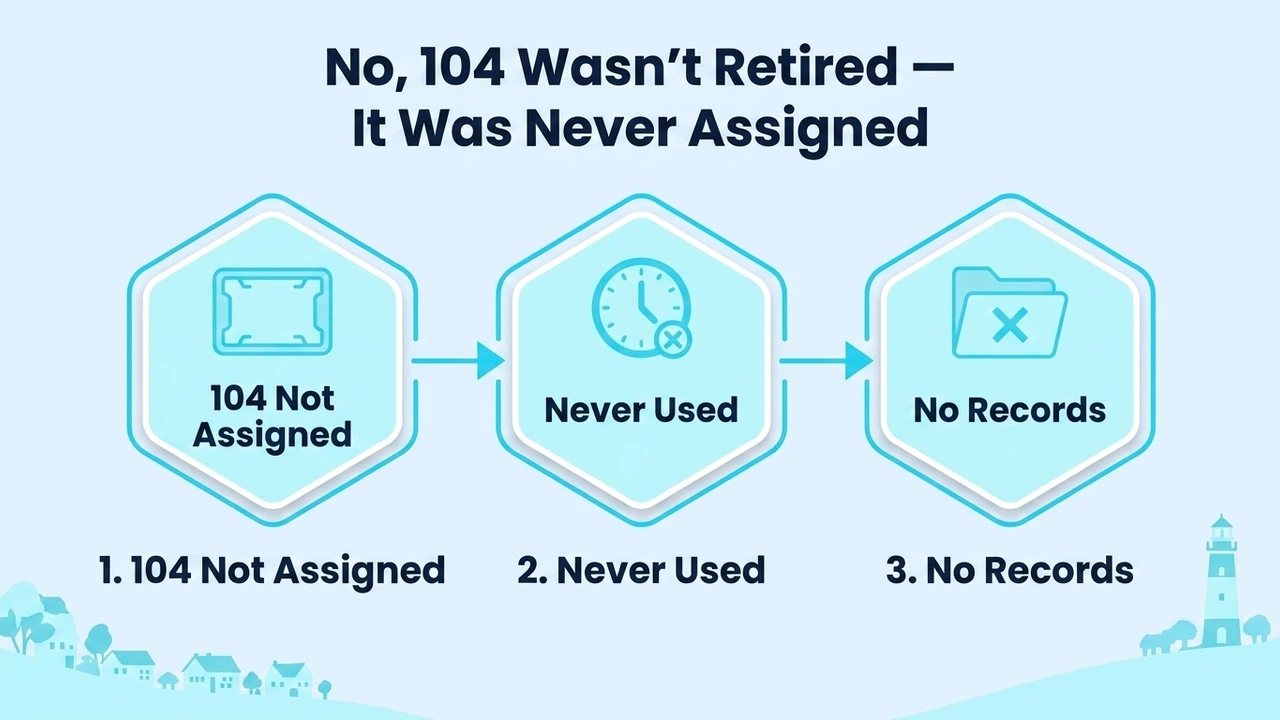
A lot of people assume unfamiliar area codes must have existed at some point and simply fell out of rotation. The 104 area code breaks that assumption completely, because retirement has never been part of how the numbering plan works, no matter how old or obscure a code seems.
- The North American Numbering Plan Administrator has no record of 104 ever being assigned to any carrier, in any decade.
- Area codes are not recycled or retired the way phone extensions sometimes are within a single company's internal directory.
- No historical map, archive, or regulatory filing shows 104 serving any US or Canadian region, past or present.
- Nearby codes like 103 and 105 are equally absent, confirming this is a structural gap, not a lost or forgotten record.
- Even old Bell System documentation from the original 1947 numbering plan never lists 104 among its assignments.
- Reverse phone lookup services and carrier databases agree unanimously on this point, with zero conflicting records anywhere.
The Rule That Decides Which Digits Become Area Codes
Every legitimate area code follows one fixed format, and understanding it explains why the 104 area code could never have existed under any era of the numbering plan, past or present.
The Digit Every Area Code Must Start With
The North American Numbering Plan requires every area code to begin with a digit from 2 through 9. The digit 1 is reserved as the long-distance access prefix, so nothing starting with 1 — including 104 — can ever qualify as a valid regional code. This rule has held constant since the numbering plan launched in 1947, without a single exception carved out for any state, province, or territory.
How Real Area Codes Actually Get Created
New area codes only ever enter service through two paths: a split, which divides an existing region into two codes, or an overlay, which layers a second code over the same territory. Both paths require a public regulatory process, published notices, and a set activation date, none of which the 104 area code has ever gone through. It was never a candidate for either path, because its format disqualified it before regulators ever considered the region.
What It Usually Means When 104 Shows Up on Caller ID
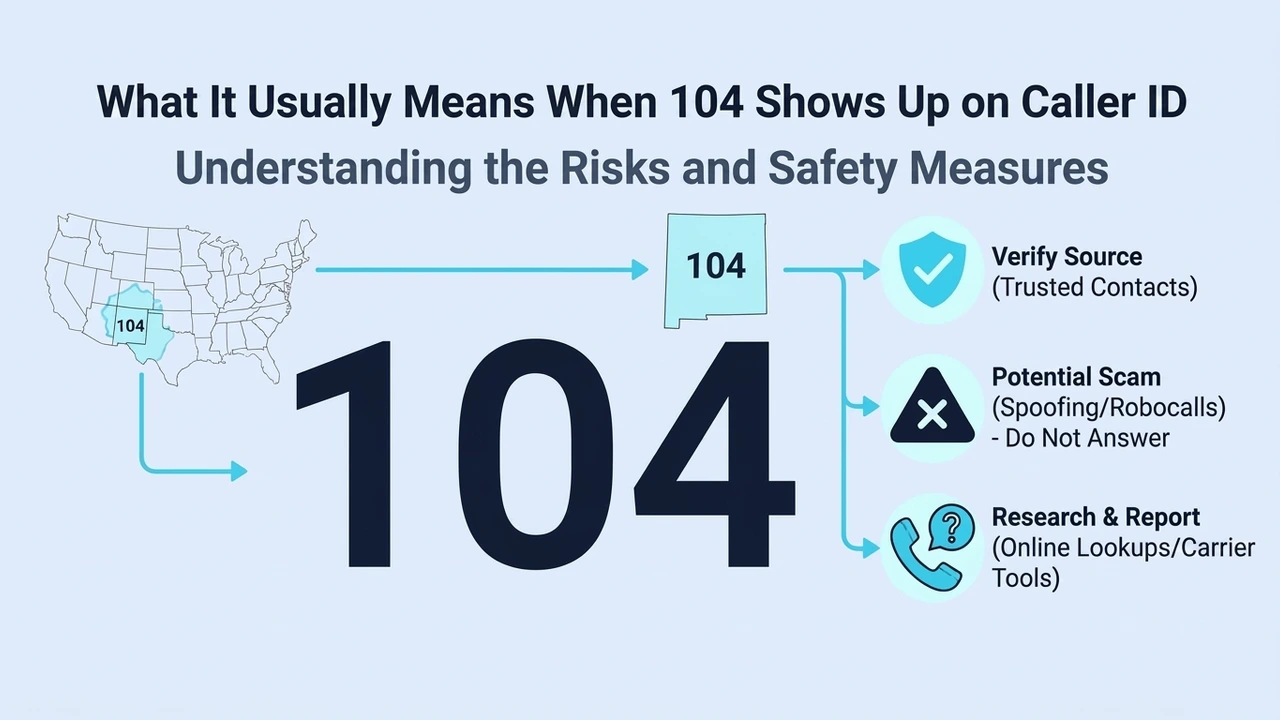
Seeing the 104 area code on your screen almost never means what it appears to mean. The explanation is usually far more ordinary than a hidden or historic phone line, even though the number itself can feel unsettling the first time you notice it.
- Caller ID spoofing software can display any three digits it chooses, including invalid ones like 104, to appear more convincing.
- A single-digit typo in a contact list, CRM, or dialer can easily produce 104 instead of a working area code.
- Some prank or marketing apps generate placeholder numbers that never route through a real carrier network at all.
- Call center systems occasionally leak a malformed test number during a software update or carrier migration.
- Smaller businesses running budget VoIP setups are especially prone to this, since fewer of them audit outbound caller ID regularly.
North Carolina's Real Split: How the 336 Area Code Came From 910
Comparing a fabricated code to a real one makes the difference obvious, the same way spotting the 103 area code as fake becomes easy once you know the pattern. Area code 336 North Carolina began as a genuine split from the 910 region, not an invention, and it now serves the Piedmont Triad on its own, complete with published notices and a set activation date on record.
Why the Triad Needed Its Own Code
Greensboro, Winston-Salem, and High Point were growing fast enough by 1997 that regulators split the region away from area code 910 entirely, creating the 336 area code as a permanent, independent region rather than a temporary fix.
What Came Next for the Region
- Area code 336 North Carolina went into service on December 15, 1997, covering Greensboro, Winston-Salem, High Point, and Burlington.
- As the region kept growing, regulators later added 743 as an overlay directly on top of the same 336 territory, without moving a single existing customer.
- Ten-digit dialing became mandatory across both codes once the overlay activated in 2016, a direct result of the added capacity.
- Both 336 and 743 numbers carry equal legitimacy today, unlike the 104 area code, which has never gone through either process.
- Smaller towns like Kernersville, Asheboro, and Roxboro fall under this same shared numbering territory as well, spanning a wide stretch of north-central North Carolina.
4 Ways to Confirm Any Area Code Before You Trust It
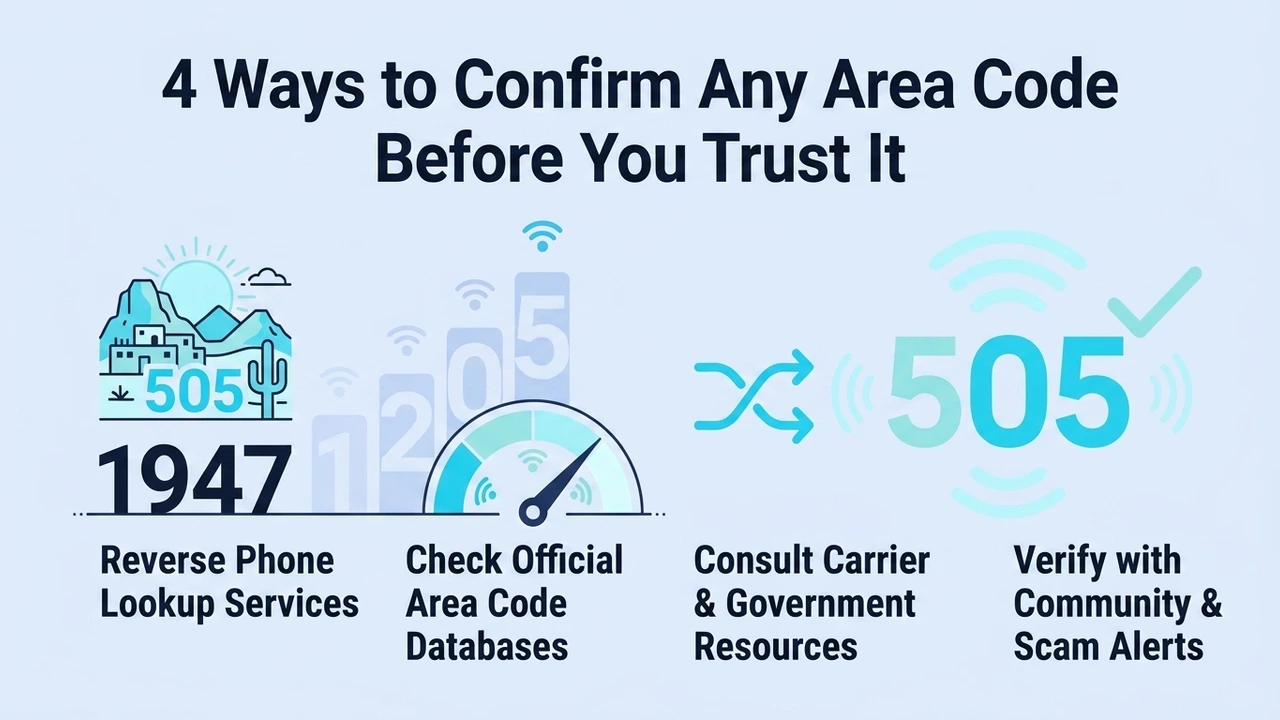
A short verification habit beats guessing every time an unfamiliar prefix shows up on your screen, whether it looks like the 104 area code or something else entirely. Run through these checks before you call back or share any information with a caller you don't recognize.
- Confirm the first digit falls between 2 and 9 — the 104 area code fails this test immediately, so no further research is even needed.
- Search the full ten-digit number in a trusted reverse lookup tool rather than judging the area code alone, since scammers reuse prefixes.
- Remember that real area codes only ever arrive through a split or an overlay, never quietly on their own or overnight.
- Report a confirmed spoofed number through the FCC guidelines for consumer complaints so the pattern gets tracked.
Keeping Your Business Numbers Off the Suspicious List
Businesses face the same problem from the other side: making sure their own outbound numbers never resemble a fabricated prefix like the 104 area code. That mistake quietly costs answered calls and customer trust, especially for sales and support teams calling out at scale.
- Provision every outbound line through a carrier that issues real, NANP-compliant numbers, never invented digits.
- Use STIR/SHAKEN-authenticated calling so your caller ID cannot be mistaken for spoofed or suspicious traffic by the receiving carrier.
- Choose local presence numbers, including legitimate splits and overlay codes like the 336 region in North Carolina, so customers see a recognizable regional code every time.
- Rozper configures every business number so it always matches a real, assignable NANP region, never a fabricated or retired-sounding prefix, even during carrier migrations.
Rozper customers get this verification built into their outbound calling by default, which keeps every number they dial from looking as suspicious as a stray 104 area code, whether the team is five people or five hundred, and regardless of how many regions they operate across.
Conclusion
The 104 area code will never show up in a legitimate carrier directory because it was never assigned, and it was never retired either, since area codes simply don't work that way once regulators create them. Comparing it against a real, regulator-approved split like area code 336 North Carolina shows exactly what a legitimate regional code looks like, built through a formal process rather than appearing out of nowhere. Most calls displaying 104 trace back to spoofing software or a simple data entry mistake rather than any assigned carrier, so applying a short verification habit protects your time and your personal information going forward, no matter how convincing the prefix looks. Whether you are checking a personal call or managing outbound numbers for a growing team, the checks above separate real regional codes from fabricated ones in seconds. Rozper builds that same clarity into every number it provisions, so your business never sends a confusing caller ID by accident, and unfamiliar prefixes like a stray 104 area code stop being a mystery starting today.
FAQs
Is 104 a real or retired area code?
It is neither. The 104 area code was never assigned in the first place, so there is nothing to retire, and the North American Numbering Plan does not recycle codes that way.
Why does my caller ID sometimes show 104?
The most common causes are caller ID spoofing software or a simple data entry typo in a contact list or dialer. Neither means you reached a real, assigned regional carrier.
Should I answer a call showing this prefix?
Answering is generally safe, but never share personal or financial details with a caller you cannot verify. Hang up and contact the organization directly through a known number if anything feels off.
Does the 336 area code cost more to call than other North Carolina numbers?
No, area code 336 North Carolina carries standard regional rates like any other assigned code, whether you reach 336 or its 743 overlay. Ten-digit dialing applies to every local call in the region.
How can I stop my own business numbers from looking suspicious?
Work with a provider that issues verified, carrier-grade numbers backed by STIR/SHAKEN authentication instead of invented digits. Rozper builds this protection into every number it provisions for growing teams.