Introduction
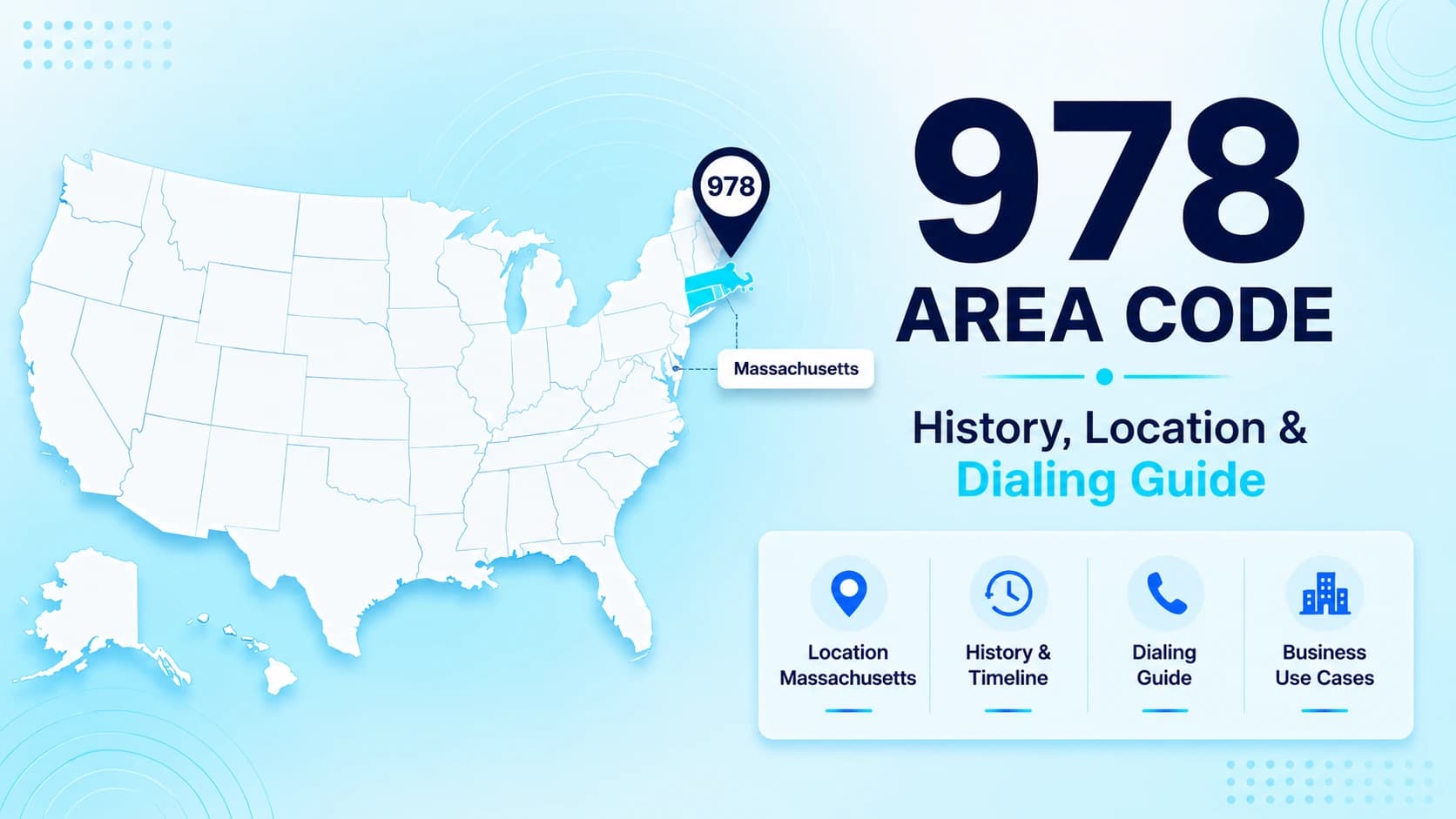
Northeastern Massachusetts has used the 978 area code since the late 1990s. Regulators split it off an older numbering plan for room to grow. Maybe a call from this prefix just landed in your inbox. Maybe you run a business and want a local number. Either way, it helps to know what the code covers and where it came from. This guide covers the geography, history, cities, and dialing rules people actually need.
Where Is the 978 Area Code Located?
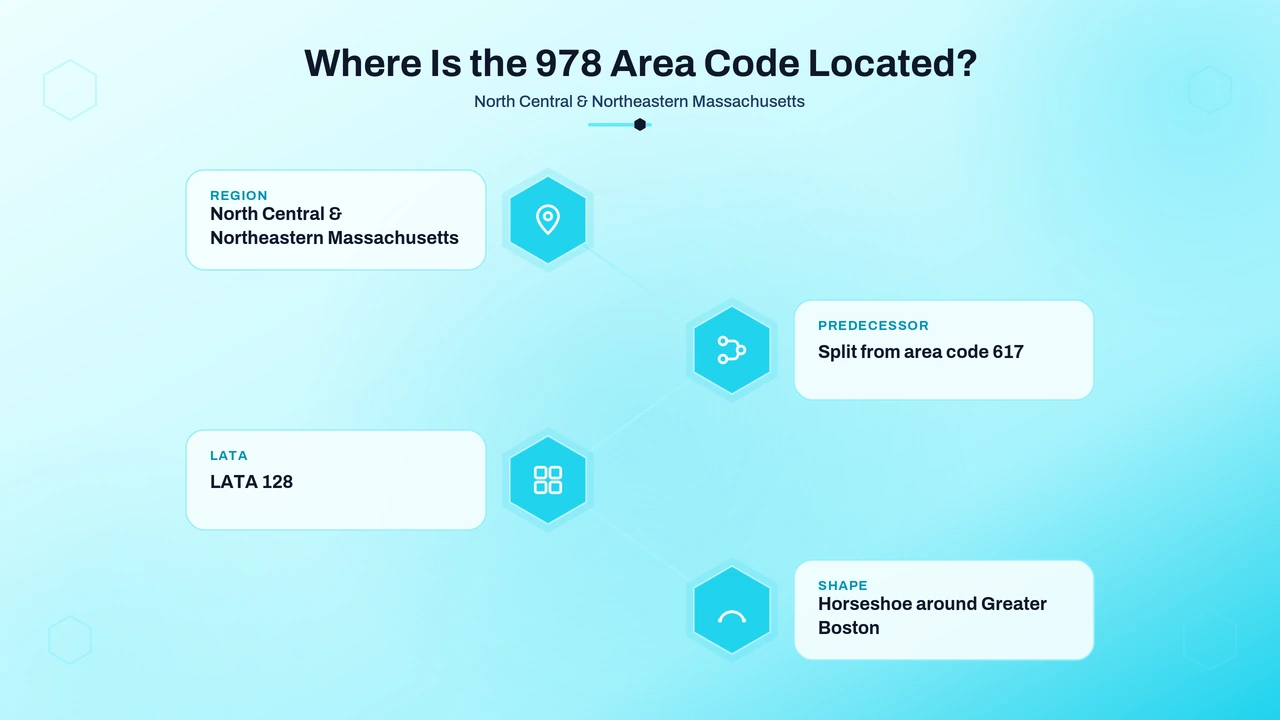
This area code covers north central and northeastern Massachusetts. The region was once served by area code 617. Population growth forced a split. Carriers group these communities under a shared local calling zone known as LATA 128. The corridor does not span the whole state. It stretches from the New Hampshire border down through the Merrimack Valley and out toward the North Shore. Along the way it covers old mill cities, coastal towns, and quiet suburbs west of Boston. Massachusetts has five area codes today, alongside the codes for Boston, the South Shore, and the western part of the state. The 978 area code forms a horseshoe around Greater Boston, not one compact block.
History and Origin of the 978 Area Code
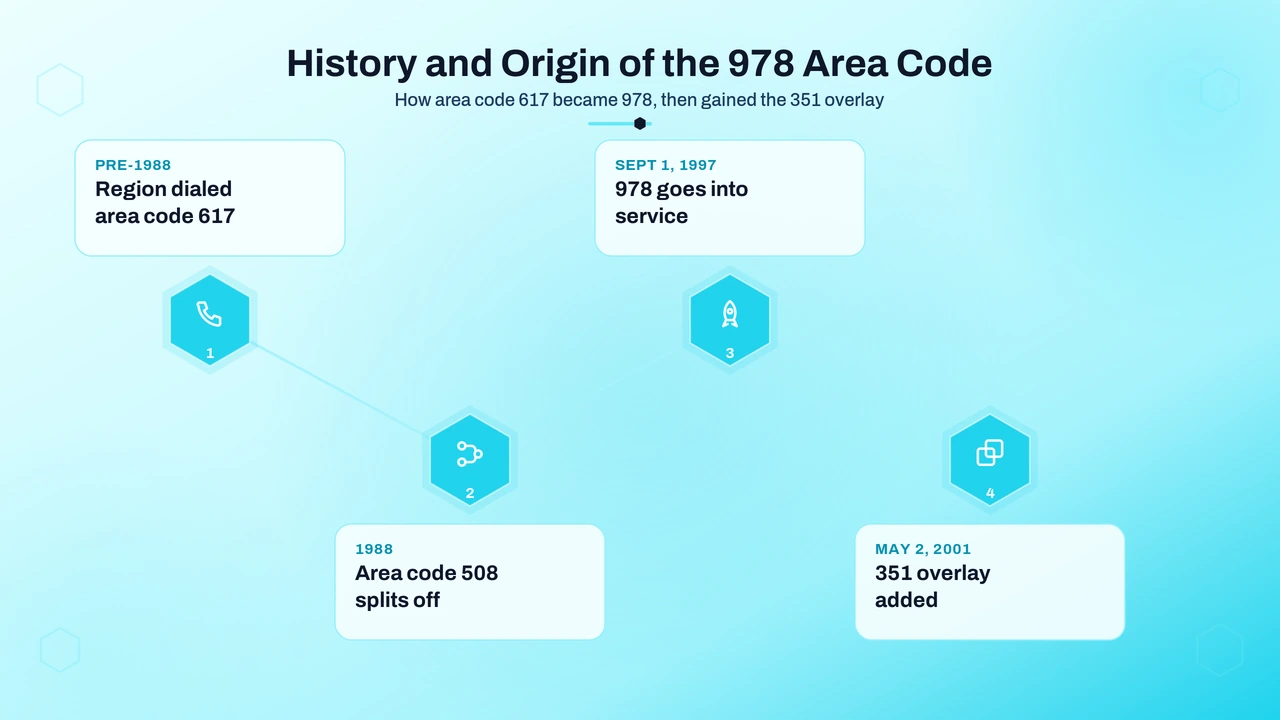
Before 1988, this whole part of the state dialed through area code 617. That was the original code for eastern Massachusetts. As the region grew, regulators split off area code 508. It covered central and southeastern Massachusetts. That relief did not last long. By the mid-1990s, 508 was running low on numbers too. Planners split it again. The 978 area code went live on September 1, 1997. A grace period followed. Callers could use either the old or the new code. That grace period ended on February 1, 1998. After that, every number in the region had to use the new prefix.
Demand kept climbing even after that. On May 2, 2001, regulators added 351 as an overlay code. It covers the exact same service area. No new lines were drawn on the map. Other fast-growing regions used this same strategy, including Boston's 617 territory. Since that overlay took effect, every call in the region needs 10-digit dialing. That includes calls between two neighbors on the same street. The Wikipedia entry on area codes 978 and 351 has the full record of these changes.
Area Code 978 Compared to Nearby Massachusetts Codes
Massachusetts runs on five area codes. The 978 area code is just one piece of that map. To the east and south, 617 and 781 cover Boston and its closest suburbs. To the south and southeast, 508 and 774 cover the region 978 split away from in 1997. To the west, 413 covers the far side of the state, including Springfield and the Berkshires. The 351 area code shares the same boundaries as 978. So the two work as one combined territory with two possible prefixes. That overlap is why 10-digit dialing became required there in the first place.
Cities and Communities Served by the 978 Area Code
This area code reaches a wide mix of communities. It is not one single metro hub. Lowell anchors the southern end of the Merrimack Valley. It was once known as the birthplace of the American Industrial Revolution. Lawrence sits alongside it as a manufacturing and healthcare center. To the north, Haverhill and Andover round out the valley corridor. Chelmsford, Billerica, and Westford serve as commuter suburbs near Boston's tech corridor.
Along the coast, Gloucester, Salem, and Beverly bring the area code to the North Shore. These towns mix fishing heritage with tourism. Inland, Fitchburg and Leominster cover north central Massachusetts. Smaller towns like Concord, Acton, and Newburyport round out a territory that blends old New England charm with modern commuter life.
Further west, Ayer, Groton, and Littleton mark the quieter edge of the area code. Former farmland here has given way to suburban growth. Closer to New Hampshire, Amesbury and Merrimac round out the northernmost towns, giving the region a true border-town feel.
Time Zone and Dialing Rules for the 978 Area Code
Every community in this area code runs on Eastern Time. That means Eastern Standard Time in winter and Eastern Daylight Time in summer. The rest of Massachusetts follows the same schedule. The 351 overlay covers the same ground as the 978 code. Because of that, seven-digit dialing alone can no longer tell the two apart. That's why callers must dial all 10 digits, area code included, for every call, even local ones. Skip the area code on a local call here and it simply won't connect. That change surprised plenty of longtime residents when it first took effect.
Why Businesses Choose a 978 Area Code Number
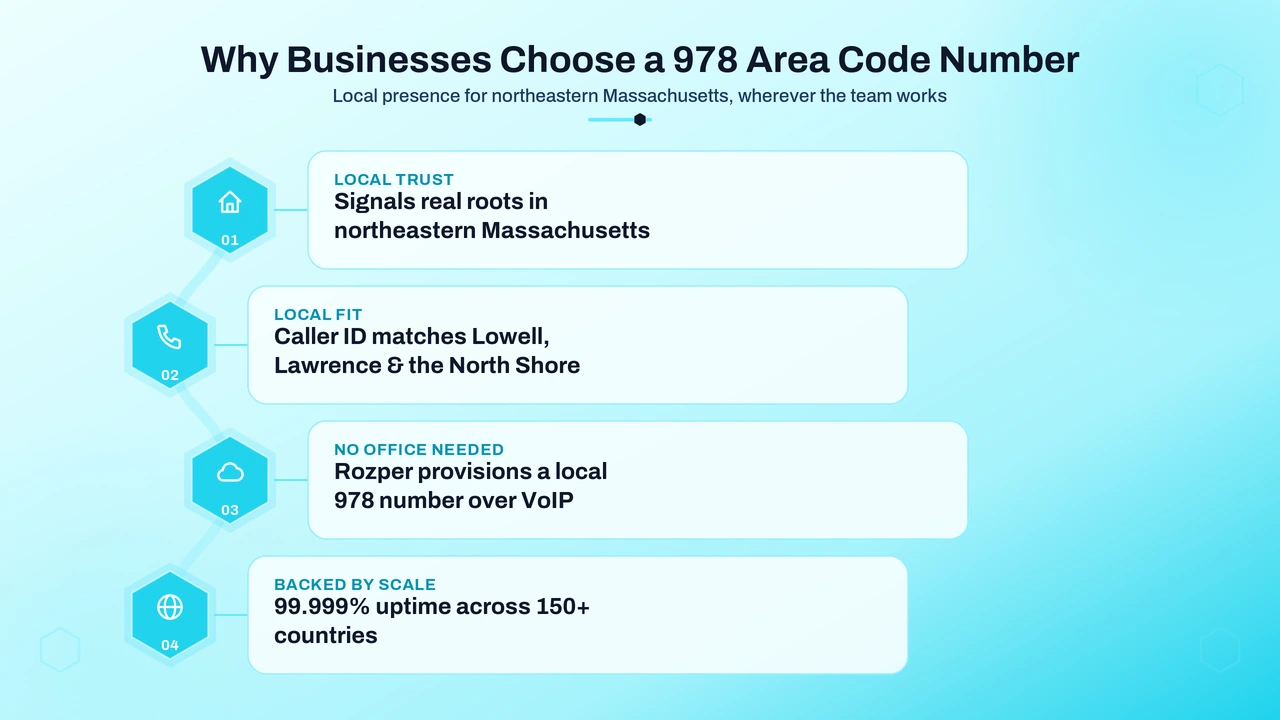
A local number in this area code sends a clear signal. It tells customers a business has real roots in northeastern Massachusetts. It doesn't look like a call center somewhere else. That matters in a region built on tight-knit mill towns and coastal communities. Local trust still drives referrals here. Businesses expanding into Lowell, Lawrence, or the North Shore often pick up a matching number. They want their caller ID to fit right in.
This is where a cloud phone provider like Rozper fits in. A business doesn't need a physical office in the region. Rozper lets it set up a local 978 number through a VoIP platform instead. The local presence stays intact. Calls can route anywhere the team actually works. Rozper backs that setup with 99.999% uptime and coverage across 150+ countries. A business can claim a Massachusetts number for its northeastern footprint. Meanwhile its support or sales team can work from anywhere else. It's a practical middle ground for a Massachusetts footprint without Massachusetts real estate.
How to Get a 978 Area Code Number
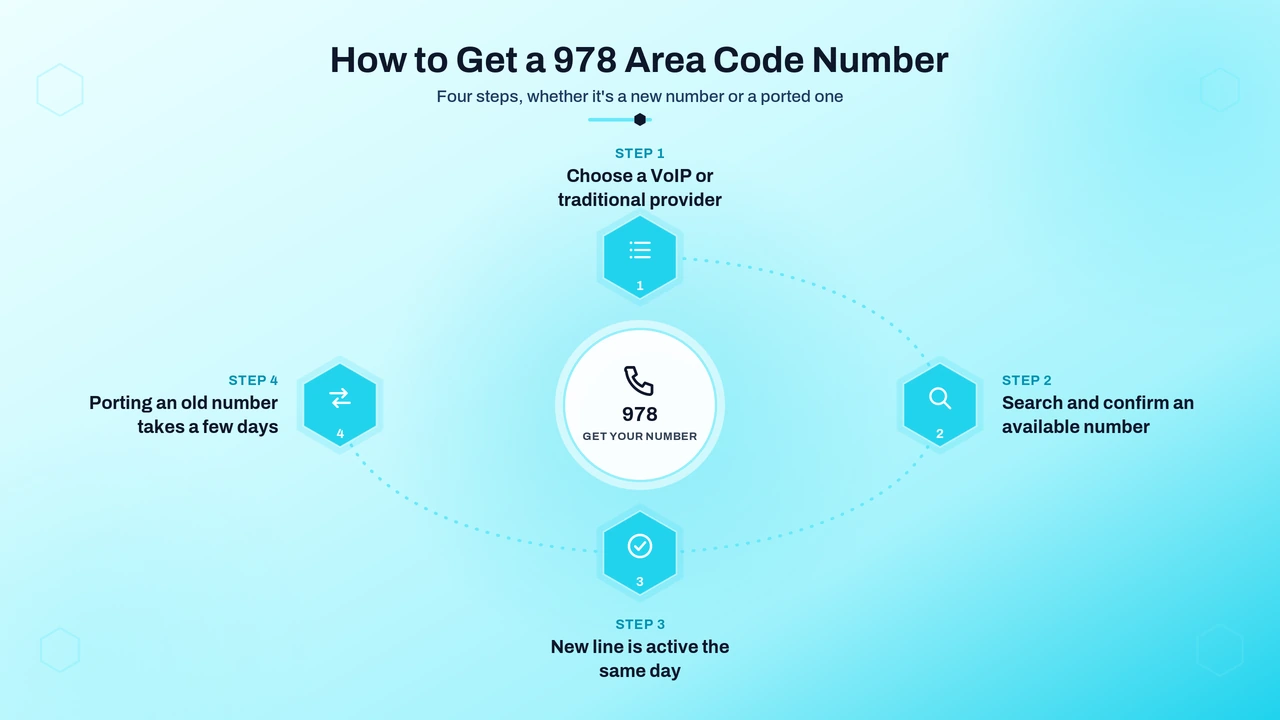
Getting a new number in this area code usually means going through a phone provider. That's different from the phone company that first assigned the block decades ago. VoIP providers can usually issue one in minutes. They check availability the same way a traditional carrier would, through the national numbering administrator. The process looks the same almost everywhere. Pick a provider. Search for an available number. Confirm it. The line is typically active the same day.
Businesses moving a number from an old provider need one more step. They must file a standard porting request. That typically takes a few business days to finish. It's worth confirming the old number keeps working normally during the transfer.
Conclusion
Area code 978 started with a 1997 split of an overloaded numbering plan. Today it is the identity of a wide, varied slice of northeastern Massachusetts. It stretches from Lowell's mill town roots to Gloucester's harbor. Its story of splits and overlays shows how fast the region grew over three decades. That growth is also why 10-digit dialing is now just part of daily life there. Maybe you're just curious about a missed call. Maybe you're shopping for a local number. Either way, knowing this area code's geography, history, and dialing rules makes the decision easier. For residents, it's simply the prefix tied to home. For businesses eyeing the Merrimack Valley or the North Shore, it's a small but meaningful signal of local presence.
FAQs
When was area code 978 created?
It went into service on September 1, 1997. Regulators split it from area code 508 to relieve a shortage of phone numbers. That shortage covered northeastern Massachusetts. A permissive dialing period allowed either code until February 1, 1998. After that, the switch became final for every line in the region.
What cities does the 978 area code cover?
It covers a broad stretch of north central and northeastern Massachusetts. That includes Lowell, Lawrence, Haverhill, Andover, Chelmsford, Gloucester, Salem, Fitchburg, and Leominster. Many smaller towns fill in the rest, from the New Hampshire border to the North Shore. This footprint mixes old mill cities, fishing harbors, and quiet commuter suburbs.
Do I need to dial 10 digits for local calls in this area code?
Yes. The 351 overlay was added in 2001 to the same service area. Because of that, every call in the region requires 10-digit dialing. This includes calls between two neighbors who both use the 978 prefix.
Is area code 978 the same as area code 351?
No, they're different prefixes that share one overlay territory. A phone number can be assigned either 978 or 351. Both require 10-digit dialing since they cover identical geography.
What time zone does the 978 area code use?
The entire region runs on Eastern Time. It follows the same Eastern Standard and Eastern Daylight schedule observed across the rest of Massachusetts throughout the year.
Can a business outside Massachusetts get a 978 area code number?
Yes. VoIP providers can issue a number in this area code to any business, no matter where it's located. That lets companies build a local presence in the region without opening a local office. Rozper, for example, can provision one alongside call routing, voicemail, and support for teams working from anywhere else in the country.