Introduction
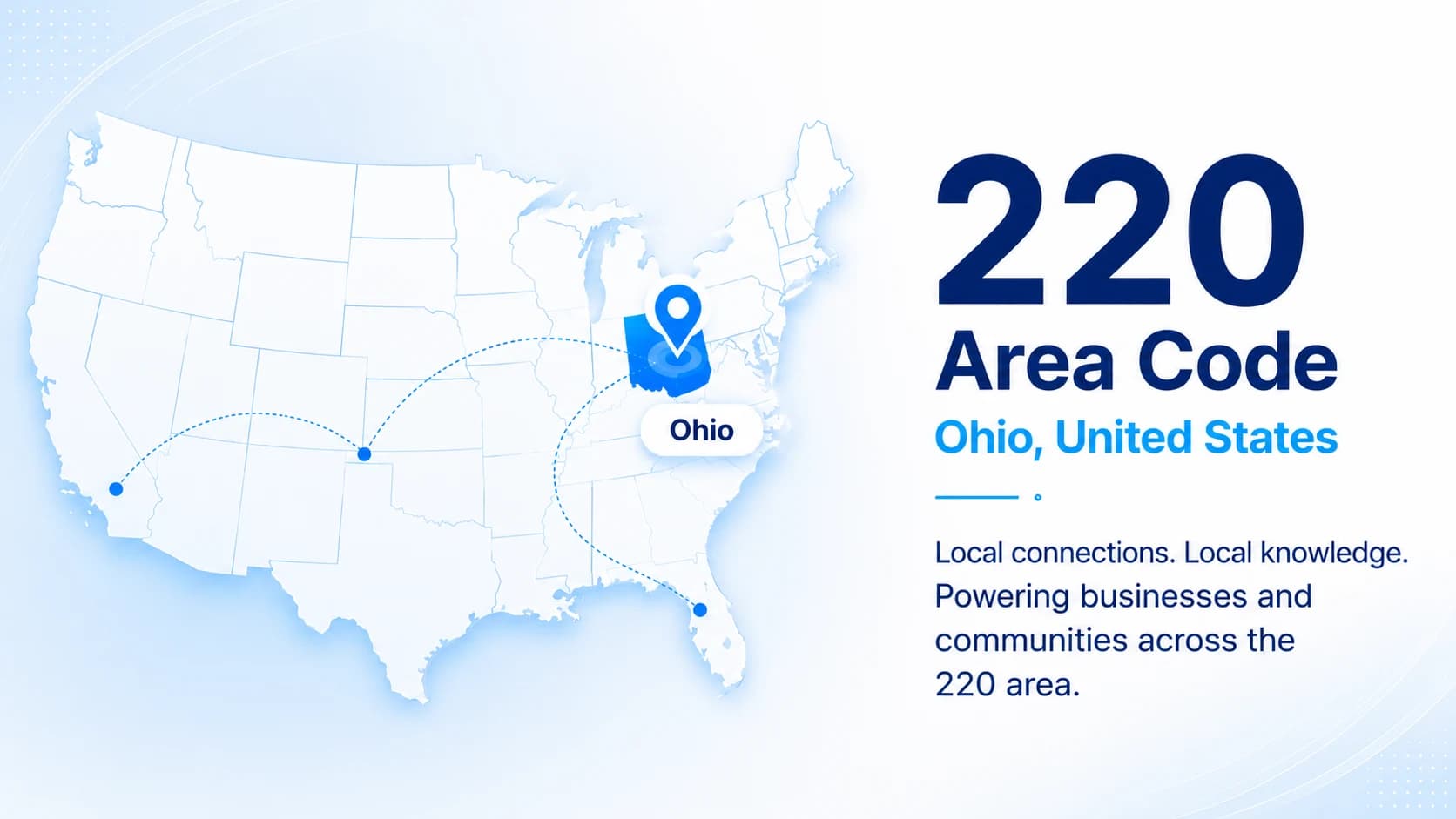
Getting a call from a 220 area code number usually means someone from central or southeastern Ohio is trying to reach you. Unlike most prefixes, this one didn't come from a territory split — it's the result of a numbering overlay layered onto the older 740 area code that had been serving the region for decades, added to solve a growing numbering shortage. This guide covers the geography, the overlay history, the practical numbering details, and how to get a 220 number of your own without waiting on a physical line installation.
What Is the 220 Area Code?
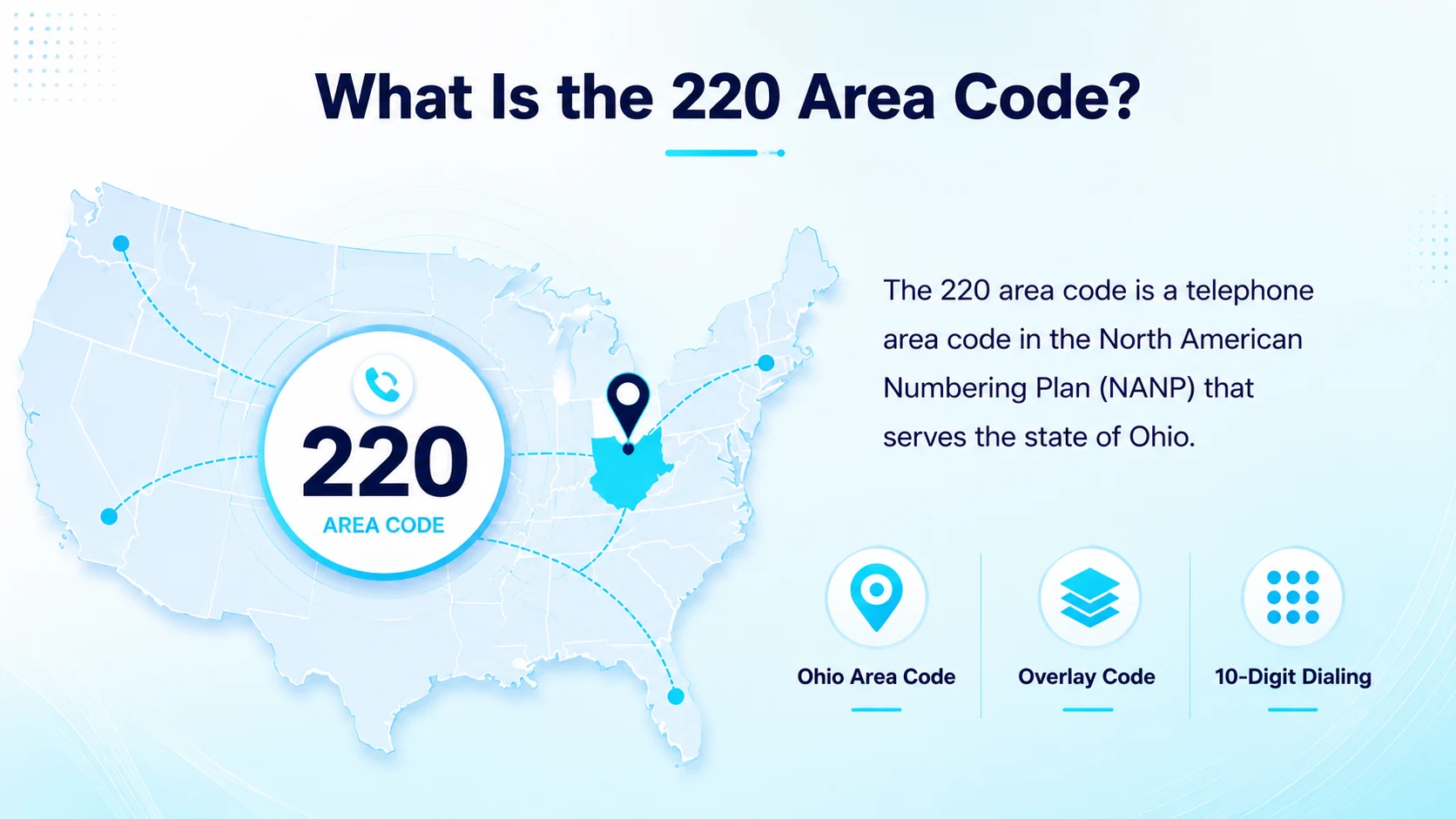
The 220 area code is an overlay code, meaning it shares the exact same geographic footprint as an older, existing prefix rather than replacing or splitting it. It was placed into service in 2015 after regulators determined the original code covering central and southeastern Ohio was running low on numbers. Rather than redrawing county lines, the state added a second code to the same territory — which means every local call in the region now requires all ten digits to connect.
Where Is the 220 Area Code Located?
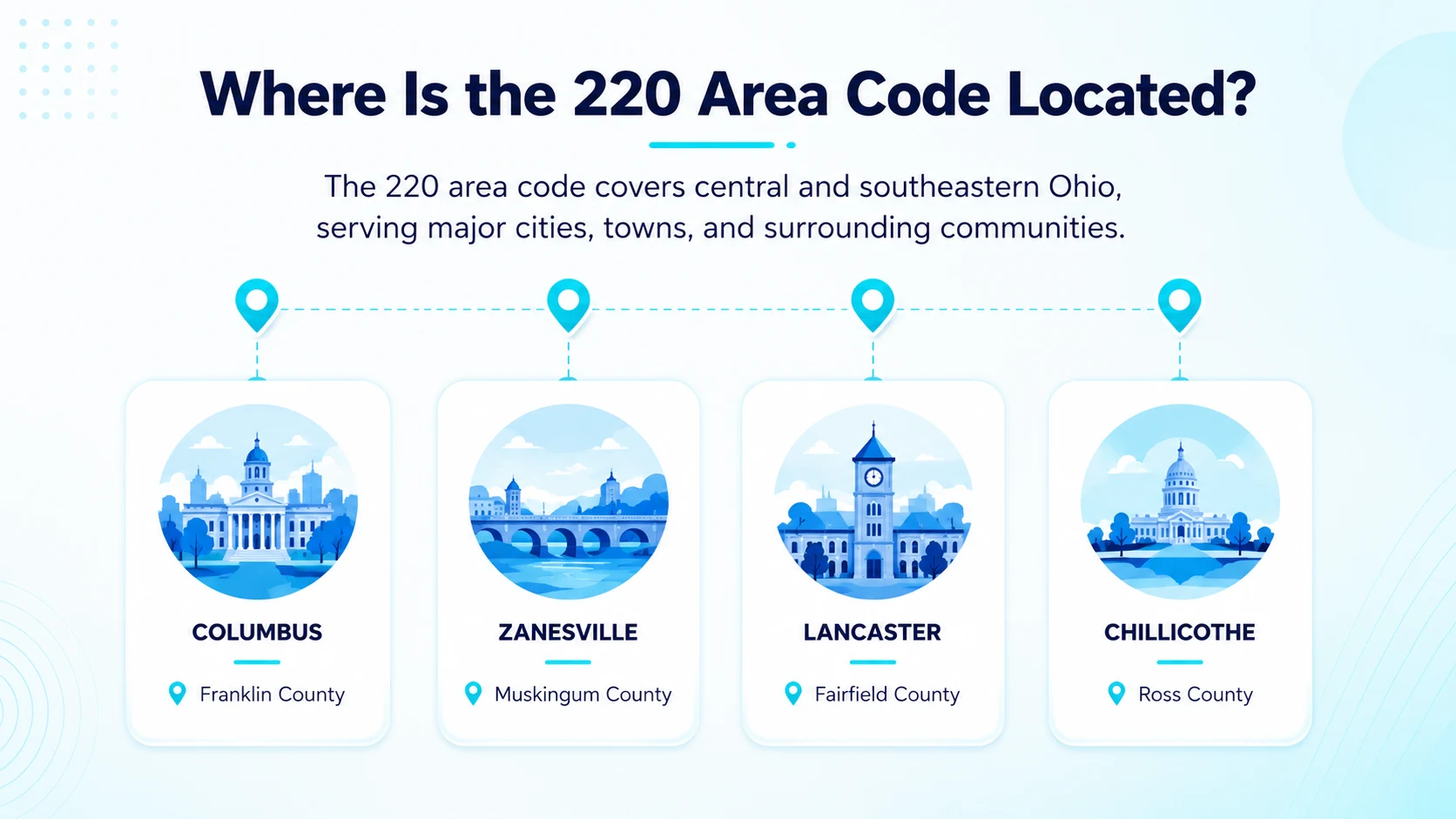
Geographically, the 220 area code stretches across a wide swath of Ohio, running from the outer edges of the Columbus metro area down through the Appalachian foothills toward the Ohio River. It's one of the larger service areas in the state by land area, even though the population is spread across many small and mid-sized cities rather than one dense metro core. Communities served by area code 220 include:
- Newark — a manufacturing and logistics hub east of Columbus
- Zanesville — known for its historic Y-Bridge and regional healthcare presence
- Lancaster — a fast-growing suburb with strong retail activity
- Marion — home to a mix of agriculture and light industry
- Chillicothe — Ohio's first state capital, now a regional commercial center
- Marietta — a river town along the Ohio River with a tourism economy
- Athens, Circleville, Coshocton, Portsmouth, and Steubenville — smaller cities anchoring their own surrounding counties
Because the region covers so much ground, a number from area code 220 can represent anything from a small-town storefront to a growing logistics operation near the Columbus suburbs — all under the same recognizable prefix. A single caller ID connects a farm-equipment dealer in Marion to a river-tourism outfitter in Marietta and a hospital network in Zanesville.
220 Area Code at a Glance
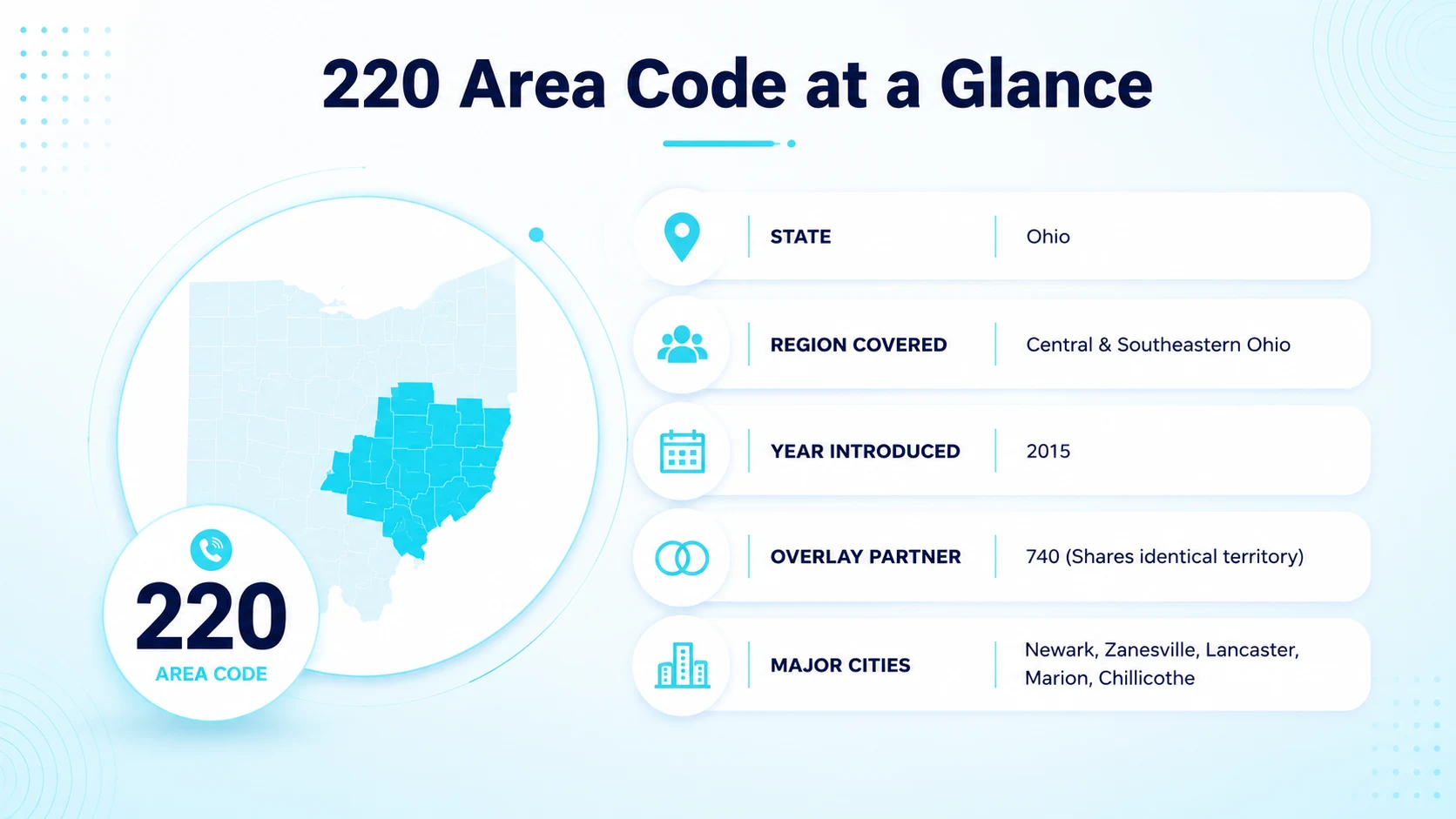
Here's a quick reference for the numbering plan details covering this part of Ohio:
| Detail | Information |
|---|---|
| State | Ohio |
| Region covered | Central & Southeastern Ohio |
| Year introduced | 2015 |
| Time zone | Eastern Time (ET) |
| Overlay partner | 740 (shares identical territory) |
| Major cities | Newark, Zanesville, Lancaster, Marion, Chillicothe |
| Counties served | Licking, Fairfield, Marion, Ross, Muskingum, and more |
| Numbering type | Overlay NPA (North American Numbering Plan) |
Because this is an overlay rather than a geographic split, a business or resident could be assigned either 740 or the newer prefix depending purely on when the number was issued, not on their exact address.
The Overlay History of the 220 Area Code
Central and southeastern Ohio spent decades on a single area code before population and business growth ate into the available number supply. By the early 2010s, regulators had to choose between splitting the territory or adding an overlay — they chose the overlay route, the same approach used in the 614 area code serving the Columbus core. The overlay went live in 2015, layering 220 onto the existing 740 area code footprint. Existing 740 customers kept their numbers; new lines could be assigned either code.
Why Businesses Choose the 220 Area Code
A local number still shapes how a business gets perceived, even in an overlay region where two prefixes share the same footprint. Customers rarely check which of the two codes a business uses — what they notice is whether the prefix matches the region they know, and that recognition can shorten the distance between a first call and a sale. Business owners in the region cite a few consistent reasons for wanting a 220 line:
- It signals genuine local presence to customers across Newark, Zanesville, Lancaster, and the surrounding counties
- It builds immediate familiarity with callers who already recognize the prefix from daily life
- It supports regional marketing that references the local Ohio community by name
- It keeps a business easy to remember for residents who associate the code with home
Numbering assignments like this one fall under federal oversight through the FCC's numbering resources program, which coordinates area code administration and prevents conflicts across the entire country. That level of oversight is part of why a number from area code 220 remains a stable, well-regulated option for any business setting up a presence in the region.
Rozper makes activating a 220 area code number straightforward — no physical office in Ohio required, no waiting on a technician for a line installation. Rozper is one option worth considering here, maintaining 99.999% uptime and coverage in 150+ countries so a single platform can serve both your local central Ohio line and any international operations.
Conclusion
This overlay prefix represents a newer chapter in Ohio's phone numbering story — not a territory split, but a second numbering pool layered on top of an existing one to keep the region supplied with fresh numbers as it kept growing. From Newark's logistics corridor to Marietta's riverfront businesses, the area it reaches is broad and still expanding. For a company building local credibility there, a matching phone number remains one of the fastest, simplest signals of legitimacy — no physical office or installation wait required. That process is still governed by the same federal numbering oversight that governs how overlay codes like this one get assigned across the country.
FAQs
Is the 220 area code still active?
Yes, it has been active and in regular use since 2015. It was never retired, and it continues to serve new phone lines across central and southeastern Ohio alongside its overlay partner, the 740 area code.
What cities use the 220 area code?
Newark, Zanesville, Lancaster, Marion, Chillicothe, and Marietta are among the larger cities. Smaller communities across several surrounding counties also fall within this service area.
Is 220 a toll-free area code?
No, it's a standard geographic overlay code, not a toll-free prefix. Calls to and from these numbers are billed like any other regional call in Ohio.
Can I get a 220 number if I don't live in Ohio?
Yes. Virtual phone providers like Rozper let businesses and individuals anywhere activate a local Ohio number without needing a physical address in the state.
What time zone does the 220 area code use?
The entire region operates on Eastern Time, matching the rest of Ohio and the broader Columbus metro area it borders.