Introduction
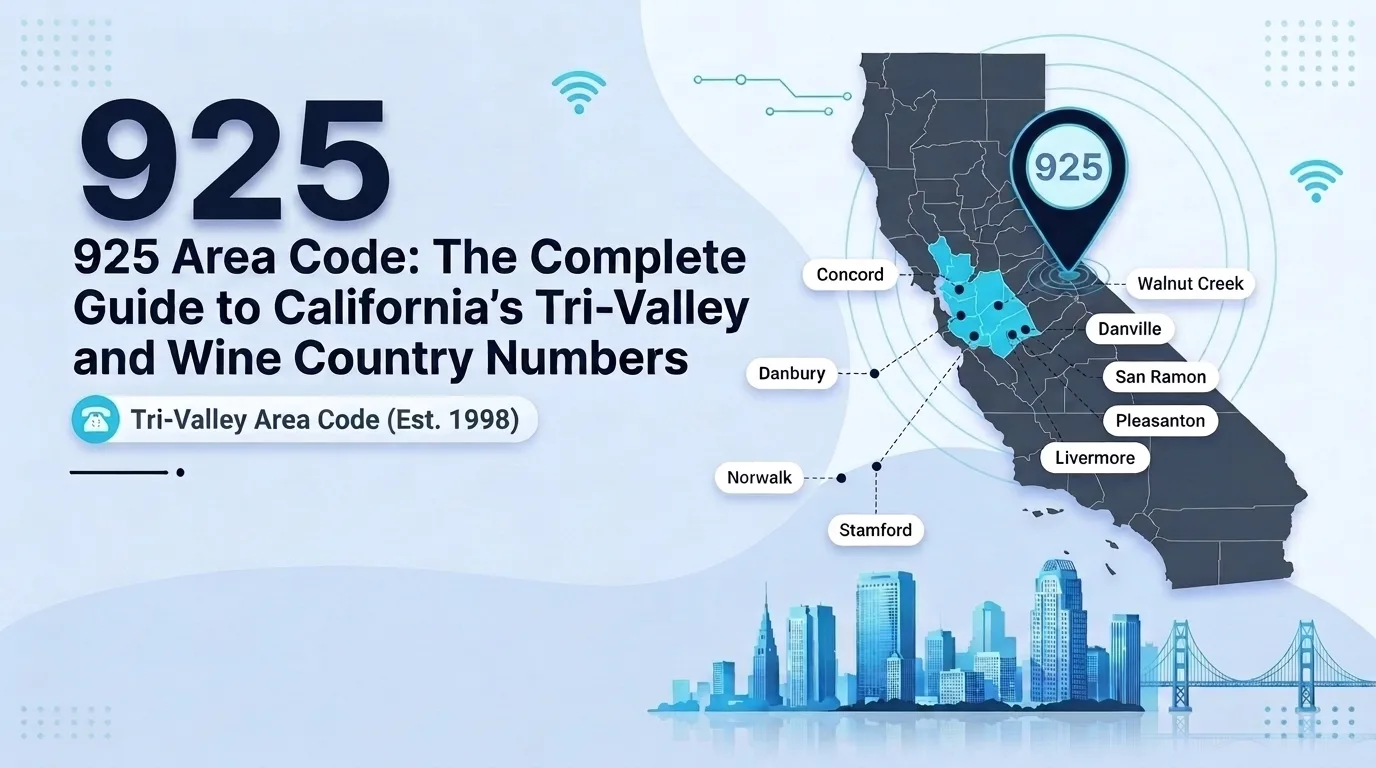
The 925 area code covers Concord, Walnut Creek, and the Tri-Valley region of the East Bay, and this guide explains exactly what that means for anyone calling, texting, or running a business across this corner of the Bay Area. This topic matters because the 925 area code has never needed a second overlay code, even though the region around it has grown into a major tech and business corridor, a detail most guides never explain. You will learn which cities and counties share this code, why it has avoided the overlay so many nearby California codes eventually needed, and how a 925 number still signals real local roots from Livermore's wineries to San Ramon's office parks. Stick with this guide and you will understand this region's numbering system better than most people who have dialed a 925 number for years.
Key Takeaways:
- The 925 area code covers most of Contra Costa County and the Tri-Valley cities of eastern Alameda County.
- Area code 925 split away from 510 in February 1998, giving the East Bay's inland suburbs their own code.
- Unlike 510, which added the 341 overlay in 2004, the 925 area code has never needed a second code.
- A 925 number could belong to a Livermore winery or a San Ramon corporate campus, all under one code.
From Concord to Livermore: Every City Under the 925 Area Code
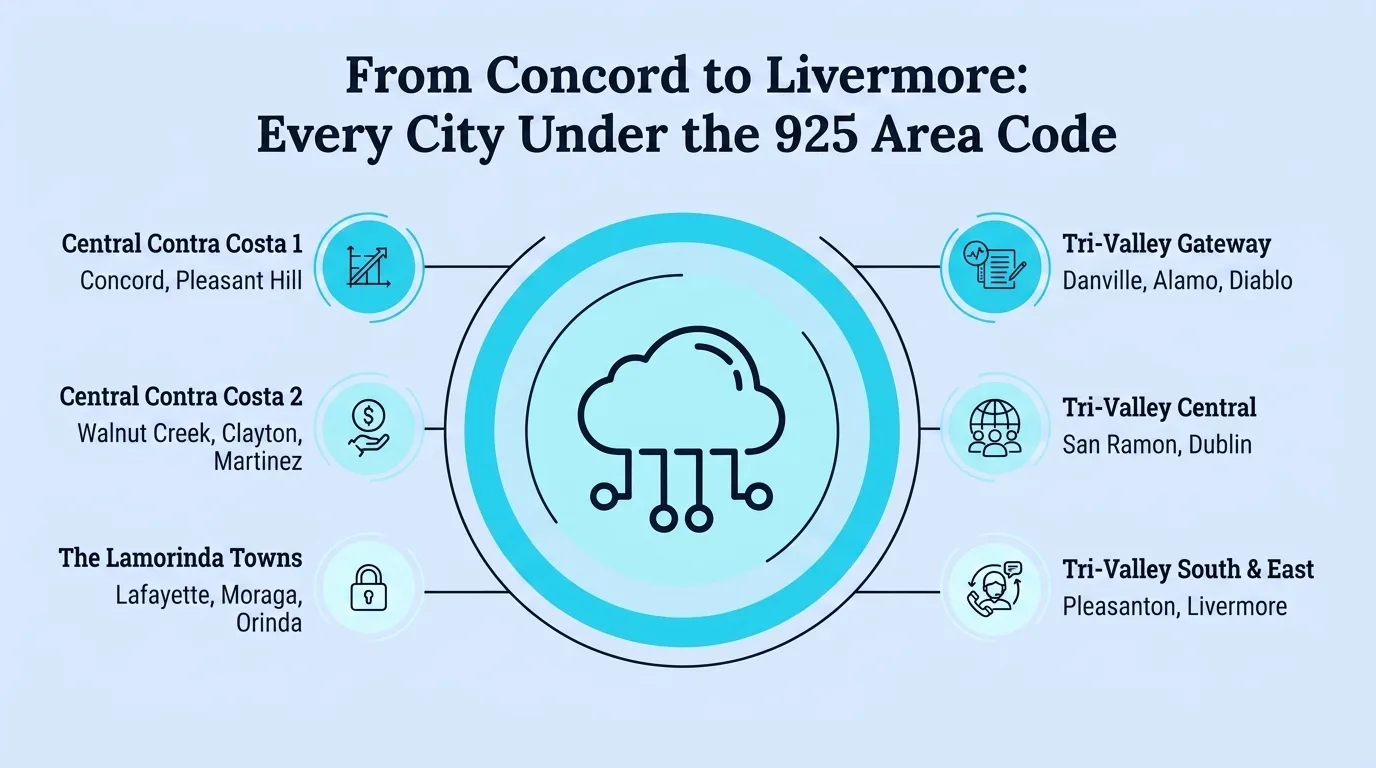
This code covers most of Contra Costa County along with the Tri-Valley cities of eastern Alameda County. Concord is the largest city in the region, followed by Walnut Creek and Antioch, with coverage stretching from the Carquinez Strait down through Danville, San Ramon, Dublin, Pleasanton, and Livermore. That footprint links dense suburban commuter towns with a growing corporate and wine-country economy.
- Concord, the largest city in Contra Costa County and a major regional hub
- Walnut Creek, known for its downtown shopping and business district
- Antioch, Pittsburg, and Martinez, anchoring the northern delta cities
- Danville and San Ramon, home to Bishop Ranch and major corporate campuses
- Dublin, Pleasanton, and Livermore, forming the fast-growing Tri-Valley
More than 1.4 million people live across the area code 925 California footprint, a mix of longtime commuter suburbs and newer tech-adjacent business parks.
A Region Built on Two Very Different Economies
The Tri-Valley side of this region has grown around corporate offices and research campuses, including Lawrence Livermore National Laboratory, while Livermore itself remains one of California's oldest wine regions. Few area codes anywhere connect a national research lab with working vineyards this closely.
How the 925 Area Code Split Away From 510 in 1998
Alameda and Contra Costa counties once shared a single area code, 510, that covered the entire East Bay from Oakland to Livermore starting in 1959. As Contra Costa County and the Tri-Valley grew through the 1980s and 1990s, regulators realized the shared numbering pool could not support both the dense inner East Bay and its fast-growing eastern suburbs much longer.
Before 1998
A single 510 number could belong to Oakland, Berkeley, Concord, or Livermore alike, with no way to tell the cities apart by prefix.
After February 1998
California split the region, and Concord, Walnut Creek, and the entire Tri-Valley became the new 925 area code, while Oakland, Berkeley, and Fremont kept 510. That split gave this fast-growing suburban corridor its own dedicated numbering identity, separate from the inner East Bay, for the first time.
Why Has the 925 Area Code Never Needed an Overlay?
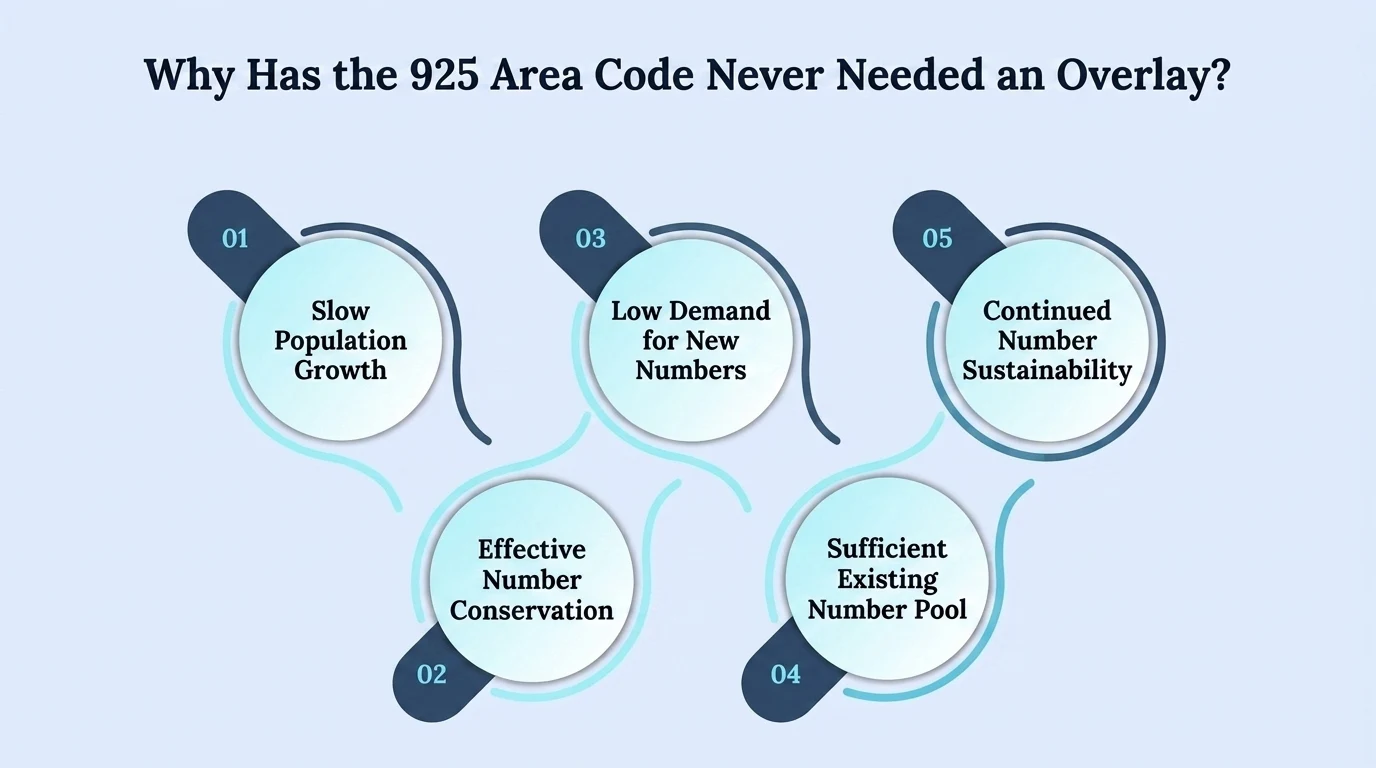
Most nearby California codes eventually needed a second overlay code as cell phones and business lines multiplied, including 510 itself, which added the 341 overlay in 2004. This region has taken a different path, still operating as a single code more than 25 years after its original split.
- Regulators carved out a large number of available prefixes when 925 launched in 1998.
- Steady, rather than explosive, population growth stretched that supply further than expected.
- Conservation efforts, including number pooling, have helped extend the region's remaining prefixes.
- As of today, every new phone line in this region still receives a 925 number.
925 vs. 510: One Split, Two Very Different Numbering Stories
Both codes once shared the same East Bay territory, so their split in 1998 still shapes how customers read a number today. The real difference now comes down to overlay history, not geography, since 510 needed a second code and the 925 area code has not.
925 — No Overlay Since 1998
This code still covers Concord, Walnut Creek, and the Tri-Valley on its own, with no second prefix ever added to the mix.
510 — Added the 341 Overlay in 2004
Oakland, Berkeley, and Fremont now share their territory with the newer 341 code, and both regions require ten-digit dialing for every local call.
Businesses in this region rarely need to explain a second local code the way their 510 neighbors sometimes do. Anyone comparing this pattern against the 510 area code will notice how differently growth has played out across the East Bay.
The Myth That Every East Bay Number Still Uses 510
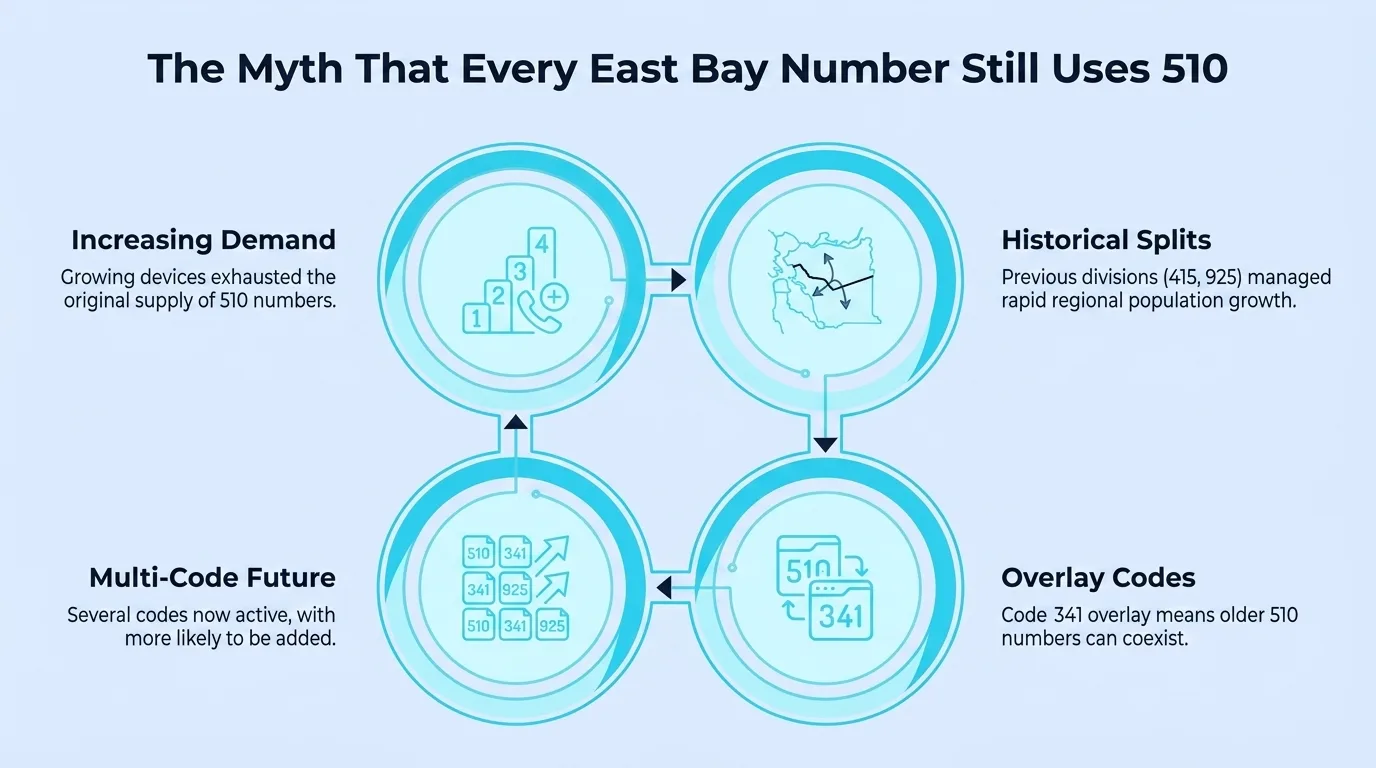
Plenty of people outside the region assume every East Bay business still uses a 510 number, since that code covers Oakland and Berkeley, the area's best-known cities. That assumption misses an entire half of the East Bay, where 925 has handled every new line since 1998.
- Concord and Walnut Creek have never shared a code with Oakland or Berkeley.
- The Tri-Valley cities have used 925 exclusively since the original split.
- A caller with a 925 number could be dialing from a vineyard or a corporate campus.
- Assuming area code 925 California numbers belong to 510 leads to inaccurate guesses often.
Rozper works with businesses across this stretch of the East Bay to make sure that confusion never costs a business a real customer, showing exactly who is calling and routing the conversation to the right person, whether the customer is dialing from Danville or Livermore.
Not Every 925 Caller Is Dialing From the Tri-Valley
Scammers frequently spoof 925 numbers because a familiar-looking local code makes people more likely to answer without hesitation. If a caller claiming to represent a utility company or government office pressures you for immediate payment through gift cards or wire transfers, treat that as a serious warning sign. Legitimate organizations across this region do not demand instant, untraceable payment over the phone.
Steps To Confirm A Legitimate 925 Caller
- Search the full ten-digit number online before returning the call.
- Contact the organization directly through its official website or listed number.
- Never share financial or personal details with an unexpected caller.
- Read Rozper's guide on choosing a number to avoid scams like this one costing your business a real customer.
According to FCC guidelines, every region assigned an area code like this one requires all ten digits for local calls, and skipping the area code will always produce a failed call rather than a warning to try again.
How a Local 925 Number Builds Trust From Wine Country to Bishop Ranch
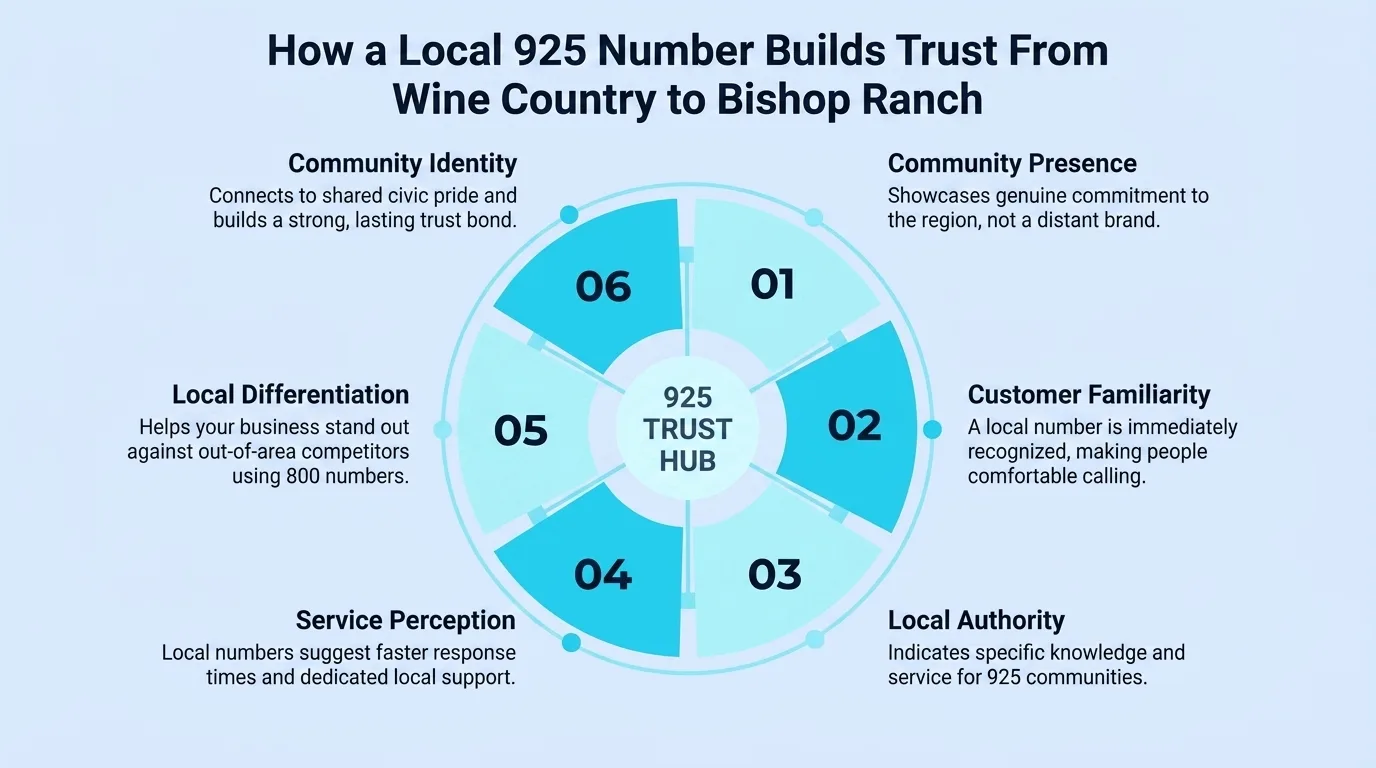
A local area code 925 tells a customer in Pleasanton or Livermore that a business understands their specific corner of the East Bay, not just the wider Bay Area. That signal matters most in a region spanning both established wine country and newer corporate campuses, where a company near Bishop Ranch and one near Livermore's vineyards serve very different customers. Businesses that pair that local number with organized call handling keep the trust they earn on the first ring.
- Local numbers get answered more often than unfamiliar toll-free lines.
- Smart call routing connects customers to the right person without delay.
- Missed-call follow-up recovers leads that a busy front desk might miss.
- Consistent local presence helps repeat customers recognize a business fast.
Rozper helps growing businesses across the Tri-Valley and Contra Costa County manage exactly this kind of call flow, so a local 925 presence turns into booked appointments instead of missed opportunities.
Conclusion
The 925 area code has anchored Concord, Walnut Creek, and the Tri-Valley since splitting away from 510 in February 1998, and it remains one of the few East Bay codes that has never needed a second overlay. Understanding why this region has held onto a single code, how it differs from its 510 neighbor, and how to catch a spoofed call helps residents and business owners navigate the system with confidence. Ten-digit dialing and the 925-510 split still matter for anyone living or working here. The 925 area code is more than a dialing prefix; it is a reminder that growth does not always mean running out of room.
Businesses spread across these commuter suburbs, corporate campuses, and vineyards need more than a working phone line to keep customers close. Rozper gives growing teams the call routing and follow-up tools to turn a local 925 presence into consistent, organized conversations no matter how far apart your customers live. As Concord, Pleasanton, Livermore, and the rest of the region keep growing, the businesses that manage every call well are the ones people remember and call back. Take the next step today and see how a smarter call system can support your local presence.
FAQs
What state is the 925 area code in?
The 925 area code is located entirely within California, covering Contra Costa County and the Tri-Valley. It borders the 510 area code to the west.
Where exactly does area code 925 cover?
It covers Concord, Walnut Creek, Antioch, Danville, San Ramon, Dublin, Pleasanton, and Livermore. This spans both Contra Costa County and eastern Alameda County.
When was the 925 area code created?
It was created in February 1998, when it split away from the original 510 code covering the entire East Bay. That code had served the region since 1959.
How do I dial a 925 number correctly?
You must dial all ten digits, including the area code, for every local call. Seven-digit dialing has not worked in this region for years.
Is it safe to answer calls from a 925 number?
Not always, since scammers frequently spoof local numbers to appear trustworthy. Confirm any unusual request before sharing personal or financial information.
What time zone does 925 use?
The entire 925 region operates on Pacific Time year-round. This applies consistently across Contra Costa County and the Tri-Valley.
Does getting a 925 number cost anything extra?
Standard phone service already includes whichever area code your line is assigned. Businesses comparing providers should focus on their phone plans rather than assume 925 numbers cost more.
Why hasn't area code 925 California ever needed an overlay like its neighbor 510?
A generous initial prefix supply combined with steadier growth patterns has let this region avoid the overlay that hit 510 in 2004. Number conservation efforts have also stretched the original 1998 supply further than regulators first expected.