Introduction
One area code can be both the easternmost and westernmost prefix in North America — and it belongs to a single state. Alaska's Aleutian Islands stretch so far west that they cross the International Date Line into the Eastern Hemisphere, making the 907 area code a genuine geographic outlier. This guide covers where this prefix reaches, how it came to exist, and how to get a matching number for a home or business today.
What Is the 907 Area Code?
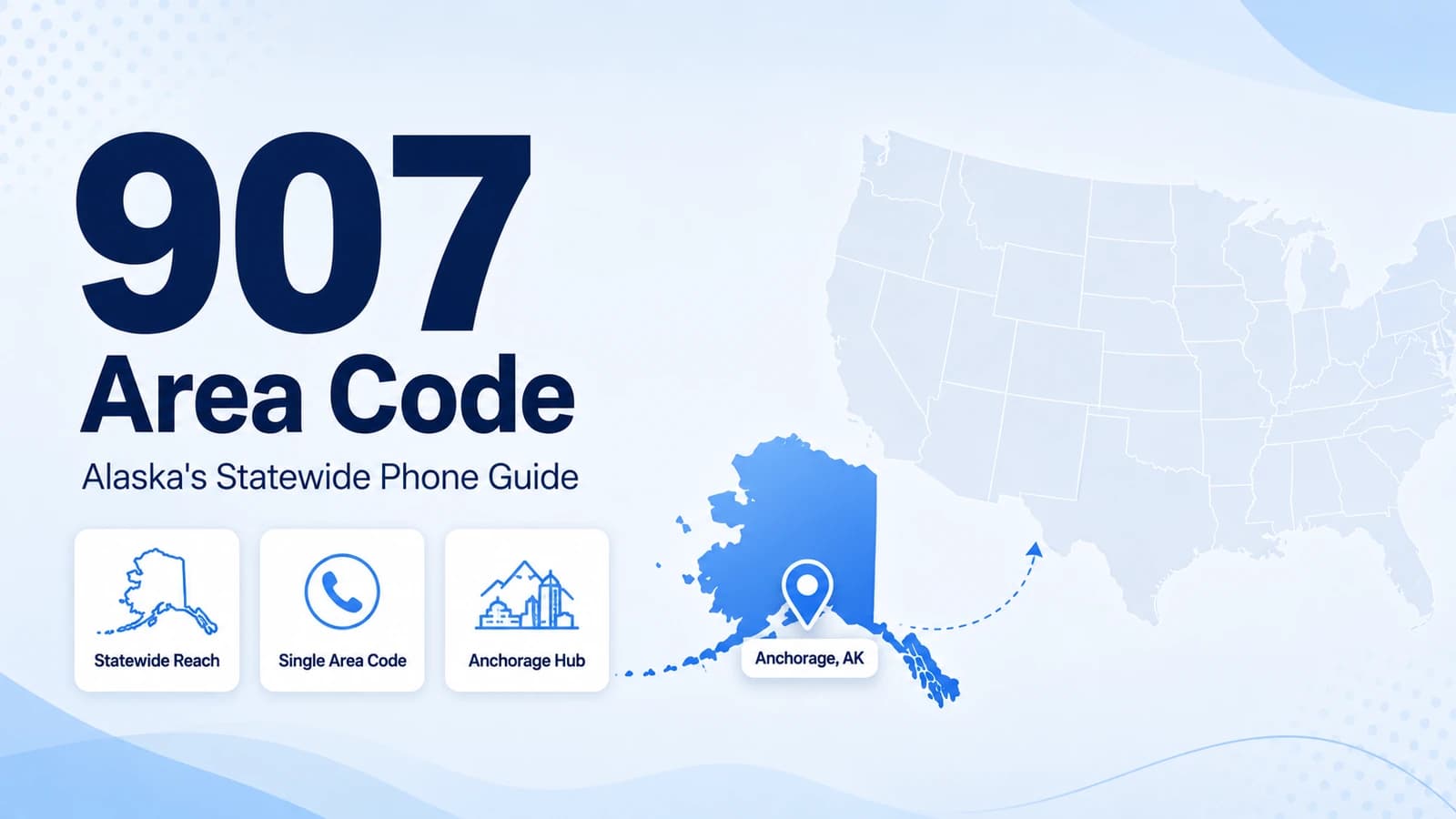
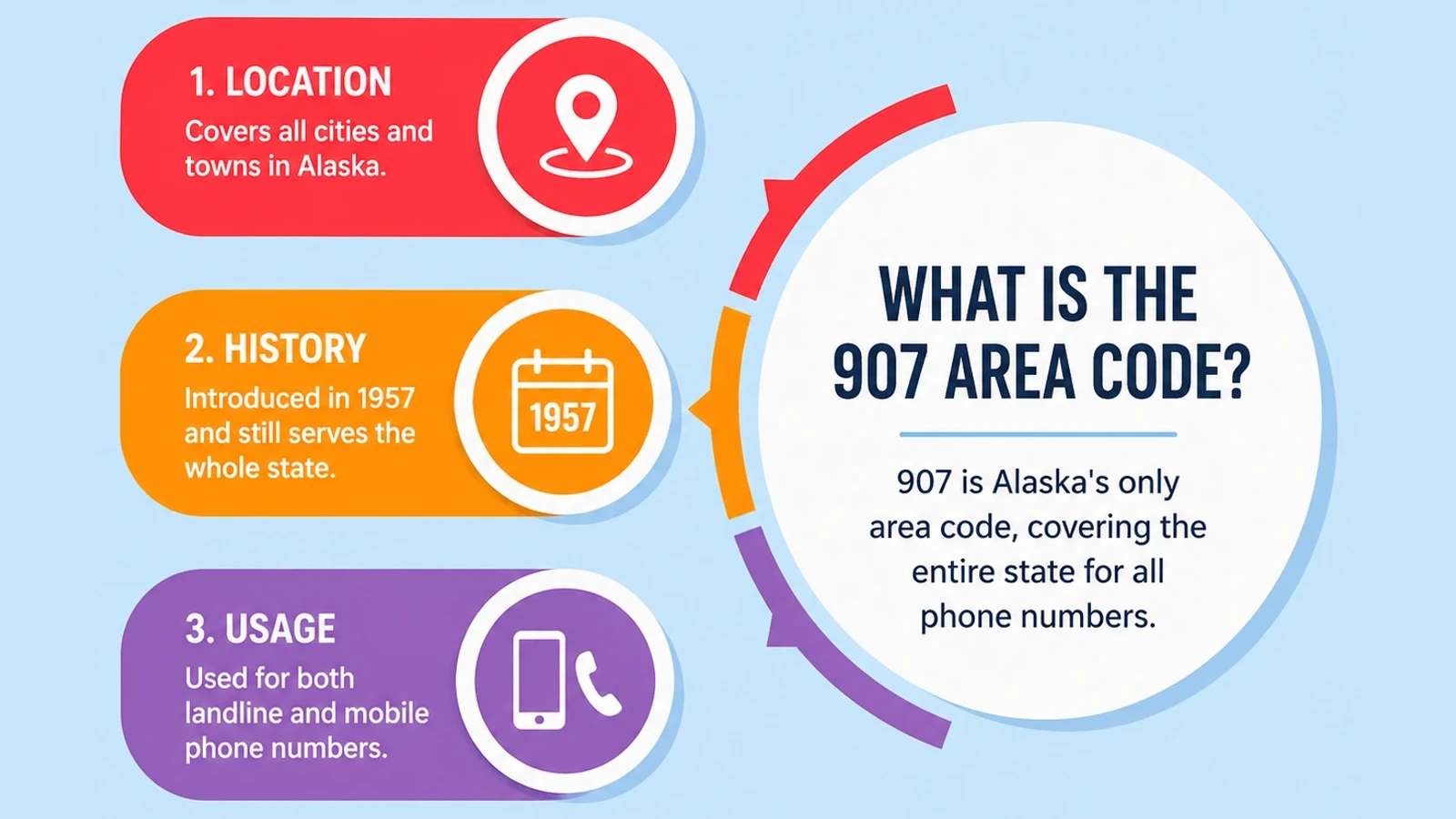
The 907 area code is Alaska's only area code, covering the entire state from the Panhandle's Inside Passage to the Arctic North Slope. It has served the region since 1956, when the first commercial submarine telephone cable connected Alaska to the rest of the North American Numbering Plan — three years before Alaska even became a state.
Geographically, the 907 area code is the largest in the United States and the second-largest in the entire numbering plan, trailing only Canada's 867. Because Alaska's westernmost islands drift across the International Date Line, this single prefix can fairly claim to be both the easternmost and westernmost area code on the continent at once.
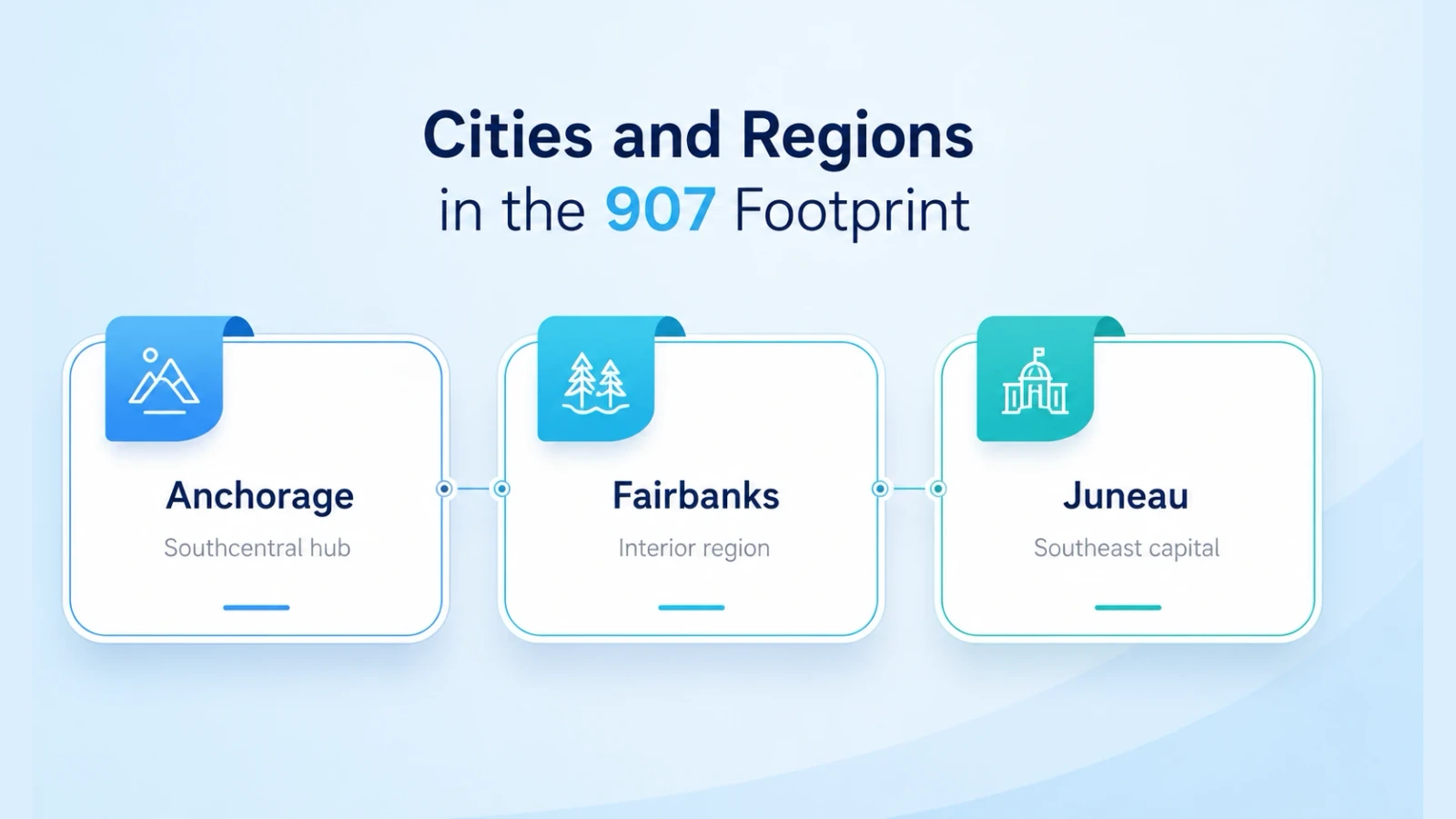
Cities and Regions in the 907 Footprint
Since area code 907 covers the entire state, its reach spans dramatically different communities. Places served by this prefix include:
- Anchorage — the state's largest city and economic hub
- Fairbanks — the largest city in Alaska's interior, known for its aurora views
- Juneau — the state capital, reachable only by air or sea
- Ketchikan — a Southeast Alaska port town anchoring the Inside Passage
- Wasilla and the Matanuska-Susitna Valley — a fast-growing area outside Anchorage
- Rural and Arctic communities — villages across the North Slope and Bush Alaska that rely on this single prefix for phone service
That range means a call from this prefix could come from a downtown Anchorage office tower or a fishing village accessible only by boat or bush plane.
The 1956 Origins of a Statewide Prefix
Area code 907 predates Alaska's statehood by three years. It was assigned in 1956, the moment the territory's first submarine telephone cable linked it to the rest of the continent, and it has never needed to split or add an overlay since.
That staying power comes down to population, not restraint — Alaska remains one of only twelve U.S. states served by a single area code, and industry estimates don't expect this prefix to run short of numbers until sometime after 2049. Alaska isn't the only state that shares an entire territory with just one prefix, either — Hawaii's 808 area code covers its whole island chain the same way, and comparing how these two geographically isolated states manage local numbering shows just how differently a single area code can function depending on the terrain it covers.
Why Businesses Choose the 907 Area Code
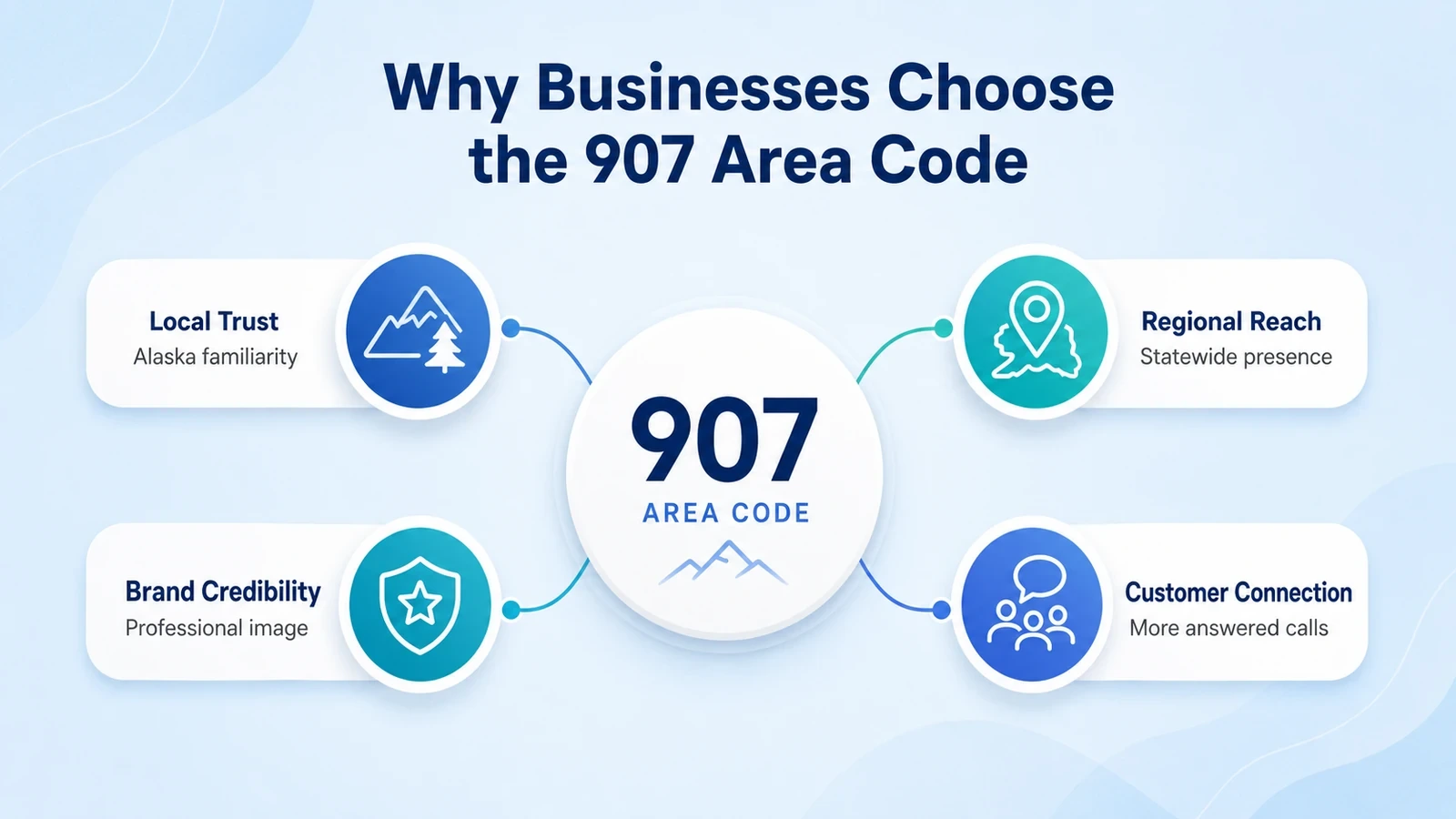
A local number still shapes how a business gets perceived by the community it serves, and that holds especially true in a state where residents are used to seeing the same three digits on every caller ID, no matter which town it comes from. Customers across Anchorage, Fairbanks, and Juneau tend to trust a business more readily when its caller ID matches the area they already call home — it shortens the distance between a first call and an actual sale.
Business owners across Alaska bring up a few consistent reasons for wanting a matching local line:
- It signals genuine local presence to customers across Anchorage, Fairbanks, and the surrounding communities
- It builds instant familiarity with residents who already recognize the prefix from daily life
- It supports regional marketing that leans into Alaska's identity as a single, unified calling area
- It keeps a business memorable for people who associate the 907 area code with home
Unusual numbering stories show up elsewhere in the country too — Florida's 863 area code holds its own distinction as the state's first landlocked prefix, and comparing these kinds of geographic quirks shows just how much a matching area code still matters to businesses building trust with a specific community.
The Economy Behind Alaska's Only Area Code
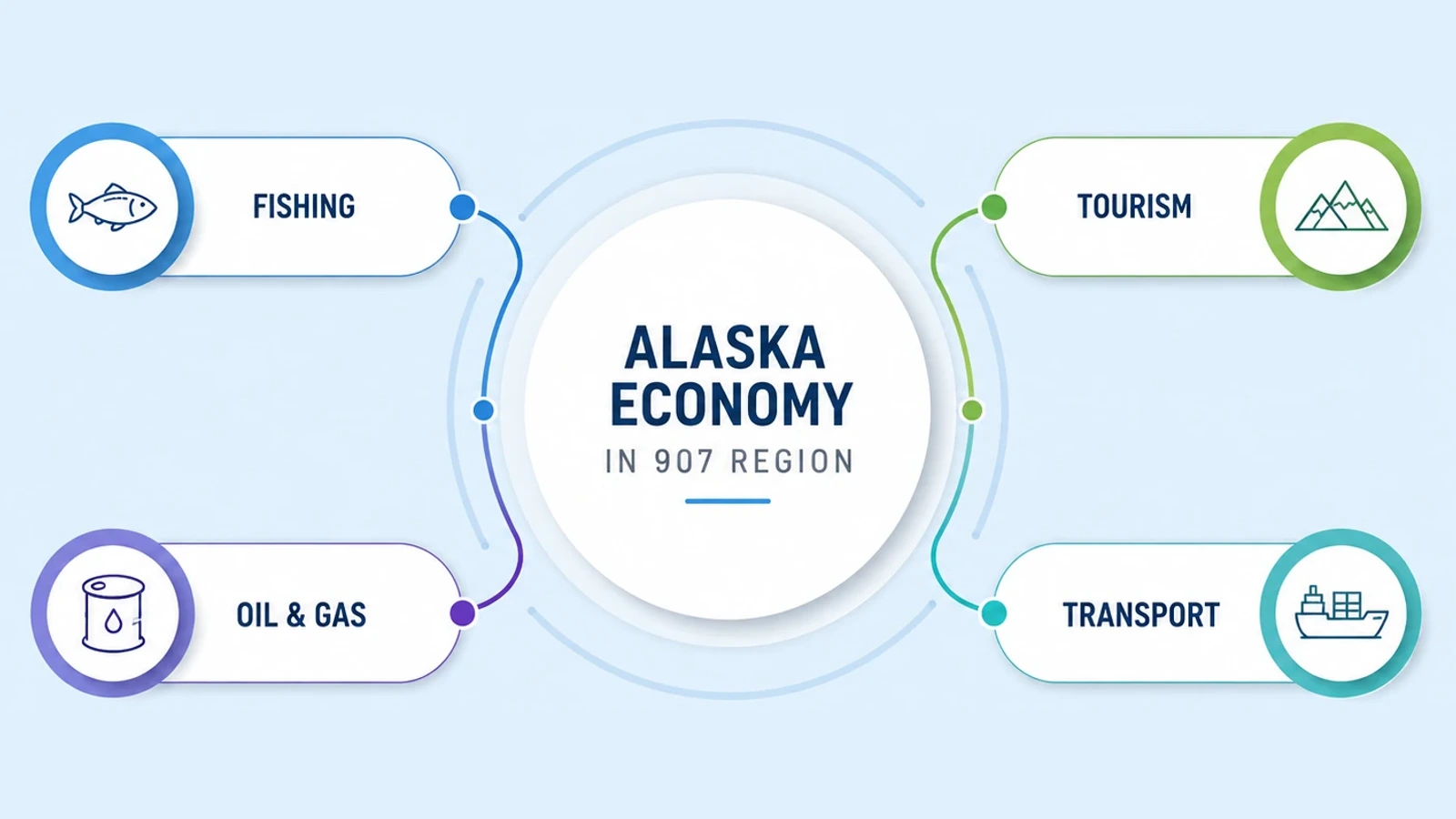
The region covered by the 907 area code has grown thanks to a mix of oil and gas, commercial fishing, and tourism. Anchorage's economy leans on transportation and logistics — its airport ranks among the busiest cargo hubs in the world — while Fairbanks anchors the interior's energy and military sectors.
Juneau and the Southeast communities depend heavily on fishing, tourism, and state government, since the capital itself has no road connection to the rest of Alaska. That mix of industries has translated into steady demand for local service providers — logistics contractors, tourism operators, healthcare practices, and small retailers — all of whom benefit from a number that visibly matches area code 907 and the community they serve.
Getting an Alaska Number Without an Alaska Address
There are a few practical paths to acquiring a number in this prefix:
- Traditional landline — Order service directly through a regional phone carrier, though this option is increasingly rare and expensive to maintain.
- Mobile carrier port — Some wireless providers can assign a matching local number if you're physically located in the coverage area, but availability isn't guaranteed.
- Cloud-based virtual numbers — The fastest, most flexible route today. A virtual phone number provider lets you claim a matching local number in minutes, without needing a physical address or hardware in Alaska.
This is where a platform like Rozper becomes useful, particularly for businesses that want an Alaska presence without opening a physical office there. Rozper provides virtual numbers across 150+ countries and thousands of U.S. area codes, backed by 99.999% uptime, so a company operating in 907 area code territory can activate a matching Anchorage or Fairbanks number and start routing calls the same day. Instead of juggling contracts with regional carriers, teams get one dashboard, transparent custom pricing, and genuine human support when something goes wrong.
For remote teams, e-commerce sellers, or franchises expanding into Alaska, this kind of setup means customer-facing calls can carry a local statewide number even if every employee is working from somewhere else entirely.
Why People Look Up This Prefix
Most searches around the 907 area code fall into a handful of categories:
- Unknown callers — checking whether a missed call from an unfamiliar Alaska number is legitimate or spam
- Business setup — entrepreneurs establishing an Anchorage or statewide Alaska contact number
- Relocation — new residents wanting to keep a familiar local number after moving to or from the state
- Verification — confirming that a company claiming to operate in Alaska actually has a matching phone prefix
Scam calls occasionally spoof legitimate prefixes, including this one, to appear trustworthy. If a call seems suspicious, verifying the caller through an official channel before sharing any personal information is always the safer move.
The Federal Rules Behind Area Code Boundaries
Area code boundaries aren't set arbitrarily. In the United States, they're managed under the North American Numbering Plan, with oversight from the Federal Communications Commission, which coordinates how prefixes like the 907 area code are created, split, or expanded as population and demand shift over time. That official numbering framework is why this prefix's boundaries have stayed consistent since 1956, no matter which carrier or provider assigns the individual number.
Conclusion
The 907 area code is more than just a set of digits — it's the single thread connecting Anchorage, Fairbanks, Juneau, and every community across Alaska's vast territory. Whether you're trying to identify an unfamiliar caller or planning to establish a local presence anywhere in the state, understanding how this prefix works makes the process far less confusing. And for anyone looking to set up a number quickly, virtual number providers have made claiming a local Alaska number simpler than it's ever been.
FAQs
Where is the 907 area code located?
This prefix covers the entire state of Alaska, including Anchorage, Fairbanks, Juneau, and Ketchikan. It's the only area code serving the state.
Is a call from this Alaska prefix likely to be a scam?
Not inherently. Like any prefix, it can be spoofed by scammers, but the vast majority of these numbers belong to real Alaska residents and businesses.
Can I get a 907 number if I don't live in Alaska?
Yes. Virtual phone number providers let you activate a local number remotely, without needing a physical Alaska address.
Why does Alaska only have one area code?
Alaska's small population relative to its size means demand for numbers has never come close to exhausting the 907 area code, which isn't expected to run short until after 2049.
How many cities does the 907 area code cover?
Area code 907 covers every community in Alaska, from major cities like Anchorage and Fairbanks to remote villages across the Arctic North Slope.