Introduction
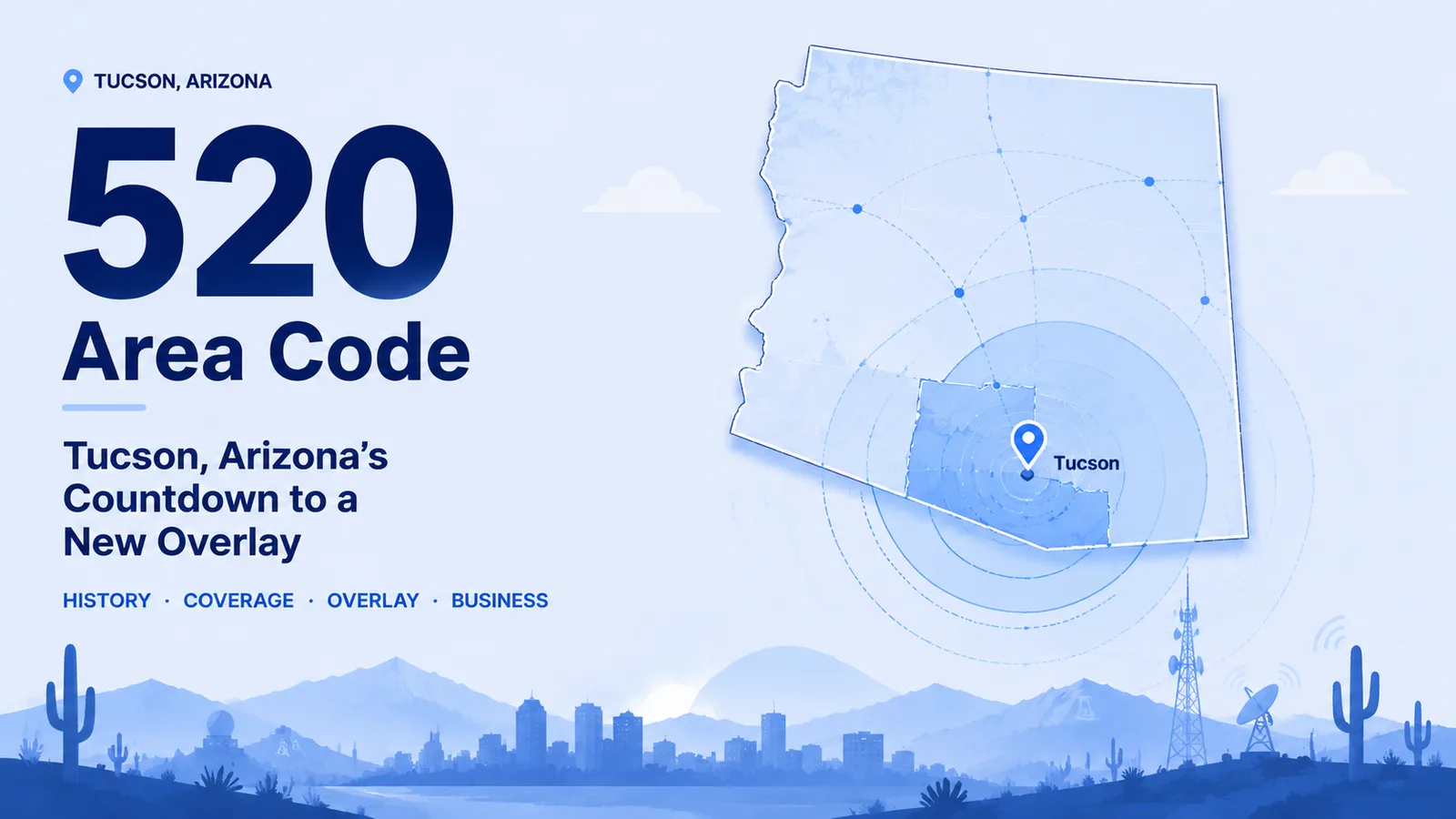
The 520 area code covers Tucson and southern Arizona, and this guide breaks down what that means for callers right now. It matters today because regulators project this area's number supply will run out by 2030, closing a window most guides never mention. You will learn where the code reaches, its history, the dialing rules, and what a coming overlay means for anyone claiming a number now. Keep reading, because that overlay detail changes how you should plan a 520 number today.
Key Takeaways:
- The 520 area code covers Tucson plus Pima, Pinal, Cochise, and Santa Cruz counties in southern Arizona.
- Regulators project the area's number supply will exhaust by 2030, pushed back from an earlier 2027 estimate.
- A new overlay code is coming for future numbers, though existing 520 numbers keep their prefix for good.
- Raytheon and Arizona's semiconductor boom are driving steady demand for new local business lines.
Four Counties, One Prefix: Where 520 Covers Tucson and Beyond
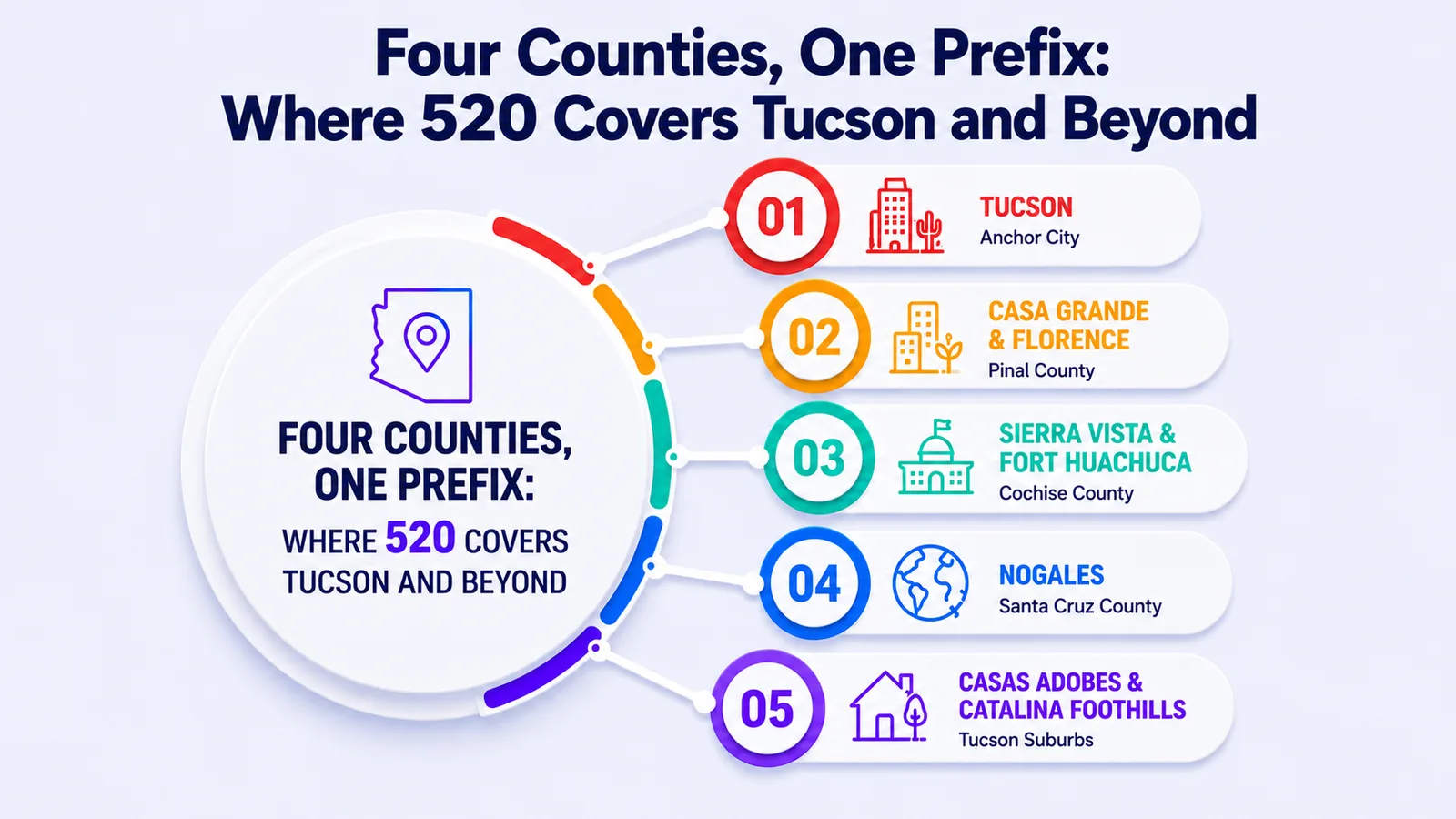
The 520 area code stretches across four counties in Arizona's southeastern corner, anchored by Tucson as its largest city and home to more than a million residents region-wide. Coverage runs from Casa Grande and Florence in the north down through Nogales, Sierra Vista, and Douglas near the Mexican border. Businesses expanding toward Phoenix should also check the 623 area code guide, since West Valley growth follows a similar pattern.
- Tucson — the anchor city and home to Raytheon's largest manufacturing site
- Casa Grande and Florence — growing Pinal County communities north of Tucson
- Sierra Vista and Fort Huachuca — Cochise County's military and border-security hub
- Nogales — Santa Cruz County's cross-border trade center
- Casas Adobes and Catalina Foothills — fast-growing Tucson suburbs
From 602 to 520 to 928: The Two Splits Behind Tucson's Code
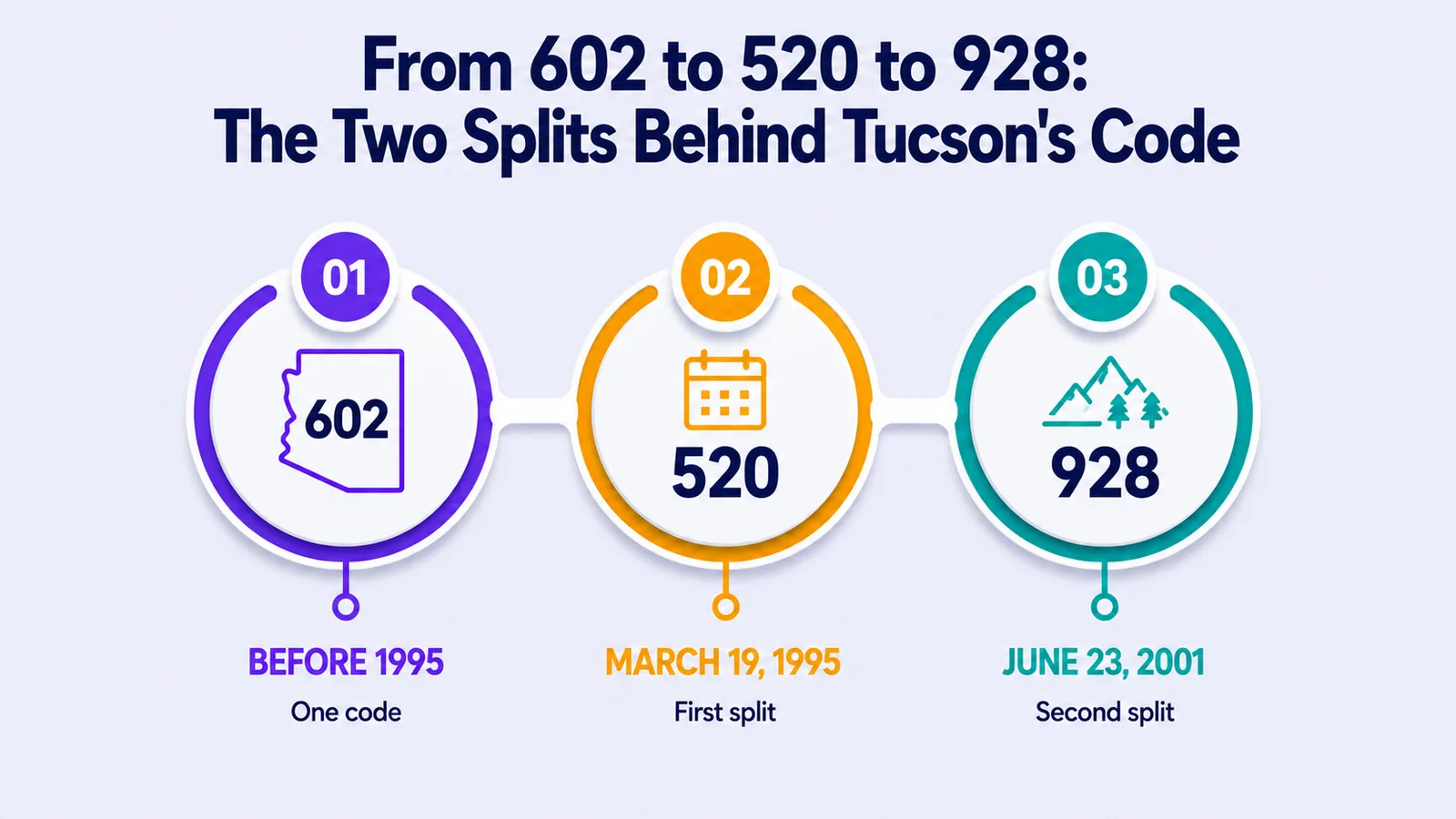
- Before 1995 — one code, 602, covered all of Arizona, including what is now the 602 area code zone around Phoenix.
- March 19, 1995 — regulators split off the 520 area code to cover the state's southeastern and northern reaches.
- June 23, 2001 — a second split carved out 928 for northern Arizona, leaving 520 with only the southeast.
Both splits followed the same growth pattern seen nationwide.
New Line After 2030? You Might Not Get 520 Anymore
Most guides describe area code 520 as a fixed, permanent prefix. That skips the news that actually matters to anyone planning ahead: this region's number supply is now projected to run out by 2030, later than an earlier 2027 estimate thanks to tighter rules on number hoarding.
- Existing 520 numbers keep their prefix for as long as the owner keeps the line
- New customers after the cutoff will receive a different, not-yet-named overlay code
- The overlay follows the same model used in Los Angeles and Dallas, where neighbors can carry different codes
- Cell phones, robocalls, and bulk VoIP number requests are the biggest drivers of the shortage
- Regulators pushed the timeline from 2027 to 2030 by cracking down on companies requesting huge number blocks
Businesses that lock in a number before the cutoff avoid ever having to explain a mismatched prefix to a longtime client.
Raytheon, Optics, and Chips: Why Southern Arizona Keeps Adding Lines
Generic guides mention Tucson's economy in passing. What they miss is the specific mix of employers now pulling in new 520 area code demand every quarter.
Raytheon's Manufacturing Scale
Raytheon's Tucson operation is Arizona's largest manufacturer by employee count, with roughly 15,000 workers across missile systems, engineering, and testing. That single site anchors a supplier ecosystem that stretches across the entire 520 footprint.
University of Arizona's Optics and Semiconductor Push
The University of Arizona anchors a growing optics and semiconductor research cluster, feeding a statewide industry that has drawn more than $60 billion in investment since 2020. Graduates and spinout companies from that research pipeline routinely set up shop right in Tucson.
A Supplier Network Under Pressure
Contractors and suppliers serving Raytheon and the semiconductor sector are opening new Tucson offices constantly, and most need a phone presence that reads as local from day one. Rozper's virtual number setup lets these teams claim that presence without waiting on a physical office lease first.
Ten Digits, Every Time: Dialing Rules for the 520 Zone
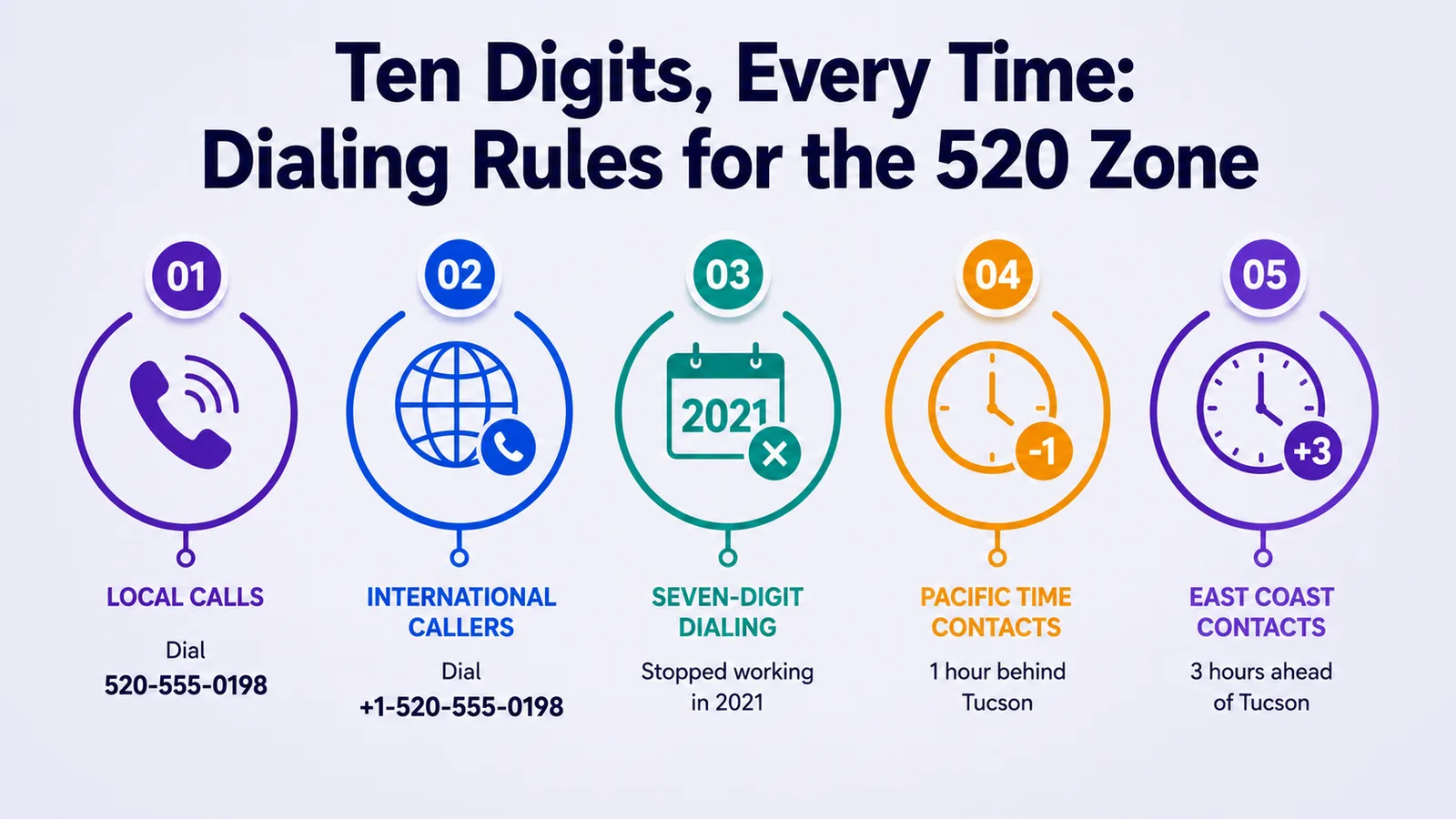
Every number in the 520 area code runs on Mountain Standard Time year-round, since Arizona does not observe Daylight Saving Time outside the Navajo Nation. That makes scheduling calls simpler once you know the offset, but calling from a state that does adjust its clocks twice a year still takes a little extra care.
- Local calls require the full 10-digit format: 520-XXX-XXXX
- International callers dial +1-520-XXX-XXXX
- Seven-digit dialing stopped working here in 2021, tied to the 988 hotline rollout
- Pacific Time contacts sit one hour behind Tucson for most of the year
- East Coast contacts sit three hours ahead, so late mornings work best for outreach
Anyone saving an area code 520 contact should store the full 10-digit number, since the region's overlay history means shorthand habits from decades ago no longer apply.
Is That 520 Call Real? What Tucson Residents Are Reporting
The 520 area code is genuine and assigned to real southern Arizona numbers, but scammers spoof it like any other growing prefix. Fraud reports in the region cluster around a few repeat patterns.
- Fake Border Patrol or ICE impersonation calls demanding immediate payment
- Bogus utility disconnection threats timed around bill due dates
- Robocalls pitching extended car warranties to numbers that never registered one
- One-ring missed calls designed to bait an expensive callback
Under FCC guidelines, carriers must authenticate outbound caller ID through STIR/SHAKEN, so a legitimate local number still carries real weight even as spoofing attempts continue. Providers such as Rozper apply this authentication automatically, which matters for any business that cannot afford to look like a spoofed call to a new client.
520 vs. 928 and 623: Picking the Right Arizona Code
- 520 — Tucson and the southeast, covering Pima, Pinal, Cochise, and Santa Cruz counties
- 928 — northern Arizona, including Flagstaff, Yuma, and Prescott
- 623 — Phoenix's West Valley, a fast-growing suburban market of its own
- The soon-to-arrive overlay — will apply only to brand-new southern Arizona lines, not to 520 itself
Picking the wrong neighboring code is an easy mistake for firms opening a satellite office, since a Phoenix or Flagstaff number tells Tucson customers nothing about local roots. For any firm competing on defense or optics contracts, a 520 area code arizona number reads as native to the exact market that matters most.
Locking In a 520 Number Before the Overlay: Five Steps
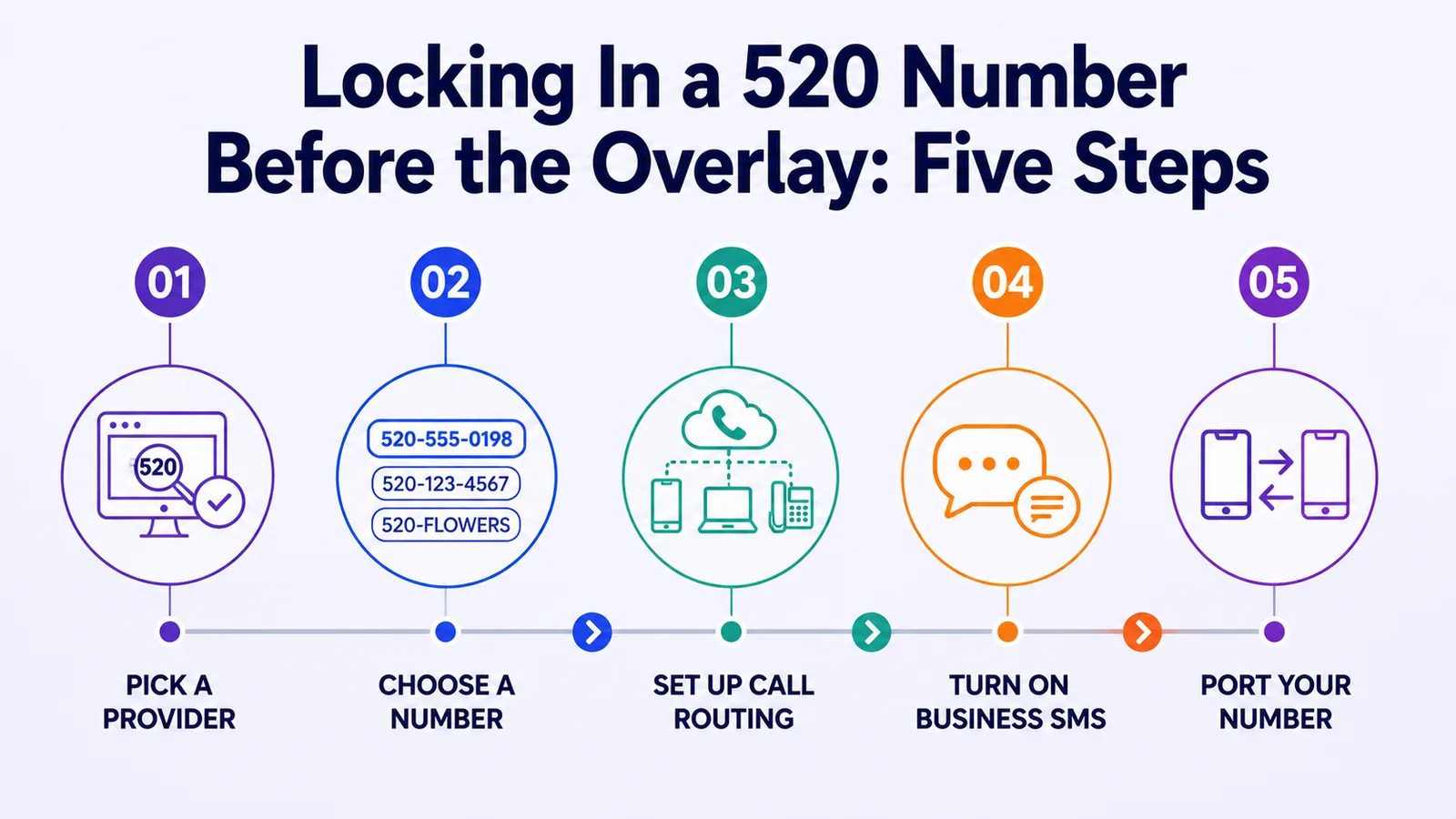
- Pick a provider with live 520 inventory and STIR/SHAKEN compliance built in, since not every carrier still has open blocks.
- Choose a number format that fits your brand image, standard or vanity.
- Set up call routing to mobile phones, softphones, or a shared team queue so no client call ever goes unanswered.
- Turn on business SMS for scheduling and customer updates.
- Port an existing number if you already have one, with no service gap.
Most providers activate a new line in under fifteen minutes, and Rozper backs its numbers with 99.999% uptime and coverage across 150+ countries, which suits contractors coordinating with defense and research teams overseas. Locking in a number through a 520 area code arizona provider now avoids any scramble once the overlay cutoff actually arrives.
Conclusion
The 520 area code still covers all of Tucson and southern Arizona today, but its runway is shorter than most guides let on. It split from 602 in 1995 and lost its northern half to 928 in 2001, leaving the footprint it holds now. Regulators project its number supply will exhaust by 2030, after which new lines will carry a different, not-yet-named overlay code. Understanding this timeline helps any business claim the area code 520 identity while it still applies to brand-new numbers too.
Southern Arizona's growth is not slowing down, with Raytheon, semiconductor investment, and university research all adding jobs and new phone lines every quarter. Rozper makes claiming a Tucson number quick, with setup measured in minutes rather than weeks. A local line signals real roots in a market that rewards exactly that kind of presence. Get your 520 number activated now, while it still means what it always has.
FAQs
What cities does the 520 area code cover?
It covers Tucson, Casa Grande, Nogales, Sierra Vista, and more than a dozen other cities across four southern Arizona counties.
Where does the 520 area code end and 928 begin?
The two prefixes split in 2001, with 520 keeping the southeast and 928 taking over Flagstaff, Yuma, and the rest of northern Arizona.
When was this Tucson prefix created?
Regulators created the 520 area code on March 19, 1995, splitting it off from the statewide 602 code.
How do I dial a number in this overlay zone?
Every call needs the full 10-digit format, area code included, even for calls within the same zone.
Is a 520 area code call safe to answer?
The prefix is legitimate, but scammers spoof it for fake border-agency, utility, and warranty calls. Verify unexpected callers independently.
What time zone does southern Arizona use?
It runs on Mountain Standard Time year-round, since Arizona does not observe Daylight Saving Time statewide.
How much does a 520 virtual number cost?
Most providers bundle a 520 number into a monthly plan rather than charging a separate number fee, with routing and SMS included.
Will my 520 number change when the new overlay arrives?
No. Existing 520 numbers keep their prefix permanently; only new lines activated after the cutoff will receive the upcoming overlay code.