Introduction
When an unfamiliar call lights up your screen with a 435 area code, it is easy to wonder which corner of Utah it is coming from. While the busy Salt Lake City metro grabs most of the attention, this three-digit prefix quietly serves the small towns, national-park gateways, and mountain communities that sit well beyond the Wasatch Front. This guide walks through where the code lands on the map, how it came to be, and how to claim one even if you have never set foot in Utah.
What Is the 435 Area Code?
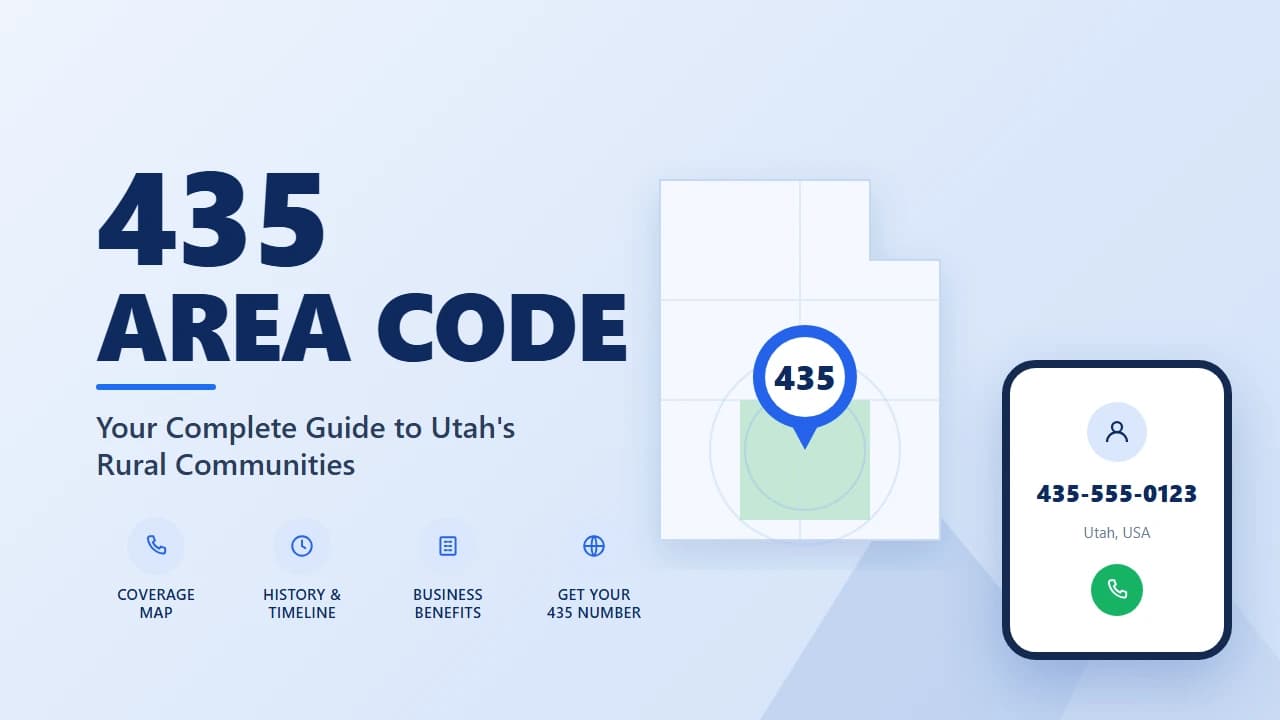
The 435 area code covers nearly all of Utah outside the Salt Lake City metro. It was created in 1997, when regulators split it away from the original 801 code to free up numbering capacity as the state's population climbed. Unlike an overlay, this was a true geographic split: everything inside the Wasatch Front kept 801, while the vast rural remainder of the state was handed the new prefix, which today stands as the only geographic code serving small-town and rural Utah.
Where Is the 435 Area Code Located?
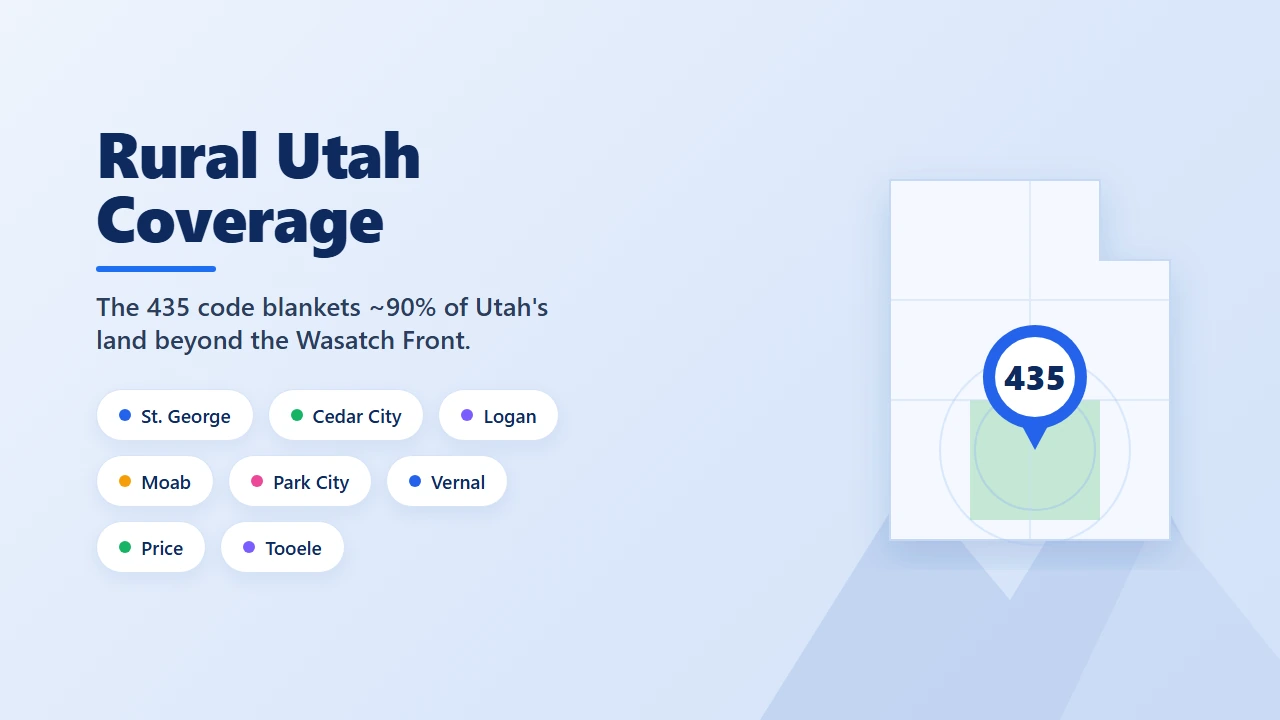
The 435 area code covers roughly 90% of Utah's land area while holding only a fraction of its people. Cities and towns served include St. George, Cedar City, Logan, Moab, Park City, Vernal, Price, Tooele, Richfield, and Heber City, along with countless smaller communities in between. Because the territory is so spread out, a number in this range signals a connection to Utah's outdoor, tourism, and small-business economy rather than the corporate identity tied to the capital.
Why the 435 Area Code Still Matters for Businesses
Local phone numbers still shape whether people decide to pick up. Most consumers are more likely to answer a call that shares their own regional prefix, and roughly 60% of shoppers prefer doing business with a company that looks local — a real edge for anyone selling into southern or rural Utah. Outbound sales teams dialing with a local 435 number tend to see stronger pickup rates, and in tourism-driven towns where seasonal demand swings hard, that extra bit of trust on the first ring can be the difference between a booked reservation and a missed one.
Getting a 435 Area Code Number, No Matter Where You Are
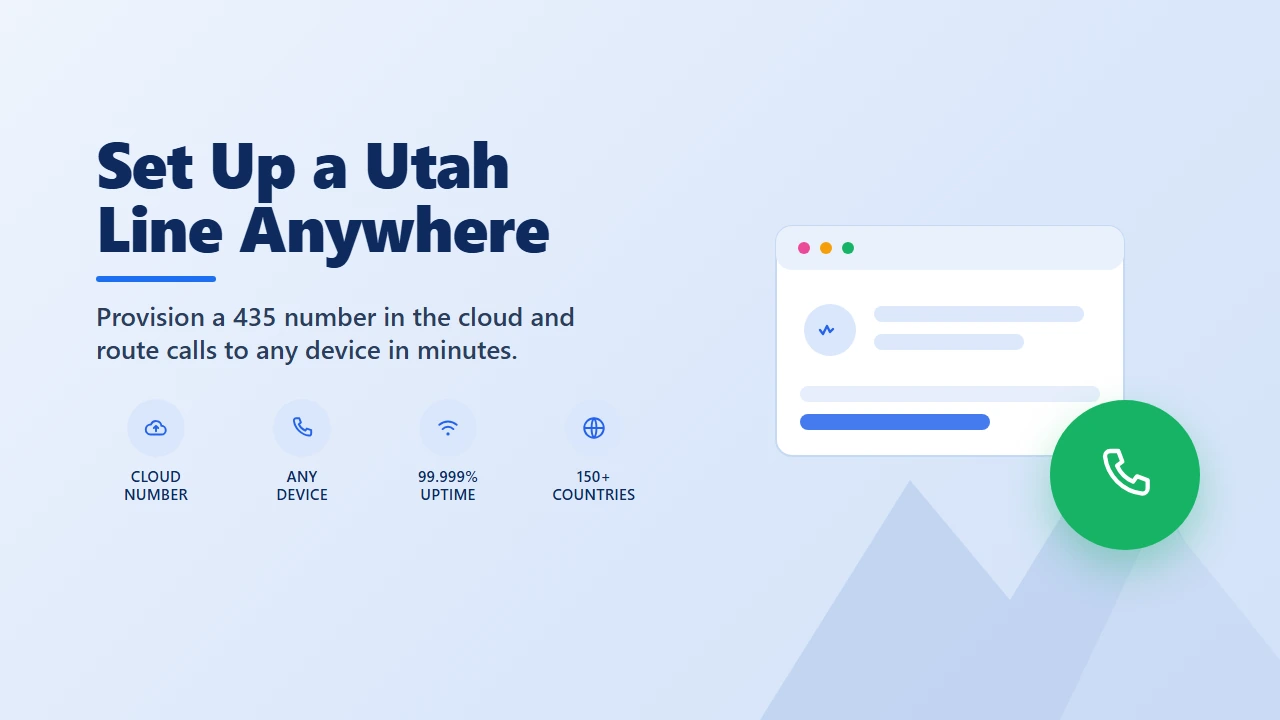
You no longer need a storefront in St. George or an office in Logan to claim a number here. Modern cloud phone systems let a business request a number tied to almost any area code, then route incoming calls to a mobile phone, desktop app, or existing office line. Rozper is one option worth considering: alongside coverage in 150+ countries and 99.999% uptime, it provisions a 435 number in minutes with real human support behind the setup. If your plans also reach the capital, see how a 385 area code number compares for the Salt Lake City overlay.
435 vs. Nearby Utah Area Codes
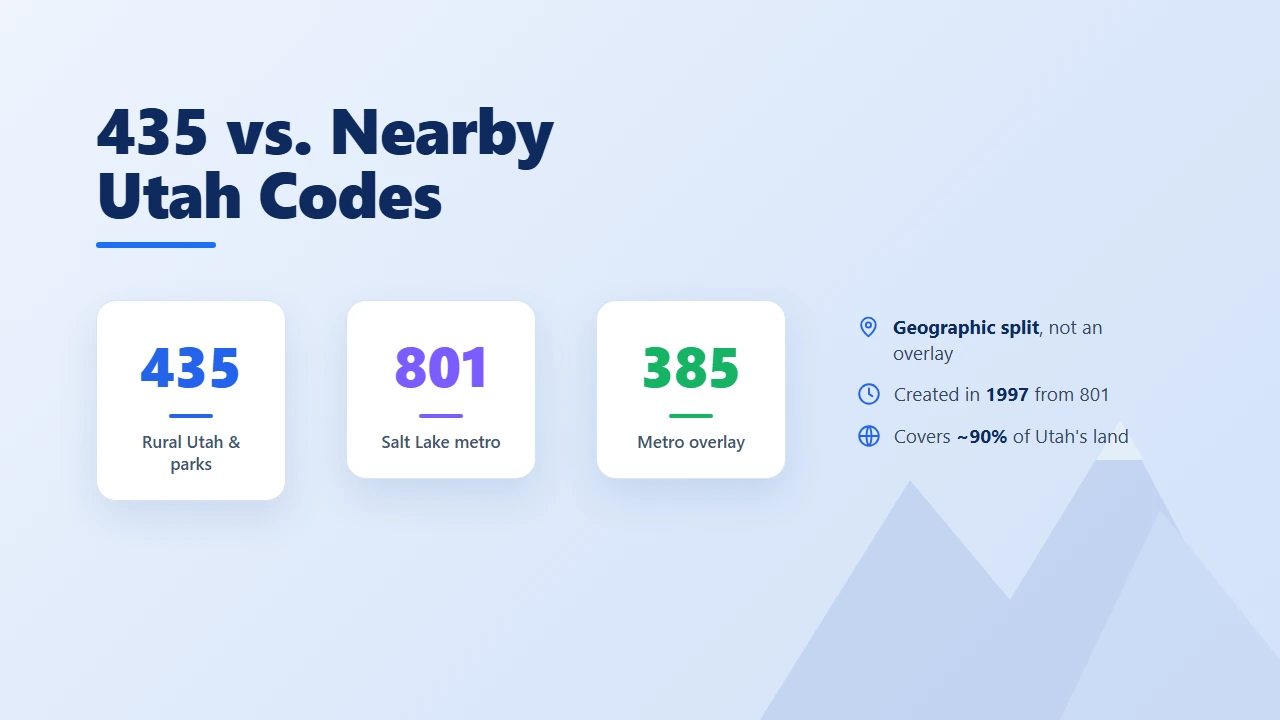
Utah's numbering map is simpler than many states'. The rural 435 area code sits alongside the metro codes that blanket greater Salt Lake City, and the dividing line is geographic rather than an overlay: the capital region uses its own prefixes while nearly everything beyond it falls under this single rural code. Neither situation signals a "better" or "newer" part of the state — see our guide to the 801 area code for how the metro prefixes serve the densely populated Wasatch Front instead.
Common Misconceptions Worth Clearing Up
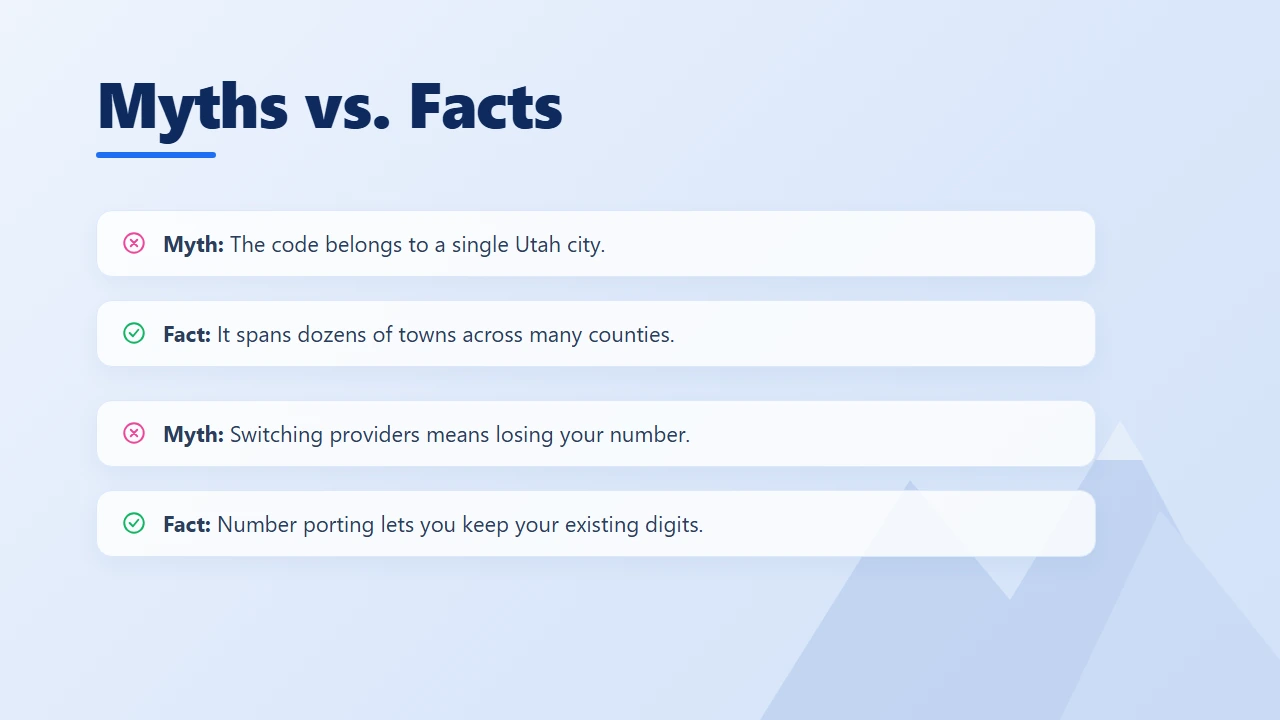
A frequent assumption is that the 435 area code belongs to one specific city, but it spans dozens of towns across many counties and thousands of square miles. A number here isn't "less established" than a metro line — it simply reflects a 1997 assignment made to relieve capacity. Porting is another common mix-up: most modern carriers let a business keep its existing digits while switching providers, so confirming porting support before signing anything avoids a needless renumbering headache. And since most numbers here now ring on mobile devices, one that handles both voice and SMS tends to outperform a voice-only line for reminders and follow-ups.
Conclusion
This Utah prefix is more than a random string of digits on a caller ID — it is a marker of a rural identity that stretches across national parks, ski towns, ranch land, and desert gateways most of the state's population never sees up close. Whether you are tracing a missed call or planning a local presence, understanding the history and reach behind those three digits puts you ahead of nearly everyone who dials them. As rural Utah keeps drawing new residents and visitors, expect this prefix to remain a steady fixture of daily communication for years to come.
FAQs
What cities does this area code cover?
It covers most of rural Utah, including St. George, Cedar City, Logan, Moab, Park City, Vernal, and Price, along with many smaller towns outside the Salt Lake City metro.
Is this a toll-free or premium prefix?
No, it is a standard geographic prefix for Utah, not a toll-free code like 800 or 888, so calls are billed at normal local or long-distance rates.
Can I get a number here if I do not live in Utah?
Yes, cloud phone providers let you request and route a number tied to this region no matter where you physically live or work.
Why does rural Utah have its own code?
Population growth in the 1990s exhausted the original statewide numbering pool, so regulators split off a separate code to serve the areas beyond the Salt Lake City metro.
Can I text from a number in this region?
Yes, most modern numbers in this prefix support both voice and SMS, which makes them well suited to appointment reminders and customer follow-ups.