Introduction
The 330 area code covers Akron, Canton, and Youngstown across northeastern Ohio, and this guide explains exactly what that means for anyone calling, texting, or running a business in the region. This topic matters because the 330 area code split away from Cleveland's original number pool and then needed a second code of its own faster than almost any other Ohio region, a detail most guides skip entirely. You will learn which cities and counties share this code, why an overlay arrived just four years after the split, and how local businesses across Ohio's rubber, steel, and football heritage still build real trust with customers. Stick with this guide and you will understand this region's numbering system better than most people who have carried a 330 number for years.
Key Takeaways:
- The 330 area code covers roughly 17 counties across northeastern Ohio, separate from Cleveland's own numbering region.
- This Ohio numbering region split away from 216 on January 28, 1996, giving the region its own dedicated area code for the first time.
- The 234 overlay arrived in 2000, just four years after 330 itself was created, one of the fastest split-to-overlay turnarounds in Ohio.
- A 330 number tells you almost nothing about which Ohio city, from Akron to Youngstown, someone actually lives in.
Three Ohio Cities, One Number: Akron, Canton, and Youngstown Under 330
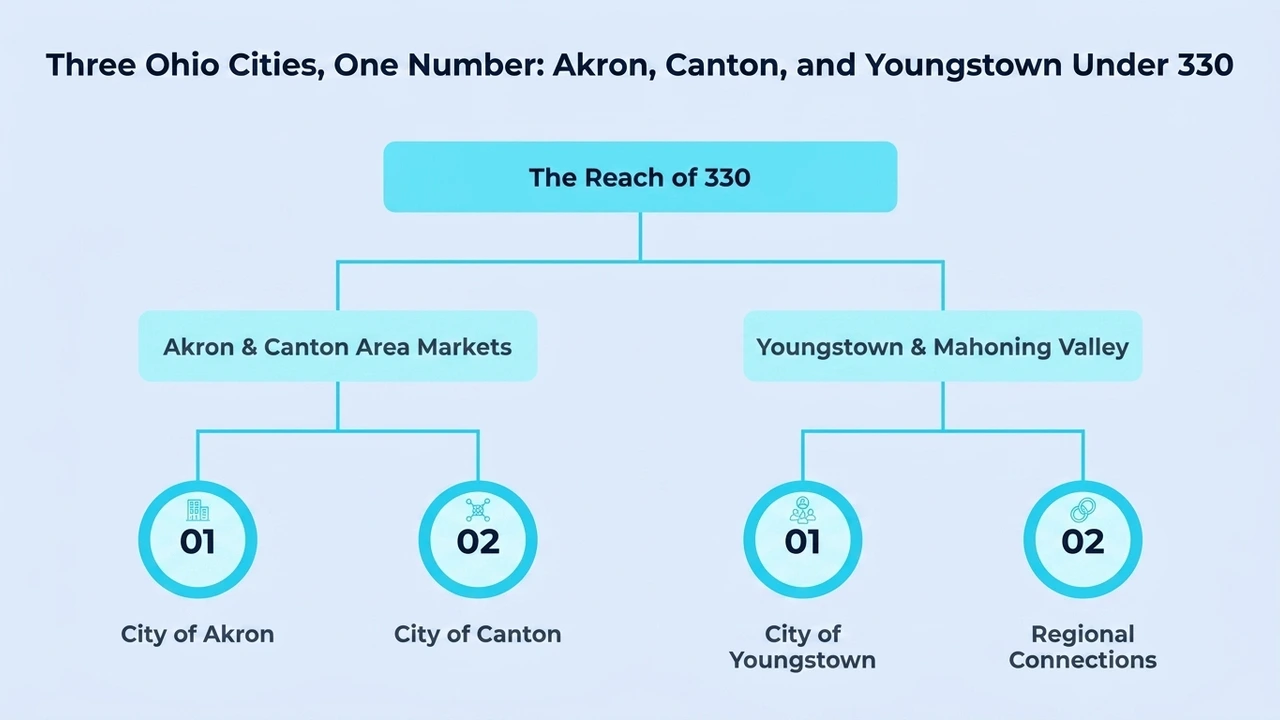
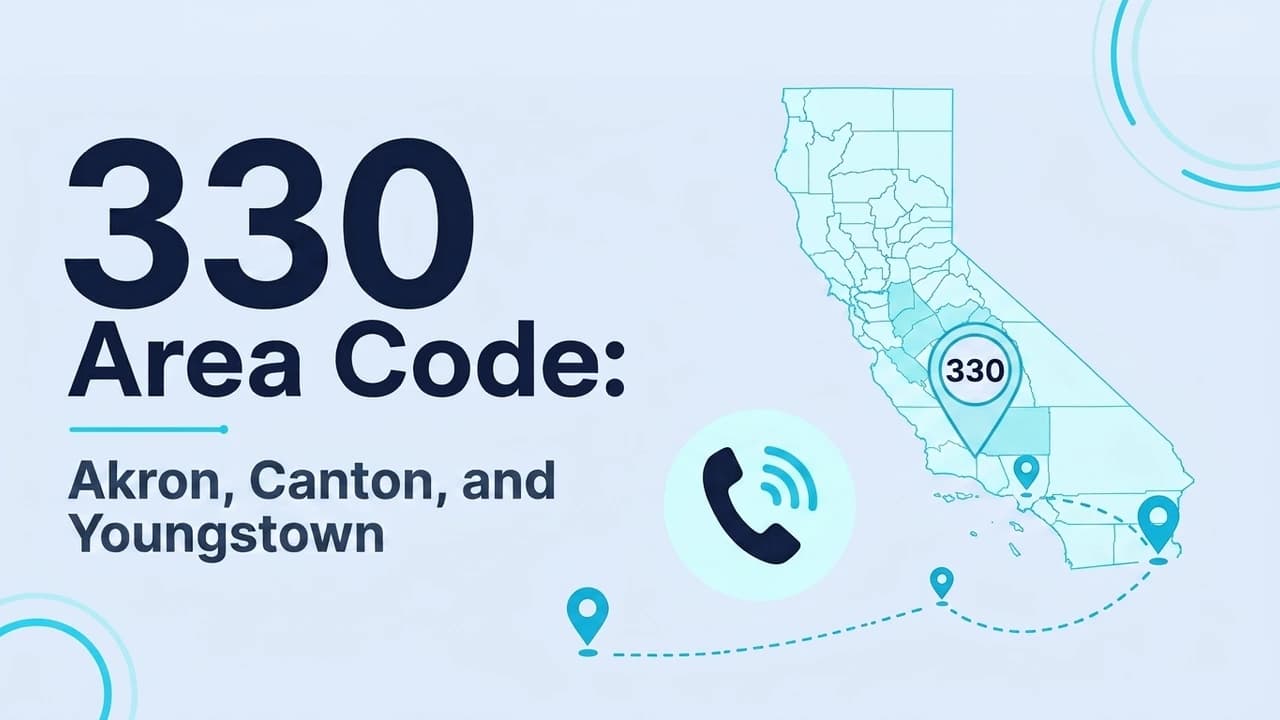
This numbering region shares its entire footprint with 234, covering roughly 17 counties across northeastern Ohio. Akron is the largest city in the region, followed by Canton and Youngstown, with the coverage stretching from the edge of Cleveland's suburbs to the Pennsylvania border. That wide span links a former rubber-manufacturing capital, a football-history landmark, and a onetime steel powerhouse under one shared numbering pool.
- Akron, long known as the Rubber Capital of the World
- Canton, home to the Pro Football Hall of Fame
- Youngstown and Warren, anchoring Ohio's historic Steel Valley
- Massillon and Alliance, smaller industrial cities near Canton
- Kent and Ravenna, college and county-seat communities northeast of Akron
More than 2 million people live across the 330 area code footprint, spread across a region that built much of its identity on manufacturing long before it built a shared phone system.
A Region Defined By What It Made
The area code 330 Ohio footprint overlaps closely with the state's old industrial corridor, where rubber, steel, and manufacturing once drove nearly every local economy. That shared history still shapes how residents describe their hometowns today.
How a 216 Split Gave Northeast Ohio Its Own Area Code in 1996
For nearly fifty years, Akron, Canton, and Youngstown shared the same area code as Cleveland, since 216 was one of Ohio's original 1947 area codes. As cell phones spread through the region, regulators realized the old 216 pool could not support both a growing Cleveland metro and its surrounding industrial cities much longer.
On January 28, 1996, Ohio split the region in two, and Akron, Canton, Youngstown, and the rest of the surrounding counties became the new 330 area code, while Cleveland and its immediate suburbs kept 216. That split gave northeastern Ohio's industrial cities their own dedicated numbering identity, separate from Cleveland's, for the first time in the state's history.
Why Did Northeast Ohio Need a Second Area Code After Only Four Years?
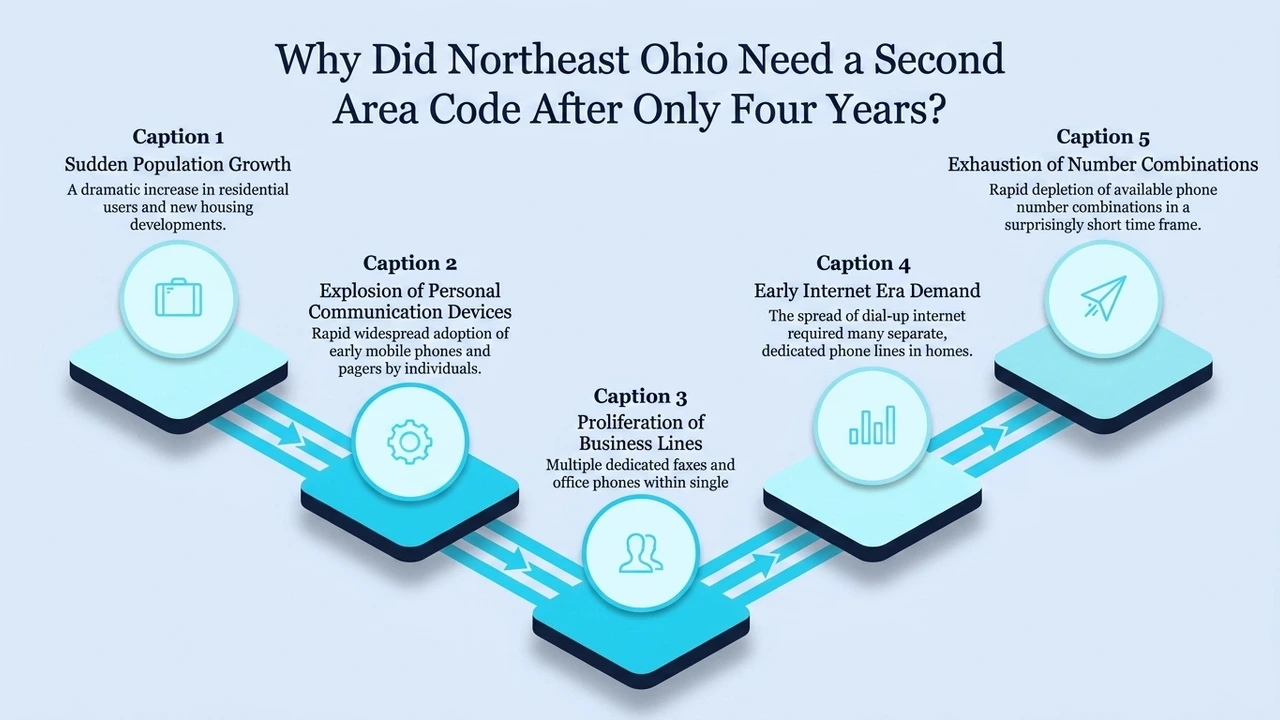
Regulators expected the new 330 area code to last well over a decade before running short on numbers. Instead, continued cell phone adoption and a surge in fax lines through Akron and Youngstown burned through the available prefixes far faster than projected.
- Ohio approved the 234 overlay for the 330 region in 1999.
- The 234 area code officially launched in 2000, just four years after 330 began.
- Existing 330 customers kept their numbers exactly as they were.
- Every new phone line activated after the overlay received a 234 area code instead.
Timing, Not Geography, Decides Between a 330 and 234 Line
Both codes cover the exact same 17 counties, so location never determines which one a customer receives. The real difference comes down entirely to timing, since 234 wasn't assigned until the overlay began in 2000.
- 330: Assigned to any phone line active before the overlay began in 2000.
- 234: Assigned to phone lines activated on or after that date.
- Both require the full ten digits for every local call, no exceptions.
- Neither code hints at which specific Ohio city or industrial town a caller lives in.
Businesses founded before 2000 are far more likely to carry the original area code 330 than a newer 234 line, simply because of when they signed up for service. Anyone comparing this pattern against the 216 area code will notice the same overlay logic has repeated itself across other growing parts of the Midwest too.
The Myth That a 330 Number Always Means Akron
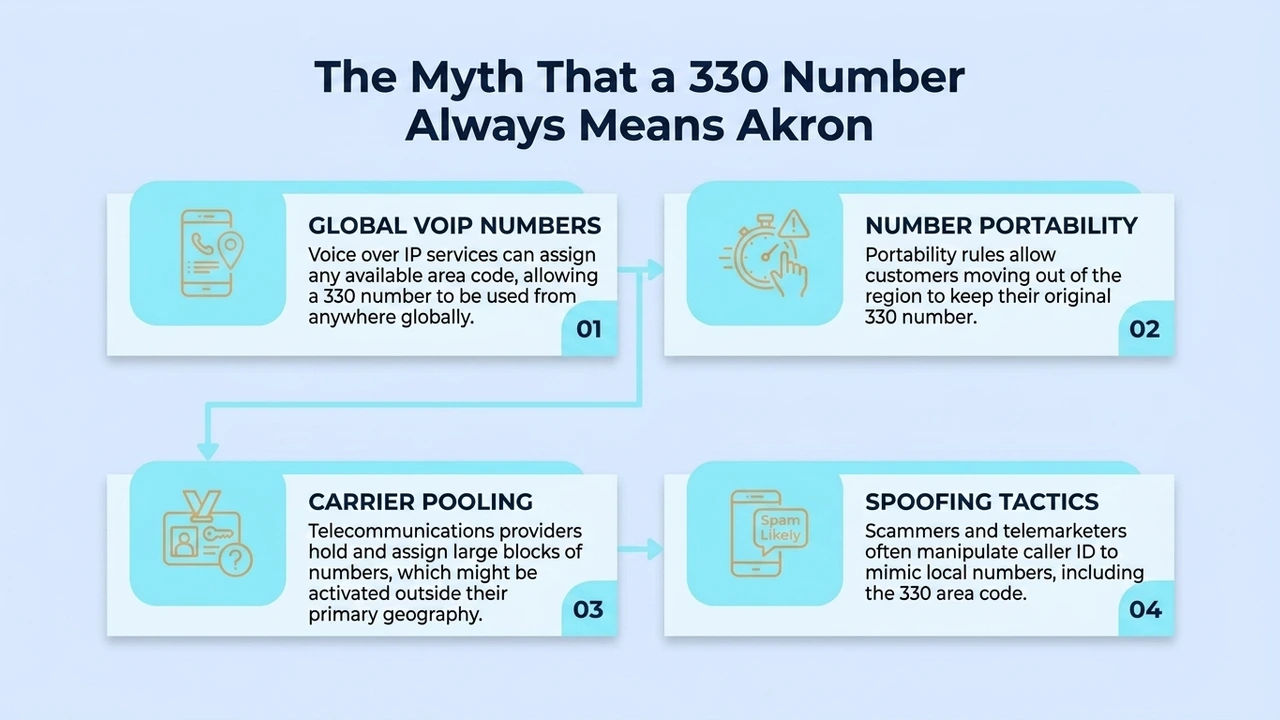
Plenty of people assume a 330 area code points specifically to Akron, since it is the region's largest city, but that assumption misses how widely this code actually stretches. A 330 number could just as easily belong to a small manufacturing shop in Alliance or a family business in Youngstown, more than sixty miles from Akron's city limits.
- Akron, Canton, and Youngstown all share the exact same area code despite sitting in different counties.
- A 330 number reveals nothing about which of the 17 counties a customer calls from.
- Rural towns near the Pennsylvania border carry the same code as downtown Akron.
- Assuming a caller's city based on area code 330 alone leads to inaccurate guesses more often than people expect.
Rozper works with businesses across this spread-out region to make sure geography never becomes a guessing game, showing exactly who is calling and routing the conversation to the right person, whether the customer is dialing from Rubber City or Steel Valley.
When a 330 Caller Isn't Actually in Northeast Ohio
Scammers frequently spoof 330 numbers because a familiar-looking local code makes people more likely to answer without hesitation. If a caller claiming to represent a utility company or government office pressures you for immediate payment through gift cards or wire transfers, treat that as a serious warning sign. Legitimate organizations across this region do not demand instant, untraceable payment over the phone.
Steps to Confirm a Legitimate 330 Caller
- Search the full ten-digit number online before returning the call.
- Contact the organization directly through its official website or listed number.
- Never share financial or personal details with an unexpected caller.
- Read Rozper's guide on stopping spam calls before they cost your business a real customer.
According to FCC guidelines, every overlay region like this one requires all ten digits for local calls, and skipping the area code will always produce a failed call rather than a warning to try again.
How a Local 330 Number Turns Rubber City and Steel Valley Customers Into Repeat Callers
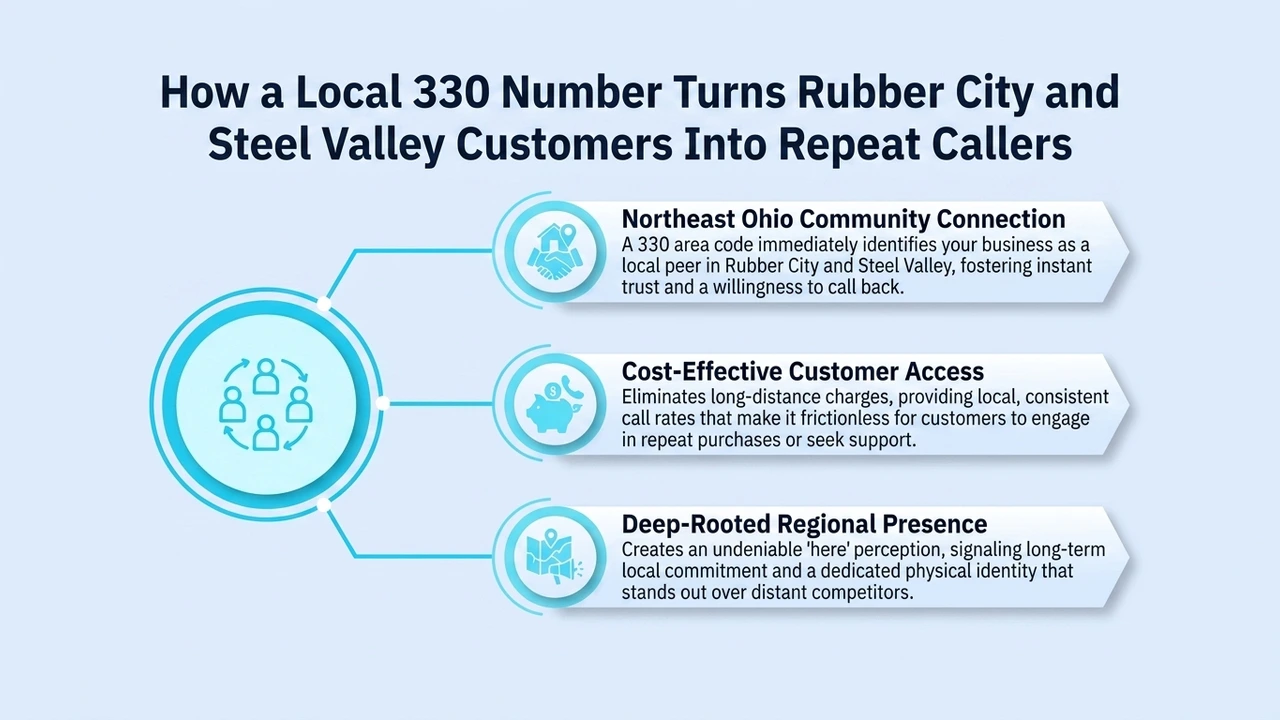
A local number tells a customer in Canton or Warren that a business understands their specific community, not just the state in general. That signal matters most in smaller, tight-knit industrial towns where people expect a real, familiar voice on the other end of the line. Businesses that pair that local number with organized call handling keep the trust they earn on the first ring.
- Local numbers get answered more often than unfamiliar toll-free lines.
- Smart call routing connects customers to the right person without delay.
- Missed-call follow-up recovers leads that a busy front desk might miss.
- Consistent local presence helps repeat customers recognize a business fast.
Rozper helps growing businesses across northeastern Ohio manage exactly this kind of call flow, routing incoming calls and tracking missed-call follow-ups so a local 330 area code presence turns into booked appointments instead of missed opportunities across the entire footprint shared by 330 and 234.
Conclusion
The 330 area code has anchored Akron, Canton, and Youngstown since 1996, when it split away from Cleveland's original 216 numbering pool to give northeastern Ohio's industrial cities their own identity. The 234 overlay followed just four years later, one of the fastest split-to-overlay transitions the state has seen, and the simple timing difference between the two codes still matters for anyone living or doing business across the region. Understanding how the overlay works helps residents avoid dialing errors and helps businesses set realistic expectations about what a local number really signals. The 330 area code is more than a dialing prefix; it is a reminder that this region's rubber, steel, and football history still shapes daily life today.
Businesses spread across these industrial cities and small towns need more than a working phone line to keep customers close. Rozper gives growing teams the call routing and follow-up tools to turn a local 330 presence into consistent, organized conversations no matter how far apart your customers live. As Akron, Canton, Youngstown, and the rest of the region keep growing, the businesses that manage every call well are the ones people remember and call back. Take the next step today and see how a smarter call system can support your local presence.
FAQs
What state is the 330 area code in?
The 330 area code is located entirely within Ohio, covering the northeastern part of the state. It shares its territory with area code 234.
Where exactly does area code 330 cover?
It covers roughly 17 counties across northeastern Ohio, including Akron, Canton, Youngstown, and Warren. Smaller industrial towns like Massillon and Alliance also draw from the same numbering pool.
When was the 330 area code created?
It was created on January 28, 1996, when it split away from the original 216 code covering Cleveland and the surrounding region. The 234 overlay followed in 2000.
How do I dial a 330 number correctly?
You must dial all ten digits, including the area code, for every local call. Seven-digit dialing has not worked in this region since the 234 overlay began.
Is it safe to answer calls from a 330 number?
Not always, since scammers frequently spoof local numbers to appear trustworthy. Confirm any unusual request before sharing personal or financial information.
What time zone does the 330 area code use?
The entire 330 region operates on Eastern Time year-round. This applies consistently across all 17 counties it shares with 234.
Does getting a 330 number cost anything extra?
Standard phone service already includes whichever area code your line is assigned. Businesses comparing providers should focus on their phone plans rather than assume 330 numbers cost more.
Why did area code 330 Ohio need an overlay so soon after it was created?
Cell phone and pager growth through Akron, Canton, and Youngstown used up available prefixes far faster than regulators expected when 330 launched in 1996. That rapid growth made the 234 overlay necessary just four years later.