Introduction
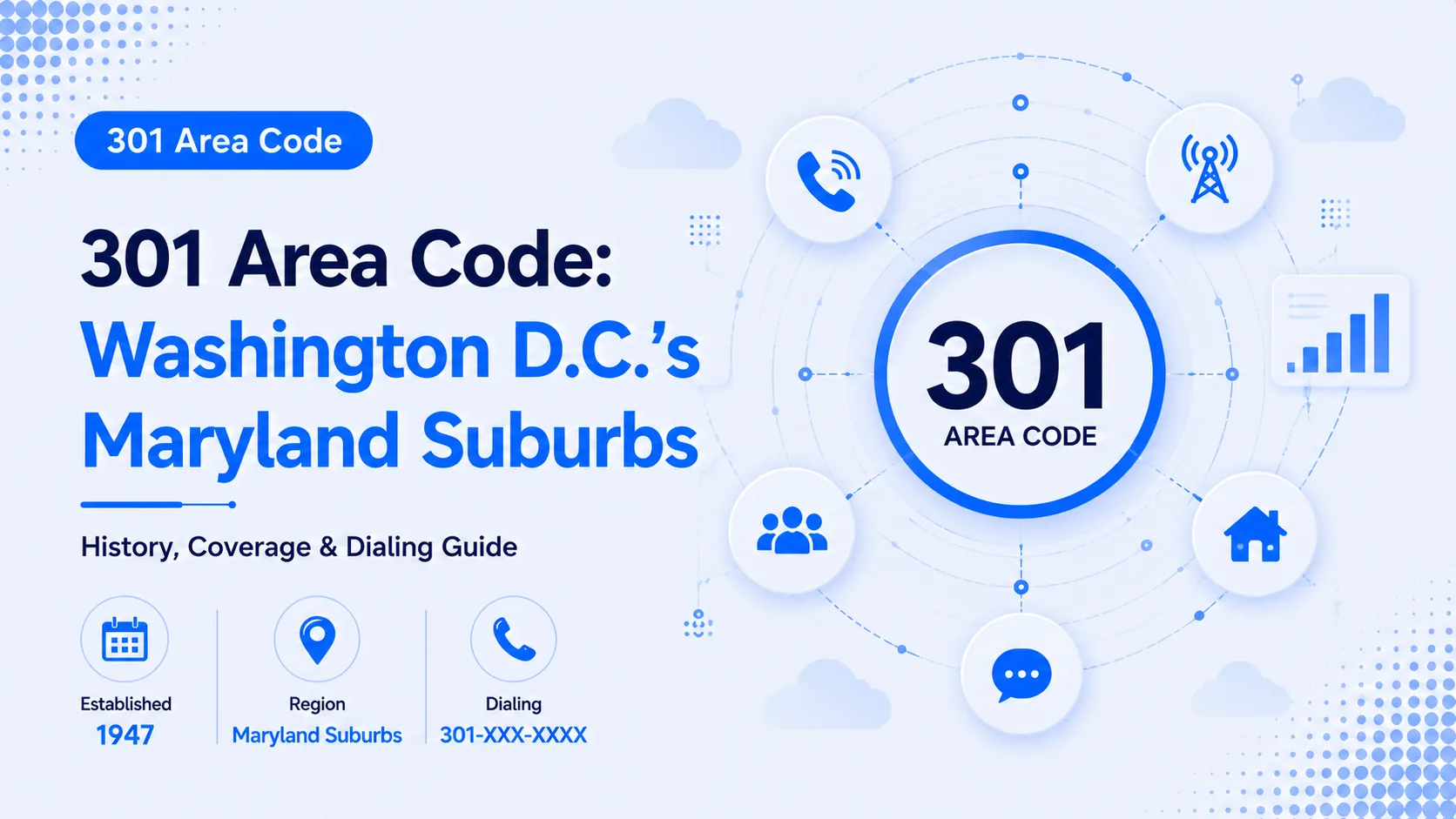
The Maryland suburbs of Washington, D.C. have used the 301 area code since 1947. It is one of the original codes in the country, and today it shares its ground with two newer overlays. Maybe a call from this prefix just landed on your phone. Maybe you run a business and want a local number in Silver Spring or Rockville. Either way, this guide explains what the 301 area code covers and where it came from. You'll learn its geography, its history, the cities it serves, and the dialing rules that come with it.
Key Takeaways:
- The 301 area code has covered Maryland's D.C. suburbs since 1947 and once served the entire state.
- It now shares its territory with the 240 and 227 overlays, so 10-digit dialing is mandatory.
- It reaches from Silver Spring and Bethesda in the east to Hagerstown and Cumberland in the Appalachian west.
- A local 301 number signals real roots in the D.C. corridor, a region full of federal contractors and established neighborhoods.
Where Is the 301 Area Code Located?
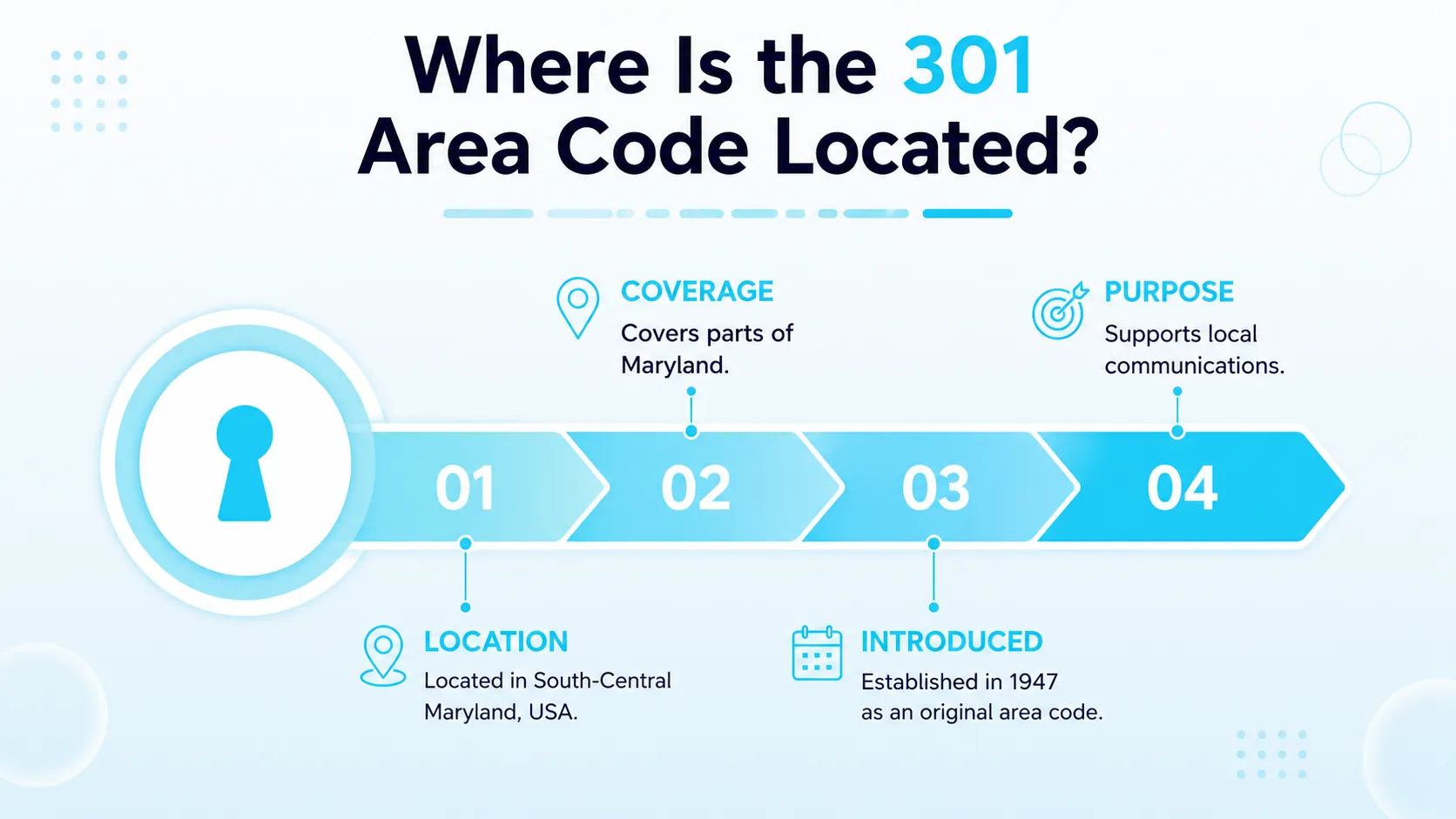
This area code covers the western and central parts of the state, wrapping around the Maryland side of Washington, D.C. It once covered the whole state. Today it anchors the densely populated D.C. suburbs and stretches west toward the Appalachian foothills. The eastern half of the state, around Baltimore, uses a different code. So 301 ties together two very different worlds: crowded federal suburbs and quiet mountain towns. The 301 area code is the prefix most tied to the capital-region commuter belt.
- 301 covers the D.C. suburbs on the state's side of the line.
- It reaches west toward the Appalachian foothills.
- It runs on Eastern Time, like the whole D.C. region.
- It shares its territory with the 240 and 227 overlays.
History and Origin of the 301 Area Code
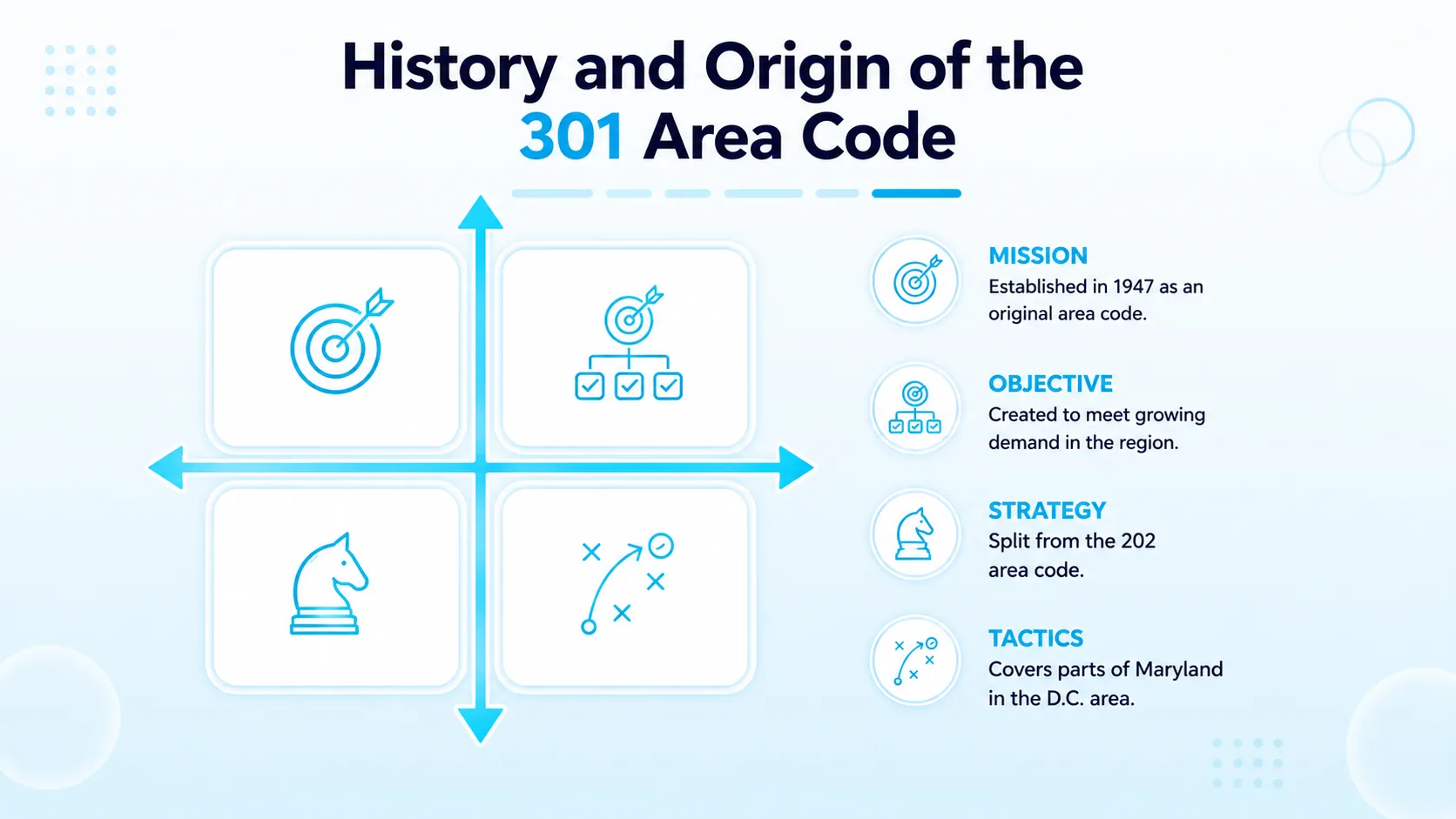
The 301 area code is one of the oldest in the country. It went live in 1947 as one of the first 86 codes ever assigned, covering the entire state. As the region grew, the map changed several times. In 1991, the Baltimore side split off as area code 410. Then demand around D.C. kept climbing, so regulators added the 240 overlay in 1997 and the 227 overlay in 2023. Each overlay stacked a new code onto the same ground without changing any boundaries.
Area Code 301 Compared to Nearby Maryland Codes
The state runs on several area codes, and 301 anchors the D.C.-suburb side. Sitting right on top of it are two overlays, 240 and 227, which share the exact same territory. To the east, area code 410 and its overlays cover Baltimore and the Eastern Shore. Just across the district line, the 202 area code covers Washington, D.C. itself. What sets 301 apart is how heavily overlaid it has become.
A stack of three codes
301, 240, and 227 all serve the same D.C.-suburb region. A new line today might draw any of the three, yet all are equally local.
A split personality
The eastern end is dense, federal, and suburban. The western end, out toward Cumberland, is rural and Appalachian.
Cities and Communities Served by the 301 Area Code
This area code reaches a wide mix of communities. Its core is Montgomery County, home to Silver Spring, Bethesda, Rockville, Gaithersburg, and Germantown. These are among the most populous and affluent suburbs in the D.C. region.
To the east, Prince George's County adds College Park, home to the state's flagship university, plus Bowie and Hyattsville. Further west, Frederick anchors a growing corridor, and Hagerstown and Cumberland hold down the mountains. Choosing which of these markets to target is its own decision, and our area code guide helps weigh the options.
Time Zone and Dialing Rules for the 301 Area Code
Every community in this area code runs on Eastern Time. That means Eastern Standard Time in winter and Eastern Daylight Time in summer, matching Washington, D.C. and the rest of the corridor. The dialing rules follow from all those overlays. Because 240 and 227 share the same ground as the 301 area code, seven digits can no longer identify a number. So callers must dial all 10 digits, area code included, for every local call. The Wikipedia entry on area code 301 lays out the full timeline of splits and overlays.
Why Businesses Choose a 301 Area Code Number
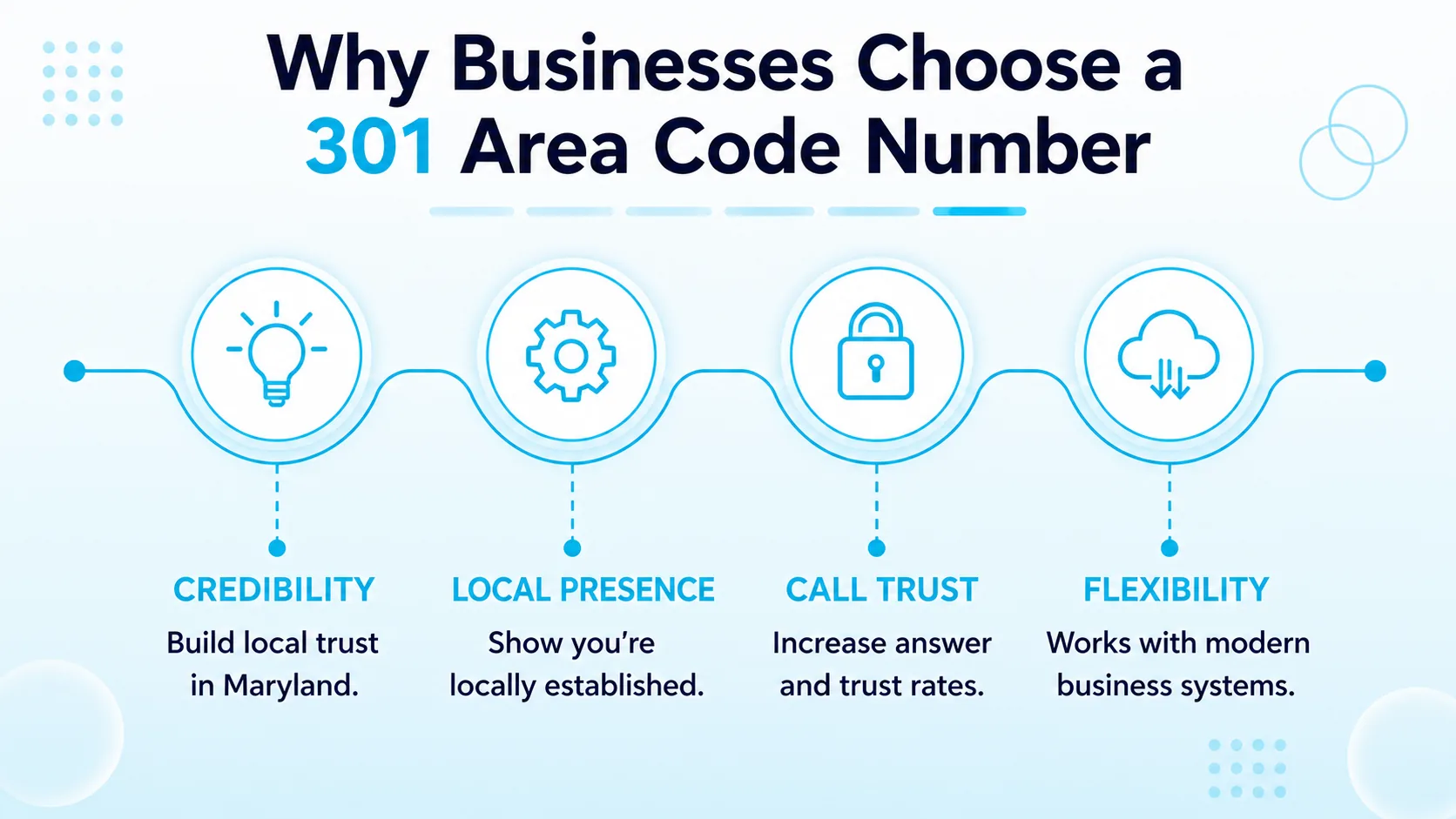
A local number in this area code sends a clear signal. It tells customers a business belongs to the D.C. suburbs, not a call center three states away. That local trust matters in a region full of federal contractors, professionals, and established neighborhoods. Businesses expanding into Silver Spring, Bethesda, or Frederick often pick up a 301 number so their caller ID fits right in.
This is where a cloud phone provider like Rozper fits in. A business doesn't need a physical office in the region. Rozper lets it set up a local 301 number through a VoIP platform instead. The local presence stays intact, and calls can route anywhere the team actually works. Rozper backs that setup with 99.999% uptime and coverage across 150+ countries. A company can claim a capital-region identity while its support or sales team works from anywhere else. It's a practical way to plant a flag without signing a lease.
How to Get a 301 Area Code Number
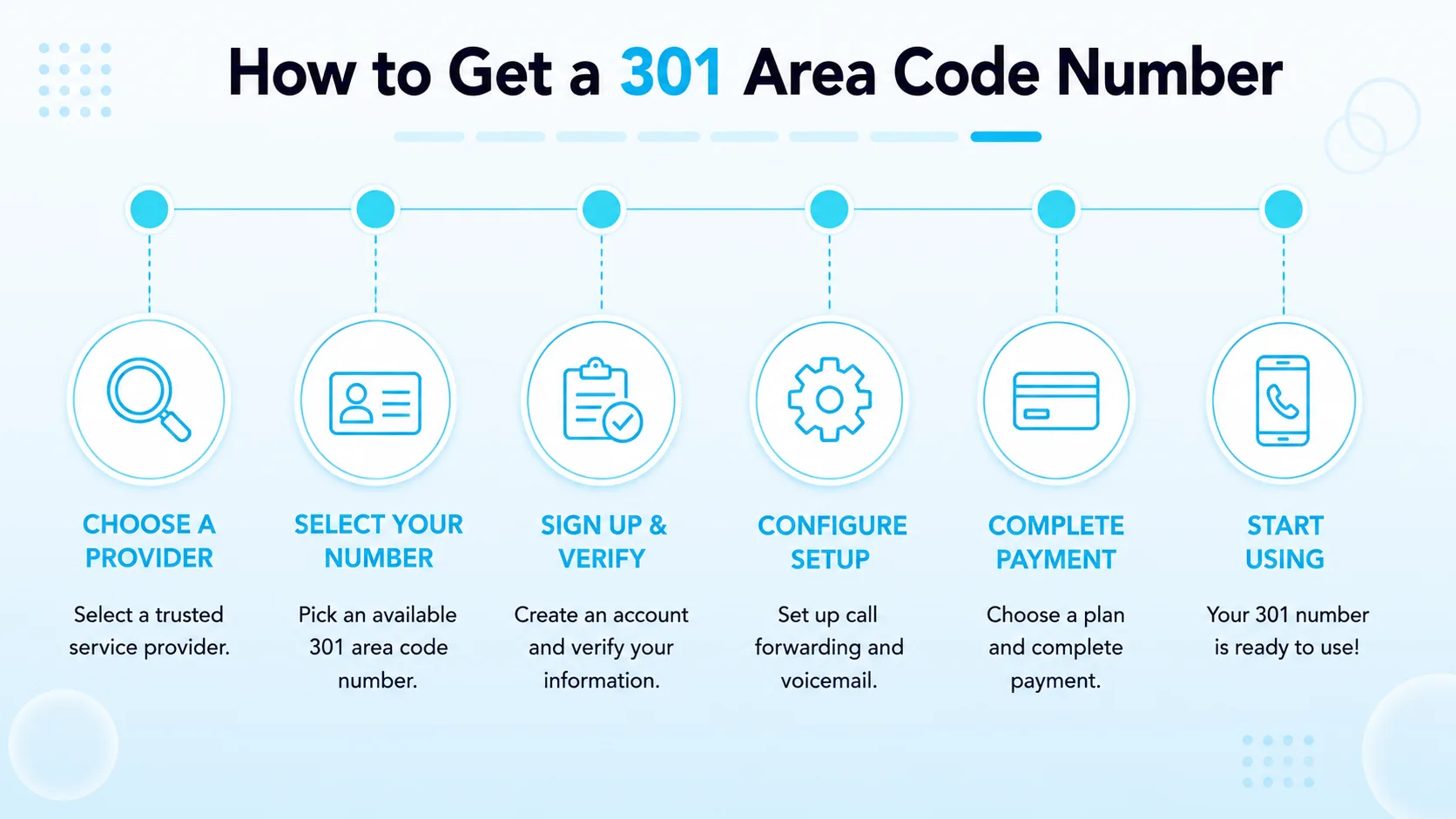
Getting a new number in this area code usually means going through a phone provider. That's different from the phone company that first assigned the block decades ago. VoIP providers can issue one in minutes. The process looks the same almost everywhere:
- Pick a cloud or VoIP provider that offers coverage in the region.
- Search available numbers in the 301 area code and choose one that fits.
- Confirm the number and point it at your existing phones or app.
- Route incoming calls to any team, wherever they actually sit.
Businesses moving a number from an old provider need one extra step. They file a standard porting request, which usually takes a few business days. It's worth confirming the old number keeps working normally during the transfer.
Conclusion
Area code 301 began in 1947 covering all of Maryland, then shrank and gained overlays to become the D.C.-suburb code it is today. It reaches Silver Spring, Bethesda, Rockville, Frederick, and dozens of towns from the Beltway to the mountains. Its Eastern Time zone and mandatory 10-digit dialing, driven by the 240 and 227 overlays, shape how every local call connects. For residents, the 301 area code is simply the prefix tied to home in the capital region. For businesses eyeing the D.C. suburbs, it's a small but meaningful signal of local presence.
FAQs
When was area code 301 created?
It went into service in 1947 as one of the first 86 area codes in the country. It originally covered the entire state.
What cities does the 301 area code cover?
It covers the D.C. suburbs and western part of the state, including Silver Spring, Bethesda, Rockville, Gaithersburg, Frederick, and College Park. It stretches west to Hagerstown and Cumberland.
Do I need to dial 10 digits for local calls in this area code?
Yes. The 240 and 227 overlays share the same region, so seven digits can't identify a number. Every local call needs all 10 digits.
Is area code 301 the same as area code 240?
No, they are different prefixes that overlay the same territory. A number can be assigned 301, 240, or 227, and all three are equally local.
What time zone does the 301 area code use?
The entire region runs on Eastern Time. It follows the same standard and daylight schedule as Washington, D.C.
Is a call from the 301 area code safe to answer?
Yes, it's a standard code used by residents and businesses across the D.C. suburbs. As with any call, stay cautious about sharing personal details with an unfamiliar number.
Can a business outside Maryland get a 301 area code number?
Yes. VoIP providers can issue a number in this area code to any business, wherever it's based. Rozper, for example, can set one up with call routing and support for remote teams.
Why does the 301 area code have so many overlays?
The dense, fast-growing D.C. suburbs burned through numbers quickly. Adding the 240 and 227 overlays let the region keep issuing numbers without forcing anyone to change theirs.