Introduction
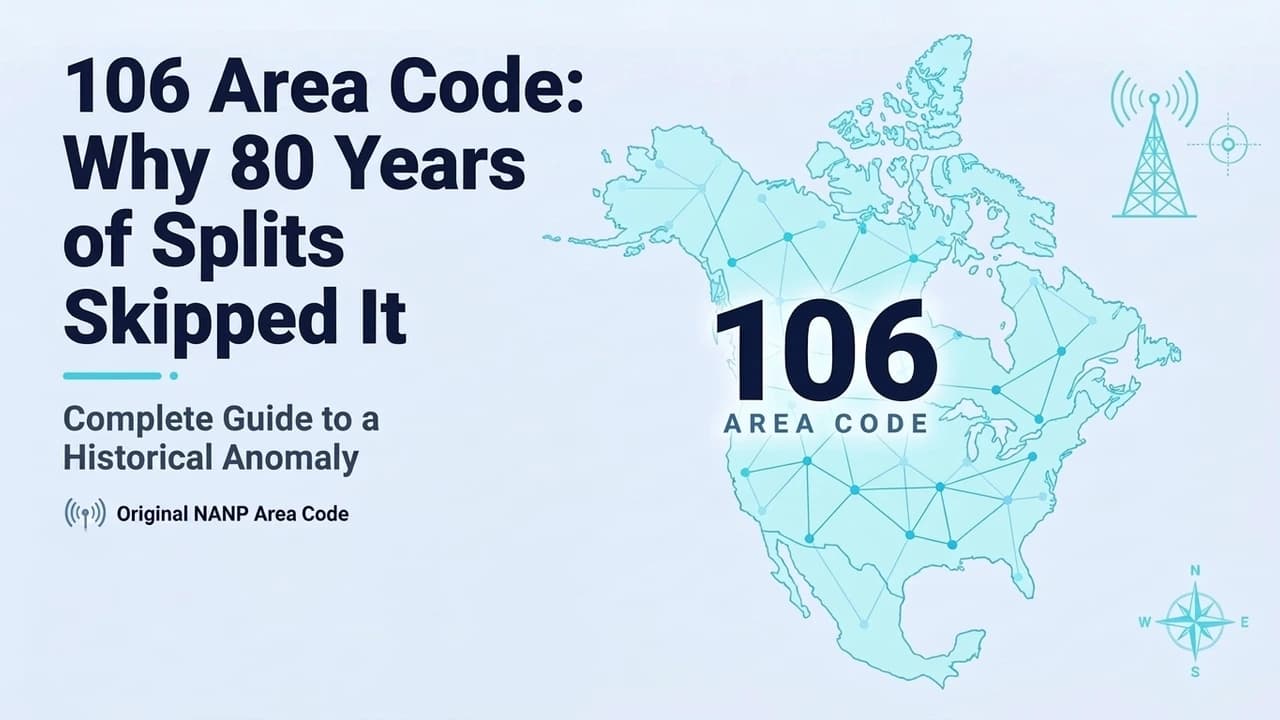
If your phone just flashed a call from the 106 area code, you might assume that with so many area codes splitting and changing over the decades, this one must have existed at some point too, regardless of which app or device displayed it. That assumption feels reasonable, since North Carolina alone has gone through several real splits since 1947. This guide breaks down exactly why the 106 area code has never existed at any point in that history, how a real code like area code 910 North Carolina fits into eight decades of genuine splits, and what a call displaying 106 usually means instead. Stick around, and you will never mistake a fabricated prefix for a forgotten chapter of numbering history again.
Key Takeaways:
- The 106 area code has never been assigned at any point across eight decades of real area code history.
- Its first digit breaks the North American Numbering Plan format, a rule that has never changed since 1947.
- The real 910 code in North Carolina came from an actual 1993 split, not an invention.
- A call showing 106 almost always points to spoofing or a simple data entry error, not a hidden numbering chapter.
No, 106 Isn't a Lost Chapter of Numbering History
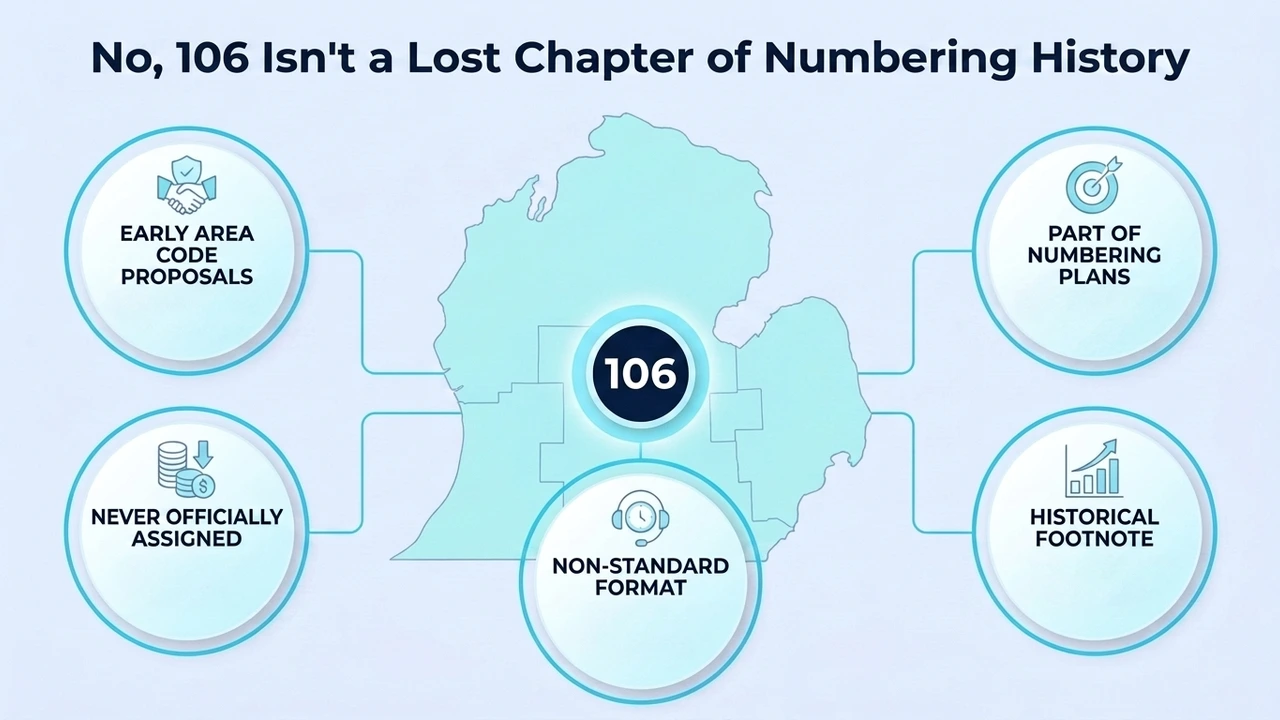
Most people assume that with so many real splits happening over the decades, an unfamiliar code like the 106 area code must have existed briefly at some point. That assumption doesn't hold up once you look at the actual record, no matter how far back you check.
- No archive, regulatory filing, or historical map anywhere shows 106 ever serving any US or Canadian region, in any decade.
- North Carolina's own numbering lineage is fully documented in public regulatory filings, and 106 appears nowhere in it, from 1947 to today.
- Nearby codes like 105 and 107 are equally absent from every carrier's records, confirming a structural gap, not a missing chapter.
- Every area code split or overlay in US history is on public record, and none of them ever produced the digits 106.
- Even old Bell System archives from the plan's earliest years never list 106 among their original assignments.
- Reverse lookup services and carrier databases agree unanimously on this point, with zero conflicting entries anywhere on file.
The Format Rule That Applied Even in 1947
Every legitimate area code, from the very first batch issued in 1947 to the newest overlay activated last year, follows one unbending format. Understanding it explains why the 106 area code could never have existed in any era.
The Digit Every Area Code Must Start With
The North American Numbering Plan has always required area codes to begin with a digit from 2 through 9. The digit 1 was reserved as the long-distance access prefix from day one, so nothing starting with 1 — including 106 — ever qualified, even in the plan's earliest years. This single rule applies across every US state, Canadian province, and Caribbean territory inside the plan, with zero regional exceptions carved out anywhere.
Why This Rule Never Loosened Over Time
Eighty years of splits, overlays, and regional growth never touched this format requirement. The real 910 code exists in North Carolina today because it followed this rule; the 106 area code was disqualified before any numbering authority could even consider it.
What a Call Showing 106 Usually Means
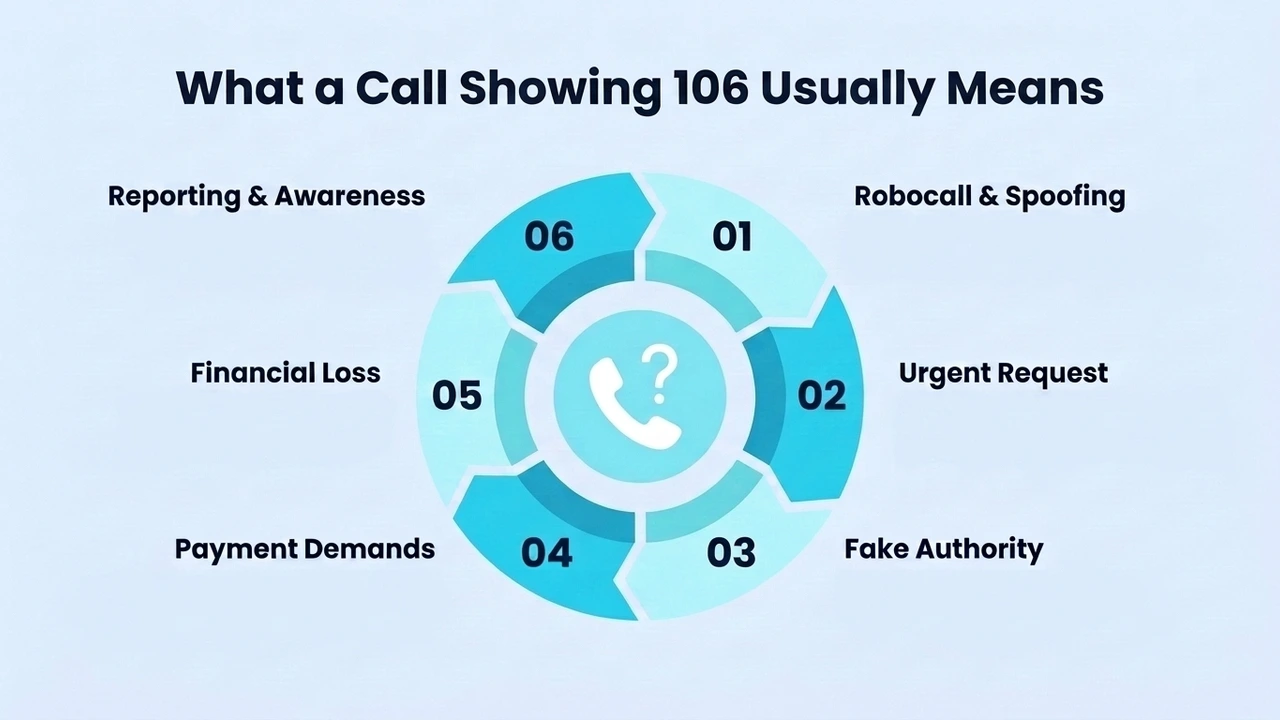
Seeing the 106 area code on your screen almost never means what it appears to mean. The explanation is usually far more ordinary than a gap in numbering history, even though the number itself can feel unsettling at first glance.
- Caller ID spoofing software can generate any three digits it wants, including invalid ones like 106, to look more convincing.
- A single-digit typo in a contact list, CRM, or autodialer can easily produce 106 instead of a working code, especially at scale.
- Some prank or marketing apps generate placeholder numbers that never route through a real carrier network at all.
- Call center systems occasionally leak a malformed test number during a software update or carrier migration.
- Smaller businesses running budget VoIP setups are especially prone to this, since fewer of them audit outbound caller ID regularly.
Meet 910: The Real North Carolina Code Behind This Comparison
Comparing a fabricated code to a real one makes the gap obvious, the same way the 106 area code falls apart under scrutiny. Area code 910 North Carolina entered service on November 14, 1993, carved out of the 919 region as the state's population grew too large for one code to handle.
Where 910 Covers Today
This region now serves Fayetteville, Wilmington, Jacksonville, and Lumberton, along with the surrounding coastal and inland counties across the southeast.
Why This Split Mattered
Splitting the region gave carriers fresh number combinations without disrupting service, the same principle behind every legitimate overlay code added since. That single decision in 1993 is why 910 still functions smoothly today, decades later.
How One Original Code Became Three: 910, 336, and 743
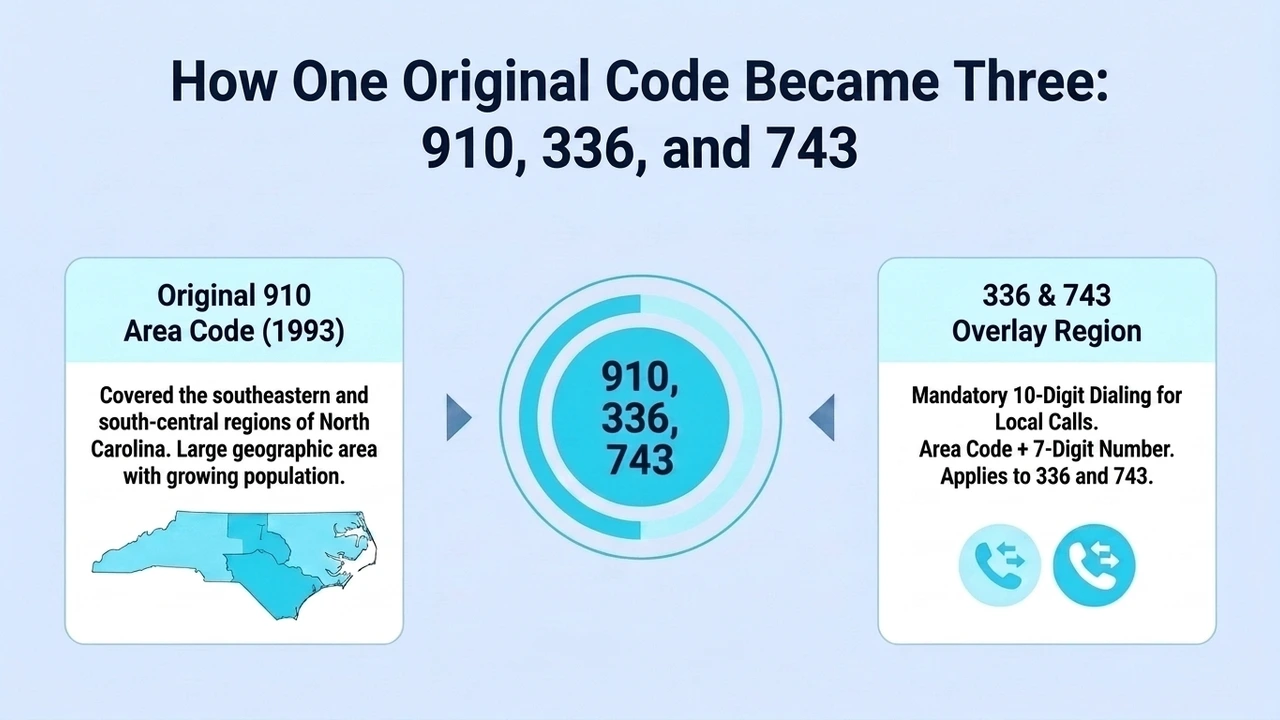
North Carolina's numbering story shows real growth in action, something the 106 area code has never been part of at any stage. Following the lineage makes the contrast between real and fabricated codes crystal clear.
- Area code 704 launched in 1947, originally covering the entire state of North Carolina in one single region.
- Area code 919 split away in 1954, taking the eastern and central regions with it as the state's population grew.
- Area code 910 North Carolina split from 919 in 1993, covering the state's southeastern corner and its coastal cities.
- Area code 336 split from 910's neighboring territory in 1997 to serve the fast-growing Piedmont Triad.
- Area code 743 layered on top of 336 as an overlay in 2016, adding capacity without another disruptive split.
- At no point across any of these five real transitions did the number 106 ever enter the rotation.
6 Ways to Confirm a Caller ID Before You Trust It
A short verification habit beats guessing every time an unfamiliar prefix shows up on your screen, no matter how plausible it looks. Run through these checks before you call back or share any information with a caller you don't recognize.
- Confirm the first digit falls between 2 and 9 — the 106 area code fails this test immediately, so no further research is needed.
- Search the full ten-digit number in a trusted reverse lookup tool rather than judging the area code alone.
- Remember that real codes only ever arrive through a documented split or overlay, never quietly on their own or overnight.
- Check whether the number matches a known regional lineage, the way the 910 code in North Carolina does.
- Avoid calling back immediately if no voicemail or clear callback reason was left.
- Report a confirmed spoofed number through the FCC guidelines for consumer complaints.
Why Clean Caller ID Still Matters for Growing Teams
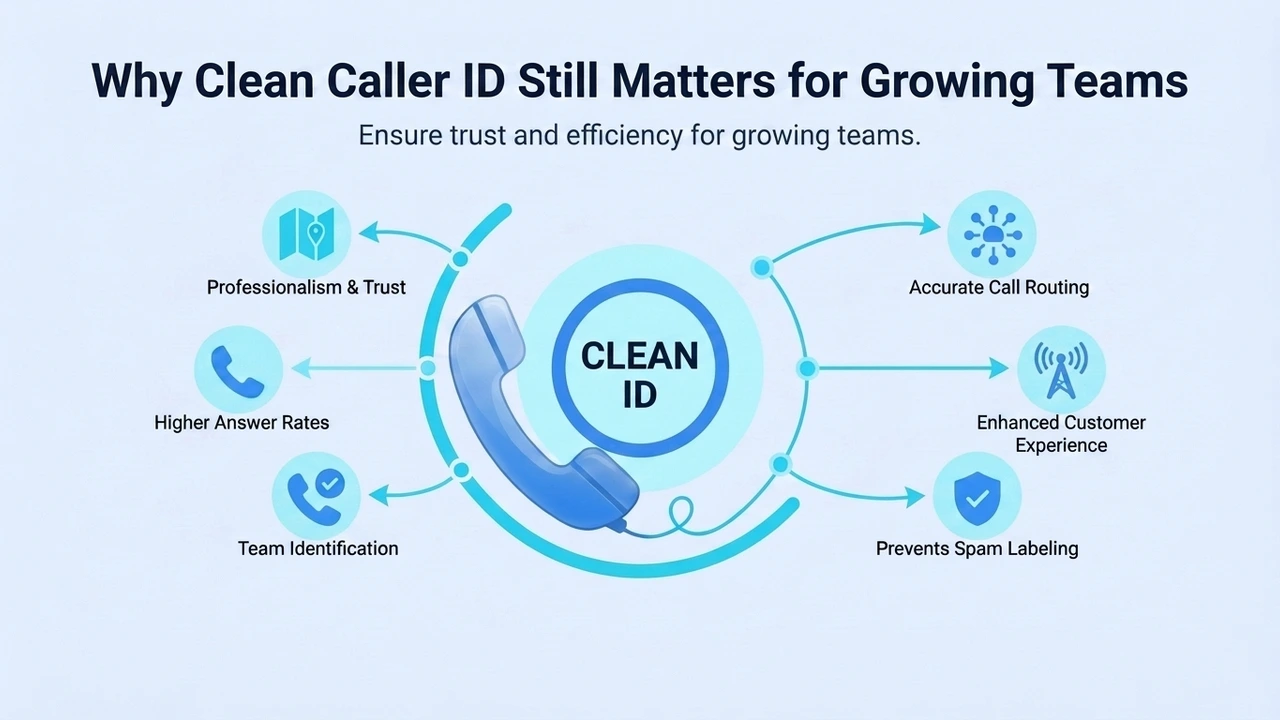
Businesses face the same problem from the other side: making sure their own outbound numbers never resemble a fabricated prefix like the 106 area code. That mistake quietly costs answered calls and customer trust, especially for sales and support teams calling out at scale.
- Provision every outbound line through a carrier that issues real, NANP-compliant numbers, never invented digits.
- Use STIR/SHAKEN-authenticated calling so your caller ID cannot be mistaken for spoofed or suspicious traffic by the receiving carrier.
- Choose local presence numbers, including genuine regional codes like area code 910 North Carolina, so customers see a recognizable prefix every time.
- Rozper configures every business number so it always matches a real, assignable NANP region, never a fabricated or invented one, even during carrier migrations.
Rozper customers get this verification built into their outbound calling by default, which keeps every number they dial from looking as suspicious as a stray 106 area code, whether the team is five people or five hundred, and regardless of how many regions they operate across.
Conclusion
The 106 area code will never show up in a legitimate carrier directory because it breaks the same first-digit rule that has held since 1947, and it has never appeared at any point across eighty years of real North Carolina splits, from 704 to 919 to area code 910 North Carolina and beyond, no matter how carefully you search the records. Most calls displaying 106 trace back to spoofing software or a simple data entry mistake rather than any assigned carrier, past or present. Comparing it against the documented lineage behind 910, 336, and 743 shows exactly what real numbering history looks like, built through public regulatory processes rather than appearing out of nowhere. Rozper builds that same clarity into every number it provisions, so your business never sends a confusing caller ID by accident, and unfamiliar prefixes like a stray 106 area code stop being a mystery starting today.
FAQs
Is 106 a real area code anywhere in North America?
No, this prefix has never existed in the US or Canadian numbering system, at any point in its history. It fails the basic NANP rule requiring every area code to start with a digit between 2 and 9.
Why does my caller ID sometimes show 106?
The most common causes are caller ID spoofing software or a simple data entry typo in a contact list or dialer. Neither means you reached a real, historically documented carrier.
Should I answer a call showing this prefix?
Answering is generally safe, but never share personal or financial details with a caller you cannot verify. Hang up and contact the organization directly through a known number if anything feels off.
Does the 910 area code cost more to call than other North Carolina numbers?
No, area code 910 North Carolina carries standard regional rates like any other assigned code in the state. Ten-digit dialing applies to every local call, matching every other legitimate NC region.
How can I stop my own business numbers from looking suspicious?
Work with a provider that issues verified, carrier-grade numbers backed by STIR/SHAKEN authentication instead of invented digits. Rozper builds this protection into every number it provisions for growing teams.