Introduction
More than $44 billion in yearly voice traffic flows through wholesale VoIP today. Yet many firms get it wrong. They switch from old phone systems but miss what drives real savings. They also can't tell a good provider from a cheap rate card.
This guide covers the model step by step. You will learn what it is, how it works, its main perks, its top features, and how to judge providers for your needs. These basics apply whether you handle large call volumes, run a contact center, or build reseller tools.
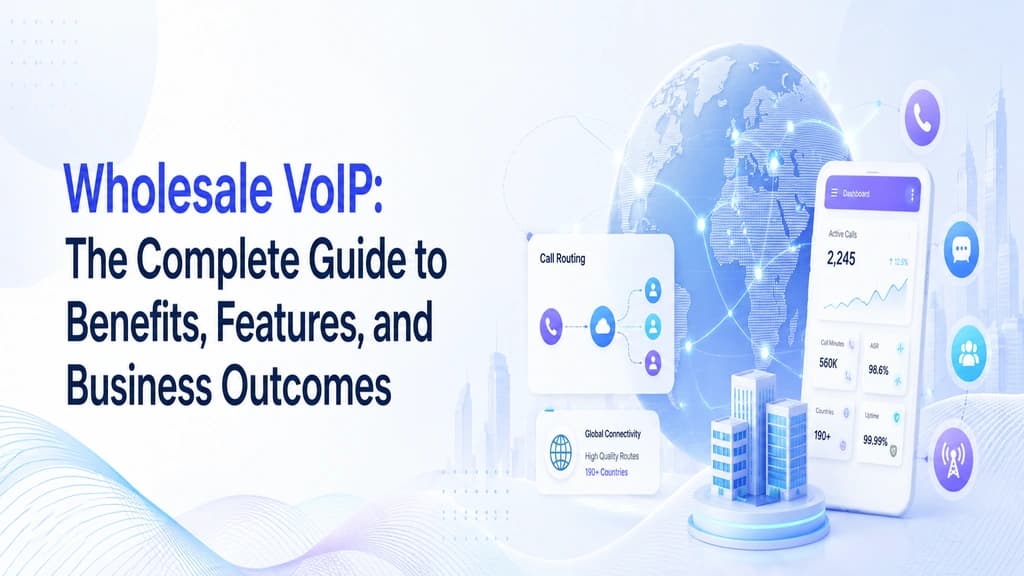
What Is Wholesale VoIP?
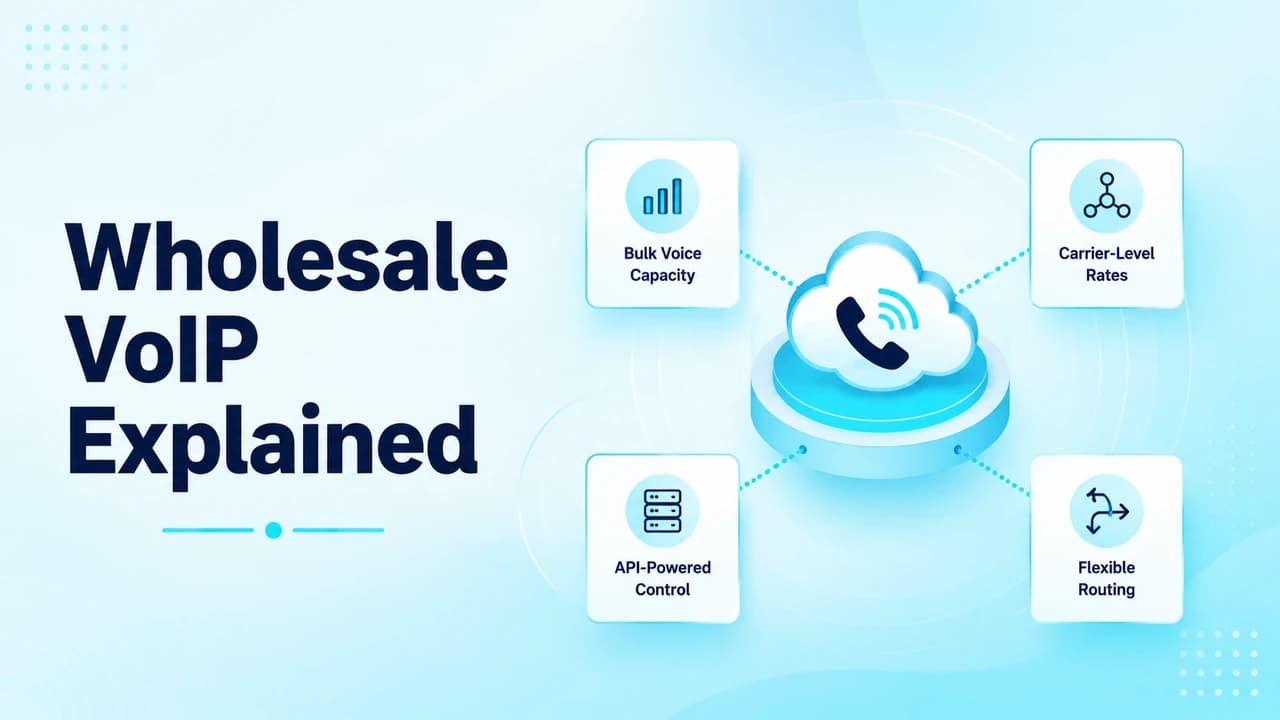
This model means buying voice services in bulk, business to business. Retail buyers pay set per-seat rates for single phone lines. Firms, resellers, call centers, and app makers buy large blocks of voice capacity instead, at carrier-level rates built for big use or resale.
The VoIP wholesale market sits above raw carrier networks and below retail end-user products. Buyers at this level want bulk pricing with no cost to build their own network, full control over routing and setup, and deals that match their real call volume, not a fixed plan.
Price is not the only thing that sets this tier apart. Wholesale accounts get set pricing by request, self-serve call tools, flexible routing, and real technical support. Retail accounts just get a portal, a rate card, and a help queue. For firms that treat voice as core infrastructure, this gap changes both what you can do and what it costs.
How Wholesale VoIP Works
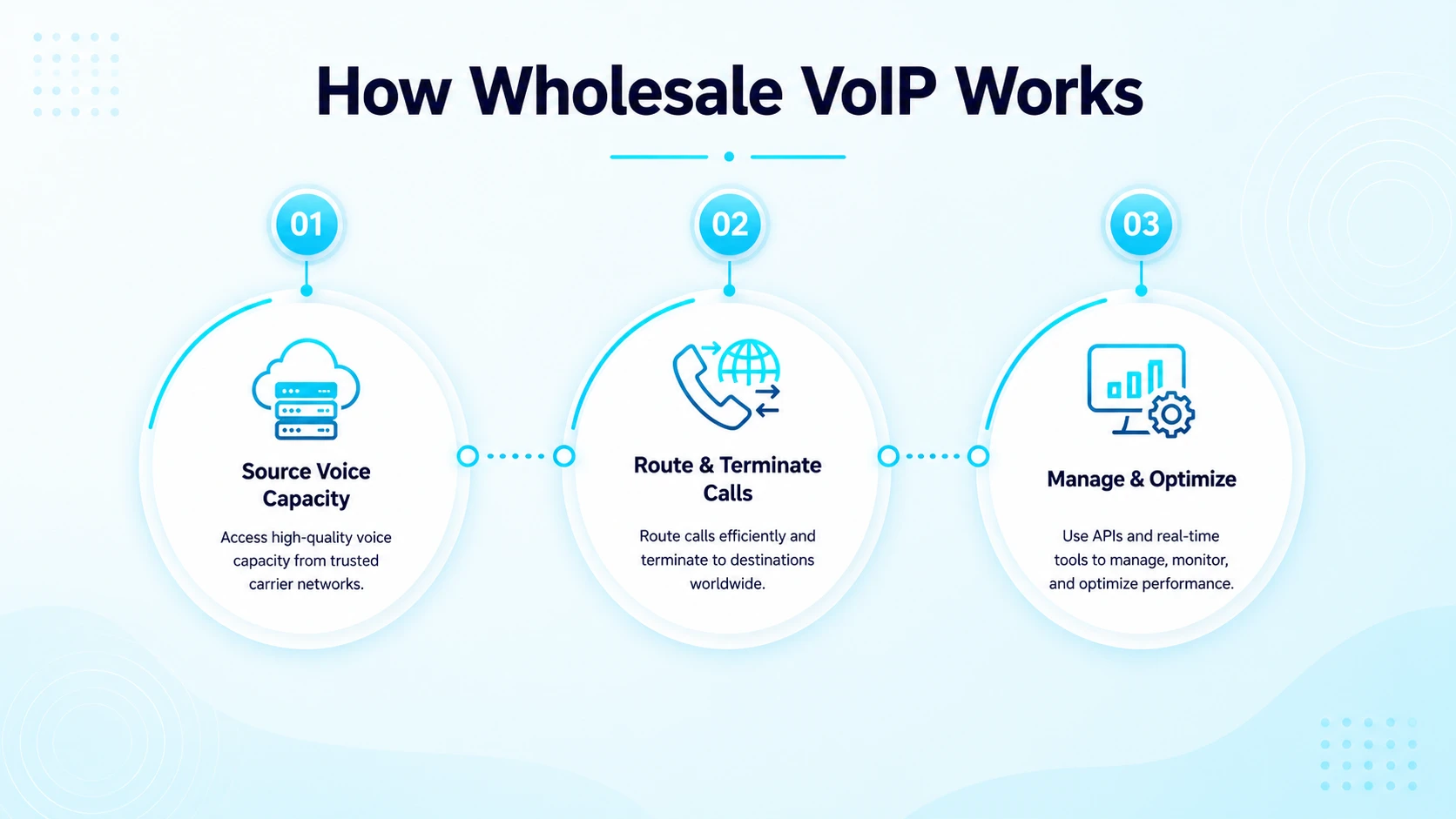
This tech turns your voice into data and sends it over IP networks. Your device picks up your voice and shrinks the sound with a codec, most often G.711, G.729, or Opus. Then it sends the data to the other end, where it turns back into sound in real time, in just a thin slice of a second on a good network.
Most VoIP wholesale setups use SIP, short for Session Initiation Protocol, to start, change, and end each call. SIP trunks link a business's phone system or cloud app to the carrier's network. Session Border Controllers, or SBCs, sit at the edge, guarding the link, crossing firewalls, and matching up formats to keep calls working well across many setups.
Voice termination sends outbound calls to the person you're calling, be it a VoIP app, a cell phone, or a landline (PSTN). Voice origination works the other way, bringing calls in through local (DID) numbers in the places you serve. Together, these two parts form the full voice stack, in and out.
Want carrier-grade service? Rozper's wholesale VoIP services offer A-Z termination in 150+ countries with 99.999% uptime. That's a solid mark for what strong voice infrastructure should look like.
Key Business Benefits of Wholesale VoIP
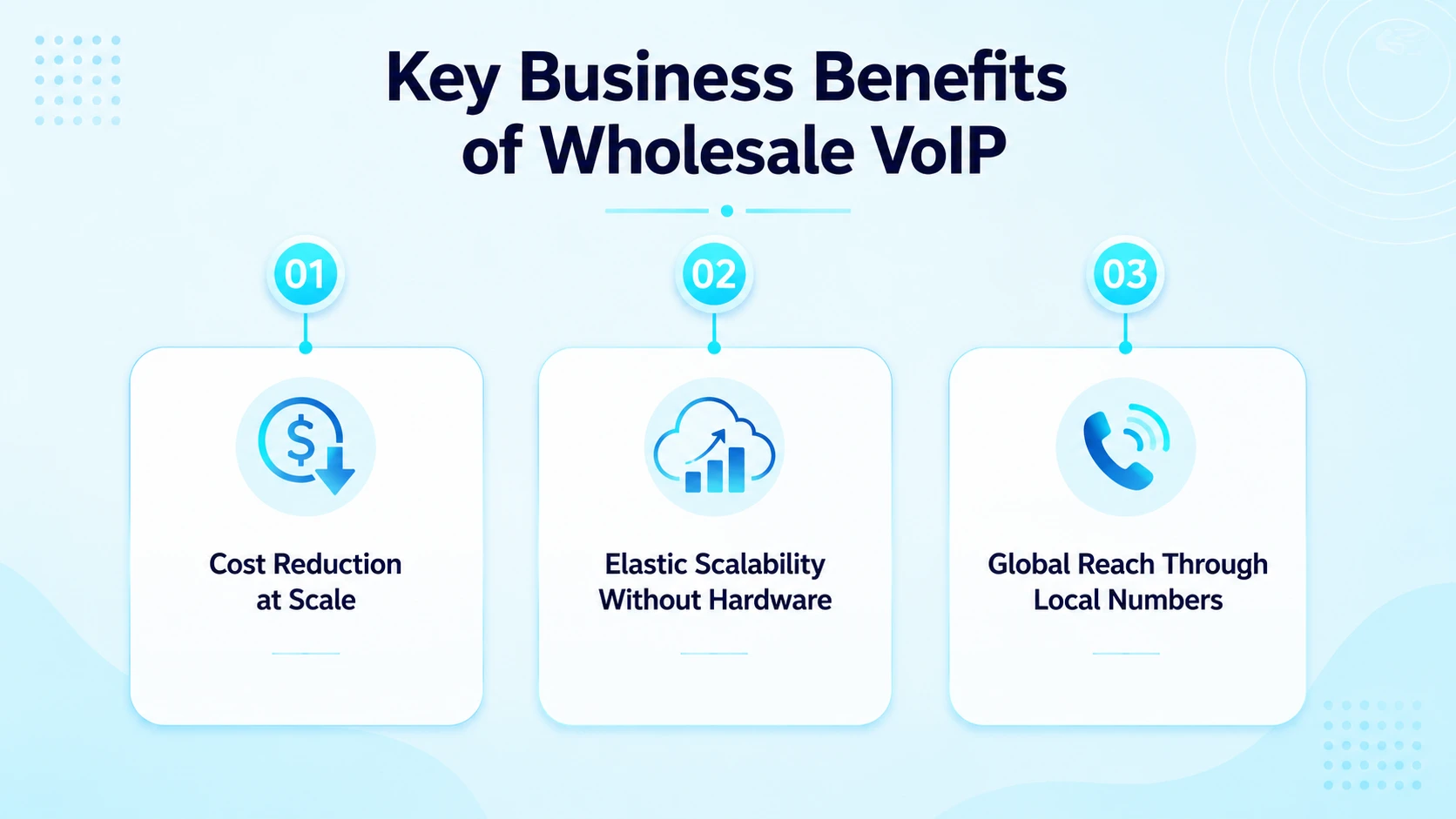
Cost Reduction at Scale
Firms that switch to this model often cut voice costs by 30–60%, compared to retail or old PSTN plans. Calls to other countries save the most, at times more than 70%. Why? Wholesale carriers pool traffic across networks that retail firms can only reach at high rates. At call center scale, even small gains per minute add up to real yearly savings.
Elastic Scalability Without Hardware
SIP lines and DID numbers get set up online, with no gear to install and no long wait. A call center can grow from 50 to 500 staff with ease. Resellers can add new clients with no extra setup work. Even busy seasons and sudden spikes get handled with no drop in quality.
Global Reach Through Local Numbers
VoIP wholesale reach spans 150+ countries, letting firms show a local phone number in every place they serve. Local numbers boost answer rates and build local trust with no need for a real office. Picture a firm serving clients in New York, London, and São Paulo. It can show a known local number in each city, at no extra setup cost.
For global route coverage, check out Rozper's wholesale voice solutions. They offer DID origination, A-Z termination, and SIP trunking, backed by a friendly support team built for carrier-grade work.
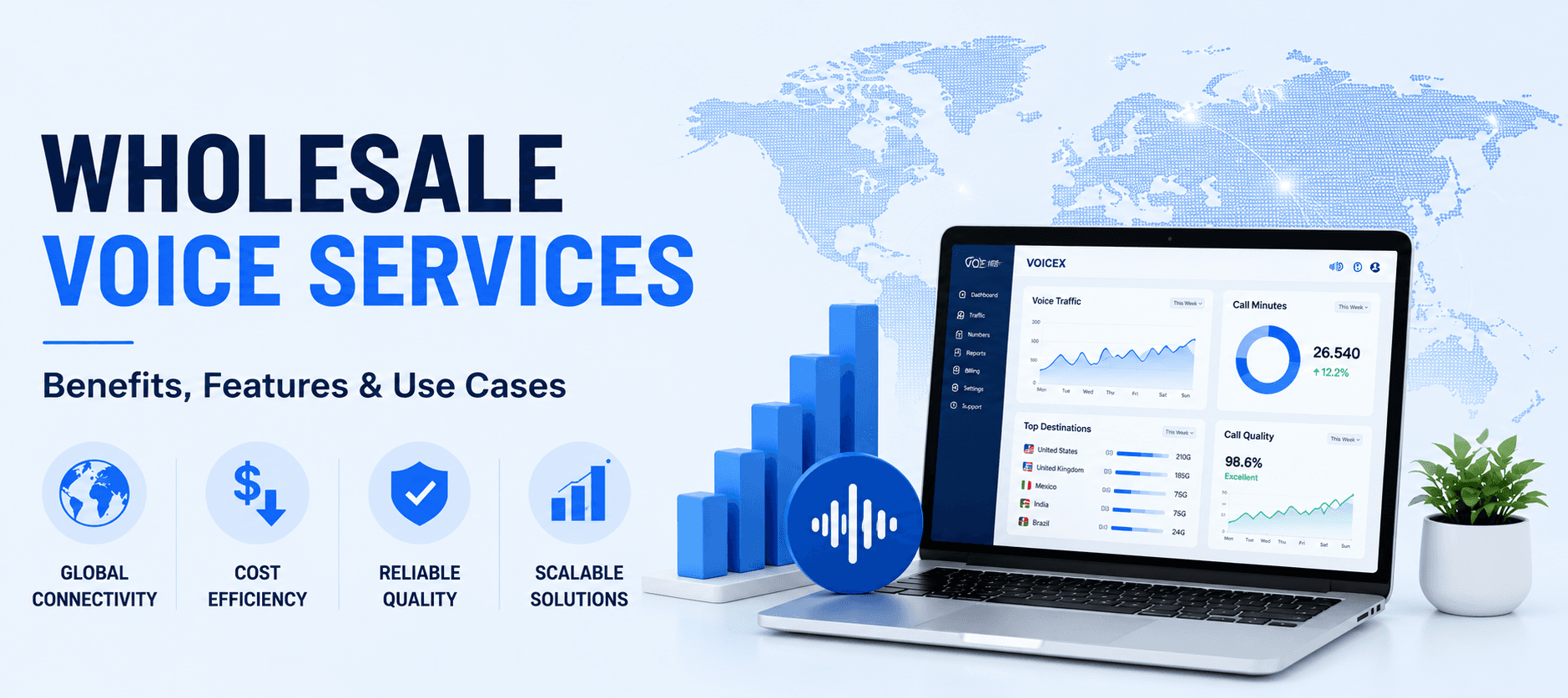
Essential Features of Wholesale VoIP Services
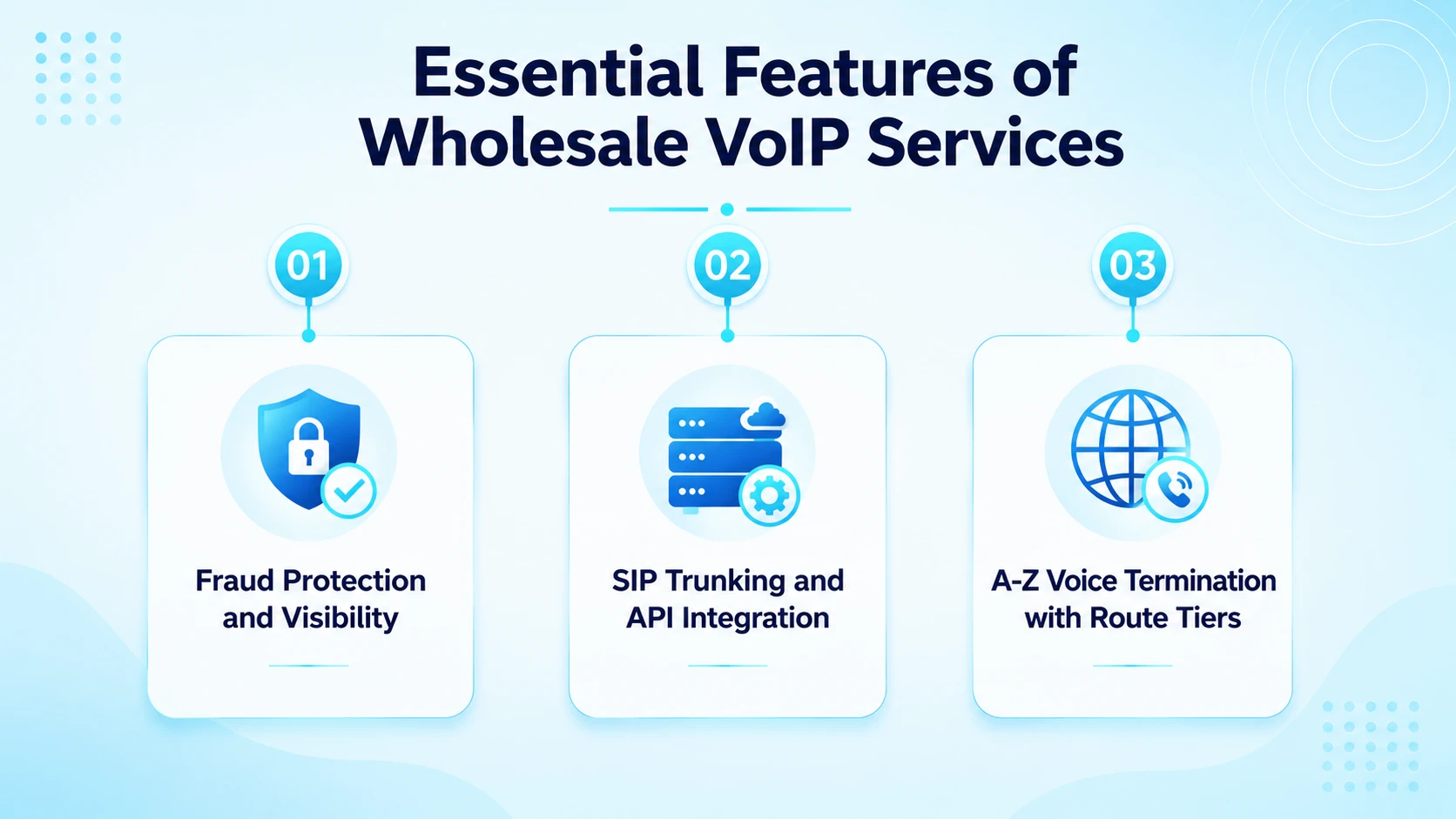
Not every provider in this space works well under real load. These features mark the gap. They set apart strong, ready-to-use tools from ones that slow down at scale.
A-Z Voice Termination with Route Tiers
There are a few route types: CLI (Caller Line Identification), Non-CLI, and Contact Center routes. Each one fits a different kind of traffic. CLI routes keep the caller ID true, best for outbound sales and calls to clients. Non-CLI routes work better for high-volume auto campaigns. You should be able to see route facts in plain view, and switch tiers based on live results. This is a base need for any real setup.
SIP Trunking and API Integration
SIP trunks link your phone system to the carrier network, with line count that flexes as you need it. Open APIs handle number setup, routing changes, call log pulls, and live stats, so developers and ops teams can run things at scale, with no manual work.
Fraud Protection and Visibility
Look for live fraud watch (IRSF), caller ID spoof checks, region blocks, and spend caps you can set. These guard your firm from money loss on calls abroad. A provider that can't spell out their fraud checks in plain terms is a red flag.
Regulatory Compliance and Security
Voice services in the U.S. fall under federal rules. These cover emergency calls (E911), caller ID checks (STIR/SHAKEN), and data protection (CPNI). Some fields, like health care, finance, and government work, face extra rules for call recording storage, data location, and lock-down standards.
Any wholesale provider should hand over a few key items: STIR/SHAKEN proof papers, FCC sign-up details, and proof that TLS and SRTP lock-down come standard, not as an add-on. The FCC's VoIP regulatory overview is the official U.S. source for these rules, and it applies to both providers and their clients.
How to Choose the Right Wholesale VoIP Provider
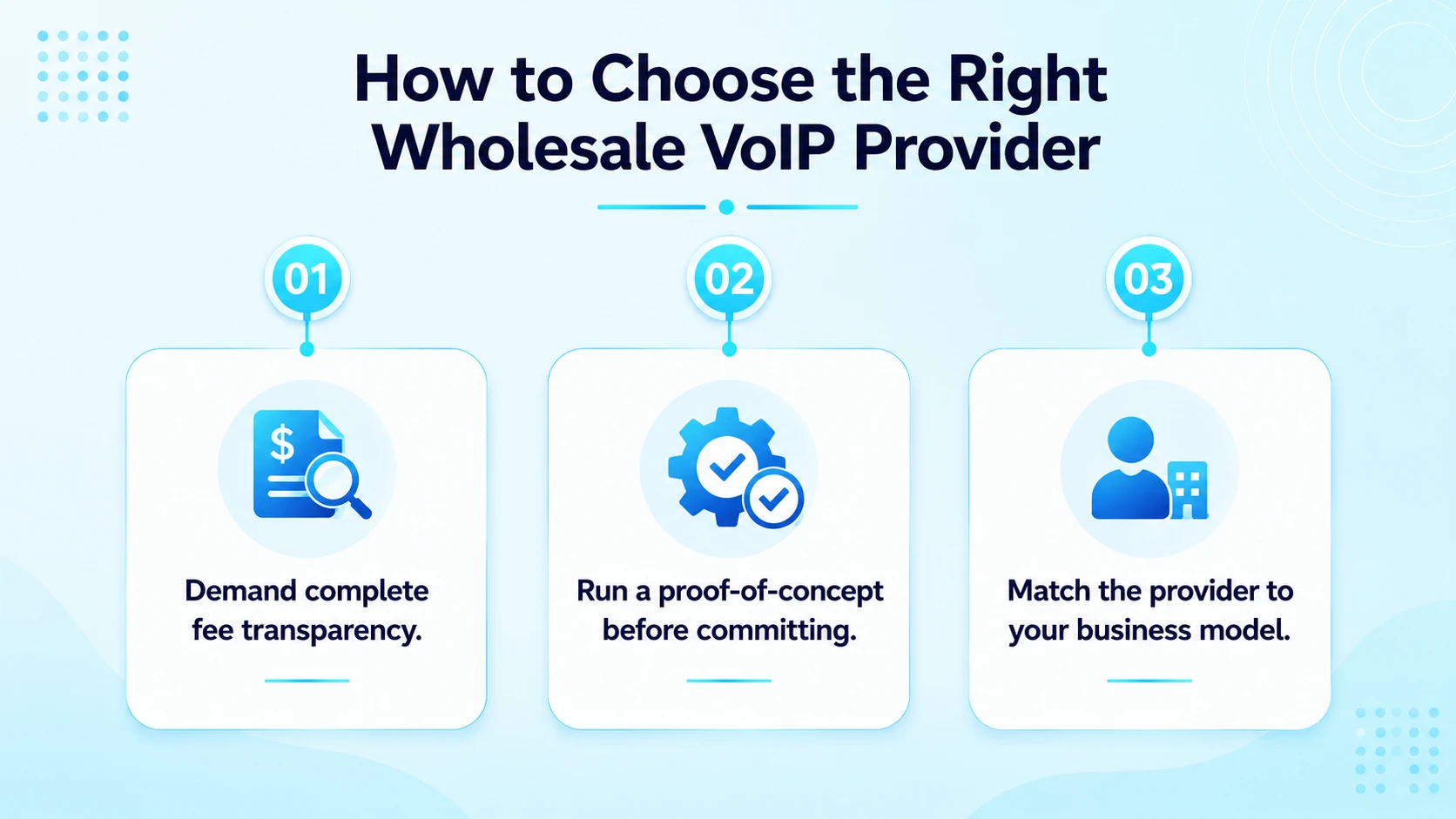
Picking a provider at this level is a long-term choice. Use these tips to look past ad claims and focus on what matters once you go live.
Match the provider to your firm. Big firms need deep carrier links and bulk pricing. Resellers need white-label tools, partner portals, and auto billing. Developers need full APIs and clear guides. A provider built for a different buyer type will cause trouble once you're live.
Run a test before you commit. Check call quality on your top routes, test the API, and check how fast support replies at different times of day. Real test results tell you far more than any sales pitch.
Ask for full fee transparency. The headline rate rarely tells the whole cost story. Ask for full details on E911 fees, porting charges, API costs, and minimum terms. Then compare that against your own real traffic before you choose.
Conclusion
This layer of tech powers voice service that scales well and costs less, for firms, resellers, call centers, and app builders alike. The firms that get the most value treat it as a real choice. They map out what their voice setup needs to do, pick a provider built for how they work, and hold that provider to clear rules on quality, rules, and cost.
The rate card is just the start. Business fit, tool quality, and the partnership itself drive your long-term gain.
FAQs
Who benefits most from bulk voice services, and what do they gain?
Big firms with large call volumes gain the most, along with resellers who build voice tools, call centers who run campaigns, and app builders who add voice to their apps. Each group uses bulk pricing in its own way: big firms cut costs, resellers boost margins, call centers scale up, and app builders get voice tools with no direct carrier deal.
How much can a business save by switching from retail telephony to carrier-grade voice?
Firms moving from PSTN or retail plans often cut voice costs by 30–60%. Calls abroad save the most, at times 70% or more. Your real savings depend on call volume, where you call, and the rate plan, and they grow even more past 10,000 outbound minutes a month.
What is VoIP wholesale traffic, and how is it priced?
It's high-volume voice traffic sent through carrier-grade networks under B2B terms. Per-minute billing suits traffic that shifts, while per-channel billing suits steady, high-volume use. Some firms mix both. Rate talks often start with a look at your traffic and call spots.
How quickly can a wholesale voice service be deployed?
Linking SIP trunks to an existing IP-ready phone system often takes one to three days. A full switch, with number porting and multi-site setup, often takes two to six weeks, depending on how tricky the porting is. Providers with real switch skill cut your risk.
What compliance documentation should a wholesale voice provider supply before you sign?
Ask for STIR/SHAKEN proof, FCC sign-up proof, E911 rule details, and written proof that TLS and SRTP lock-down come standard. If you're in a regulated field, also ask for data storage rules and CPNI papers. A provider that can't hand over these papers fast is not the right partner for regulated voice work.