Introduction
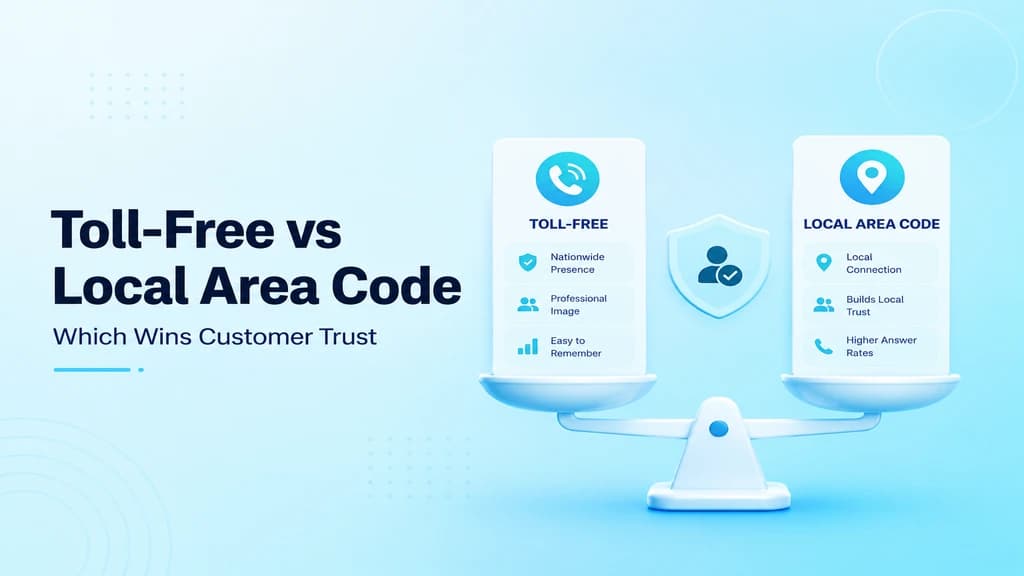
Nearly two-thirds of unfamiliar calls to a mobile phone now go straight to voicemail. The prefix on the screen is often the only clue a customer has. It's the one thing that decides whether they pick up. That small detail turns a routine numbering choice into a trust test. The toll-free vs local area code question isn't about which number sounds more "official." It's about which one a customer is more likely to answer on the first ring.
The Real Difference Between Toll-Free and Local Numbers
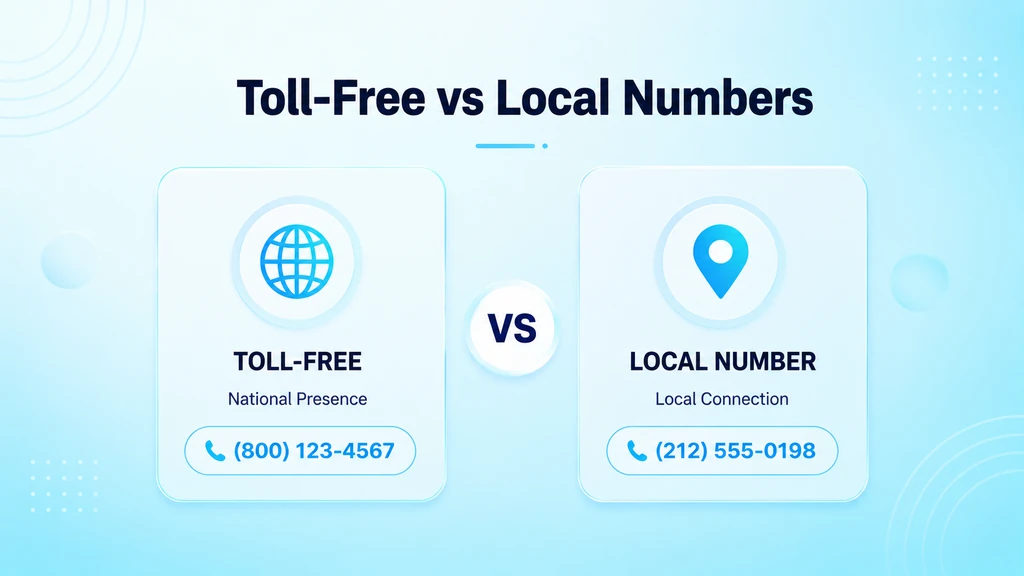
A toll-free number starts with a prefix like 800 or 888. It has no tie to any place, and that's the point. It signals a business that works everywhere, not just in one spot. A local area code works the other way. It ties a business to one city or region. A customer sees that link the moment they glance at the caller ID.
Neither format is better on its own. The toll-free vs local area code choice depends on what a business wants to say. It also depends on who is on the other end of the call. A national retailer answers support calls from every state. A plumber who works in three neighborhoods has very different needs.
Why Local Area Code Numbers Feel More Trustworthy
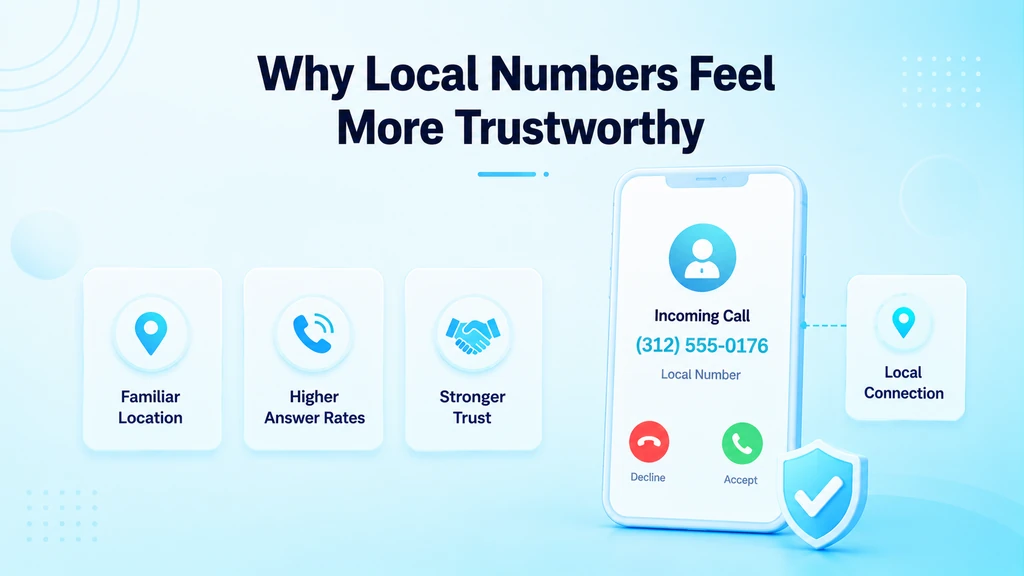
Familiarity drives answer rates more than almost any other factor. A prefix that matches a customer's own area code feels safe. So does a prefix that matches the area code of a business they expect a call from. It feels different from a random call out of nowhere. This small effect is why the toll-free vs local area code topic keeps coming up among small and mid-sized firms.
Service-based businesses feel this the most. A homeowner waiting on a callback from a contractor is far more likely to pick up a number that matches their own city. A number that could belong to any call center in the country gets ignored more often. That one answered call can decide the whole job. A rival who calls back five minutes sooner might win it instead.
Local numbers also back up a story a business already tells in its ads. A company that calls itself a neighborhood expert weakens that claim if its phone number says otherwise. This mismatch shows up the moment a customer looks at the digits.
This pattern holds across almost every service field. It's a big reason trust builds faster around a number that already feels local.
When a Toll-Free Number Still Makes Sense
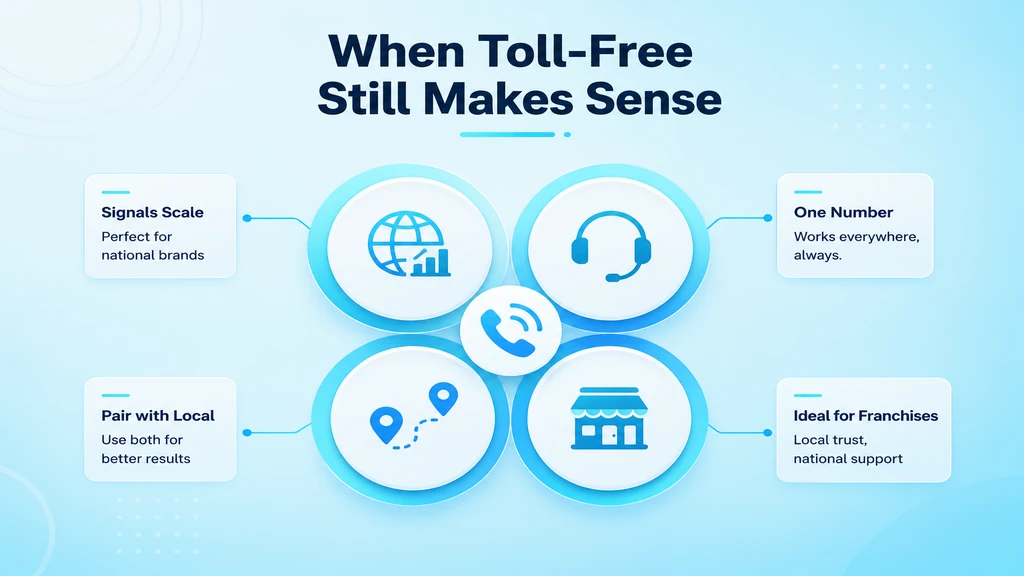
None of this means toll-free numbers are the wrong choice. A toll-free line still signals scale and staying power in a way one local prefix cannot. That matters a lot for national brands and online stores. It also matters for any business whose customers spread across dozens of area codes, with no single clear match.
Toll-free numbers also make sense for a firm's main support or sales line. The goal is one easy number to remember. It should work the same no matter where a call comes from. Nobody expects an airline to answer from one city. The local signal that helps a plumber just doesn't apply here.
The real answer to this question usually isn't one or the other. Plenty of firms run a toll-free number for national ads. They also keep local numbers for city outreach. Each format does the job it's good at. No single number has to cover every job.
Franchises with many locations face this tension all the time. A head office might want one toll-free line to keep the brand look the same everywhere. Local owners, though, often do better with a local prefix that fits their own market. It helps to work through this choice one location at a time. Forcing one format on every franchise rarely works as well.
Industries Where the Choice Matters Most
Real estate agents, home service contractors, health care practices, and law firms sit at one end. For these businesses, feeling local is part of the value they offer. The toll-free vs local area code question is usually easy to answer here. Matching the caller ID to the neighborhood being served wins out.
A business moving into a new city can see this play out directly. Rozper's 813 area code guide covers this exact local numbering choice. It's the same call a Tampa-area service business faces. Do you pick a local prefix, or a generic toll-free line?
Insurance brokers, financial advisors, and franchise firms sit closer to the middle. They often run both formats. It depends on whether a call comes from a national ad or a local referral. Retail chains and online brands sit at the far end. Toll-free almost always wins for them. No single area code stands for their whole customer base.
Franchise-heavy fields like fitness studios, tax prep firms, and home cleaning brands often see this play out differently in each market. What a customer wants shifts a lot between a busy city and a small town nearby.
Combining Both to Build Customer Trust
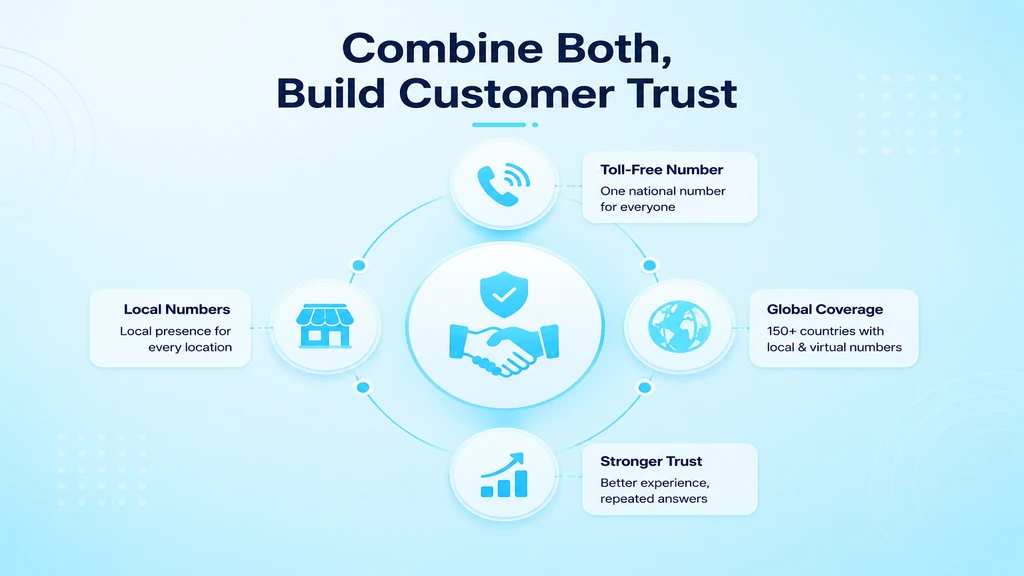
The businesses that get the most out of this choice rarely treat toll-free vs local area code as an either-or question. A national brand can run a toll-free line as its main marketing number. At the same time, it can give each branch its own local prefix. A customer calling a specific office then sees a number that matches where they actually are.
Rozper offers local and virtual numbers in over 150 countries. This makes it easy to pair a toll-free front door with local numbers. A business can cover every market it serves this way. Everything runs through one account. There's no need to juggle separate providers. This mix tends to build more trust than either format alone. A business can look big and established, while still feeling local wherever it shows up.
Trust also builds up over repeated calls. A customer who answers a local-feeling call once, and likes what they hear, is more likely to answer the next one too.
Common Mistakes in the Toll-Free vs Local Area Code Decision
The most common mistake is picking one format for the whole company. This ignores how different customer groups act. A business may have national online customers and a few local service branches too. It often needs both formats at once. One number stretched across two different jobs rarely works well.
Another common mistake is thinking a toll-free number always looks more "official." Plenty of customers now link toll-free lines with call centers and cold calls more than with trust. That flips the usual view for some industries. The FCC's overview of toll-free number assignment is a useful guide. It shows how these numbers get handed out. It also shows why some firms end up with harder-to-remember digits.
Businesses also forget to test both options before they commit long-term. Try running a local number next to an existing toll-free line for a few months. Compare the answer rates directly. That settles the toll-free vs local area code question with real data instead of a guess.
One last mistake is worth flagging. Don't treat the toll-free vs local area code choice as permanent. A format that made sense in a startup's first year might stop working once it opens offices in a dozen new cities.
Conclusion
There's no single winner in the toll-free vs local area code debate. There's only a better fit for a specific business and its own customers. National brands and e-commerce companies tend to lean toll-free. Local service businesses, health care practices, and law firms tend to get more answered calls with a familiar area code. Test both where you can. Match the format to how customers actually behave. The right mix usually becomes clear within a single billing cycle.
FAQs
Does a toll-free number cost more than a local area code number?
Pricing is usually about the same. Toll-free numbers can cost a bit more per minute. This depends on the provider and call volume.
Can a business use both a toll-free and a local number at the same time?
Yes. Many firms run a toll-free line for national ads. They also keep local numbers for each branch or service area.
Which format answers faster: toll-free or local area code?
Local numbers usually win for service and community brands. Toll-free does just as well for national brands.
Do customers still trust toll-free numbers today?
Many do, especially for large national brands. Some now link toll-free lines with call centers more than with a trusted local business.
Is switching from toll-free to a local area code number complicated?
Not usually. Most virtual number providers can set up a local number fast. They can plug it into your phone system within a single business day.
Should a new local business ever choose a toll-free number over a local area code?
It can make sense if the firm expects national customers right away. But most new local shops do better with a familiar area code.