Introduction
Area code 940 stretches from the fast-growing edge of the Dallas-Fort Worth Metroplex all the way to the rural farmland near the Oklahoma border, and those two ends of the territory could not feel more different. If your business is deciding whether a number here will actually read as local, that population gap matters more than any map of covered counties. This article walks through where 940 actually reaches, why one code ended up holding both a booming suburb and a quiet rural region, and how to choose a number that fits the specific market you're calling into. By the end, you will know how to choose, set up, and protect a 940 number so it earns trust in the part of the region that actually matters to your business.
Key Takeaways:
- Area code 940 covers both booming Denton County suburbs like Frisco and rural counties near Wichita Falls, all under one code.
- It was split from area code 817 in 1997, the same event that shaped the Fort Worth region's numbering plan.
- A well-matched 940 number can still meaningfully raise answer rates, provided it fits the specific sub-market you're calling.
- Setup now takes minutes through a cloud phone provider instead of the days a traditional carrier once required.
Where Area Code 940 Actually Covers
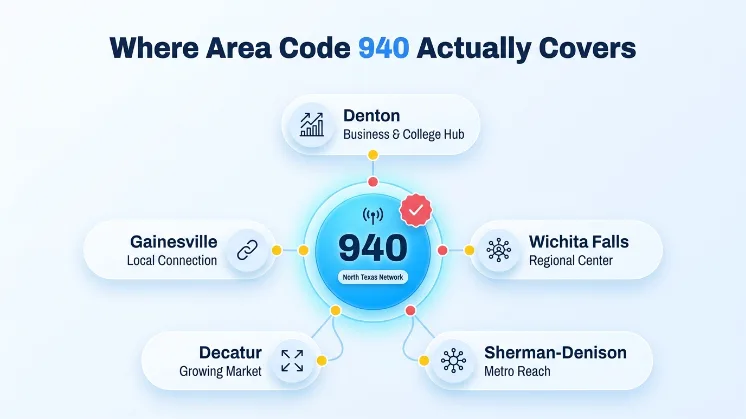
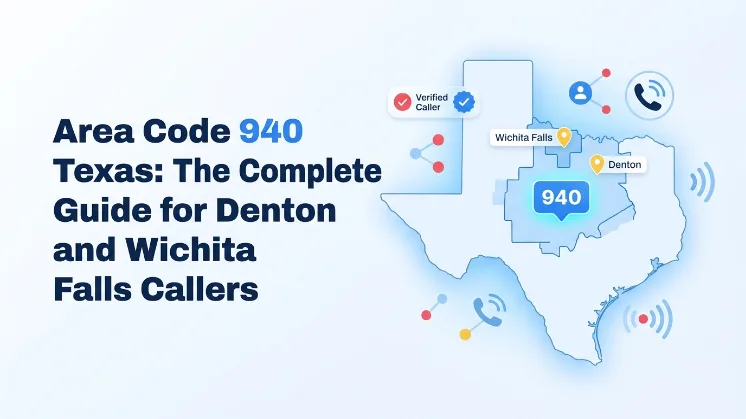
Area code 940 covers 22 counties stretching from the northern edge of the Dallas-Fort Worth Metroplex up toward the Oklahoma border. It reaches more than 75 cities, including Denton, Frisco, Wichita Falls, Gainesville, and Mineral Wells.
- Denton County: Denton, part of Frisco, Sanger
- Wise and Cooke Counties: Decatur, Gainesville
- Wichita County: Wichita Falls, Burkburnett
- Archer and Montague Counties: smaller rural North Texas communities
This is not a single uniform region. It is a code that holds one of the fastest-growing suburban counties in the country on one end and quiet farm and ranch country on the other.
That imbalance is why the 940 area code is worth understanding before you pick a number. New residents move into Denton County by the thousands every year, while Wichita Falls has stayed comparatively flat, and one set of prefixes now serves both realities.
Born From the Same 1997 Split That Created 817
Area code 940 exists because the 817 area code, once one of the largest codes in the state, split into three pieces in 1997 as the Dallas-Fort Worth Metroplex outgrew its original numbering plan. The northern portion, including Denton and Wichita Falls, became 940, while the southern portion became 254 and 817 itself shrank down to the Fort Worth core.
At the time, Denton was a modest college town and Frisco barely registered as a suburb at all. Wichita Falls, further north, was and still is the largest city in that end of the territory. Since then, the Denton County side of 940 has exploded in population growth, while the Wichita Falls side has grown far more slowly, leaving one area code stretched across two very different growth stories.
That gap has only widened in recent years. Denton County alone now accounts for a large share of the entire area code's population, driven almost entirely by suburban expansion near Dallas-Fort Worth, while the rural counties near the Oklahoma border have added only a fraction of that growth over the same period.
One Number, Two Very Different Economies
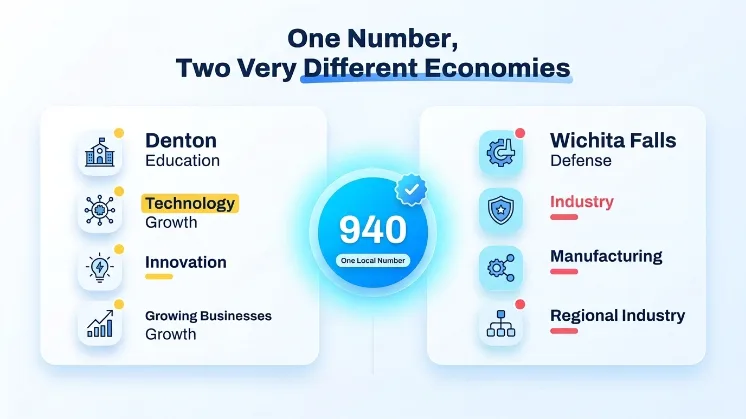
Because area code 940 spans such different regions, the number itself does not automatically mean the same thing to every customer inside it. A prefix associated with fast-growing Denton County reads differently to a rancher near Wichita Falls than it does to a tech worker in Frisco.
- Match the prefix to your actual customer base — some prefixes cluster historically around specific towns even within one area code.
- Check the provider's number map — reputable providers can show which city a given prefix is historically associated with.
- Consider separate numbers for separate markets — a business serving both Frisco and Wichita Falls may need two separate lines to feel local in both places.
- Don't assume suburban growth patterns apply everywhere — Denton County's boom doesn't extend to the rural counties sharing its area code.
This is the detail most area code guides skip entirely: getting a 940 number is easy, but getting the right one for your specific customers takes real thought in a region this uneven. Rozper's number search tools let businesses filter available prefixes by the town they're historically tied to, rather than treating the whole area code as one interchangeable pool.
Local 940 Number: Uniform Impact?
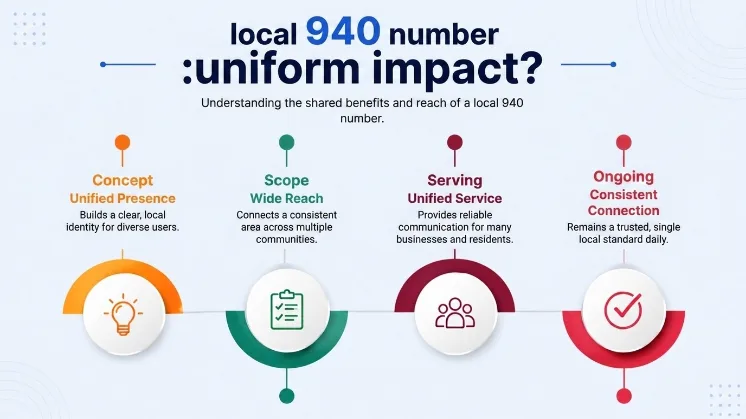
Not quite, and that's exactly the point. A local number still helps across the board, but the effect looks different depending on which end of area code 940 your customers actually live in.
- Fast-growing suburbs like Frisco see heavy call volume and a lot of new-area-code confusion, since many residents moved in from elsewhere.
- Rural Wichita Falls-area customers tend to recognize a small, familiar set of prefixes and answer local numbers more readily than city dwellers do.
- Home services, healthcare, and real estate businesses calling Denton County customers benefit from matching the suburb's specific growth patterns.
- Businesses serving Wichita Falls and the surrounding counties see the strongest boost from a consistently used, recognizable local line.
Treating the whole area code as one interchangeable market is the fastest way to underperform in either half of the region. What works for a Frisco marketing campaign will not automatically translate to Wichita Falls, and assuming otherwise costs answered calls in both places.
A Scenario: A Home Builder Expands From Denton County Into Wichita Falls
Picture a homebuilding company based near Frisco that decides to expand its service area north into Wichita Falls to take advantage of lower land costs. Using its existing Denton County number, sales calls into Wichita Falls saw noticeably lower pickup rates, since the prefix had always been associated with the fast-growing suburb rather than the smaller northern city. After adding a second, Wichita Falls-associated area code 940 line, answer rates in that market climbed within a few weeks.
This kind of mismatch shows up constantly in large, uneven codes like 940, but it rarely gets addressed in generic area code guides. Rozper's call routing tools let a business run both numbers through one system, sending each call to the right sales rep without customers ever noticing the difference behind the scenes, even as the company adds more towns to its service map over time.
The same lesson applies well beyond home building. Any business expanding from the Denton County suburbs into rural North Texas — contractors, clinics, real estate teams — hits the same mismatch the moment it assumes one number covers both markets equally well.
Setting Up a 940 Number Without Losing Caller Trust
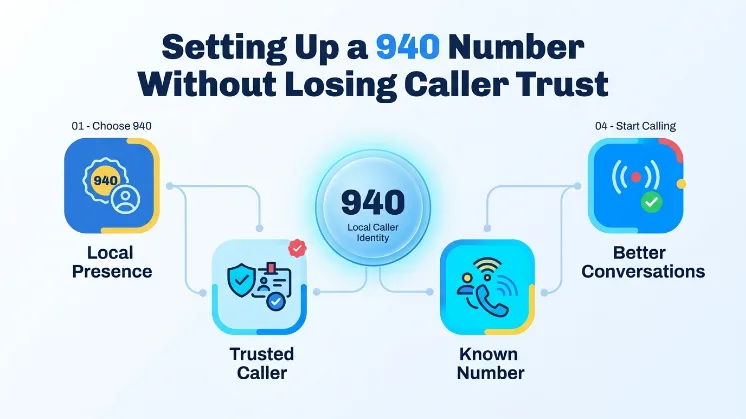
Claiming the number is the easy part, especially across a region with this much variation. The setup process and the habits behind it decide whether that local presence actually earns trust in its market.
Same-Day Setup Steps
- Pick a cloud phone provider with coverage across both Denton County and the Wichita Falls area.
- Search prefixes tied to your specific target town, not just "940" broadly.
- Connect the number to your existing phone, app, or desk system.
- Set a matching caller ID and greeting before taking live calls.
Protecting Your Caller Reputation
A number is only as trustworthy as the calling pattern behind it. High call volume without spam registry registration can get a legitimate 940 number flagged, especially in smaller towns where unusual volume stands out fast. Check the FCC's spoofing guidance if a call ever looks suspicious, and register outbound numbers with STIR/SHAKEN-compliant providers so your own calls don't get mistakenly flagged either.
Rozper bundles this reputation monitoring directly into its call management dashboard, so a business running multiple numbers across Denton County and Wichita Falls can catch a spam flag before it costs answered calls in either market.
Conclusion
Area code 940 covers one of the more uneven territories in the state, stretching from the booming Denton County suburbs down the road from Dallas-Fort Worth all the way to the quieter farm country around Wichita Falls. The 1997 split from area code 817 explains why this single code holds such different regions, but the practical challenge for businesses is matching a specific number to a specific sub-market rather than assuming the whole area code reads the same way. A well-chosen 940 number can meaningfully improve answer rates in either half of the region, provided it's tied to the right town and backed by honest, consistent calling habits. Treating this area code as one uniform market is the single biggest mistake businesses make when they set one up.
If your business serves customers across this stretch of Texas, start by mapping your customer base to specific towns before picking a prefix, not after. Rozper's call routing and monitoring tools make it easy to manage several area code 940 numbers under one system while keeping every line trustworthy as call volume grows. Confirm prefix availability for your target markets first, then build the habits that keep each number credible over time. From there, the only thing left to do is start dialing into the market you actually chose.
FAQs
What cities does area code 940 cover?
Area code 940 covers more than 75 cities across 22 counties, including Denton, part of Frisco, Wichita Falls, and Gainesville. It spans everything from the edge of the Dallas-Fort Worth Metroplex to rural North Texas.
Where is area code 940 located?
It covers a wide stretch of North Texas running from the northern Dallas-Fort Worth suburbs up toward the Oklahoma border. The territory surrounds area code 817 without overlapping it.
When was area code 940 created?
It was created on July 7, 1997, as part of a three-way split of area code 817. The northern portion, including Denton and Wichita Falls, became 940 at that time.
How do I get a 940 phone number for my business?
Sign up with a cloud phone provider that offers coverage in your specific target town, then search and reserve an available 940 prefix. Most numbers connect to your existing phone or app the same day.
Is a call from a 940 area code safe to answer?
Answering is safe, but any area code, including 940, can be spoofed by scammers. Call back a published business number if a request involves money or sensitive information.
What time zone does area code 940 use?
The entire 940 region runs on Central Time, following the same daylight saving shifts as the rest of North Texas. This matters when scheduling calls with contacts elsewhere in the country.
Does a 940 number cost more in Frisco than in Wichita Falls?
No, pricing depends on your provider's plan rather than which town the prefix is associated with. Most cloud phone platforms charge the same rate for every 940 number regardless of location.
Will one 940 number work for both Denton County and Wichita Falls customers?
Not always — a prefix associated with the fast-growing suburbs may not read as local to customers in the rural north, even within the same area code. Businesses serving both regions often need more than one number to feel local everywhere they operate.