Introduction
A call with this prefix has a clear northern New Jersey feel. It has sat over an older, more familiar area code since the start of the 2000s. This number now shares its ground with a neighboring code rather than replacing it. That setup still trips up some callers who think every ten-digit number must mean a new region. Maybe you just moved to the area. Maybe you started a business nearby. Or maybe you just want to know more about the number on your caller ID. This guide covers where the prefix reaches, how it began, and why it still matters for business today.
New Jersey Towns the 862 Area Code Reaches
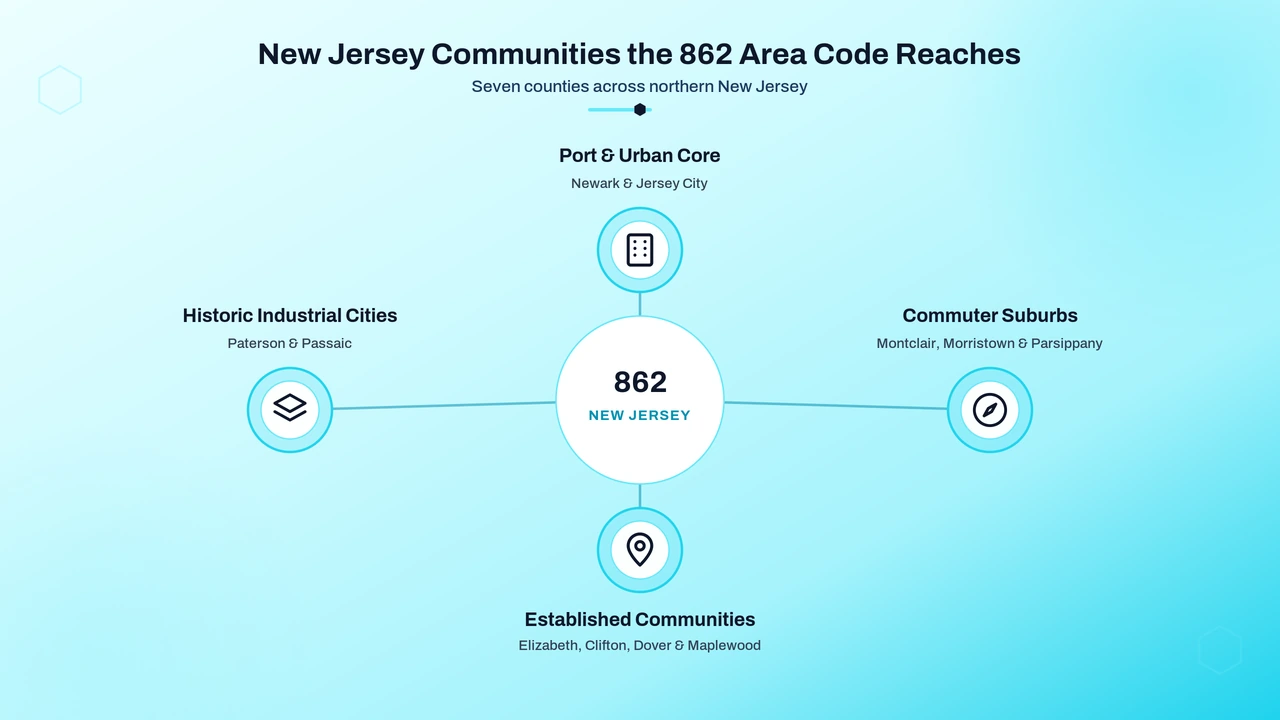
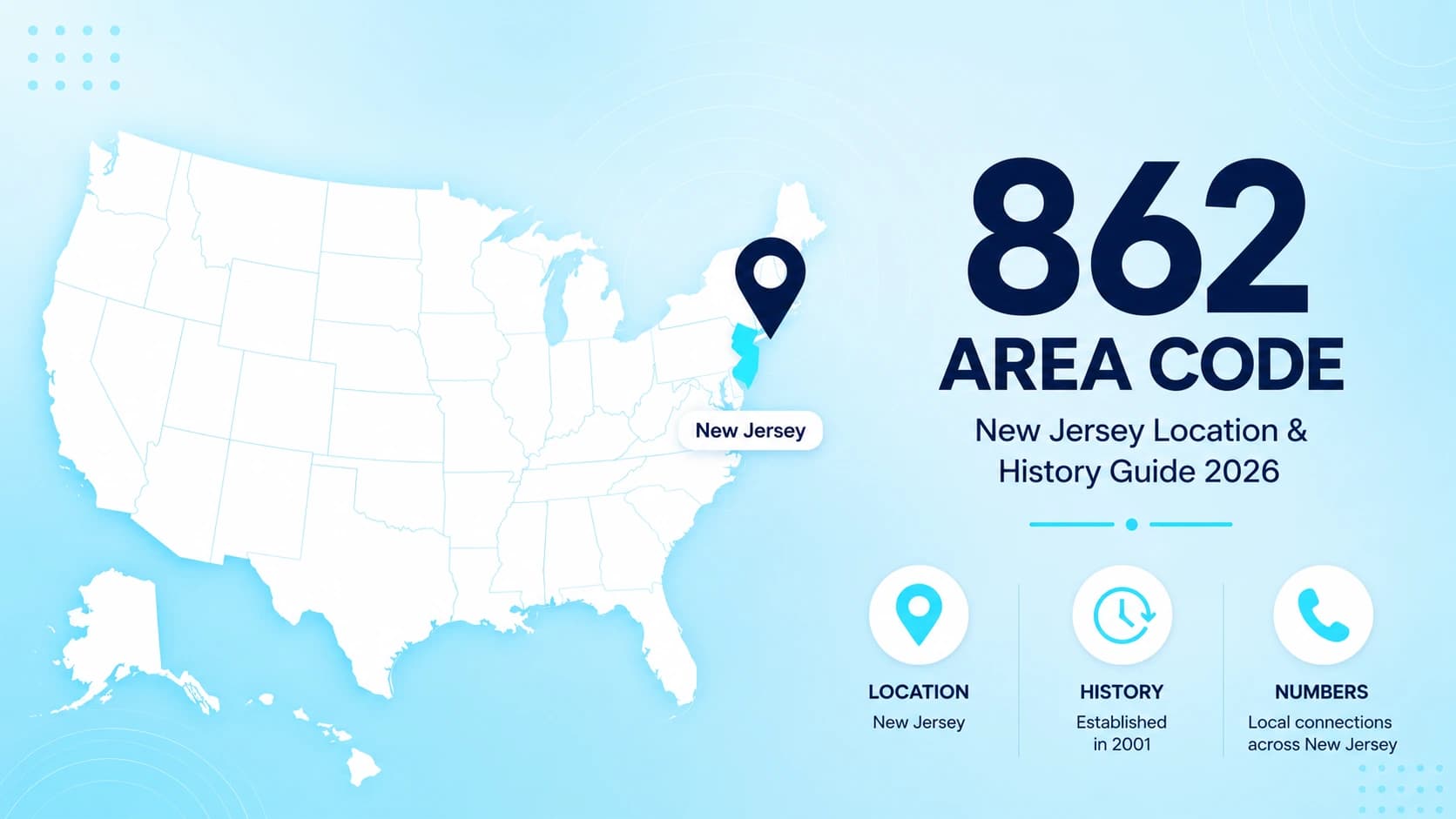
The 862 area code covers seven counties across the northernmost part of New Jersey: Bergen, Essex, Hudson, Morris, Passaic, Sussex, and Union. The area runs from Newark and Jersey City through Paterson, Elizabeth, Clifton, Passaic, Montclair, Morristown, Parsippany, Dover, and Maplewood. Together, these spots form one of the most packed corners of the country. A number with this prefix shows a real tie to the ports, rail lines, and commuter towns that make up the New York metro's New Jersey side.
This part of New Jersey mixes a huge shipping trade at Port Newark-Elizabeth with growing finance, drug, and health care work. The region is packed with people. That keeps local phone numbers in high demand. Steady growth and new business keep this prefix in heavy use.
Newark Liberty International Airport and the region's rail and highway network bring in a steady stream of commuters and workers. They deal with local firms every day. This keeps demand for a known prefix high, even next to other packed East Coast metros.
Some of these towns, like Montclair and Morristown, have grown into desired commuter suburbs close to Manhattan. Others, like Paterson and Passaic, still hold on to their old factory-town feel even as the region around them changes.
Firms that want to know more about numbering options nearby may also want to check how the related 973 area code covers this same ground, since both prefixes now serve the same towns under the current overlay plan.
The Split That Created 973, Then the Overlay That Added 862
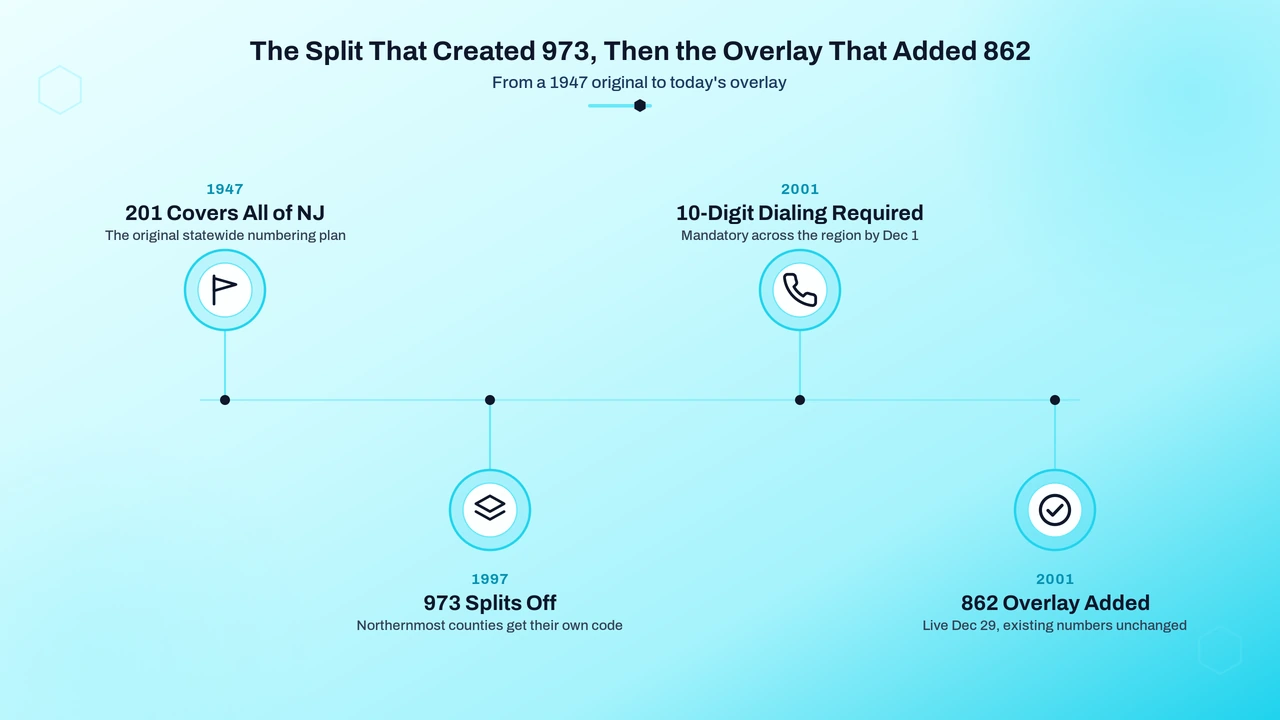
Area code 201 was the first code for the whole state of New Jersey. That was back when the North American Numbering Plan began in 1947. Years of growth split that one code into smaller parts. On June 1, 1997, the state split off area code 973. It served the top counties on its own.
By the early 2000s, more cell phones, pagers, and fax lines began to use up the numbers left in 973. Rather than split the area again, planners added area code 862 as an overlay. The new code went live on December 29, 2001. Ten-digit dialing became a must across the region on December 1, 2001. That was just ahead of the new code's launch.
An overlay let firms in Newark, Paterson, and nearby towns keep their old numbers. This saved them the cost of new print materials. It also saved them the work of telling customers about a number change in a busy metro market.
Local Numbers Without a New Jersey Office
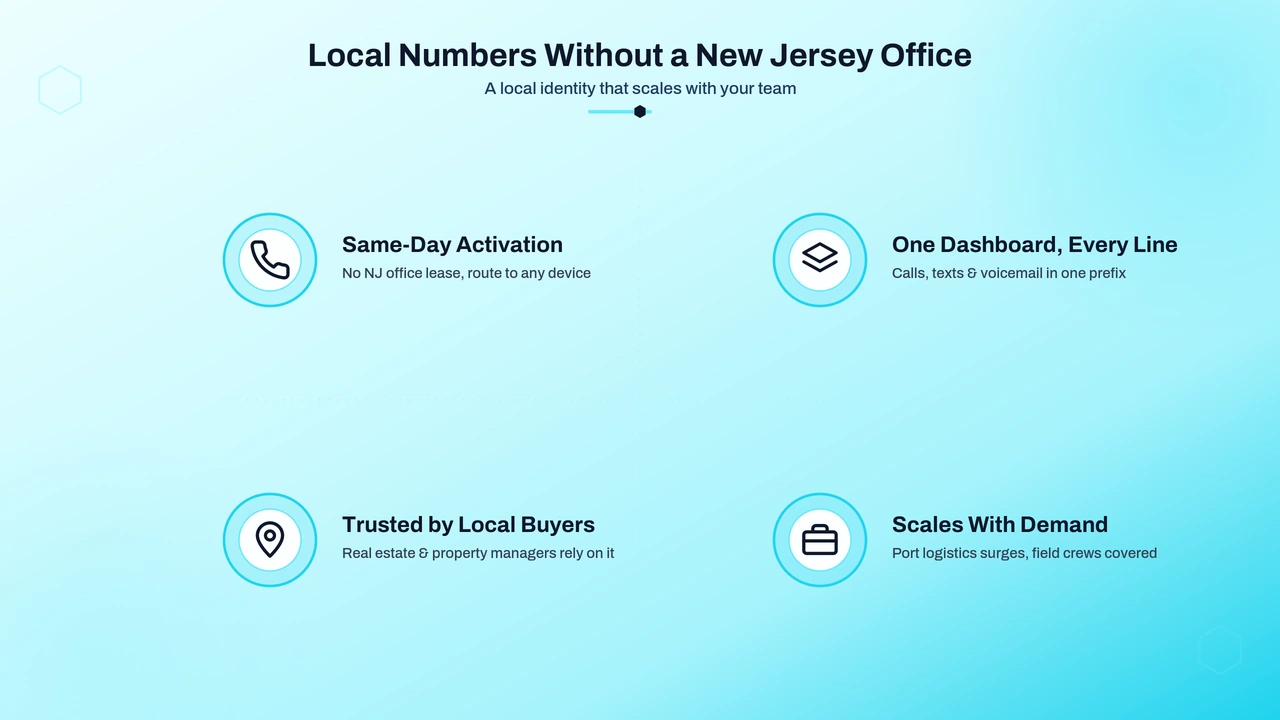
Setting up an 862 number does not need an office lease in Newark. It does not need a long-term contract either. Rozper offers local and virtual numbers in 150+ countries. It runs on 99.999% uptime. A business can turn on this number, send it to any device, and start taking calls the same day. The platform runs on real human support, not a self-serve afterthought. Support teams can help set up call routing, voicemail, and multi-line setups built around a northern New Jersey presence.
For firms growing across Bergen, Essex, and nearby counties, one number tied to a full phone platform keeps every call, text, and voicemail in one dashboard. Nothing gets lost across separate devices. As a team grows from one rep to a full office, more lines can join the same account with no new contracts to sign.
Real estate agents and property managers across the region also lean on this trust. Buyers and renters moving within the New York metro often skip calls from numbers that do not match their target area. A local prefix gives a small but real edge.
This flexibility matters most for firms serving the Port Newark-Elizabeth shipping corridor, where busy seasons can call for several new lines within days, not the weeks a normal carrier would take. Contractors and field crews working across the metro see the same benefit, since one number can follow a crew from job to job with no change customers would notice.
Ten-Digit Dialing and Eastern Time in the 862 Region
Every part of the 862 area code runs on Eastern Time. It uses Eastern Standard Time in winter. It uses Eastern Daylight Time the rest of the year. This puts northern New Jersey in step with New York City, Philadelphia, and most of the East Coast for scheduling.
Area code 862 shares its ground fully with 973. Because of this, ten-digit dialing has applied to every local call since December 2001. This holds true even between two neighbors in the same building. For more on how this numbering plan grew, the Wikipedia entry on area codes 973 and 862 lays out a clear timeline of the split and the later overlay. Getting used to ten-digit dialing takes a bit of time. Still, it stays key for anyone calling into or out of this part of New Jersey today.
Why This Prefix Still Wins Trust with New Jersey Callers
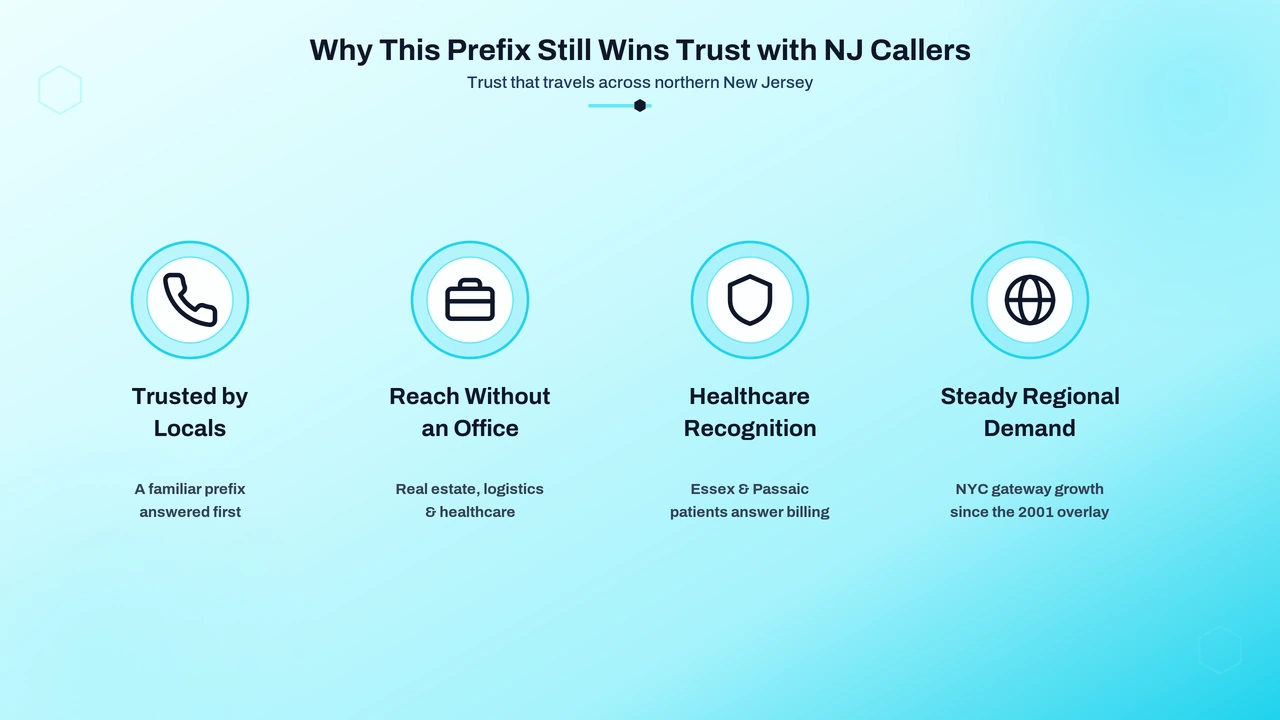
An 862 number tells callers right away that a firm has real roots in northern New Jersey. That carries real weight in a metro built on shipping, finance, and a fast-growing drug trade. Local folks tend to pick up calls from a known prefix more than an out-of-area or toll-free number. That one habit can shift booking rates and response rates in a firm's favor.
An 862 number also helps firms serve the northern New Jersey market with no office there at all. Real estate teams, logistics staff, health care firms, and remote sales teams often ask for 862 numbers. This makes their outreach read as local, even when their base sits in another state. In a region where trust and word of mouth both drive new business, the right prefix can decide if a call gets picked up at all.
Health systems and hospitals across Essex and Passaic Counties lean hard on this trust. Patients booking visits or asking about bills are far more likely to pick up a call from a number that matches where they already live.
Northern New Jersey has held a steady, packed population for decades. The region acts as a gateway between New York City and the rest of the country. This keeps growing the pool of people who expect a number that matches their neighbors. Planners have built that steady demand into every choice made since the 2001 overlay.
Conclusion
From its start as an overlay fix in 2001 to today's mandatory ten-digit dialing system, the 862 area code has stayed tied to Newark, Paterson, and the rest of northern New Jersey through every stage of growth. It spans seven counties. It runs on Eastern Time. It stays one of the most known prefixes for shipping, finance, and health care firms across the metro. With the overlay built to handle decades of future growth, area code 862 will speak for this part of New Jersey for a long time to come.
FAQs
What counties does the 862 area code cover?
It covers Bergen, Essex, Hudson, Morris, Passaic, Sussex, and Union Counties in northern New Jersey.
Is the 862 area code the same as 973?
No. They are separate codes overlaying the exact same territory since December 2001, with mandatory ten-digit dialing in effect since the overlay began.
When was the 862 area code created?
It was introduced on December 29, 2001, as an overlay to relieve capacity issues in the older 973 numbering plan area.
Can a business get an 862 area code number without an office in New Jersey?
Yes. Virtual number providers can issue an 862 area code line that forwards to any phone or device, letting outside teams maintain a local presence.
What time zone does this prefix follow?
All communities inside the 862 area code follow Eastern Time, switching between Eastern Standard Time and Eastern Daylight Time throughout the year.
Why do local businesses prefer this prefix?
A recognizable 862 area code number builds instant trust in northern New Jersey communities, often leading to higher answer rates than unfamiliar or toll-free numbers.