Introduction
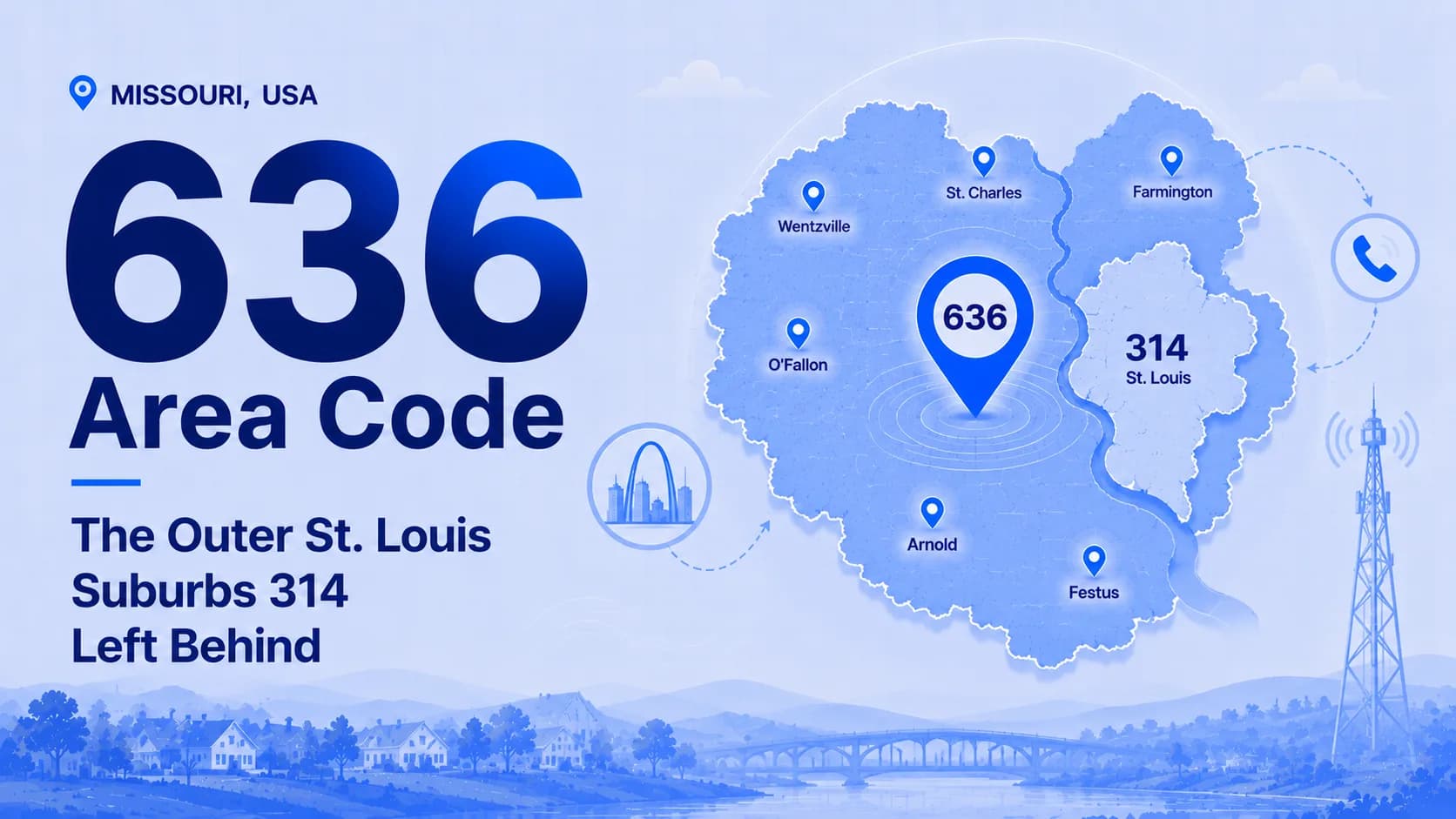
The 636 area code covers the outer suburbs ringing St. Louis, and this guide maps out exactly which communities it reaches today, right down to the county lines that define its edges. That distinction matters because plenty of callers still assume anything outside the 314 area code isn't really part of St. Louis, and that assumption is simply wrong and worth correcting properly. You'll learn where the 636 area code came from, which suburbs genuinely use it, and how to set up a local number here without an office anywhere nearby. By the end, you'll understand this prefix well enough to explain the split to anyone still confused by it.
Key Takeaways:
- The 636 area code covers 52 cities and 9 counties across the outer St. Louis suburbs.
- It was created on May 22, 1999, when the original 314 area code split, pushing the outer counties onto their own line.
- A 636 number is just as genuinely St. Louis as a 314 number — the split was about capacity, not legitimacy.
- Businesses can activate a local 636 number through Rozper without opening an office anywhere in the region.
Chesterfield to Wentzville: Mapping the 52 Cities Beyond I-270
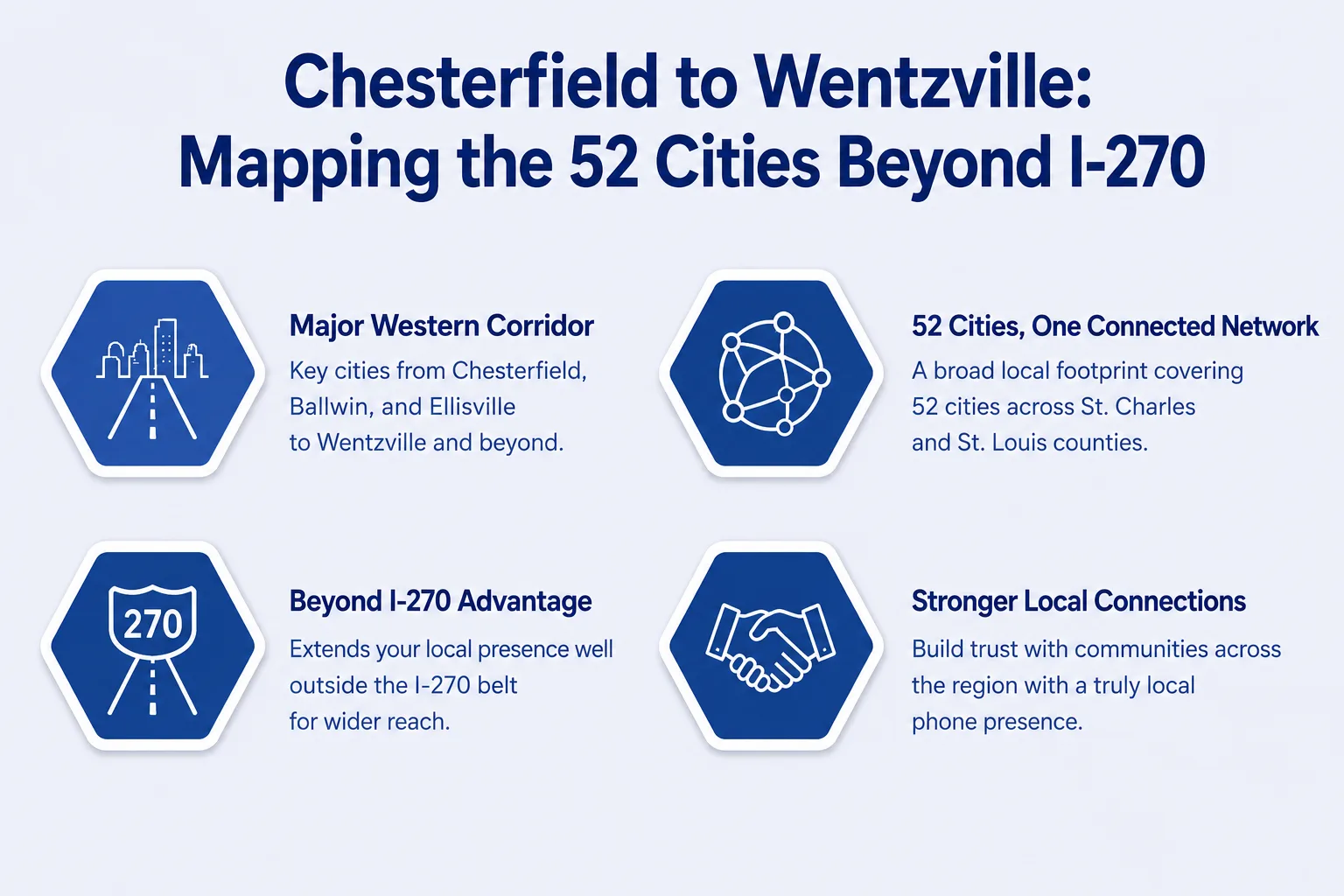
The 636 area code spans 52 cities and 9 counties, covering St. Charles, Franklin, Jefferson, and Warren Counties along with the parts of St. Louis County that sit outside the I-270 loop. It stretches from the edge of the city out through fast-growing exurbs and into small river towns near the Missouri and Mississippi Rivers, covering some of the fastest-growing zip codes in the entire state.
- Chesterfield — St. Louis County, a major corporate and retail hub just west of the city
- St. Charles and St. Peters — St. Charles County, anchoring the region's single largest suburban population base
- Wentzville and O'Fallon — some of the fastest-growing communities in the entire state today
- Ballwin and Lake St. Louis — established residential suburbs with steady, dependable local economies
- Washington — Franklin County, a river town with a strong, longstanding manufacturing base
- Union and Pacific — smaller Franklin County communities rounding out the far western edge
- Warrenton and Troy — Warren and Lincoln County communities anchoring the far northwestern edge
Together, these communities make 636 one of the largest suburban footprints in Missouri, even though it only came into existence in 1999, and each one expects a number that actually sounds like it belongs to their part of the metro.
The 1999 Split That Pushed St. Louis's Suburbs Onto Their Own Line
Before 1999, the entire eastern third of Missouri, including the city of St. Louis and every surrounding county, ran on the original 314 area code. Explosive suburban growth through the 1990s eventually forced regulators to act before the region ran out of usable combinations entirely.
Why Regulators Chose a Split
On May 22, 1999, NANPA split the metro rather than adding an overlay, giving the city and its close-in suburbs the 314 area code while every outer county became the new 636 area code. A geographic split made more sense here than layering a second code on top, since the outer counties already functioned as a distinct dialing pattern for most residents.
What the Split Actually Changed
Anyone with an existing suburban number kept their same seven digits — only the three-digit prefix in front changed, and the new boundary followed county lines rather than any single highway. A short permissive dialing window let both codes work together for a few months so nobody's calls dropped overnight.
No, 636 Isn't "Not Really St. Louis"
Some callers treat a 636 area code number as somehow less authentic than a 314 number, and that assumption doesn't hold up under any real scrutiny. The split happened because the metro grew too large for one prefix, not because the outer counties were ever considered a separate market or lesser part of the region.
- Chesterfield, St. Charles, and Wentzville are every bit as much genuinely "St. Louis" as the neighborhoods still carrying 314
- The boundary simply reflects 1999 numbering capacity, not any real cultural or economic divide
- Businesses in the 636 footprint serve exactly the same regional economy as those inside the city limits
- Treating 636 as a lesser prefix risks alienating some of the entire metro's fastest-growing suburbs
- The same misconception rarely comes up around the 417 area code, since that prefix never had to split off from a bigger neighbor
- A prefix's history says absolutely nothing about how genuine or valuable the businesses using it actually are
Is a 636 Call Actually from the St. Louis Suburbs?
In almost every case, yes. A 636 area code number is registered somewhere in the outer St. Louis metro, and the large majority of calls from it come from real local businesses, schools, and residents rather than scammers. Like any prefix, it can still be spoofed by robocallers hoping a familiar-looking number gets answered faster than an obviously out-of-state one, since a recognizable area code raises the odds someone actually picks up. If an unfamiliar 636 call still feels off, letting it go to voicemail and calling back through a verified listing costs nothing and avoids the risk entirely.
Chesterfield's Corporate Corridor Versus Washington's Small-Town Pace
The 636 area code ties together suburbs with very different economies, and treating them as one audience undersells the differences.
The Corporate and Retail Core
Chesterfield and O'Fallon carry major office parks, corporate headquarters, and retail centers that draw commuters from across the entire metro every business day. Businesses here compete on polish and responsiveness as much as price, since customers already have plenty of options nearby.
The River Towns and Small Cities
Washington, Union, and Pacific run on a slower, more established rhythm, where manufacturing jobs and long-standing local relationships matter more than new advertising campaigns. A business that shows up consistently over years tends to win more trust here than one chasing quick wins.
Setting Up an Outer St. Louis Presence Without an Office in Wentzville
Reaching customers across the 636 area code doesn't require renting space in Chesterfield or St. Charles. A repeatable setup gets a business there just as fast, without ever touching a physical line in the region, and it scales the same way whether the goal is one suburb or the whole footprint.
- Pick the suburbs that matter most first — a business chasing both Chesterfield and St. Charles customers may want to test more than one local number.
- Route every single incoming call to your existing team, regardless of where that team physically sits.
- Set voicemail greetings and business hours to match Central Time expectations for the region.
- Track call volume by number to see which suburbs are actually converting into real customers.
- Review the results monthly and shift outreach toward whichever city is answering and converting best.
Rozper handles each of these steps without new hardware, letting calls to a 636 number land wherever your team already works, whether that's a home office, a call center, or a shared support line.
The Local-Number Mistake That Costs Suburban St. Louis Businesses Calls
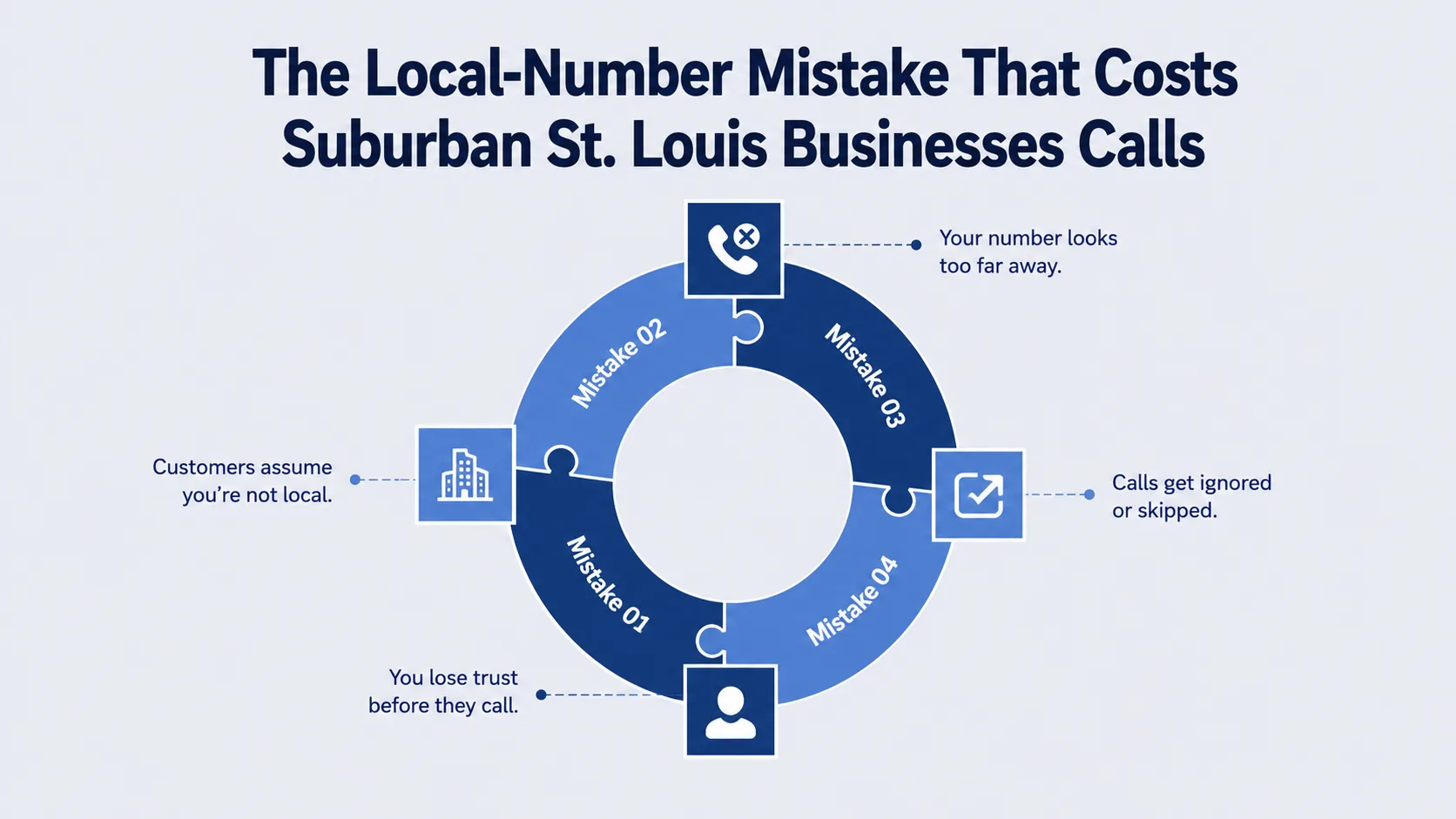
Companies expanding into the outer suburbs often just forward existing calls through an out-of-state or downtown-only line, assuming customers in Wentzville or Washington won't notice the mismatch. That assumption quietly costs more calls than most businesses ever realize.
- Unfamiliar area codes get sent to voicemail far more often than recognizable local ones do
- A missed connection reads to a customer as a business that never called back at all
- A 636 area code number signals real, genuine familiarity with the suburbs, not a distant call center guessing at the market
- Directory listings and local ads stay consistent when the phone number actually matches the community
- Skipping a local prefix quietly suppresses answer rates before a single real conversation even starts
- The same pattern already played out for the 314 area code after its own overlay arrived in 2022
- The official record of the 1999 split confirms the boundary was always about capacity, not legitimacy
Conclusion
The 636 area code has anchored the outer St. Louis suburbs since 1999, tying together Chesterfield, St. Charles, Wentzville, and dozens of smaller communities under one shared line. That split reflected growing capacity needs, not any real divide between the city and the suburbs surrounding it, and a 636 number carries exactly the same local weight as one starting with 314 in Missouri. None of that history changes what a customer actually notices — they just want a number that feels like it belongs to their part of the metro. Rozper activates a genuine local 636 number in minutes, fully routed to your existing team before the first call ever comes in — take the next step and get an outer St. Louis presence running today.
FAQs
Where is the 636 area code located?
It covers the outer St. Louis suburbs, including Chesterfield, St. Charles, Wentzville, and Washington. It spans 52 cities across 9 counties.
When was the 636 area code created?
It went into service on May 22, 1999, when the original 314 area code split, giving the outer suburbs their own dedicated prefix.
Is a 636 number less local than a 314 number?
No. Both cover genuine parts of the St. Louis metro; the boundary reflects 1999 numbering capacity, not any real divide.
Can I get a 636 number without living in Missouri?
Yes. Rozper lets you activate a local 636 number remotely, with calls routed to your existing team no matter where they're based.
What time zone does the 636 area code use?
The entire 636 region operates on Central Time, the same zone used across the rest of Missouri.