Every phone number tells a story about where a business operates. If you have received a call from central Ohio or are looking to build a local presence there, the 380 area code is likely already on your radar. Whether you are a business owner targeting Columbus customers or simply trying to identify where a call originated, understanding this code is essential. This guide covers everything: the cities it serves, how it came to exist, the time zone it follows, and exactly how your business can secure a local number without needing a physical office.
What Is the 380 Area Code?
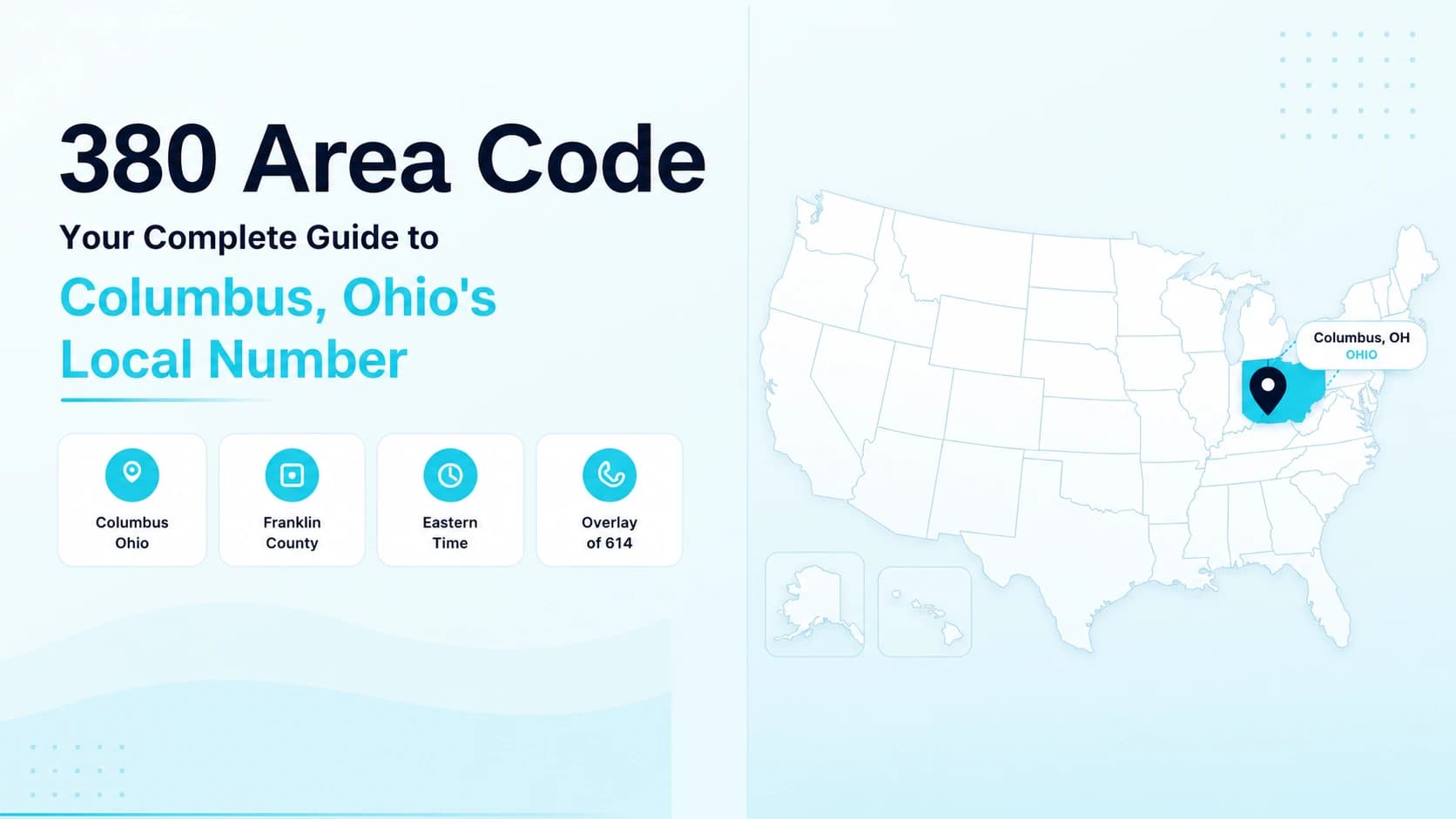
The 380 area code is an overlay for the original 614 area code, both of which serve central Ohio. When 614 began running low on available number combinations, telecommunications regulators assigned 380 as a relief code — meaning both codes now cover the same geographic region simultaneously.
Callers see no functional difference between a 614 and a 380 number; both connect to the same cities and neighborhoods. The primary effect for residents and businesses was a shift to mandatory 10-digit dialing for all local calls — even calling a neighbor next door now requires the full area code before the seven digits.
Unlike a geographic split — where two codes divide a region into separate halves — an overlay preserves continuity and allows existing 614 subscribers to keep their numbers unchanged without any service disruption.
Cities the 380 Area Code Covers
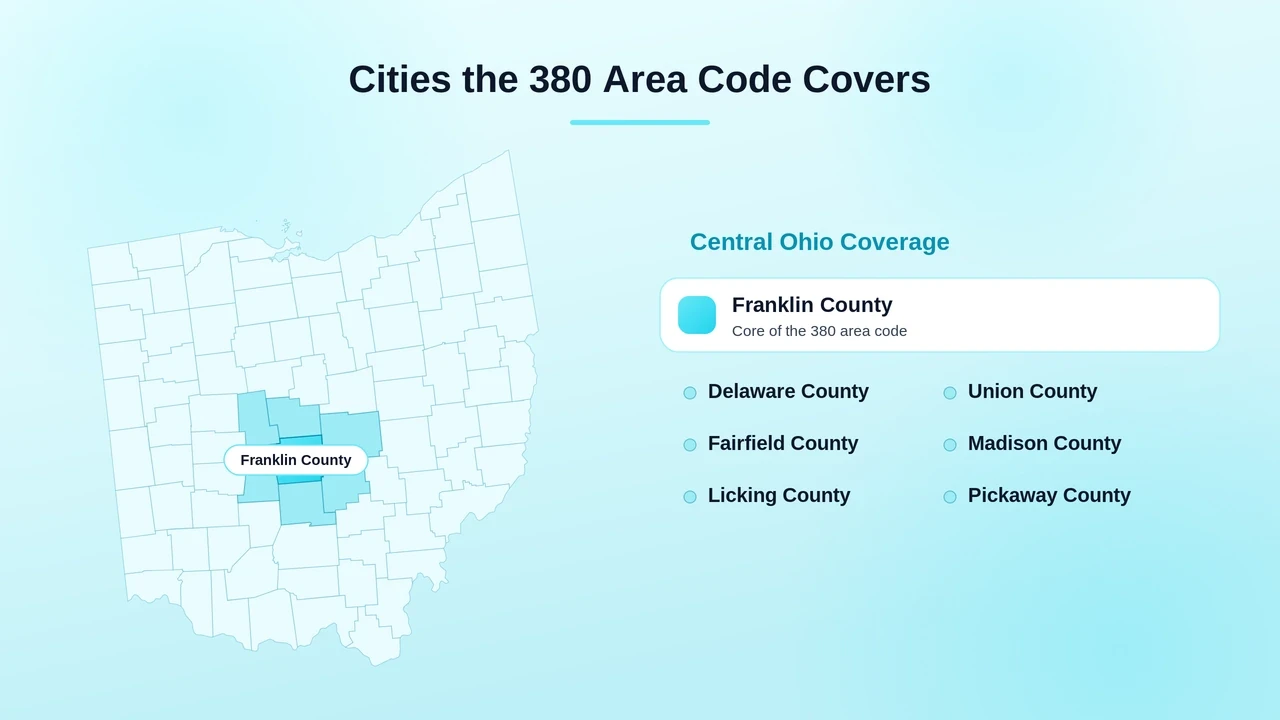
Central Ohio forms the geographic heart of the 380 area code. The numbering plan covers Franklin County and portions of several surrounding counties, including Delaware, Fairfield, Licking, Madison, Pickaway, and Union.
Major cities and communities served include:
- Columbus — Ohio's state capital and largest city
- Dublin — a growing technology and business hub northwest of Columbus
- Westerville — home to Otterbein University and numerous corporate campuses
- Gahanna — a suburban community east of Columbus
- Grove City — a commercial center south of the city
- Reynoldsburg — a retail and residential suburb to the east
- Upper Arlington — an upscale community adjacent to Ohio State University
- Hilliard — a fast-growing suburb to the northwest
- Worthington — a historic community with strong commercial roots
- Bexley — a small city known for its walkability and proximity to downtown Columbus
- Grandview Heights — an urban-feel neighborhood popular with young professionals
The Columbus metro area is home to over 2 million residents, making it one of the most economically active markets in the Midwest. Major employers based in the region include JPMorgan Chase, Nationwide Insurance, Amazon, Cardinal Health, and Honda — businesses that drive consistent demand for local communication lines and reliable voice services.
How the 380 Area Code Came to Be
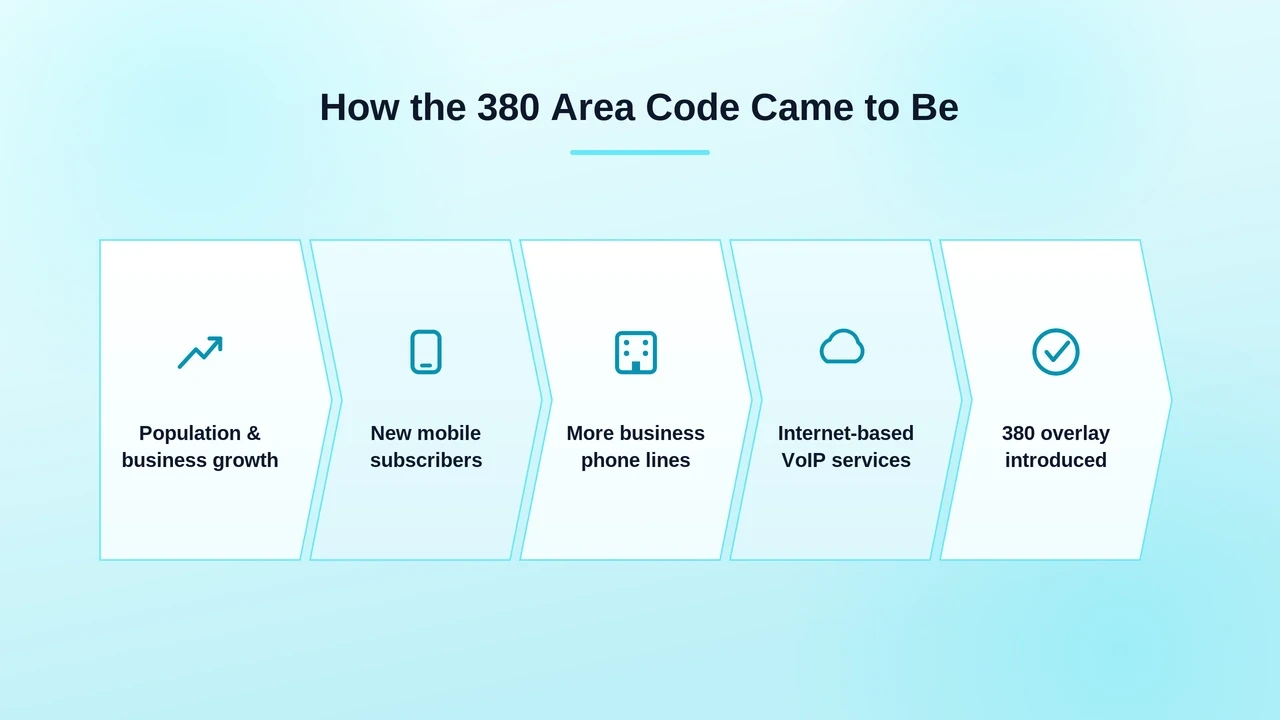
Central Ohio's rapid population and business growth in the early 2000s placed mounting pressure on the 614 numbering inventory. Rising demand from new mobile subscribers, business phone lines, and internet-based VoIP services accelerated the depletion of available number combinations faster than regulators initially projected.
In 2001, the Public Utilities Commission of Ohio (PUCO) approved area code 380 as an overlay solution to address the shortage. The code was officially activated on February 27, 2016, adding a fresh pool of number combinations for the region without displacing existing customers.
Residents and businesses were not reassigned new numbers — instead, the 380 area code became available for all new activations alongside the existing 614 numbers. The 10-digit dialing requirement that accompanied the change applies uniformly across both codes.
380 Area Code Time Zone and Dialing Rules
Numbers in this region follow Eastern Standard Time (EST), or UTC-5, shifting to Eastern Daylight Time (EDT, UTC-4) during summer months. This is a practical detail for businesses coordinating calls across time zones — a 9:00 a.m. meeting in Columbus is 6:00 a.m. on the West Coast and 2:00 p.m. in London.
Since 2016, the 380 area code and its 614 counterpart both require mandatory 10-digit dialing for all calls placed within the service area. Dialing only seven digits will not connect — every local call requires the full prefix.
Knowing the time zone and dialing rules for area code 380 helps prevent scheduling errors and missed connections, whether you are coordinating from within Ohio or managing a remote team from across the country.
Why Businesses Choose a 380 Area Code Number
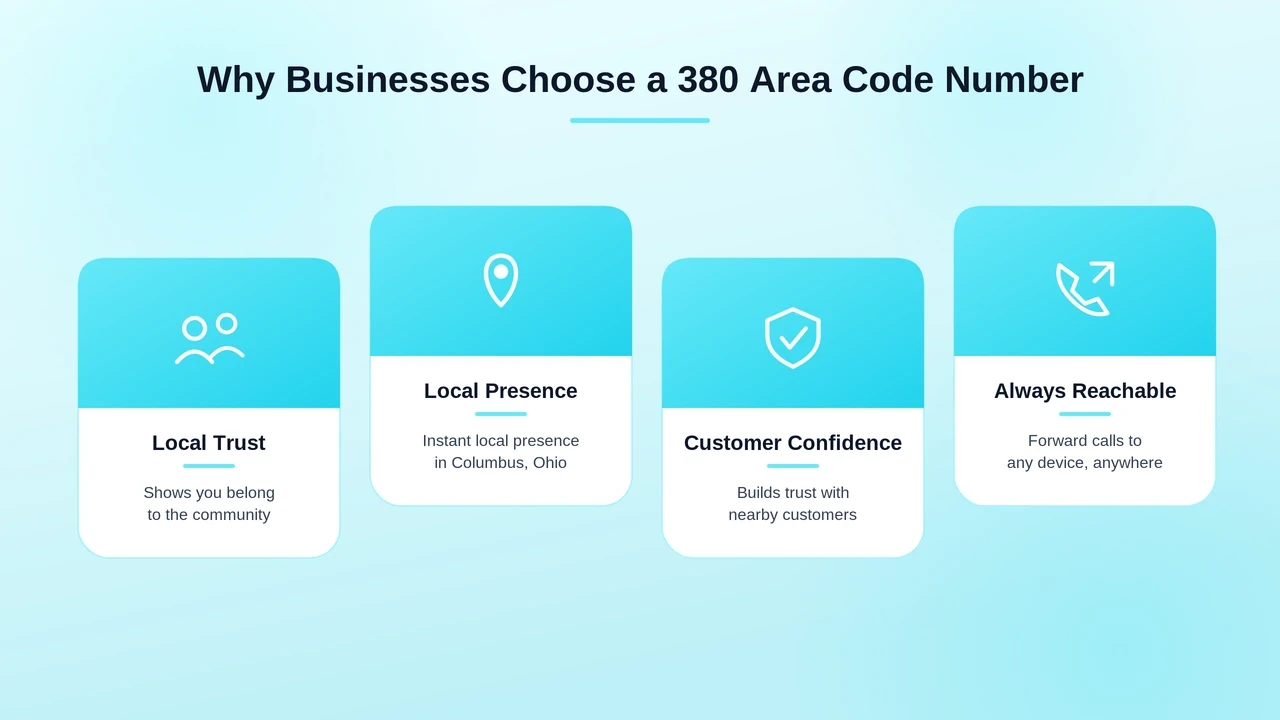
A local phone number signals to customers that your business is part of their community. Research consistently shows that callers are more likely to answer and engage with calls from recognizable local prefixes than from toll-free or out-of-state numbers — a pattern seen across industries from healthcare to financial services and retail.
Businesses targeting Columbus and its suburbs gain an immediate credibility advantage by displaying a local prefix on every outbound call and marketing asset. Beyond trust, a 380 area code number allows companies to expand into the Columbus market without opening a physical office or signing a commercial lease.
The same advantage applies across other major markets. Companies building local presence in Houston use a 281 area code for this reason, and businesses targeting Atlanta see identical results with a 678 area code — local prefixes consistently outperform toll-free numbers in markets where community connection drives purchasing decisions.
Providers like Rozper offer area code 380 numbers with 99.999% uptime and reach across 150+ countries — allowing businesses to establish a Columbus presence as part of a broader, scalable communication infrastructure without the overhead of legacy telecom contracts.
How to Get a Local Columbus Phone Number
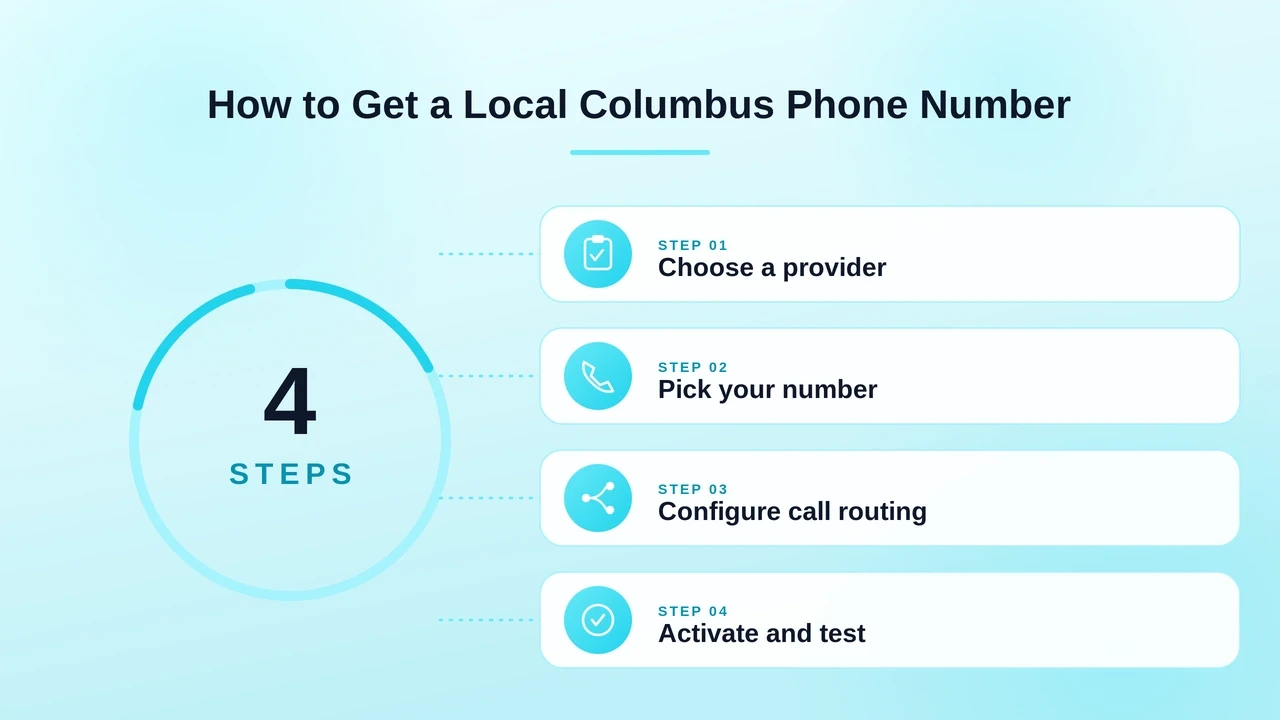
Getting a Columbus-area number is simpler than most businesses expect. Virtual phone providers allow you to register a 380 area code number without signing traditional carrier contracts or purchasing physical hardware.
Here is the typical process:
- Choose a provider — Select a VoIP or virtual phone service that offers Ohio numbers in the Columbus region.
- Pick your number — Providers offer a range of available numbers, including vanity options for businesses that want something memorable.
- Configure call routing — Direct the number to existing mobile phones, a desktop softphone app, or a full cloud PBX system.
- Activate and test — Numbers are typically live within minutes, not business days.
For a thorough look at the regulatory and technical background of this numbering plan, the Wikipedia article on area codes 614 and 380 provides a detailed overview of the PUCO decision and the 2016 activation timeline.
Number portability rules also mean that if your business already holds a Columbus number from another provider, you can often transfer it to a new service without changing the digits — preserving continuity with existing customers and avoiding disruption to printed materials or long-standing referrals.
Conclusion
Central Ohio is one of the Midwest's most economically dynamic regions, and a local number is often the fastest way for a business to signal it belongs there. Whether you are entering the Columbus market for the first time or upgrading your current communication setup, getting a local number is a practical, cost-effective first step. See how Rozper handles local number provisioning and voice infrastructure at rozper.com.
Frequently Asked Questions
Where is the 380 area code located? It serves central Ohio — Columbus and surrounding communities including Dublin, Westerville, Gahanna, Grove City, and Upper Arlington, spanning Franklin County and adjacent counties.
What cities are covered by area code 380? The coverage includes Columbus, Dublin, Westerville, Hilliard, Gahanna, Reynoldsburg, Grove City, Upper Arlington, Worthington, Bexley, and Grandview Heights. Both 380 and 614 serve the same geography.
What time zone does the 380 area code follow? Numbers here use Eastern Time — EST (UTC-5) in winter and EDT (UTC-4) in summer. A Columbus noon is 9:00 a.m. Pacific.
Is 380 the same as 614? Yes, geographically. Both 380 and 614 serve the same central Ohio region — 380 was added as an overlay when 614 numbers ran low. There is no geographic separation between them.
Can I get a 380 number without a physical Ohio address? Yes. Virtual phone providers allow any business to acquire a 380 number and route calls to any device worldwide. No Ohio address is required.
Do I need 10-digit dialing for a 380 number? Yes. Since 380 launched as an overlay in 2016, all Columbus-area calls require 10-digit dialing. Seven-digit dialing will not connect.