Introduction
The 260 area code covers Fort Wayne and the northeastern corner of Indiana, and it exists today only because regulators once split a single overloaded area code three separate ways instead of the usual two. That decision, made by random drawing in 2001, is part of why the region's numbering plan looks the way it does more than twenty years later. This guide walks through where the 260 area code reaches, how it came to be, and what still sets it apart from most of the codes around it. Rozper put this together to give Fort Wayne businesses and residents a clear, accurate reference instead of another recycled area-code listicle.
Key Takeaways:
- The 260 area code serves Fort Wayne and most of northeastern Indiana, effective January 15, 2002.
- It was created through a three-way split of area code 219 — a rarer approach than the two-way splits used almost everywhere else.
- A random drawing, not population size or geography, decided which of the three new codes covered which territory.
- More than two decades later, 260 still has no overlay, so local calls within the region still use seven-digit dialing.
How Far Northeastern Indiana's Only Area Code Actually Extends
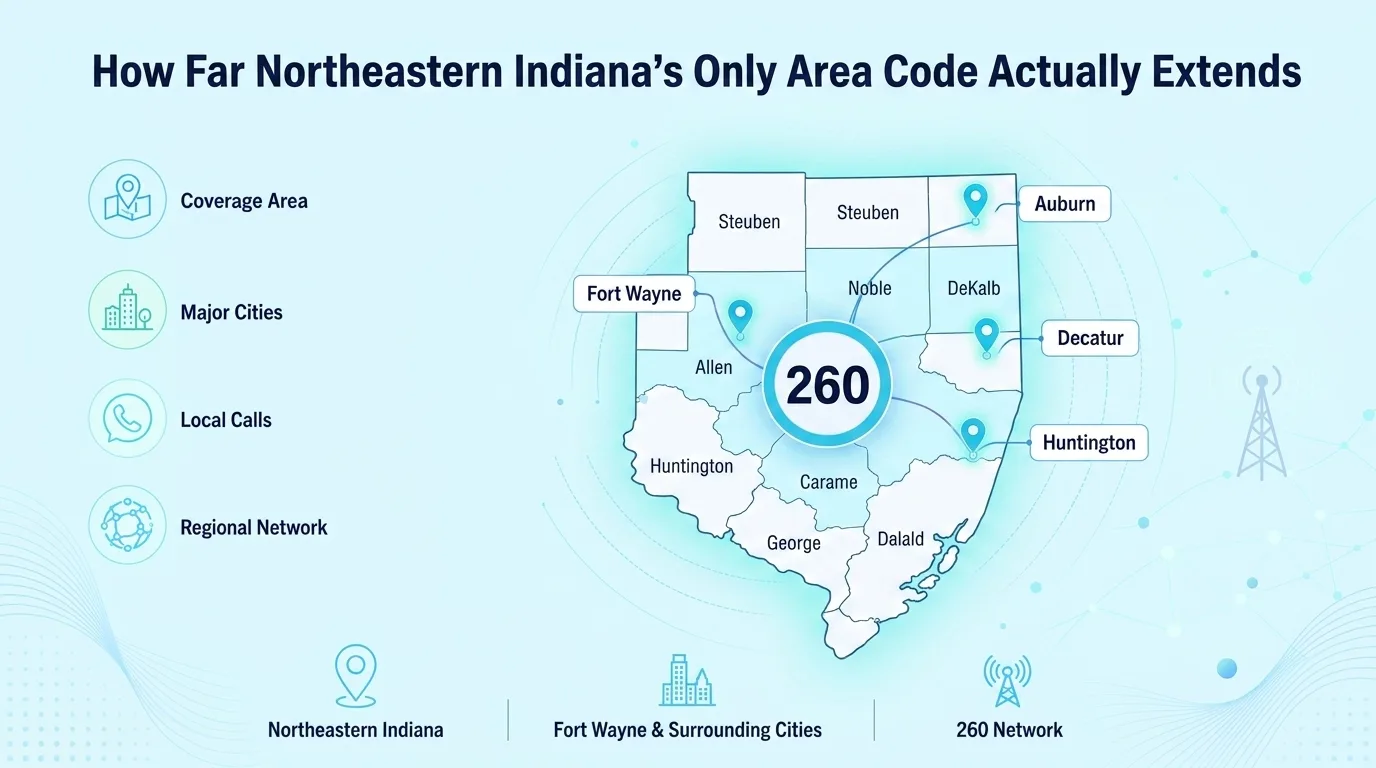
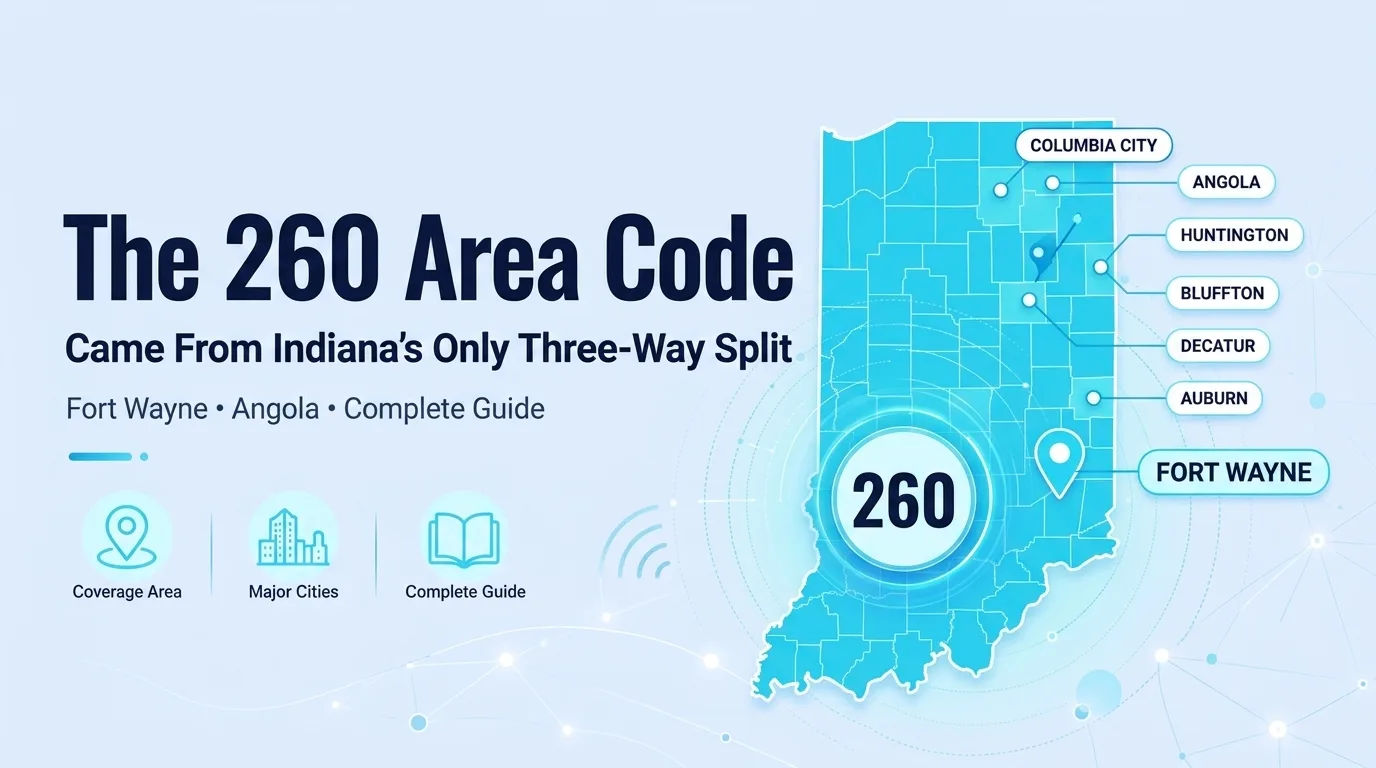
Fort Wayne is the anchor of the 260 area code. But the territory reaches well past the city limits, running from the Ohio state line in the east to the edges of the South Bend numbering area in the west. Along the way, it picks up dozens of smaller cities and towns.
Places served across this territory include:
- Fort Wayne, the largest city and the region's commercial hub
- Auburn, Angola, and Butler in the northeast corner near the Michigan and Ohio borders
- Huntington, Wabash, and Bluffton to the south of Fort Wayne
- Columbia City and Decatur, both county seats within the coverage area
- New Haven, immediately east of Fort Wayne along the Maumee River
Anyone dialing a business or a relative across this stretch of Indiana is very likely reaching this Fort Wayne-area number rather than one from a neighboring state.
Does "260 Idoho" Mean Idaho? Here's the Actual Answer
No — a search for "260 idoho" is a misspelling of "Idaho," and it has nothing to do with the state itself. The 260 area code has never covered any part of Idaho; it belongs entirely to Indiana.
One Missing Letter, One Wrong State
The confusion traces back to a simple typing habit. "Idaho" and "idoho" look close enough on a keyboard. Enough people search that exact misspelling that it now shows up as a common autocomplete suggestion attached to area code searches nationwide, including this one.
Why This Distinction Actually Matters Locally
Assuming a 260 number is calling from Idaho instead of Indiana can lead to real mistakes. You might misjudge the time zone, mislabel a customer's location in a CRM, or dismiss a legitimate Fort Wayne-area caller as unfamiliar. Getting the state right keeps that kind of confusion from creeping into business records.
The Random Drawing That Decided Which Counties Got 260
Area code 219 originally covered the entire northern third of Indiana. But by the late 1990s, the supply of available numbers there was running out. Rather than splitting the territory in half, as most exhausted area codes do, regulators opted for a three-way split instead.
- The plan divided the old 219 territory into three separate regions instead of two.
- Northwestern Indiana, including Gary and the Chicago suburbs, kept the original 219 code.
- The middle section around South Bend became area code 574.
- The eastern section around Fort Wayne became area code 260.
- Which specific new code would attach to which region was settled by a random drawing rather than by population, geography, or any formula.
- The split took effect January 15, 2002, with a permissive dialing period that let both old and new numbers work through mid-2002.
That drawing is the entire reason Fort Wayne dials 260 today instead of 219 or 574. The outcome could just as easily have gone another way.
Setting the Record on What Time 260 Calls Actually Land
The 260 area code sits entirely within the Eastern time zone, the same zone used across most of Indiana. A call placed from Fort Wayne at 2:00 p.m. lands at the same clock time for anyone else on the East Coast.
- Callers in New York or Boston should expect no time difference at all when reaching a 260 number.
- Callers in Chicago or anywhere on Central time should add one hour to know what time it is in Fort Wayne.
- Callers on Mountain time should add two hours, and Pacific-time callers should add three.
- Businesses scheduling calls into northeastern Indiana can treat 260 numbers the same way they'd treat any Eastern-time contact on the East Coast.
Six Signs a 260 Caller Might Not Be Calling From Indiana At All
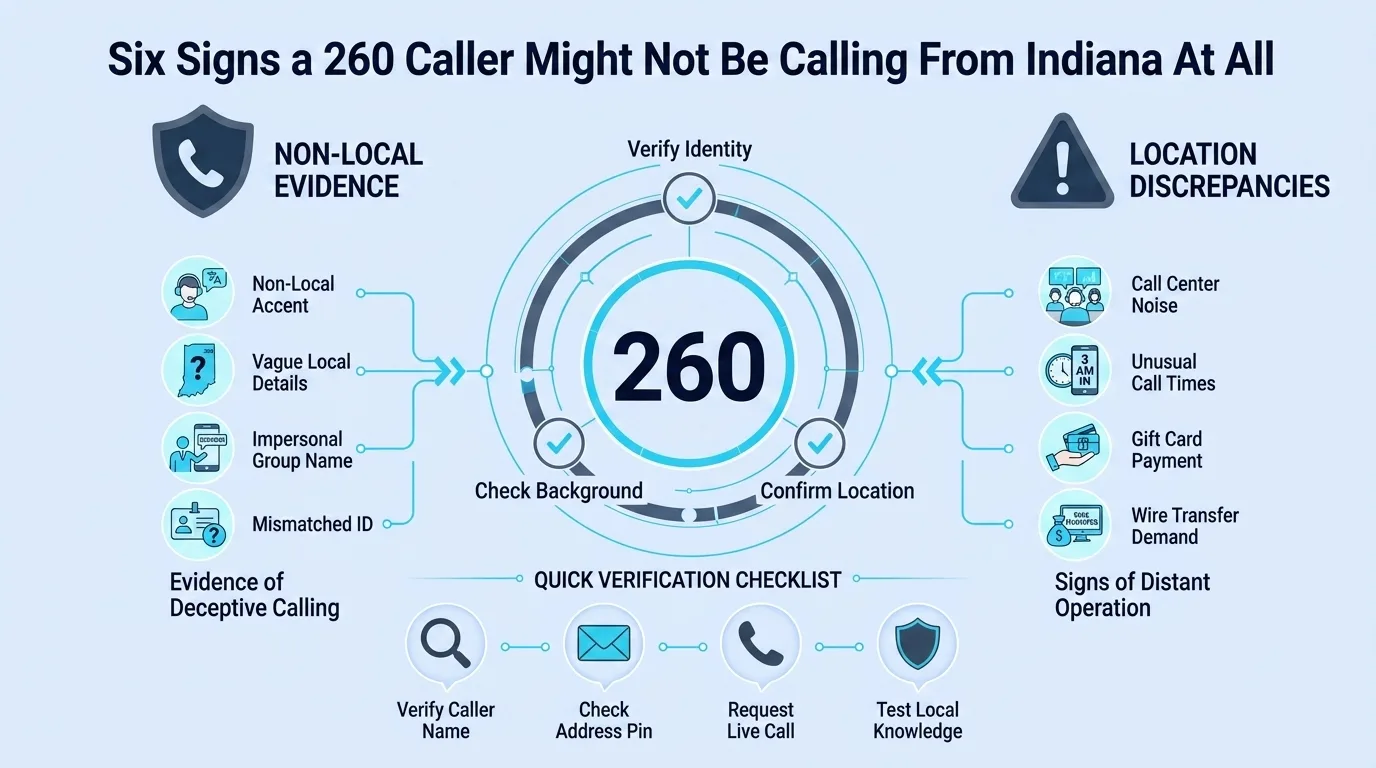
Scammers frequently borrow a real area code to make a spoofed call look local, and 260 numbers aren't exempt from this tactic. A few consistent warning signs can help separate a genuine Fort Wayne-area call from a spoofed one.
- The caller pressures you to act immediately, especially around payment or personal information.
- The number matches a business you know, but the voice, script, or request feels unfamiliar.
- Caller ID shows a 260 number, yet the person can't answer basic questions about the local area.
- The call arrives at an unusual hour for a legitimate northeastern Indiana business to be operating.
- You're asked to confirm sensitive details the caller should already have on file.
- A callback to the same number rings a disconnected line or an unrelated business.
If more than one of these signs shows up on the same call, hanging up and calling the organization back directly through a verified number is the safer move.
No Overlay, No Rush: How 260 Avoided What Most Codes Eventually Need
Plenty of area codes that split once still end up needing an overlay a decade or two later. That happens once the fresh split starts running low again. It hasn't happened in the 260 region.
Why Some Regions Need a Second Code
Growing population, more businesses, fax lines, and multiple phone numbers per household or company all eat into a region's supply of available prefixes. When that supply nears its limit, regulators add an overlay. That's a second area code layered over the same territory, and it typically forces ten-digit dialing for every local call.
Why 260 Never Did
Northeastern Indiana's population growth since 2002 has stayed moderate enough that the original three-way split still has room to spare. As a result, 260 remains one of a shrinking group of U.S. area codes where residents can still dial a local number using just seven digits, without an area code attached.
219, 574, and 260: How One Split Became Three Area Codes
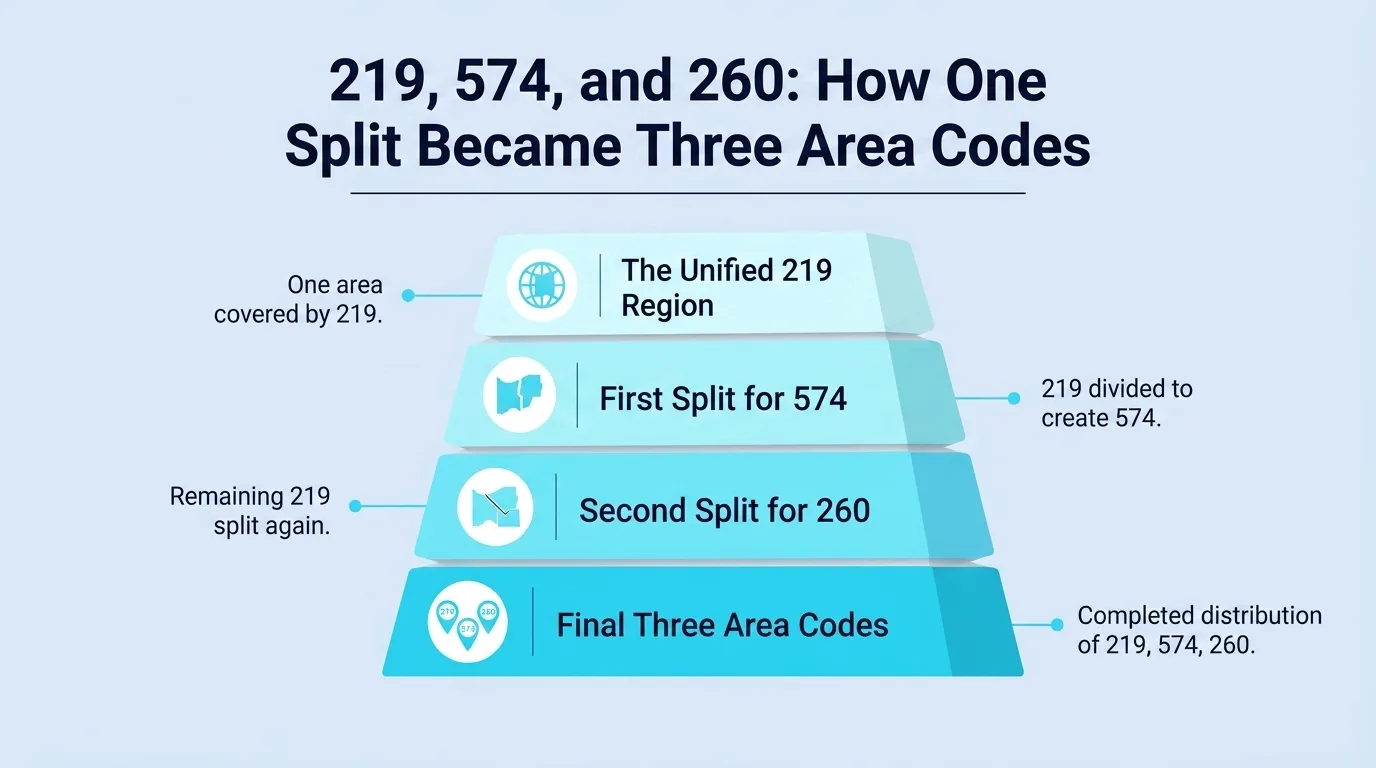
Because 260 came from a three-way split rather than a two-way one, it has two sibling codes instead of just one. All three trace back to the same original 219 territory.
- 219 kept its original number and now covers Gary, Hammond, and the rest of northwestern Indiana closest to Chicago.
- 574 covers the middle section of the old territory, centered on South Bend and Elkhart.
- 260 covers the eastern third, anchored by Fort Wayne, and reaches all the way to the Ohio state line.
A number beginning with any of these three codes traces back to the same 1947 numbering plan. It was split apart in one coordinated move, not through separate decisions decades apart.
Fort Wayne Business Owners Explain Why the Area Code Still Matters
Local business owners in the 260 area code footprint consistently point to the same reason for keeping a local number: recognition. A Fort Wayne customer who sees an unfamiliar area code is far more likely to let a call go to voicemail than one who sees 260 on the screen.
That local trust extends to first impressions with new prospects, too. A quote request, a service call, or a follow-up message carrying a 260 number reads as a business genuinely rooted in northeastern Indiana. It doesn't read like an outside call center. For companies serving Fort Wayne and the surrounding counties, Rozper recommends keeping that local identity intact rather than defaulting to a generic toll-free line. It's a small detail that keeps showing up as a real factor in whether a first call gets answered at all.
Conclusion
The 260 area code exists because of a random drawing that split northeastern Indiana off from the rest of the old 219 territory in 2002, giving Fort Wayne and its surrounding counties a number of their own. More than two decades later, that three-way split has held up well enough that the region has never needed an overlay, and residents still dial local numbers with just seven digits. Searches for "260 idoho" are simply misspellings of Idaho, a state the area code has never touched, and confusing the two can lead to real mix-ups around time zones and caller location. Anyone doing business across northeastern Indiana benefits from understanding that history and treating a 260 number the way it's meant to be seen — as a genuine local connection.
Rozper builds tools that help businesses manage exactly this kind of local presence, from area code selection to call handling across every region a company serves. Whether you're setting up a new line in the 260 area code region or verifying an incoming call, having accurate, current information matters more than guesswork.
FAQs
What state does the 260 area code belong to?
The 260 area code belongs to Indiana, covering Fort Wayne and the northeastern part of the state. It has never been assigned to Idaho or any other state.
Where exactly do 260 area code calls come from?
Calls from a 260 number originate in northeastern Indiana, including Fort Wayne, Auburn, and Huntington. The territory stretches from the Ohio border west toward the South Bend numbering area.
When was the 260 area code created?
Area code 260 took effect on January 15, 2002, as part of a three-way split of the former 219 territory. A permissive dialing period allowed both old and new numbers to work for several months afterward.
How do I block or report a suspicious 260 call?
Most phones let you block a number directly from the recent-calls list after a suspicious 260 call. You can also report the call to the FTC or FCC if it appears to be a scam or robocall.
Is it safe to call back a missed 260 number?
Calling back is generally safe, since it won't connect you to a premium-rate line the way some international numbers can. Still, verify the caller's identity before sharing any personal or payment information.
What time zone do 260 area code numbers use?
The 260 area code operates entirely on Eastern time, matching most of the rest of Indiana. Callers on Central, Mountain, or Pacific time should adjust accordingly before placing a call.
How much does it cost to get a local 260 number for my business?
Pricing varies by provider, but local Indiana numbers are typically available through virtual phone services for a modest monthly fee. Rozper can help businesses set up a 260 area code presence as part of a broader local-calling strategy.
Why did area code 260 come from a three-way split instead of the usual two-way split?
Regulators chose a three-way split because the original 219 territory was large enough to divide into three balanced regions at once. A random drawing then decided which of the three new codes — 219, 260, or 574 — would cover which section.