Introduction
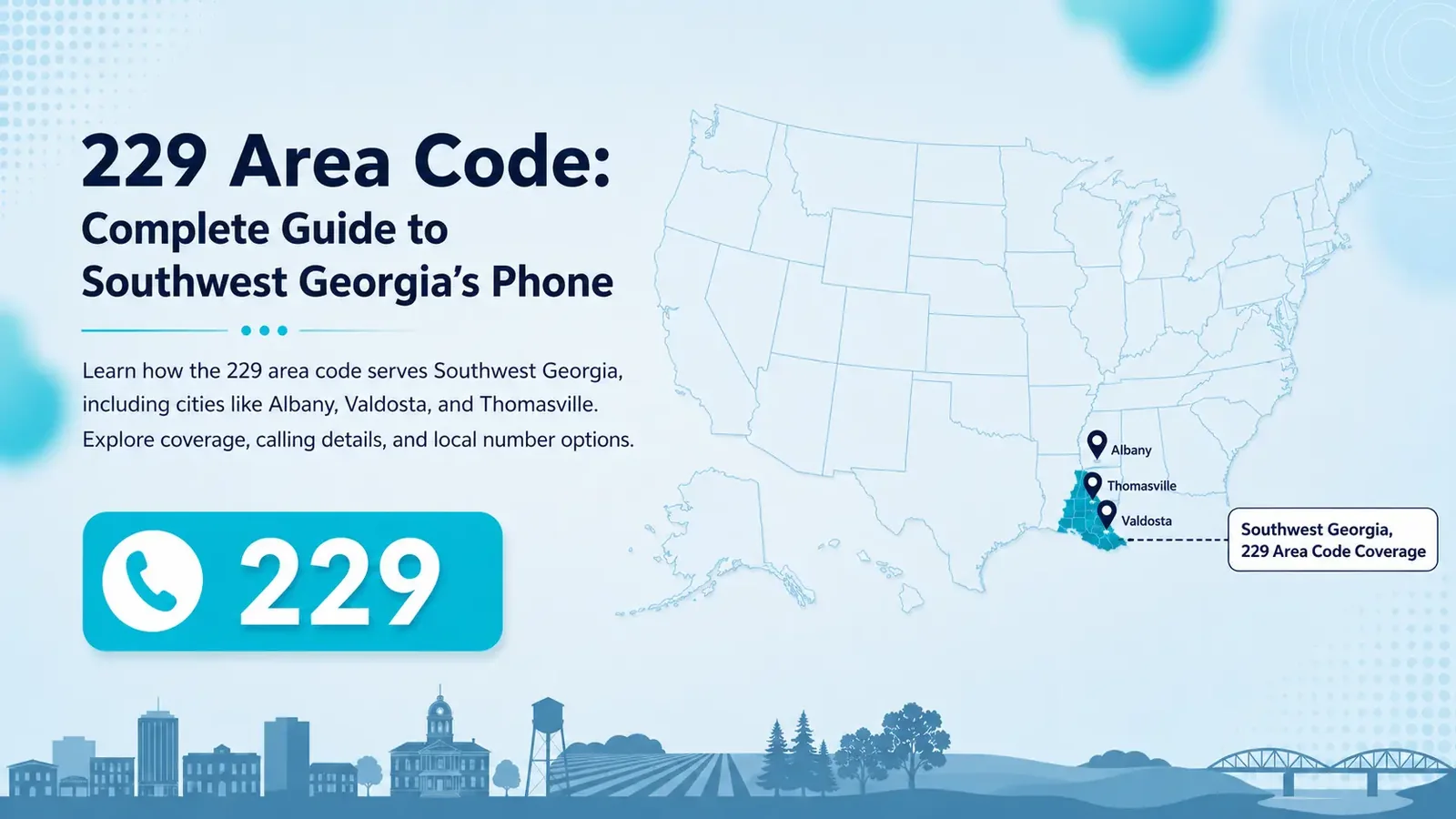
The 229 area code covers dozens of cities across southwest Georgia, from Albany and Valdosta to smaller towns most people have never mapped out. If you've received a call from this prefix, run a business in the region, or just want to know where it actually reaches, getting the facts straight matters more than guessing. This guide walks through exactly which cities and counties fall inside this territory, how to tell a legitimate call from a scam, and why growing businesses now choose local Georgia numbers over generic toll-free lines. Keep reading and you'll leave with a clear map, a scam checklist, and a plan for using this prefix to your advantage.
Key Takeaways:
- The 229 area code spans roughly 38 counties and more than 90 cities across southwest Georgia, including Albany, Valdosta, and Thomasville.
- Area code 229 was created in 2000 when regulators split the old 912 region into three separate area codes.
- Scam calls from this prefix commonly impersonate the IRS, Social Security Administration, and Medicare representatives.
- Businesses are claiming local area code 229 georgia numbers to build trust with southwest Georgia customers instead of relying on toll-free lines.
Albany, Valdosta, and 90+ Cities Share This One Prefix
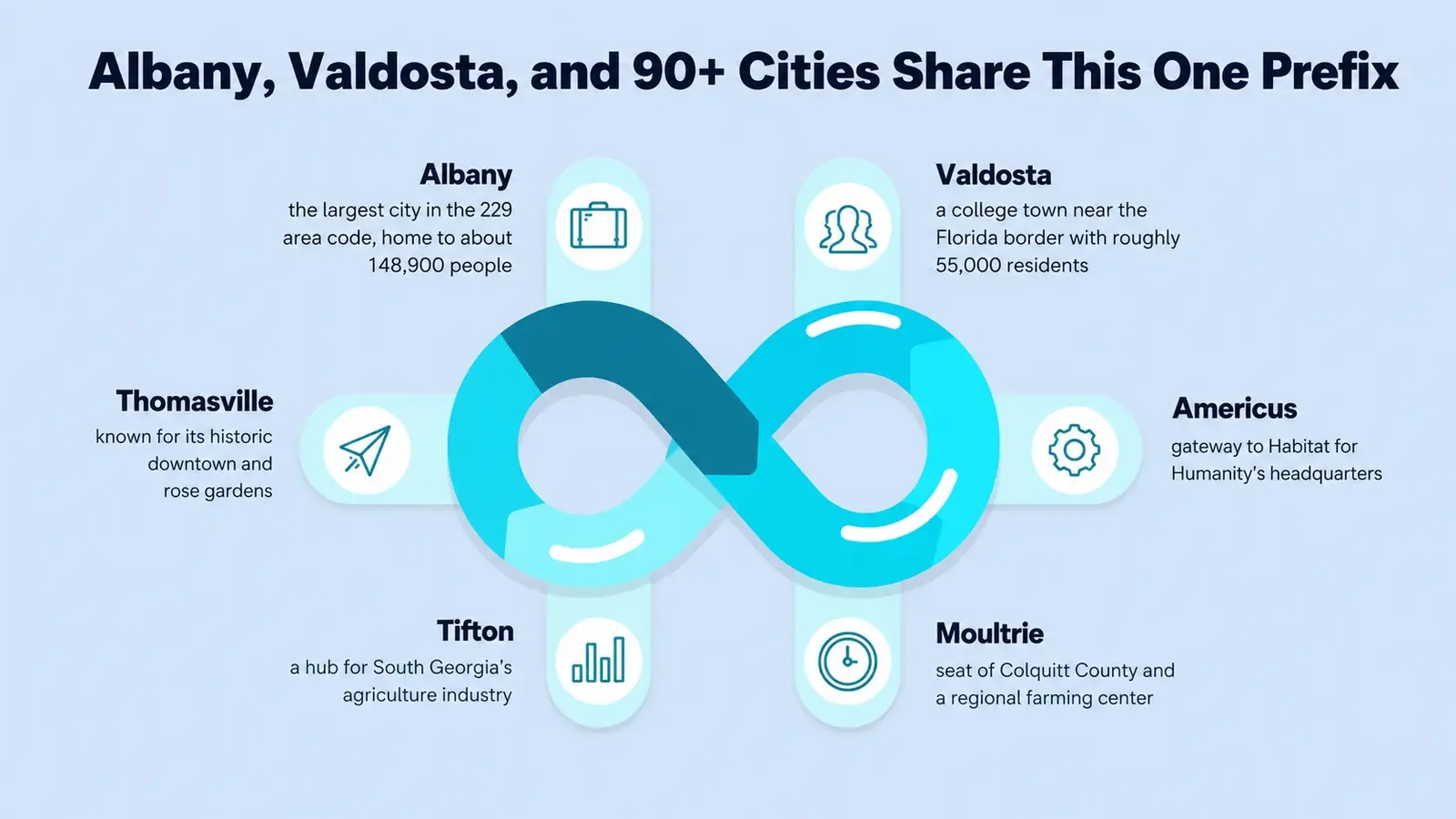
The 229 area code reaches nearly every corner of southwest Georgia, stitching together small farm towns and mid-size cities under one dialing prefix. Albany anchors the northern edge with close to 149,000 residents, while Valdosta and Thomasville cover the southern half near the Florida line. Because the region spans roughly 38 counties, a single local number can reach customers spread across a huge stretch of rural Georgia. That's part of why so many local businesses still prefer this Georgia prefix over a number tied to Atlanta or another state entirely.
- Albany – the largest city in the 229 area code, home to about 148,900 people
- Valdosta – a college town near the Florida border with roughly 55,000 residents
- Thomasville – known for its historic downtown and rose gardens
- Americus – gateway to Habitat for Humanity's headquarters
- Tifton – a hub for South Georgia's agriculture industry
- Moultrie – seat of Colquitt County and a regional farming center
How Southwest Georgia Got Stuck With Just One Prefix
Georgia didn't always have three separate codes covering its southern half. Until August 2000, the entire southern portion of the state, from Savannah to Albany, shared a single 912 area code. As pagers, fax lines, and cell phones multiplied, regulators split that territory three ways, carving out the 229 area code to serve the southwest corner exclusively. Farm towns and mid-size cities alike had been sharing dwindling number blocks for years before the split finally arrived. The change gave the region breathing room that has lasted more than two decades without needing a second split.
The Three-Way Split of 912
In 2000, regulators divided the old 912 territory into 229 for the southwest, 478 for the Macon area, and a smaller 912 for Savannah and the coast. The split was designed to handle growth without forcing residents to memorize new dialing habits overnight.
The Permissive Dialing Window
For a full year after the split, callers could still dial seven digits locally while the new ten-digit format phased in. That transition period gave businesses and residents time to update stationery, ads, and paperwork before the old habit stopped working entirely. Phone companies also used the window to reprogram switching equipment across dozens of rural exchanges without interrupting service for anyone.
The Scam Playbook Behind Suspicious 229 Calls
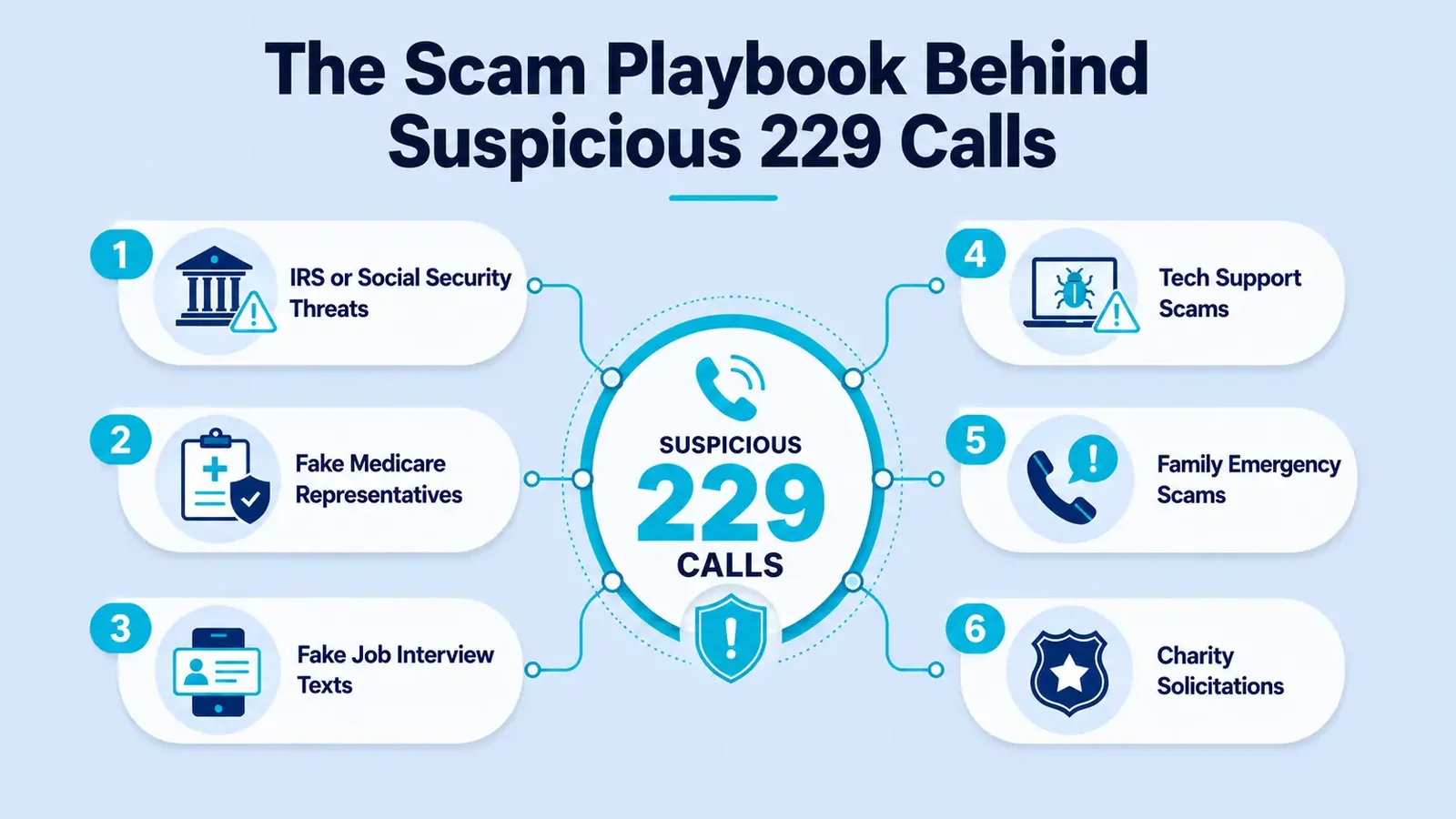
Not every call from the 229 area code is legitimate, and scammers know a Georgia number feels more trustworthy than an obviously spoofed one. Fraud reports tied to this prefix spike around tax season and open enrollment, when callers pose as government agencies or insurers. Some scammers even use number-spoofing software to display a real southwest Georgia business name on caller ID. Knowing the common scripts makes it much easier to hang up with confidence instead of second-guessing yourself.
- Callers claiming to be the IRS or Social Security threatening arrest over unpaid taxes
- Fake Medicare representatives pushing unnecessary medical equipment or plan changes
- Text messages offering a job interview that ask for your Social Security number upfront
- "Tech support" alerts demanding payment in gift cards to fix a fake virus
- Urgent family emergency calls claiming a relative is jailed and needs bail money
- Charity solicitations impersonating police or firefighter associations
Four Steps to Verify Any Call From the 229 Area Code
You don't need special software to check whether an unfamiliar call is real. A few quick habits catch almost every scam before it goes further. Use this short process any time an unfamiliar southwest Georgia number rings your phone.
- Let unknown calls go to voicemail and listen before calling back.
- Search the full ten-digit number online to see if others have flagged it.
- Call the agency or business directly using a number from its official website, not the one that called you.
- Never share a Social Security number, bank details, or gift card codes over the phone.
Why Local Businesses Are Claiming 229 Numbers Right Now
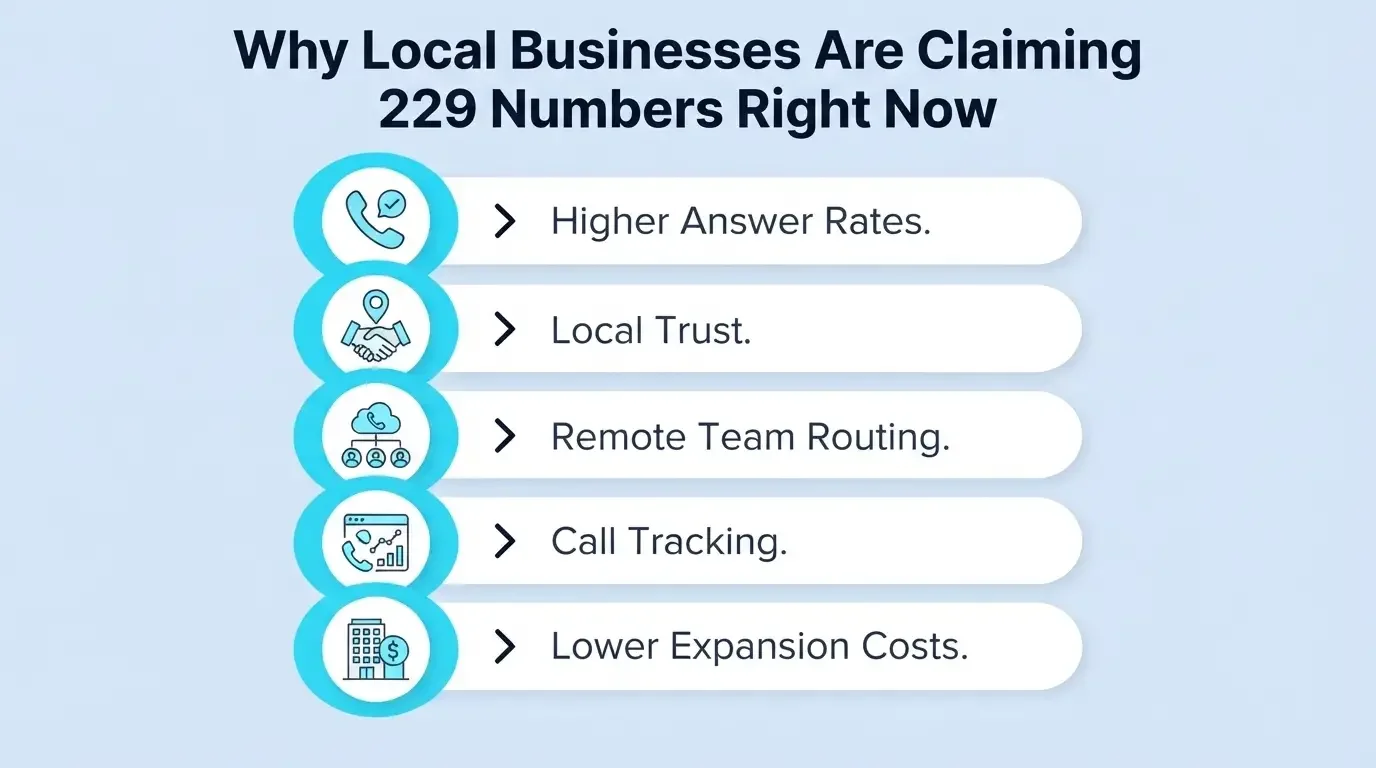
Southwest Georgia is growing, and small businesses are catching on that a local prefix builds trust faster than an out-of-state or toll-free number. Customers in Albany or Valdosta are more likely to answer a call tied to area code 229 georgia because it looks like a neighbor, not a call center. Platforms like Rozper make this easy by letting a business set up local numbers without needing a physical office in the region. That local presence pays off in higher answer rates and fewer missed leads.
- Higher answer rates because customers recognize the local prefix
- Easier call routing to remote or hybrid teams without losing a local footprint
- Professional call handling through Rozper's virtual receptionist tools
- Simple tracking of which marketing campaigns actually drive calls
- Lower cost than opening a physical branch office in the region
229 vs. 912 vs. 478: Picking the Right Georgia Code
Georgia splits its southern half three ways, and mixing them up is an easy mistake. Knowing the difference matters if you're setting up a business line, verifying a caller, or just trying to figure out where a number originates. Each of these three codes covers a distinct stretch of territory with its own mix of cities, counties, and calling patterns.
The Southwest Corner
Covers Albany, Valdosta, Thomasville, and the rest of southwest Georgia's rural counties, plus dozens of smaller farming communities nearby.
Serves Savannah and the coastal counties along Georgia's Atlantic side, including the port and its surrounding tourist areas.
Area Code 478
Covers Macon and the central Georgia counties north of the 229 region, stretching toward the middle of the state. For more on that prefix, see the 478 area code guide.
What Happens When Southwest Georgia Runs Out of 229 Numbers?
Every area code eventually runs low on available prefixes as new landlines, cell phones, and business lines get added. Industry projections from recent years suggested the 229 area code had enough capacity to last through the end of the decade before needing relief. Regulators track this capacity closely and typically announce a plan well before the shortage actually causes problems for callers. When that point arrives, they typically choose between an area overlay, which adds a second code to the same region under the numbering plan, or a geographic split like the one that created 229 in the first place.
- An overlay would add a new area code layered over the same 229 region
- A geographic split would carve southwest Georgia into two separate prefixes
- Either option would likely require ten-digit dialing for every local call
- Existing local numbers today would not need to change
- Official notice typically arrives a year or more before any change takes effect
Conclusion
Southwest Georgia's phone system covers more ground than most people realize, stretching from Albany's city limits to small farm towns near the Florida line. The 229 area code has served this entire region since 2000, and it isn't going anywhere anytime soon. Knowing which cities fall under area code 229, how to spot a scam call, and why so many businesses now choose this prefix puts you ahead of most callers in the region. Whether you're a resident checking an unfamiliar number or a business owner planning your next move, you now have the facts to act with confidence.
The next step is putting that knowledge to work, whether that means saving a verified number to your contacts or setting up local call routing for your own business. Rozper helps southwest Georgia businesses manage calls, route customers to the right team, and sound local without opening a second office. Growing a customer base in this region starts with being reachable and recognizable to the people calling you. Start exploring what a smarter call setup can do for your business today.
FAQs
What cities are in the 229 area code?
This prefix covers over 90 cities across southwest Georgia, including Albany, Valdosta, Thomasville, Americus, and Tifton. It spans roughly 38 counties stretching from central Georgia down to the Florida border.
Where is area code 229 located?
It serves the southwest region of Georgia, anchored by Albany in the north and Valdosta near the Florida state line. It does not cover Atlanta, Savannah, or Macon, which use different area codes.
When was the 229 area code created?
It went into effect on August 1, 2000, after regulators split the old 912 region into three separate codes. A one-year permissive dialing period followed to help residents adjust smoothly.
How do I know if a call from the 229 area code is a scam?
Legitimate government agencies and businesses rarely demand payment by gift card or threaten immediate arrest over the phone. If a call pressures you to act instantly, hang up and verify the number independently.
Is it safe to call back a missed call from this area code?
It's generally safe to call back, but search the full number online first if it seems unfamiliar. Avoid pressing any buttons in an automated message, since that can confirm your number is active to scammers.
What time zone does the 229 area code use?
Every city in this region follows Eastern Time, the same zone used across most of Georgia. There's no time difference to account for when calling within the region.
How much does a local number in this area code cost for a business?
Costs vary by provider, but many call management platforms, including Rozper, offer local numbers as part of an affordable monthly plan. Most also let you test the setup with a free trial before you commit to anything.
Why are businesses choosing area code 229 georgia numbers over toll-free lines?
A local number in this region looks more trustworthy to nearby customers than an unfamiliar toll-free line. It also signals that a business understands and serves the southwest Georgia community directly.